I didn't expect to fall for Leipzig the way I did. I showed up with two days, a vague sense that it was "the other German city people talk about," and a list of things to do that looked almost identical to every other European city guide. By the end of the first afternoon, the list was gone. Leipzig has a way of doing that.
It's not Berlin, and it's not trying to be. It's louder in some ways, quieter in others. More relaxed. Cheaper. A bit more crumbled around the edges in a way that feels honest. And the locals, genuinely, seem happy you came.
Here's how to do it right.
Quick Guide: Things To Do in Leipzig Like a Local
- Primary Recommendation: Spend time in Plagwitz and Südvorstadt, not just the Old Town. The city's best experiences are west and south of the center.
- Top Choice for History: The Museum in der Runden Ecke (Stasi Museum) in the city center, paired with a walk to Nikolaikirche, 10 minutes on foot from Augustusplatz.
- Top Choice for Art: Spinnerei in Plagwitz, a former cotton mill turned gallery complex with over 100 artists' studios, 10 minutes from the city center by tram.
- Value Pick: An evening on Karli (Karl-Liebknecht-Strasse), Leipzig's best bar street in the Südvorstadt district, where a beer costs under three euros and the crowd is mostly students and locals.
- The Best Way to See the City: Take a private, personalized walking experience with a local on Lokafy in Leipzig and discover the neighborhoods, history, and hidden corners that guidebooks skip.
Start in the Old Town, But Don't Stay Too Long
Most visitors spend a full day in Leipzig's Altstadt. Most locals spend about two hours there on a weekend and then leave.
That said, the Old Town deserves a proper morning. The Markt square, anchored by the Renaissance Altes Rathaus (Old Town Hall), is one of the more impressive market squares in Germany. Walk through the Mädler Passage, an ornate 19th-century shopping arcade that also houses the legendary Auerbachs Keller restaurant, which appears in Goethe's Faust and has been serving food since 1525. You don't have to eat there. Locals mostly don't. But you should walk through the vaulted room and look.
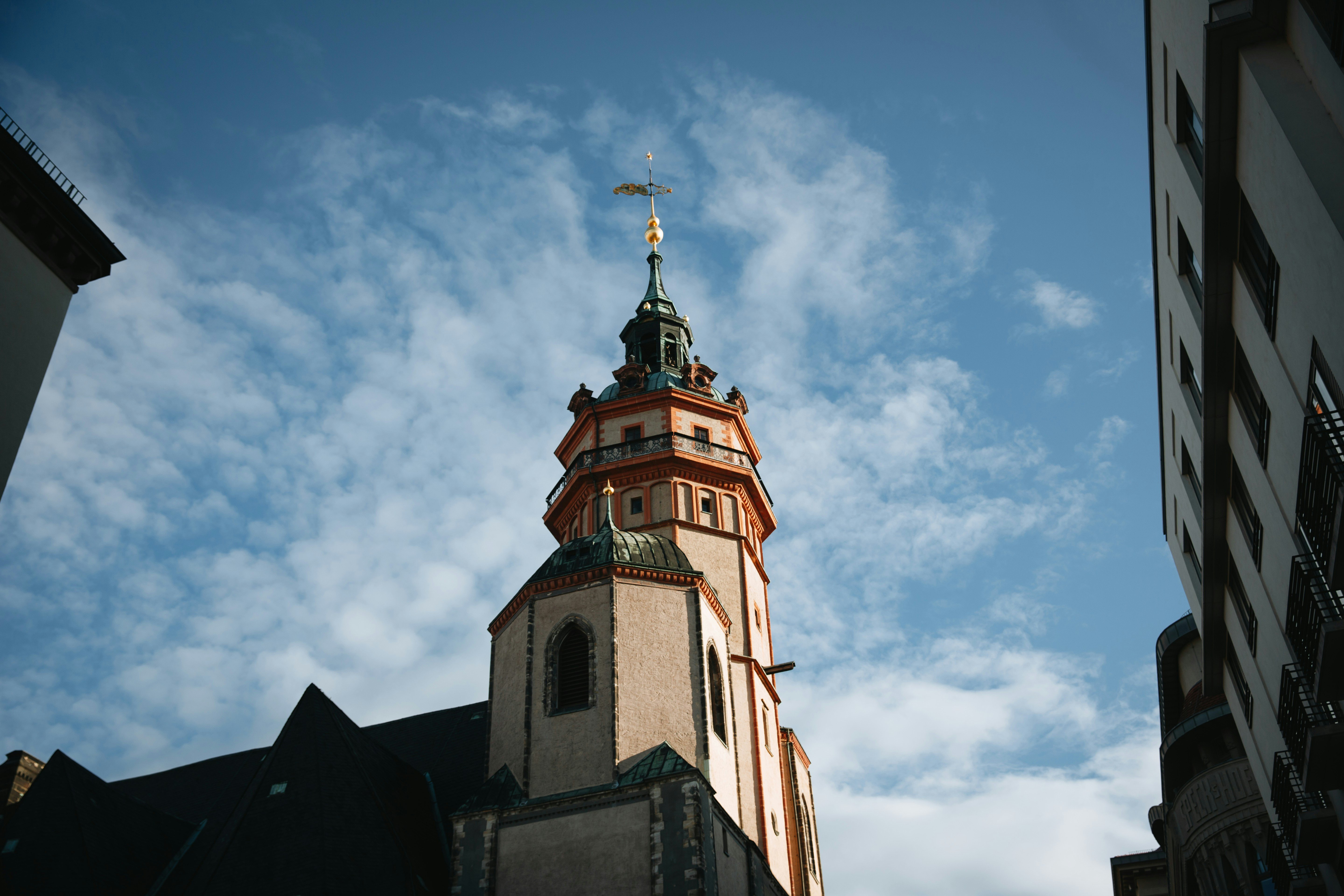
From the Markt, it's a five-minute walk to Nikolaikirche (St Nicholas Church), one of the oldest churches in Leipzig, dating back to 1165. The interior is surprisingly soft and pastel, all white columns and green palm fronds carved in stone, which makes the weight of its history feel even stranger. This is where the Monday Demonstrations began in 1989, the peaceful protests that eventually brought down the East German government and opened the path to reunification. On 9 October 1989, over 70,000 people marched from this church into the streets. The city did not fire on them.
The stone column outside in the Nikolaikirchhof, with its carved palm fronds, is a direct reference to the church's interior. Locals call it a quiet monument. It's the kind of thing you walk past twice before you understand what you're looking at.
While you're in the center, also check the Naschmarkt square just behind the Old Town Hall, where an equestrian statue and the Alte Handelsbörse (Old Stock Exchange) create one of the most photogenic corners in the city. It's not marked on most tourist maps.
The Runde Ecke: Leipzig's Most Necessary Stop
Two minutes on foot from Nikolaikirche, tucked just off the Brühl shopping street, is the building locals call the Runde Ecke. The rounded corner of this former Ministry for State Security headquarters gives it its name.
The Museum in der Runden Ecke is one of the best museums in Germany, and almost no one outside Europe knows about it. It's free to enter. It occupies the actual offices where the Stasi operated from 1950 to 1989, and almost nothing has been changed. Desks, filing cabinets, surveillance equipment, wigs used by agents for disguise, the devices used to steam open letters and reseal them, the forged stamps, the smell sampling jars used to keep citizens' scents on record. The machinery of the surveillance state is laid out without dramatization, and the effect is more unsettling because of that.
On 4 December 1989, citizens occupied this building to stop the shredding of files. That occupation, and the preservation of those files, is why the museum exists. The Stasi had begun destroying evidence. The people of Leipzig stopped them.
The museum is open Tuesday through Sunday and closes at 6pm. A guided tour runs every Saturday at 4pm from the Nikolaikirchhof, costing five euros, and covers key sites of the Peaceful Revolution across the city center. Worth knowing.
Plagwitz and the Spinnerei: Where Leipzig's Art Scene Lives
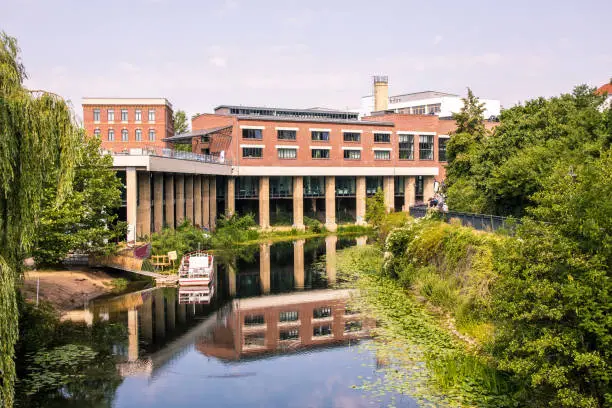
Take the S-Bahn line S1 or tram 14 toward Plagwitz. Get off at the Plagwitz stop and follow Spinnereistrasse for about five minutes. You're looking for a large gate.
The Leipziger Baumwollspinnerei began as Europe's largest cotton mill in the 19th century. Today it's home to over 120 artists and some of Germany's most interesting contemporary galleries. The complex itself is extraordinary to walk through: red brick buildings, internal courtyards, a cinema, a roastery, galleries that range from serious international shows to small studio exhibitions by artists who have a door and two chairs and their work pinned to the wall.
Open gallery days happen twice a year, in spring and autumn, when the whole complex comes alive. On regular days you can still walk the grounds and visit any gallery that's open. Give yourself two hours minimum. This isn't a place to rush through.
When you leave, turn right onto Karl-Heine-Strasse and walk toward the canal. The Karl-Heine-Kanal runs through Plagwitz and Lindenau, and the stretch along Karl-Heine-Strasse on a Sunday afternoon feels like what Berlin used to feel like before it became expensive and self-aware. People kayak on the canal. Artists work in street-level studios with the windows open.
The Westwerk complex, about five minutes west of the Spinnerei on Karl-Heine-Strasse, is a former iron foundry turned creative hub with studios, second-hand shops, food stalls, yoga and tattoo studios. It's less polished than the Spinnerei and more fun. The Westfach shop sells vinyl, ceramics, prints, and work by local artists. On alternating Sundays, the Kiezflohmarkt flea market takes over the courtyard. On Saturday mornings, the Plagwitzer Markthalle nearby sells regional food from local producers.
Across the street from Westwerk is the Schaubühne Lindenfels, a bar, cinema, and theatre housed in an Art Nouveau villa. The house gin and tonic is good. Come back here in the evening.
The Panometer: The Most Surprising Thing in Leipzig
In the Connewitz district, about 15 minutes by tram from the center, a converted 1909 gasometer stands on Richard-Lehmann-Strasse. Artist Yadegar Asisi has been filling it since 2003 with the largest 360-degree panoramas in the world.
The current exhibition, ANTARCTICA, opened in January 2026 and depicts the Antarctic coastal landscape at a 32-metre height, with ice formations, glaciers, and underwater life. The display alternates between day and night with sound effects. You stand on a raised viewing platform in the middle, surrounded by the image.
It sounds like a novelty. It doesn't feel like one. Most visitors are quiet for the first five minutes. The scale does something to your sense of proportion that photographs can't replicate.
Open daily from 10am to 5pm (last entry 4pm). Panometer Leipzig is at Richard-Lehmann-Strasse 114, in the southern Connewitz district, roughly 10 minutes by tram 9 from the city center.
The Völkerschlachtdenkmal: Big History, Empty Crowds
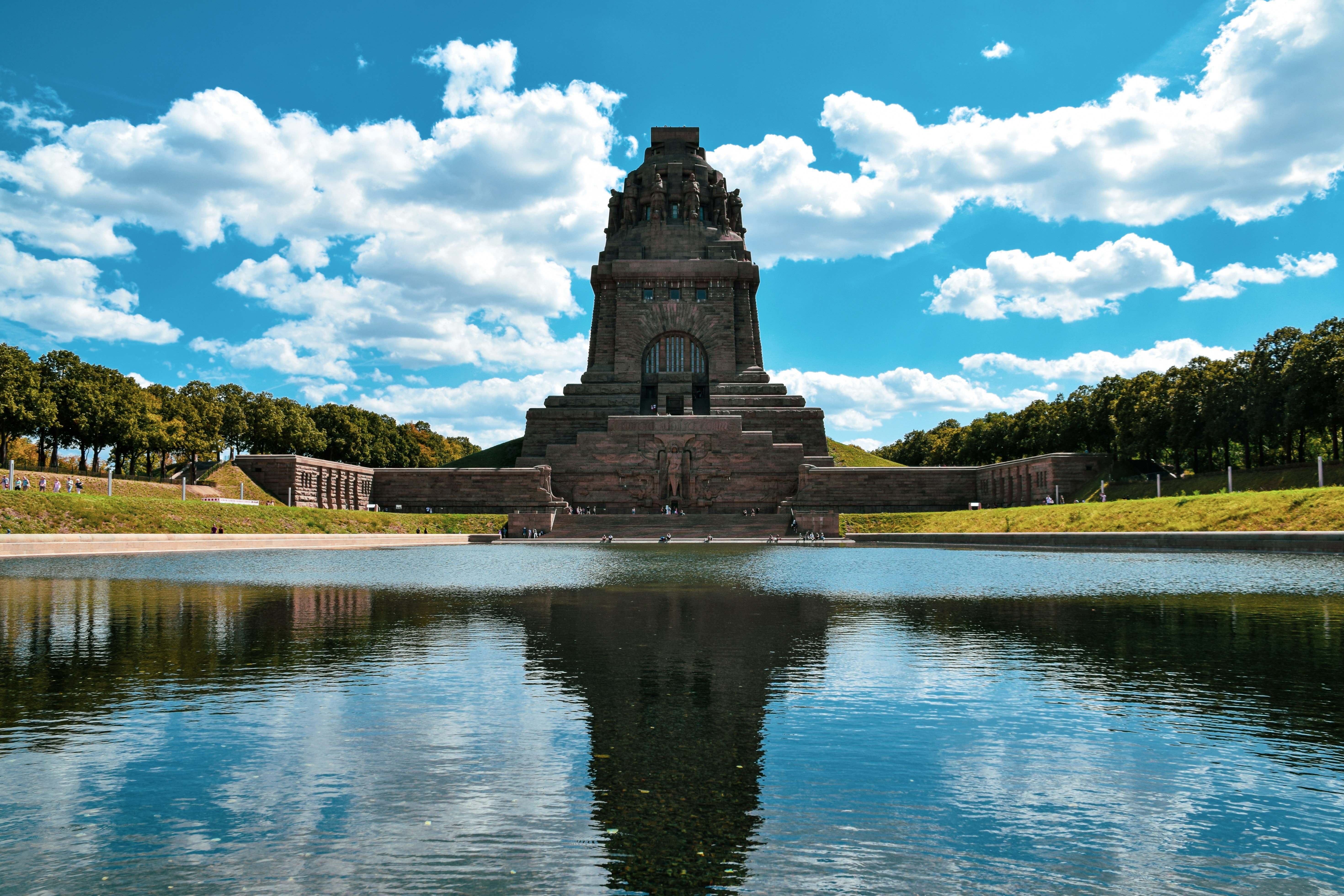
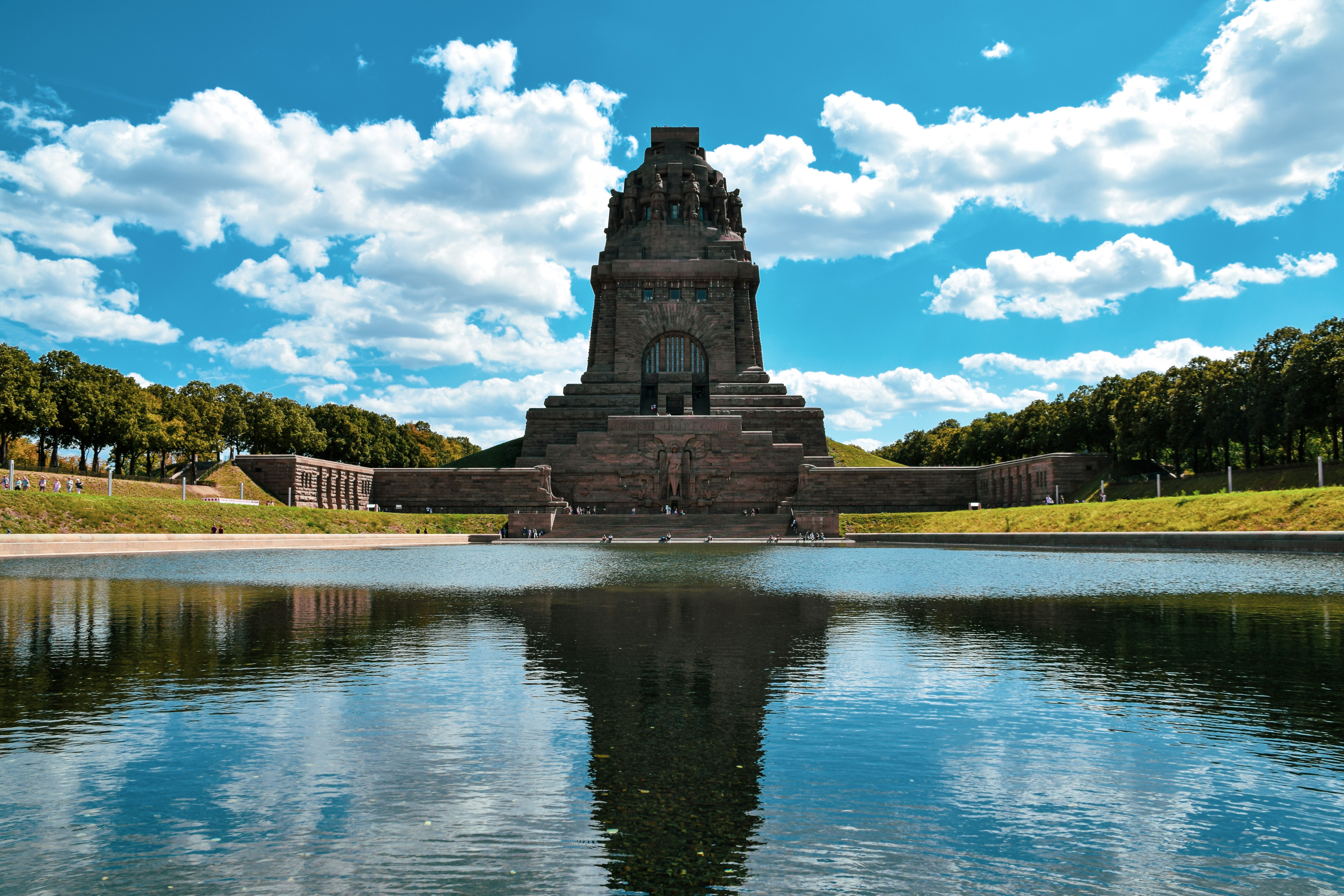
On the southeastern edge of Leipzig, about 4 kilometers from the Old Town, stands the Monument to the Battle of the Nations. At 91 metres tall, it's one of the largest monuments in Europe.
The Völkerschlachtdenkmal was built to commemorate the 1813 Battle of Leipzig, in which Napoleon's forces were defeated by a coalition of Prussian, Russian, Austrian, and Swedish armies. It was the largest battle of the Napoleonic Wars, with over half a million soldiers on the field. The monument took 15 years to build and was inaugurated in 1913.
The surrounding reflecting pool and oak trees make the approach slow and deliberate. Inside, you can climb to the viewing gallery for a panorama of the city. On a clear day you can see the Panometer gasometer in the distance, which is a strange little loop of Leipzig history.
Most tourists come in the morning. Go in the late afternoon, particularly in autumn or early spring, when the light is low and there's almost no one else there. It becomes a different place.
Take tram 15 from Augustusplatz toward Meusdorf, get off at Völkerschlachtdenkmal. About 20 minutes.
Südvorstadt and the Karli: Where Leipzig Breathes
Karl-Liebknecht-Strasse, universally known as the Karli, runs south from the city center through the Südvorstadt district to Connewitz. It's about two kilometers of unbroken street life: cafes, bars, independent bookshops, record stores, Vietnamese takeaways, natural wine bars, late-night kebab places.
Locals spend the morning here over coffee (try one of the many small, unmarked cafes without signs), the afternoon browsing, and the evening in the bars. The Feinkost, a covered flea market that runs most weekends on or near the Karli, is where locals buy everything from vintage denim to old electronics. Go on a Saturday morning before 11am.
In the evening, the atmosphere shifts. Barfusz Bar on Karl-Liebknecht-Strasse is one of the stalwarts, with cheap drinks and outdoor tables. The street isn't trying to be cool. It's just actually cool, which is the difference.
Connewitz, at the southern end of the Karli, is Leipzig's most politically alternative district, known for its leftist and student culture. UT Connewitz is an old cinema turned community venue, hosting films, concerts, and talks. For vegan food, Zest on Bornaische Strasse in Connewitz serves genuinely inventive tasting menus with dishes like stuffed Mezzelune and vermouth-bergamot cream. It costs far less than it should.
Clara-Zetkin-Park and the Auwald
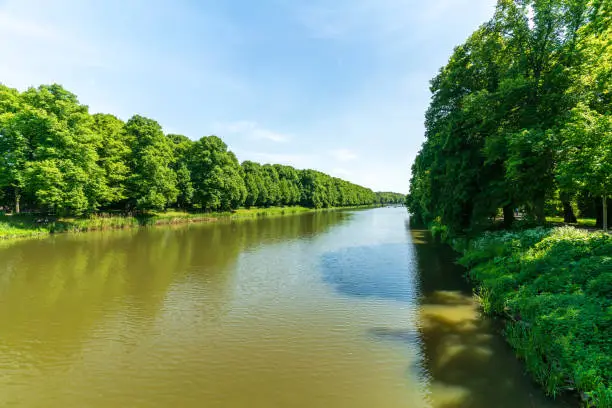
If the weather holds, leave the tram and walk.
Clara-Zetkin-Park, about 10 minutes southwest of the Hauptbahnhof main station, is 62 hectares of parkland that connects to the Palmengarten and eventually to the Auwald, Leipzig's ancient floodplain forest. The city has been shaped by its rivers, the Elster and the Pleiße, and the Auwald is what remains of the original forest that grew along their banks.
Locals walk here on weekday mornings when it's near empty. The canopy is thick enough in summer to lose the city completely within a few hundred metres of the treeline. Follow the paths south and the forest opens into the floodplain landscape near Cospudener See, a lake about 7 kilometres from the city center, formed from a former open-cast mine and now one of Leipzig's main swimming spots in summer.
The Fockeberg, a rubble hill in the southwest of the park, is Leipzig's closest thing to elevation. Climbing it takes about 20 minutes from the Elster riverside and gives a view across the rooftops toward the city center and the Völkerschlachtdenkmal. Locals use it for sunrise runs and evening walks with dogs.
The Gewandhaus and the Bach Experience
Leipzig is a music city in a way that goes deeper than reputation. Johann Sebastian Bach spent the last 27 years of his life here as Kantor of Thomaskirche (St Thomas Church), and you can hear his music performed in that same building every Friday evening at 6pm (Motette), performed by the Thomanerchor, the St Thomas Boys Choir.
This is not a tourist performance. It's a working liturgical service that has run continuously since Bach's time. There is no stage. There are no lights. You sit in a pew. The choir is above you. Admission costs around five euros. It's one of the most direct connections to historical musical life anywhere in Europe.
The Bach Museum Leipzig, directly across from Thomaskirche on Thomaskirchhof, runs small-scale concerts on Sundays in its historic Summer Hall, including harpsichord recitals and early music performances. Tickets are around 20 euros, reduced for students. The museum itself is worth an hour, with original manuscripts and instruments in well-curated rooms.
The Gewandhaus, facing Augustusplatz, is the home of the Gewandhausorchester, one of the oldest professional orchestras in the world, founded in 1743. Regular season concerts run from September through June. The acoustics are considered among the best in the world. Tickets start at around 15 euros for standard concerts. Book in advance.
Explore Leipzig With Someone Who Lives There

There's a gap between knowing where something is and understanding why it matters. The Runde Ecke is a good museum. With a local who grew up watching the news in October 1989, it becomes something else entirely.
Book a private walking experience with Lokafy in Leipzig and explore the city with someone who actually lives here. Every tour is private and shaped around what you want to see, at your own pace. No rehearsed script, no bus, no shared headphones. Just Leipzig, from the inside.
Frequently Asked Questions About Leipzig
Is Leipzig worth visiting?
Yes, and it's significantly underrated. Leipzig offers a combination of music history (Bach, Mendelssohn, Wagner were all connected to the city), contemporary art (the Leipzig School of painting is internationally recognized), important political history from 1989, and a genuinely affordable and livable city atmosphere. It's less crowded than Dresden and has a distinctly different character from Berlin, more grounded and less self-aware.
How many days do you need in Leipzig?
Three days is comfortable. Two days is enough to cover the main areas if you're focused. A day trip from Berlin is possible (the train takes about 1 hour 10 minutes), but you'll miss Plagwitz, Connewitz, and everything that makes Leipzig worth lingering in.
Is Leipzig safe for tourists?
Yes. Leipzig is a safe city. Exercise the same common sense you would in any European city. The Connewitz district has a reputation for political graffiti and a strong alternative scene, but it's safe to visit during the day and evening.
What is Leipzig famous for?
Leipzig is internationally known as the city of Johann Sebastian Bach, who worked here for 27 years, and as the birthplace of the Peaceful Revolution of 1989, when Monday demonstrations at Nikolaikirche helped bring down the East German government. It's also known for the Leipzig School of visual art, the annual Bachfest (held each June), and the Gewandhausorchester.
When is the best time to visit Leipzig?
Late spring (May, June) and early autumn (September, October) offer the best combination of weather and atmosphere. June coincides with the Bachfest, a 10-day international music festival centered on Johann Sebastian Bach with over 150 concerts across the city. Summer brings outdoor markets, canal life in Plagwitz, and swimming at Cospudener See. Winter is quiet and cold but the Christmas market on the Markt is one of Germany's best.
Is Leipzig cheaper than Berlin?
Noticeably so. A meal at a good restaurant in Leipzig typically runs eight to fifteen euros for a main. A beer at a local bar is two to three euros. Accommodation is around 30 to 40 percent cheaper than equivalent options in Berlin.
What neighborhoods should I explore in Leipzig?
Beyond the Old Town, the three neighborhoods that define modern Leipzig are Plagwitz (art, canals, Spinnerei, Westwerk), Südvorstadt (Karli bar street, student life, flea markets), and Connewitz (alternative culture, vegan restaurants, UT Connewitz cinema). Each takes half a day to explore properly.
Enjoyed this article?