The first thing I noticed about Funchal was how easy it is to be by yourself here without feeling conspicuous about it. I arrived with no car and a vague plan to walk until something interesting happened, and by the second morning I had a coffee counter I kept going back to, a bus card in my pocket and a sunburn on one side of my neck from sitting on the wrong side of the promenade. Madeira has a reputation as a couples-and-hiking-groups island. Funchal, the capital, turns out to be one of the friendliest cities in Europe for a person travelling alone: compact, walkable, cheap to move around, and full of small counters where eating on your own is completely normal.
Here is how to do it properly.
Quick Guide: Solo Travel in Funchal
- Primary recommendation: Base yourself in the Zona Velha (Old Town) or near the cathedral. Everything worth walking to is within 20 minutes, and both areas stay busy and lit until late.
- Best way to get around: A GIRO card costs €0.50 and drops city bus fares to €1.45 a ride instead of €2.00 paid in cash on board.
- Top choice for eating alone: A Tendinha on Travessa dos Reis, a tiny weekday lunch place serving fish of the day to a line of locals.
- Best day out with no car: The 06:00 public bus from the cable car stop to Pico do Areeiro, €3.00 each way, at the summit for sunrise by 06:45.
- Value pick: Complexo Balnear da Barreirinha, the sea-bathing platform at the end of Rua de Santa Maria.
- The best way to see the city: Take a private, personalised walking experience with Lokafy in Funchal and see the back streets, market counters and neighbourhood bars with someone who lives there.
Is Funchal safe for solo travellers?
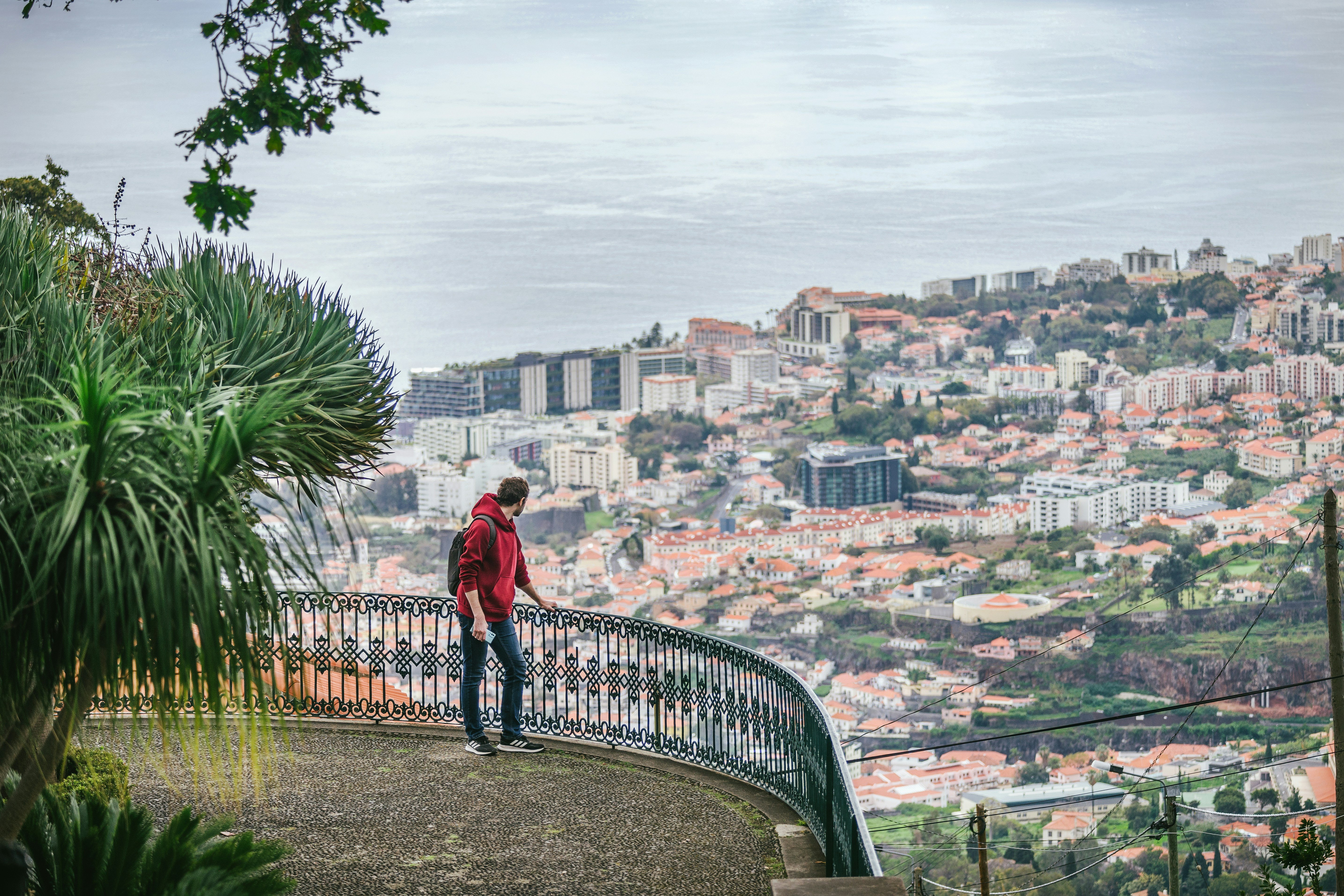
Yes, and it is one of the reasons people who try solo travel here tend to come back. Portugal held seventh place in the 2026 Global Peace Index, a position it has kept since 2023, and Funchal is a small provincial capital of around 100,000 people rather than a big anonymous city.
The practical picture: walking the Old Town, the marina and the Avenida do Mar after dinner is unremarkable and plenty of people do it. Petty theft is the realistic risk, and it clusters where tourists cluster, so keep your phone off the table at the seafront cafés. The bigger risks in Madeira are geographical rather than criminal. Pavements are steep and often wet, the cobbles polish up like glass, and the mountain weather changes faster than the forecast for Funchal suggests, because the city sits at sea level and the peaks are nearly 1,800 metres up.
Two habits worth keeping. Tell someone your plan before you set off on a walk in the hills, since phone signal drops in the valleys. And carry a small torch, because several levada paths pass through unlit tunnels.
Getting in and getting around without a car
You do not need to rent anything. Funchal is built for buses and legs.
From the airport. The Aerobus (routes 500 and 500R) runs between Madeira Airport and the hotel zone, calling at or near most central hotels. The 2026 fare is €6.70 paid on board, or €5.55 if you have already bought a GIRO ticket, and the trip takes 40 to 50 minutes. First departure from the airport is 08:30 and the last is 22:00. The cheaper option is public line 113, which costs less and takes longer with far more stops. If you land late, a taxi to the centre is the sensible fallback.
Around town. The island's buses now run as one network, SIGA, and the routes were renumbered in March 2026, so old blog posts and even some signage will show you the previous numbers. Line 021 climbs to Monte, 022 goes to the Babosas terrace, and 029 runs to Curral dos Romeiros. Pay €2.00 cash on board or tap a GIRO card for €1.45. If you plan four or more rides in a day, load a day ticket instead.
Up to Monte. The cable car from the Old Town to Monte costs €22 return and €16 one way, and it runs 08:45 to 17:45 every day except Christmas Day. Buying the one-way and coming down another way is the better solo move: bus 021 costs a couple of euros, and the wicker toboggan run is €30 for one person, €40 for two and €60 for three, cash only, bought on the spot with no online booking, Monday to Saturday 09:00 to 18:00. Solo riders pay the most per head here, which is worth knowing before you queue.
Into the mountains. Horários do Funchal runs a dedicated bus to Pico do Areeiro. It leaves the Teleférico (Cable Car-Terminus, stop 4A) at 06:00 and 13:30, reaching the summit at 06:45 and 14:15. Returns are at 12:15 and 19:00 in summer, dropping to 18:00 from 25 October 2026. It costs €3.00 on board, the bus holds 31 seats, and you can reserve by phone from seven to two working days ahead on +351 291 705 555. Be at the stop 15 minutes early. This single service is the reason a car-free traveller can still stand above the clouds at sunrise.
Where to stay when you are on your own
Three areas make sense. The Zona Velha puts you among the painted doors of Rua de Santa Maria, the sea-bathing platform and most of the poncha bars, and it is the easiest place to walk home alone at night. Around the Sé cathedral and Rua Fernão Ornelas you are two minutes from the market and the main bus stops on Avenida do Mar, which matters if you are catching a 06:00 departure. The Lido and Estrada Monumental strip is quieter and greener, better if you want the coastal promenade outside your door, though you will use the bus more.
Three days in Funchal, alone and on foot
Day one: the city, slowly. Start at the Mercado dos Lavradores when it opens at 07:00, before the tour groups. Walk up through Rua Fernão Ornelas to the cathedral, then east into the Old Town and along Rua de Santa Maria, where more than 200 doorways have been painted by artists since the Arte Portas Abertas project began in 2010. At the far end, the yellow Fortaleza de São Tiago sits above the water and you can walk into the courtyard and along the ramparts for nothing. Finish with a swim at Barreirinha next door, then eat within a few streets of where you are standing.
Day two: the mountain. Take the 06:00 bus to Pico do Areeiro for sunrise. If you have booked a trail slot in advance, walk part of PR1 toward Pico Ruivo and come back to the summit for the 12:15 bus. If you have not, the viewpoints around the radar station are free and spectacular enough on their own. Afternoon: cable car up to Monte, wander the church steps and the gardens, then come back down on foot or by bus.
Day three: the coast. Pick up the Passeio Público Marítimo at the Lido and follow it west through the tunnel to Praia Formosa, Madeira's largest beach, and on to the fishing bay of Câmara de Lobos. It is roughly 5 to 6 kilometres end to end, flat, and easy to walk alone. Parts of the path close when the sea is rough, so look at it before you commit. Bus or a short taxi back.
Eating alone in Funchal without feeling odd
Madeiran eating culture is built around counters, small tables and lunch, which suits solo travellers.
Learn the words prato do dia. Small places post a dish of the day at lunchtime, usually with soup and often for less than half of what the same plate costs at dinner on a terrace with a sea view.
A Tendinha (Travessa dos Reis 5) is the one to plan around. It opens for weekday lunch from 12:00 to 14:00 and closes at weekends, has a handful of tables, and cooks whatever came off the boat. Turn up early. Snack-Bar Pão de Ló (Rua da Alfândega 115) opens at 06:00 and does the classic Madeiran quick meal: a prego steak sandwich or bolo do caco, the flat wheat bread cooked on a basalt stone and served hot with garlic butter. It is the sort of place where nobody looks up when one person sits down.
For dinner with more of an occasion, Santa Maria (Rua de Santa Maria 145) grills espetada, beef threaded onto a bay laurel skewer, and the counter seating makes a solo table comfortable. If you walk the coast path, Doca do Cavacas (Rua da Ponta da Cruz 66) is built into the cliff above the water and is a local favourite for lapas, the grilled limpets you eat with lemon and bread. It is closed on Mondays.
Then there is poncha, the island drink of aguardente de cana, honey and citrus, stirred with a wooden caralhinho. Old Town bars pour it for roughly €3 to €5 and hand over a bowl of lupini beans with it. Over on the São Martinho side, Bacchus Bar on Caminho do Amparo is a neighbourhood room where the poncha is made to order, though it closes on Sundays. One glass is stronger than it tastes. Two is a decision.
The market, honestly
Mercado dos Lavradores is worth an hour and is open Monday to Thursday 07:00 to 19:00, Friday 07:00 to 20:00, and Saturday 07:00 to 14:00. It is closed on Sunday. Friday is the day country growers come in and the building is at its best.
One warning, because it is the single most common complaint travellers make about Funchal. Several fruit stalls work a routine on visitors: a free slice of something sweet, more fruit into the bag while you chew, then a total far beyond any normal price. Reviews describing €28 for a piece of dragon fruit or €40 for a handful of items appear month after month. The fix is simple. Ask the price per kilo before you accept a sample, say how much you want in euros rather than in pieces, and do not let anything go into a bag until the price is agreed. The fish hall downstairs, where the espada (black scabbard) come in looking prehistoric, has none of this and is the better half of the building anyway.
Walks you can do from the city, and the 2026 trail rules
This changed in January 2026 and it catches people out. Every classified PR trail in Madeira now requires an advance booking with a 30-minute entry slot through the official SIMplifica portal at simplifica.madeira.gov.pt. The standard fee is €4.50 per person, and PR1 from Pico do Areeiro to Pico Ruivo is €10.50 since it reopened in April 2026. Children under 12 go free but must still be on the reservation, rangers check tickets at trailheads, and hiking without one risks a fine. Popular slots sell out weeks ahead in summer. Multi-day passes exist, though PR1 is excluded from all of them.
What is not covered: paths outside the classified PR system, which stay free and unbooked. The most useful of these for anyone based in Funchal is the Levada dos Tornos. Take bus 029 to Curral dos Romeiros and follow the water channel east, contouring around the valley with the whole bay below you. About 90 minutes in you reach the Jasmin Tea House (Caminho dos Pretos 40), open daily 10:00 to 17:00, where tea and scones arrive in a garden full of hydrangeas. From there you can carry on toward Camacha, through a long unlit tunnel that needs a torch, or pick up a bus back down.
What a solo day costs
Funchal is kind to a single budget in a way that surprises people arriving from Lisbon. Buses are €1.45 with a card. A lunchtime dish of the day sits around €8 to €12 in the small places. Poncha is €3 to €5. Entry to the sea-bathing complex is a few euros. The costs that scale badly for one person are the ones sold per vehicle rather than per head: the toboggan at €30 for a solo rider, and taxis to trailheads. Spend your money on the things priced per person and walk the rest.
See Funchal Through a Local's Eyes

The gap between a decent trip and a memorable one here is usually knowledge you cannot look up: which counter does the good bolo do caco, which staircase shortcut saves you 20 minutes of climbing, what the neighbourhood was like before the cruise terminal, where people go on a Sunday.
Book a private, personalised walking experience with Lokafy in Funchal and you spend a few hours with someone who lives in the city, walking wherever your interests take you. It is private by default, which means no group to keep up with and no script, and for a solo traveller it is often the fastest way to stop feeling like a visitor. Most people who do it early in a trip end up using the rest of the week better.
Book a Funchal experience with a local →
FAQs
Is Funchal safe for solo travellers? Yes. Portugal ranked seventh in the 2026 Global Peace Index, and Funchal is a small, well-lit capital where walking alone at night in the Old Town and along the marina is normal. Petty theft near tourist cafés is the main risk. The steep wet pavements and fast-changing mountain weather deserve more caution than the crime does.
Can you visit Funchal without a car? Comfortably. The Aerobus links the airport to the hotel zone for €6.70 on board, city buses cost €1.45 with a GIRO card, and a dedicated €3.00 bus runs to the summit of Pico do Areeiro twice a day. A car only becomes necessary for the far north and west of the island.
How many days do you need in Funchal on your own? Three is the sweet spot: one for the city and market, one for the mountain, one for the coastal promenade and a levada. Add a fourth if you want a day trip east or west by bus.
Do you need to book hiking trails in Madeira in 2026? Yes. Since 1 January 2026, all classified PR trails require a paid reservation with a 30-minute entry slot through the SIMplifica portal. Most cost €4.50 per person and PR1 costs €10.50. Rangers check tickets at the trailhead and there is no cash payment on site.
Is it awkward to eat alone in Funchal? No. Snack bars, market counters and small family restaurants make up most of the eating scene, and the lunchtime prato do dia is designed for people eating on their own on a working day. Book ahead only for the busier Old Town dinner spots.
When is the best time for a solo trip to Funchal? May, June, September and October give the most stable weather for walking, with clearer views from the peaks and fewer people on the trails. The sea is at its warmest from late summer into October. Winter stays mild at sea level but brings more cloud and rain to the mountains.
How much should a solo traveller budget per day in Funchal? Outside accommodation, a modest day of buses, a dish of the day at lunch, a casual dinner and a drink or two lands in the region of €35 to €50. Add the cable car, the toboggan or a trail booking as one-off extras rather than daily costs.
Enjoyed this article?