I still remember turning down the wrong alley behind the souks, looking for a taxi back to my riad, and ending up instead in a candle workshop run by a woman who'd been making them by hand since she was nineteen. That wrong turn taught me more about Marrakech than any of the tours I'd already paid for.
This city rewards the traveler who wanders past Jemaa el-Fna and the souk stalls every guidebook photographs. What follows is built from the spots locals actually use: an old industrial zone turned design quarter, the spice market where Marrakchis buy their own saffron, and the side streets in Gueliz where the city eats dinner on a regular Tuesday night.
Quick Guide: Marrakech Hidden Gems
- Primary Recommendation: Sidi Ghanem, the design district ten minutes outside the medina that most first time visitors never hear about.
- Top Choice for Food: Gueliz, specifically Rue Oued El Makhazine, where Marrakchis and long term residents actually eat dinner. The restaurants ringing Jemaa el-Fna are built for tour groups, not locals.
- Value Pick for Garden Lovers: Le Jardin Secret instead of Jardin Majorelle, for travelers who want a quiet courtyard garden without the ticket queue and the crowd of phones.
- The Best Way to See the City: Take a private, personalized walking experience with Lokafy in Marrakech and discover the neighborhoods locals actually live in, with a Local.

Sidi Ghanem: The Design Quarter Tourists Walk Right Past
Sidi Ghanem began life in the 1980s as a working industrial zone on the edge of the city, the kind of place with concrete warehouses and not much else. Over the last decade it has turned into something closer to Marrakech's answer to SoHo, packed with design studios, ceramic workshops, and concept stores that most travelers never add to their itinerary because it sits roughly five kilometers from the medina.
Worth seeking out: LRNCE, the textile and ceramics line founded by Laurence Leenaert, known for hand painted patterns in deep, earthy colors. Chabi Chic puts a modern spin on traditional Moroccan pottery. Poterie Serghini is run by the eighth generation of one family making pottery the old way, and you can watch pieces being thrown right there in the workshop. For lunch, head to the gallery and café run by artist Hassan Hajjaj, where the kitchen is staffed by women cooking genuinely local food rather than a tourist friendly version of it.
A few practical notes. Prices in Sidi Ghanem's concept stores tend to be fixed rather than open to the kind of haggling you would do in the souks, though smaller workshops sometimes still negotiate on bigger pieces. Most places close on Saturday afternoons and all day Sunday. Because the district is spread across a grid of industrial streets, it is worth hiring a driver or taking a taxi rather than walking, and plan on at least half a day if you want to actually browse rather than rush.
The Mellah: Where Marrakchis Buy Their Own Spices
Built in 1558 under the Saadian sultan Moulay Abdallah, the Mellah was once Marrakech's Jewish quarter and remains one of the oldest continuously used markets in the city. Unlike the souks closer to Jemaa el-Fna, which cater heavily to visitors, the Mellah's spice market along Avenue Houmane el Fetouaki and Rue Imam el Rhezoli is where a meaningful share of the city's residents do their actual shopping.
The difference shows in the pace. Vendors here tend to be more relaxed and less aggressive with their sales pitch than stalls deeper in the tourist heavy parts of the medina, and the prices reflect a local clientele rather than a visitor markup. Saffron is the standout purchase, generally running somewhere in the range of 20 to 25 dirhams per gram for good quality threads. A simple way to check authenticity: real saffron leaves a yellow stain when wet, while anything leaving an orange red tint has likely been cut with something else.
Beyond the spice stalls, the Mellah holds the Lazama Synagogue, open daily except Saturdays, and the Miaara Jewish Cemetery a short walk away, with an entry fee of around 10 dirhams. The tinsmiths' square, Place des Ferblantiers, marks one of the main entrances and is worth a slow walk through on your way in or out.
Two Gardens That Aren't Majorelle
Jardin Majorelle deserves its reputation, but it is also the single most crowded garden in the city, and booking ahead is close to mandatory if you want to avoid a long wait. Two alternatives are worth knowing about.
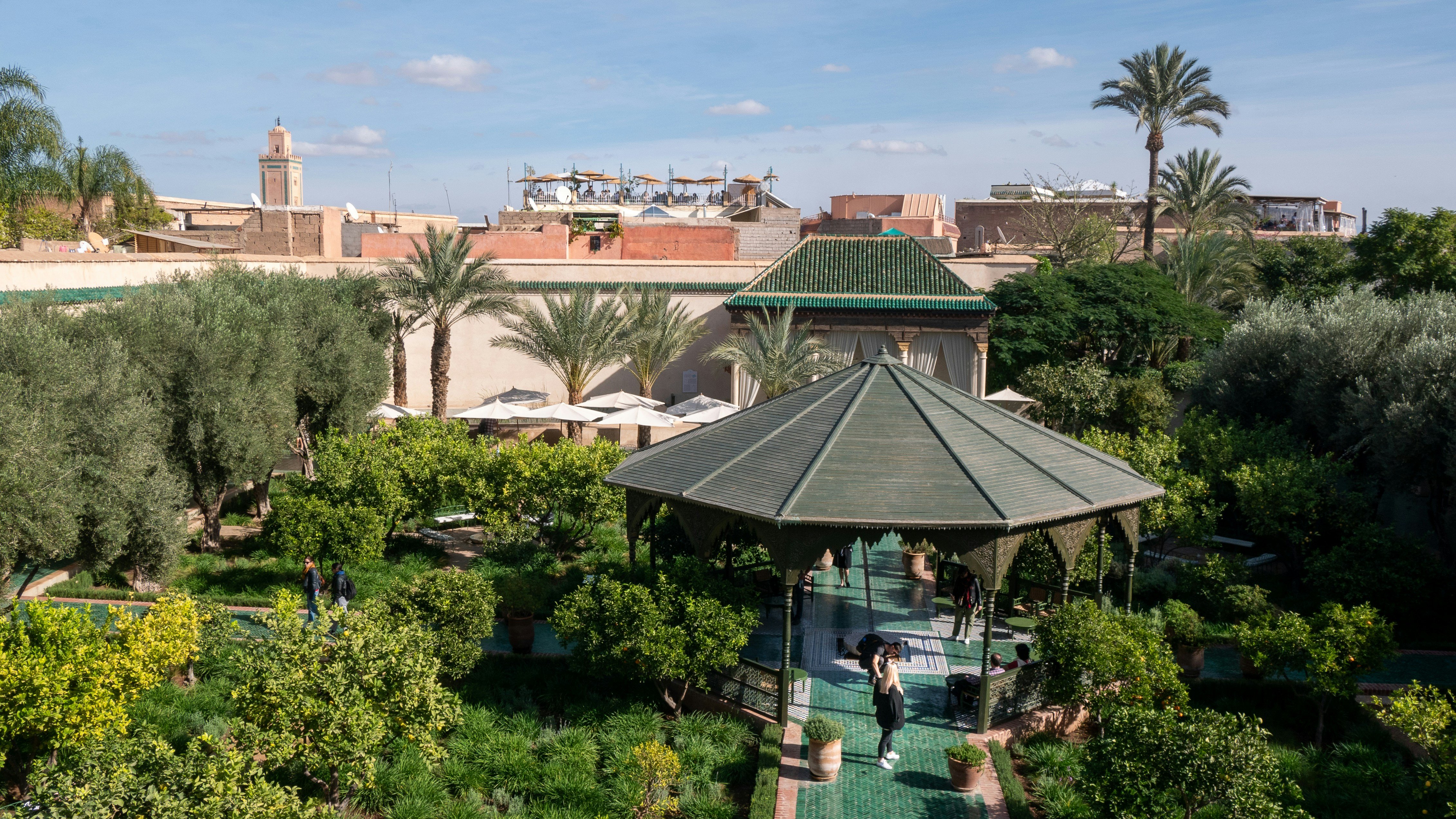
Le Jardin Secret sits inside the medina itself, walkable from most riads, and occupies the site of a 16th century Saadian palace complex that fell into disrepair before being carefully restored. The courtyards are quieter, the crowds thinner, and you can easily fold a visit into an afternoon of wandering the souks rather than planning a separate trip across town.
Anima Garden, created by Austrian artist André Heller, sits about 30 to 45 minutes outside the city along the Ourika road. A free shuttle runs from behind Koutoubia Gardens, departing from the Lavage la Koutoubia parking area, and the ride takes around 40 minutes. Inside, three hectares of exotic plants share space with sculptures by Picasso, Keith Haring, and Alexander Calder, and the on site café, named after writer Paul Bowles, uses ingredients grown in the garden itself. It pairs naturally with an Ourika Valley day trip if you are already heading that direction.
Where Locals Actually Eat in Marrakech (It's Not the Medina)
Here is something most first time visitors do not realize: a large share of Marrakech's residents rarely eat inside the medina at all. Cars cannot reach most of it, the lanes are crowded with tour groups by evening, and the restaurants ringing Jemaa el-Fna are priced and staffed for one-time visitors rather than regulars. Real, everyday Marrakech dining mostly happens in Gueliz, the newer part of the city built during the French protectorate era.
Rue Oued El Makhazine in Gueliz is a good place to start. La Taverna has an old fashioned, slightly retro feel, white gloved waiters, a relaxed garden setting, and a clientele of locals and longtime residents rather than tour buses. A few doors down, Casa Jose serves Spanish style tapas and grilled seafood in a similarly low key atmosphere. Nearby on Rue de la Liberté you will find a cluster of small, mid-range restaurants that cater to the same crowd.
That said, the medina is not a complete write-off for food. A few spots earn repeat visits from residents and visitors alike. The Amal Center, a nonprofit training restaurant staffed by women rebuilding their careers, serves a couscous lunch every Friday that draws both locals and travelers, and reservations are worth making in advance. Cafe Clock, tucked into the Kasbah neighborhood near the old palace district, hosts English language storytelling nights on Thursdays that connect back to the city's old tradition of public storytellers in the square. For pastries, Patisserie Prince sits a short walk off Jemaa el-Fna and offers a proper sit down space away from the hustle, which is more than can be said for the cookie carts in the square itself, where quality varies wildly and is best avoided.
For something cheaper and more immediate, the food stalls that fill Jemaa el-Fna after dark are still worth experiencing once. Look for the harira soup stall, usually around 5 dirhams a bowl, and the grilled sandwich stalls along Derb Dabachi, generally around 15 dirhams. Adventurous eaters can try babbouche, a warm snail soup sold from small carts and considered a genuine local favorite rather than a tourist novelty.

A Rooftop and a Hammam Worth the Detour
For sunset, Kabana sits a few steps from Koutoubia Mosque, and the trick locals use is arriving about an hour before sunset to claim a table with a clear view before the rooftop fills up. The burgers, somewhat unexpectedly, are genuinely popular with residents rather than only tourists.
For a hammam that feels less like a spa package and more like daily Marrakech life, Hammam Mouassine on Rue Mouassine is a working public bathhouse used by locals, with entry typically running 2 to 5 US dollars. It is gender separated with communal washing rooms, which suits some travelers better than others. The ritual itself, applying black soap known as savon beldi and scrubbing with a rough kessa mitt, is the same one Marrakchis have used for generations. If communal bathing isn't your preference, private cubicle hammams elsewhere in the city run closer to 15 to 30 dollars and offer the same scrub with more privacy.
Skip Ourika, Try Ouirgane
Ourika Valley is genuinely lovely, but it is also the day trip everyone already knows about, which means it gets busy, especially on weekends when locals head there too. Ouirgane, a smaller valley further along the same Atlas Mountains foothills, offers a quieter and greener alternative with far fewer tour buses. It particularly rewards travelers who have already done Marrakech once before and want something a little less scripted on a second visit.
If you happen to be visiting between December and February, Oukaimeden is worth knowing about purely for novelty value: a mountain area that gets genuine snow and draws locals up for a day that feels nothing like the rest of a Marrakech trip.
See These Spots With Someone Who Actually Lives Here

If one thing should come out of this guide, it's that the best version of Marrakech rarely shows up on a packed group tour schedule. Lokafy connects travelers with local guides in Marrakech for private, fully personalized walks built around your actual interests, from an afternoon in Sidi Ghanem's design studios to a slow wander through the Mellah to a dinner table in Gueliz that no guidebook will point you toward.
Frequently Asked Questions
What is the best hidden gem in Marrakech for first time visitors? Sidi Ghanem, the design district about five kilometers outside the medina, is the strongest pick for a first visit. It offers a genuinely different side of the city, working artisan studios and concept stores, without requiring the kind of local knowledge needed to navigate somewhere like the Mellah's back alleys.
Where do locals actually eat in Marrakech? Most everyday dining happens in Gueliz, the newer part of the city, rather than inside the medina, since the medina's narrow lanes are largely built around tourist traffic and cars cannot reach most of it. Streets like Rue Oued El Makhazine and Rue de la Liberté hold the restaurants residents and long term expats actually book.
Is Sidi Ghanem worth visiting if I'm not shopping for design pieces? Yes, though it helps to set expectations. The district rewards people interested in seeing artisans at work and watching how traditional Moroccan craft techniques translate into modern design, even without buying anything. Plan at least half a day and arrange transport, since the area is spread out and not particularly walkable.
Should I visit Jardin Majorelle or Le Jardin Secret? Jardin Majorelle is the more famous garden and worth seeing once, but it draws large crowds and usually requires booking a timed entry slot well in advance. Le Jardin Secret, located inside the medina itself, offers a quieter, smaller scale courtyard garden that's easier to fold into a day of wandering the souks without separate planning. Visitors with limited time who want a calmer experience tend to prefer the latter.
Is the Mellah safe to visit in 2026? Yes. The Mellah is a standard part of central Marrakech, close to Bahia Palace, and sees a steady flow of both residents and visitors throughout the day. As with anywhere in the medina, normal city awareness applies, and it's worth dressing modestly out of respect for the neighborhood's character.
What scams should I watch for in Marrakech? The most common patterns involve taxi drivers skipping the meter, unsolicited henna applications followed by a steep payment demand, paid photo opportunities with snakes or monkeys in Jemaa el-Fna, and people falsely claiming a site is closed to redirect you toward a shop. None of these are dangerous, but knowing about them in advance avoids an unpleasant surprise.
What's a quieter alternative to the Ourika Valley day trip? Ouirgane Valley, further along the same stretch of Atlas Mountains foothills, offers similar scenery with noticeably fewer tour groups, making it a strong choice for travelers who have already done the more popular Ourika or Imlil routes on a previous trip.
Enjoyed this article?