The first time I did Strasbourg in December, I got it wrong in the most ordinary way possible. I turned up on a Saturday at two in the afternoon, joined the slow shuffle between Place Kléber and the cathedral, bought a mulled wine that tasted like warm cough syrup, and left three hours later having seen almost nothing. Three million people visit this market across a single month. On a December Saturday, it feels like most of them are in the same alley as you.
The good news is that one day is enough. Strasbourg's historic centre sits on an island you can walk across in twenty minutes, and the eight official markets are all within that circle. You just have to move through them in the right order, at the right hours, with a plan for lunch that does not involve queueing behind ninety people for a sausage.
Quick Guide: Strasbourg Christmas Market in One Day
- Primary recommendation: Arrive before the stalls open at 11:30am and use the quiet morning for the cathedral, the tower platform, and Petite France. Everyone else starts at noon.
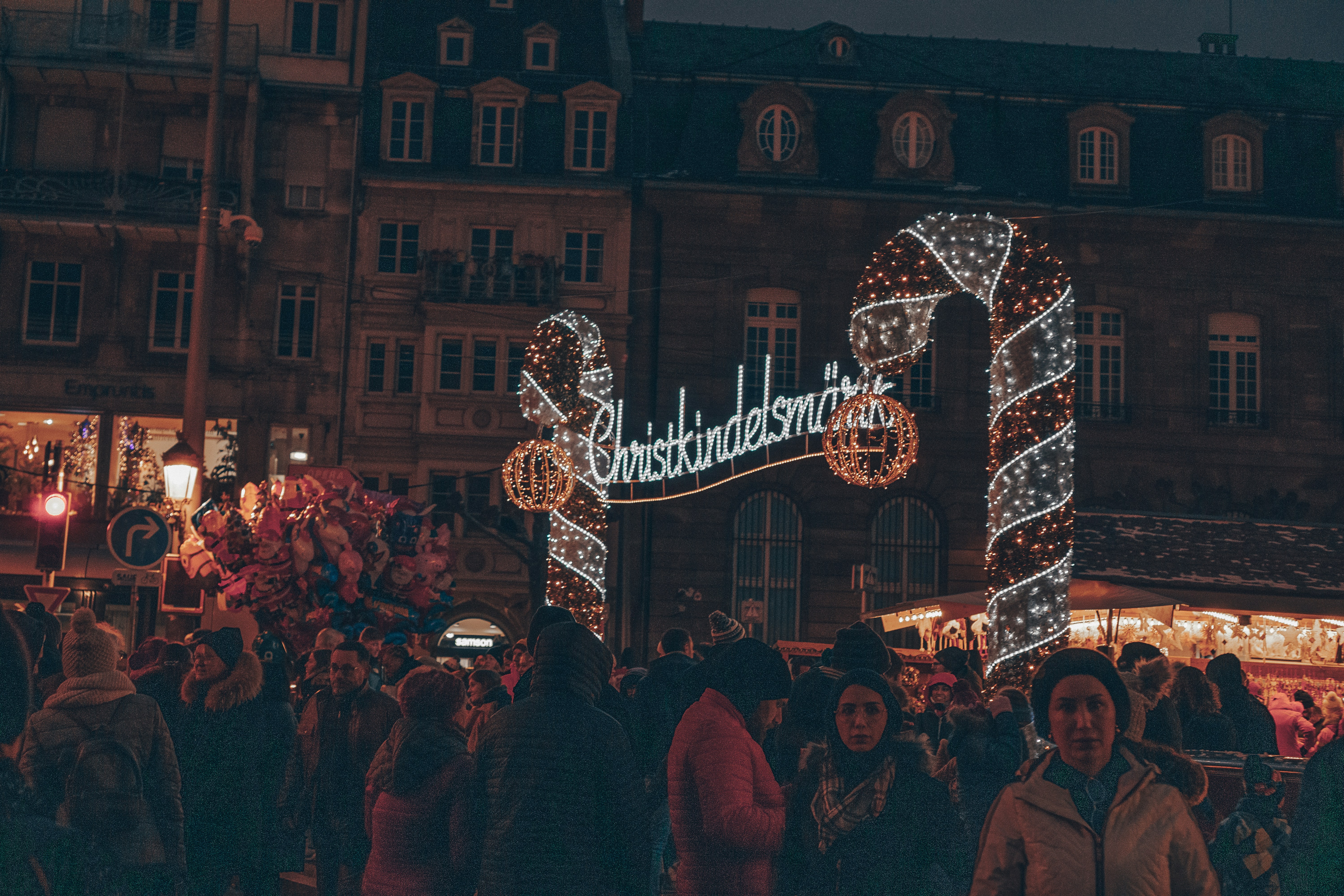
- Top choice for atmosphere: Place Broglie, the original Christkindelsmärik, which has been running since 1570. Go after 7pm when the day-trippers have gone home and the chalets still have two hours left.
- Top choice for food and drink: Skip the mulled wine at the big chalets and drink at the Marché OFF on Place Grimmeissen or in a proper bar. Eat your baguette flambée at lunch, never at night, for reasons every local will tell you.
- Value pick: Square Louise Weiss and Place du Temple Neuf, where small Alsatian producers sell the honey, cheese, and bredele worth carrying home.
- Best day to go: Any weekday. Saturdays in December are the single worst decision available to you.
- The best way to see the city: Take a private, personalised walking experience with Lokafy in Strasbourg and discover the market the way a Strasbourgeois does, including the squares that never make the guidebooks.
When to Go, and When Not To
The Christkindelsmärik opens in the last week of November and closes on 24 December. There is no market on Christmas Day or after it, which surprises a lot of people who book a trip for the 27th. The chalets run from 11:30am to 9pm daily, with an earlier close on Christmas Eve, and the city lights stay switched on into the first week of January.
Pick a weekday if you possibly can. Locals treat December Saturdays as a reason to leave town, and the city puts extra crowd measures in place on the busiest weekends, including one-way street systems in the centre from early afternoon. A Tuesday in the first week of December gives you the same lights, the same smells, and roughly half the shuffling.
One more thing on timing. The sun sets before 5pm in Strasbourg in December. That gives you a long, useful stretch of darkness from late afternoon onward, which is when the city looks like the postcard. Plan your indoor and daylight activities for the morning and let the evening be about lights.
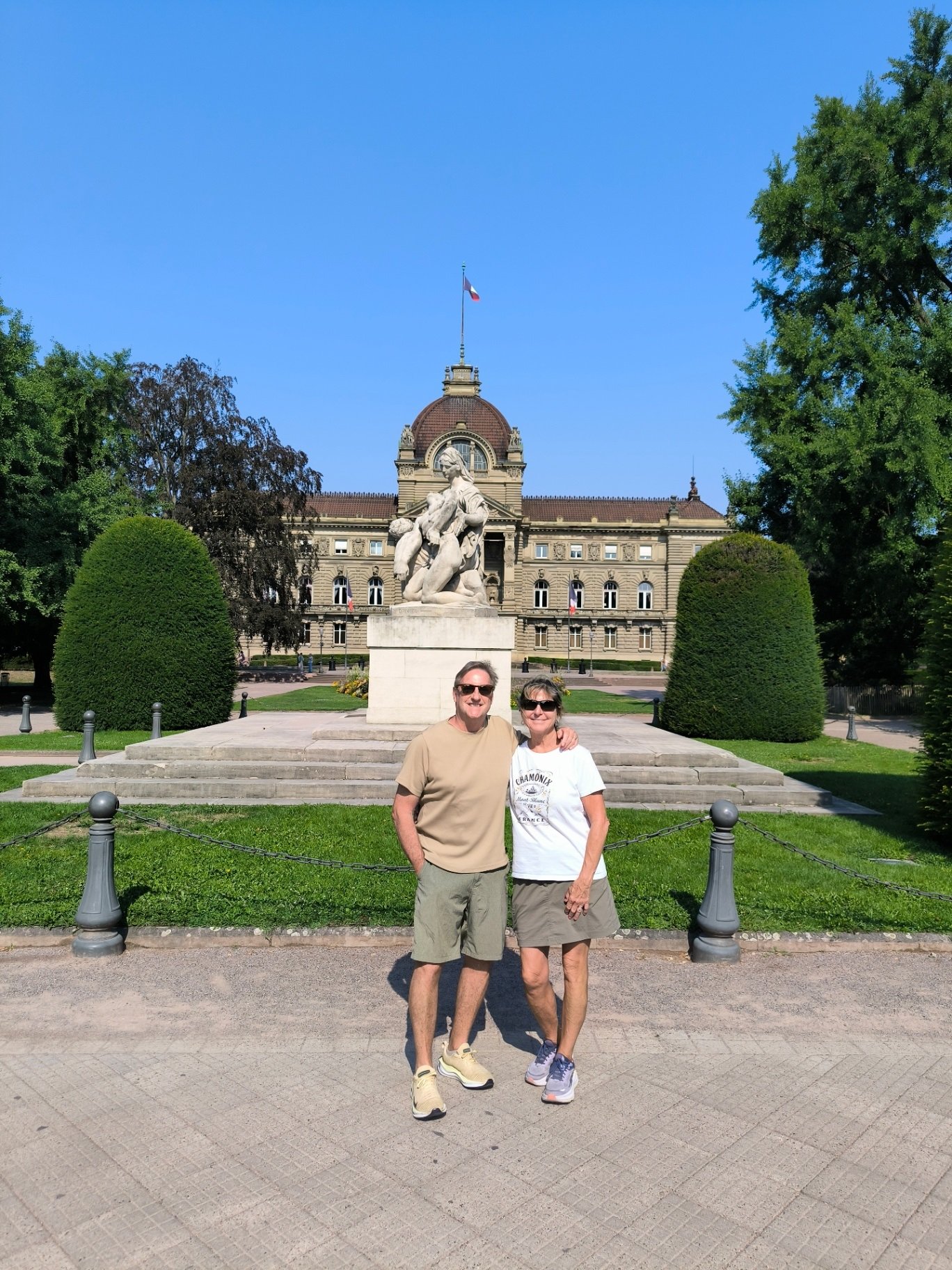
The One-Day Route
9:00am: The cathedral, before anyone else
Start at the cathedral while the square outside is still being set up. Entry to the nave is free, and at nine in the morning you can stand under the rose window with maybe a dozen other people. During the market period the entrance moves to the south façade, on Place du Château, so head there rather than trying the main west doors.
Inside, look for the nativity scene and the astronomical clock in the south transept. You can see the clock for free any time the cathedral is open. The famous parade of apostles happens at 12:30pm and needs a separate ticket of a few euros, bought at the desk near the south portal, with queueing from around noon. It runs daily except Sundays. Worth it if you like clockwork, skippable if you would rather spend that half hour eating.
10:00am: Up the tower
The platform opens at 10am in winter and the climb is 332 steps with no lift. From the top you get the whole Grande Île laid out below, the market squares still half empty, and on a clear morning the Black Forest sitting on the horizon to the east. Tickets are around €8 for adults and cheaper for children. In winter the platform closes at 6pm with a break in the early afternoon, so morning is the sensible slot anyway.
11:00am: Petite France while it is still walkable
Cross the island west toward Petite France, the old tanners' quarter with the timbered houses leaning over the canals. At eleven it is calm. By three it is one of the tightest squeezes in the city, because the streets here were built for carts, not for crowds with tote bags.
Walk out to the Ponts Couverts and, if the panoramic terrace at the Barrage Vauban is open, go up. Access is free, the view back over the four medieval towers and the rooftops of Petite France is the best in the city, and in November through February it closes at 4pm. The site has had renovation work recently, so check before you make a detour for it.
11:30am: The markets open
Start with the small ones. Place Benjamin Zix in Petite France and Place Saint-Thomas just beyond it are the first chalets you will hit. Then work east to Square Louise Weiss and Place du Temple Neuf, which hosts the Carré d'Or market. These two are where the small Alsatian producers set up: honey from the Neuhof, cheeses, foie gras, jams, apple juice pressed forty minutes from where you are standing. If you are buying anything to take home, buy it here rather than from the big central squares, where prices climb steeply.
12:30pm: Lunch, and the baguette flambée rule
Here is the one piece of advice every Strasbourgeois gives visitors, usually with a knowing look. Eat your baguette flambée at lunch, not in the evening. These sit out in the open air all day and get reheated, and the local consensus is that the later you eat one, the more of your evening you will spend hunting for a toilet. Lunch is when they are freshest.
If you want to sit down instead, book ahead. Winstubs are the traditional Alsatian tavern, all wood panelling and checked tablecloths, and the good ones fill up in December. Au Pont Corbeau on Quai Saint-Nicolas does an enormous choucroute garnie beside the Musée Alsacien. Le Clou, tucked on Rue du Chaudron near the cathedral, is cramped and noisy in the best way, with braised ham hock as the thing to order. Chez Yvonne on Rue du Sanglier has been feeding Strasbourg since 1873 and still does coq au Riesling with spaetzle. Reserve a table before you leave your hotel.

2:00pm: The central squares
Now take on the busy part. Walk Rue des Hallebardes and Rue Mercière, both strung with lights and both lined with shops that decorate their façades competitively. Place Gutenberg, Place du Château, and the Terrasse Rohan beside the Palais Rohan are your next markets. The Rohan one, the Quai des Délices, is compact and leans heavily on wine and hot drinks, so it gets very full very fast.
Duck into Pâtisserie Christian on Rue Mercière if the queue is short. For pain d'épices, the gingerbread that is more or less Strasbourg's civic identity, Mireille Oster at 14 Rue des Dentelles in Petite France has been the reference for decades. Her versions come with dates, ginger, candied citrus, and combinations you will not find in a supermarket box.
3:00pm: The Marché OFF
Place Grimmeissen hosts the Marché OFF, the alternative market built around local makers, social projects, and organic producers. It has been running for a decade now and has a loyal following among people who live here. The mulled wine made with mirabelle plum is the thing to order, and it is a long way better than the standard chalet pour. Prices are not cheap, but you are getting something made by the person handing it to you.
4:00pm: The Grand Sapin lights up
Place Kléber holds the Grand Sapin, a fir of around 30 metres brought in from the Vosges and decorated to a different theme each year. From 4pm the tree runs its light and music sequence, repeating through the evening, and it is the single biggest crowd magnet in the city. Get there a few minutes early and stand toward the edges of the square rather than directly beneath it.
Once it is dark, the whole island changes. Shopfronts on the Grand'Rue and around the cathedral compete for the best display, and the walk between squares becomes the point rather than the transit.
5:30pm: Place Broglie, the original
Save the Christkindelsmärik itself for the evening. Place Broglie is where the market began in 1570, and the long avenue of chalets in front of the Opera is the most atmospheric stretch in Strasbourg once the light has gone. The crowd thins noticeably after seven as the coach groups head off, and you get the last two hours with room to move.
7:00pm: Dinner, then the quiet lap
Take your booked table. Afterwards, when the chalets shut at nine and the crowd drains out through the bridges, do one slow loop back through Petite France. The lights stay on, the reflections come up off the canals, and for about an hour you get a version of the city almost nobody who came for the day ever sees.
What to Eat and Drink, According to People Who Live Here

Mulled wine in Alsace is traditionally made with white wine, not red, and the city has pushed hard over the years to raise the standard. You will still find plenty of rough versions. The local workaround is to drink at bars that make their own rather than at the highest-traffic chalets, and to order the mirabelle version at the OFF market when you want something different. Every cup carries a deposit, so you either return it or keep it as your souvenir.
Beyond that, the short list: bretzels, hot chestnuts, spaetzle, Strasbourg knacks, kougelhopf, and bredele, the small spiced Christmas biscuits that Alsatian families bake by the tin. Foie gras and Munster show up at the producer markets. Drink a glass of water between each mulled wine unless you want the sugar crash to make your decisions for you at six in the evening.
Three Things Locals Do That Visitors Miss
They leave the island. Christmas activity spreads into neighbourhoods well beyond the centre, with events, hot chocolate handouts, and Saint Nicolas celebrations in districts like Koenigshoffen, Meinau, Robertsau, and the Esplanade. If you have an extra afternoon, this is where the market feels like a community event rather than a visitor attraction.
They walk the Neustadt. The German imperial quarter northeast of the centre is UNESCO-listed, grand, and almost empty in December. Ten minutes from Place Broglie and you have the streets to yourself.
They know where the toilets are. Strasbourg is short on public facilities and the city has partnered with a mapping app that shows dozens of accessible toilets in real time, including central shops that let you use theirs without buying anything. Download it before you arrive. You will thank yourself.
Getting Around and Practical Details
Cars cannot enter the Grande Île during the market. Park at a park-and-ride on the edge of the city and take the tram in, which costs a few euros including your return tram fare. From the main station it is a ten-minute walk to the first chalets.
Note that several tram stops inside the market zone, including Broglie, Grand'Rue, and Alt Winmärik, close during market opening hours. Homme de Fer stays open but can be shut temporarily when weekend crowds peak, so build in a buffer if you are catching a train.
Security is visible and organised. The bridges onto the island function as control points with bag checks, and random street checks happen. Leave the big backpack at your hotel. Leave the umbrella too, which is unusable in a dense crowd and makes you unpopular fast. A waterproof hood and warm shoes will serve you better.
On money: December is expensive in Strasbourg. Hotels multiply their rates, central restaurants adjust their menus, and market stall prices sit well above what the same products cost in a shop two streets away. Book accommodation months ahead, or stay in Kehl across the German border and tram in for a fraction of the price.
See Strasbourg With Someone Who Lives There
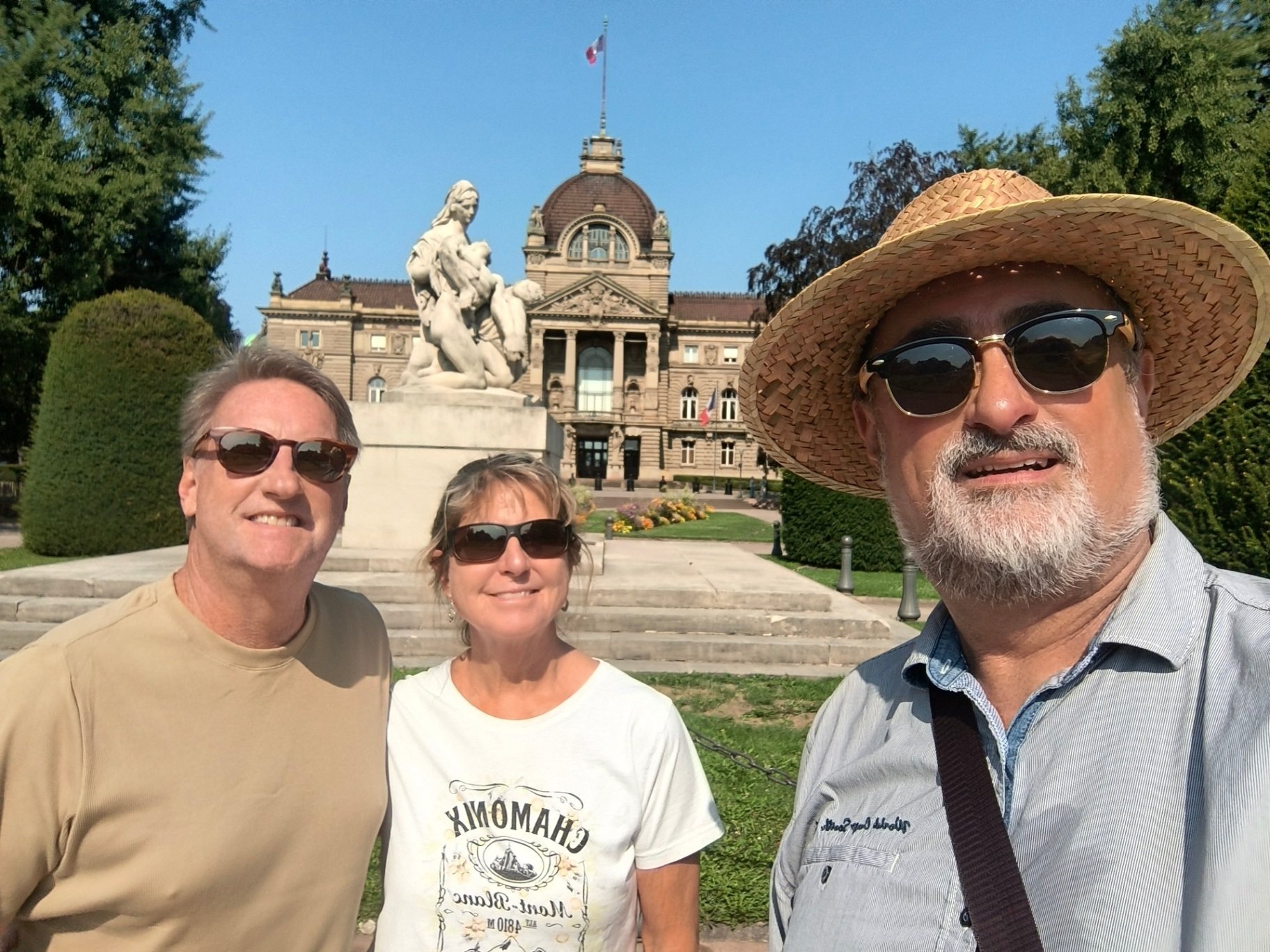
A map gets you between squares. It does not tell you which chalet is run by the family who has held that pitch for thirty years, which street the locals cut down to skip the crush on Rue des Grandes Arcades, or what their grandmother put in her bredele.
Lokafy pairs you with a Strasbourg local for a private, personalised walk built around what you want to see. Not a scripted tour with a numbered flag, just a few hours with someone who knows the city and is happy to show you their version of it. Our Lokafyers take visitors to the producer stalls they buy from themselves, the bars that make good mulled wine, and the corners of the Grande Île that never appear on a day-trip itinerary. Book a walk in Strasbourg and see the Christmas market from the inside.
Frequently Asked Questions
Can you see the Strasbourg Christmas market in one day? Yes. All eight official markets sit inside the Grande Île, which takes about twenty minutes to cross on foot. A single full day from morning to 9pm covers every square with time for the cathedral, a sit-down meal, and the Grand Sapin lighting. Two days is more relaxed, but one day works.
What is the best time of day to visit the Strasbourg Christmas market? Late afternoon into the evening, from around 4pm when the Grand Sapin lights up until the chalets close at 9pm. Arrive in the city earlier and use the 9am to 11:30am window, before the stalls open, for the cathedral and Petite France.
What day of the week is least busy? Any weekday, particularly Monday through Thursday in the first two weeks of December. Saturdays are the busiest by a wide margin, followed by Sundays and the run-up to Christmas Eve.
Is the Strasbourg Christmas market free? Yes. Entry to all the markets is free. You pay only for food, drink, and shopping, plus optional paid attractions like the cathedral tower platform and the astronomical clock show.
What time do the Strasbourg Christmas markets open and close? Stalls generally run 11:30am to 9pm daily through the season, with an earlier close on 24 December. The markets do not reopen after Christmas Eve, though the city illuminations stay lit into early January.
How many Christmas markets are there in Strasbourg? Eight official markets, spread across Place Broglie, Place Kléber, Place de la Cathédrale and Place du Château, Places Benjamin Zix and Saint-Thomas in Petite France, the Terrasse Rohan and Place du Marché-aux-Poissons, Square Louise Weiss, Place du Temple Neuf, and Place Grimmeissen for the Marché OFF.
Where should I eat near the Strasbourg Christmas market? Book a winstub in advance. Au Pont Corbeau on Quai Saint-Nicolas, Le Clou on Rue du Chaudron, and Chez Yvonne on Rue du Sanglier are long-standing Alsatian tables in the centre. For market food, eat the baguette flambée at lunchtime and stick to spaetzle or knacks in the evening.
Is the Strasbourg Christmas market worth visiting? It is the oldest Christmas market in France, running since 1570, and it turns an entire UNESCO-listed island into a month-long event rather than a fenced-off attraction. The crowds and the December prices are real. Come on a weekday, plan your route, and it earns the reputation.
Enjoyed this article?