I came to Sofia with a metro map open on my phone and barely used it. My first morning, I walked from a fourth-century Roman church to a 1913 bathhouse where people were filling plastic bottles with hot spring water, and the whole stretch took under fifteen minutes. Sofia stacks two thousand years of buildings into a centre you can cross in half an hour, which makes it one of the easiest capitals in Europe to understand on foot. This guide gives you the route, the timings, the food stops, and the practical details that changed in 2026.
Quick Guide: Walking Sofia
- Primary recommendation: Start at Serdika metro station and walk the central loop counter-clockwise.
- Top choice for history: The Ancient Serdica complex, open air and free, twenty-four hours a day.
- Value pick: Banski Square.
- Best food stop: Central Market Hall.
- The best way to see the city: Take a private, personalised walking experience with Lokafy in Sofia and see the neighbourhoods, markets, and family-run kitchens a local would take you to.
Why Sofia works so well on foot
Three things make walking the right call here.
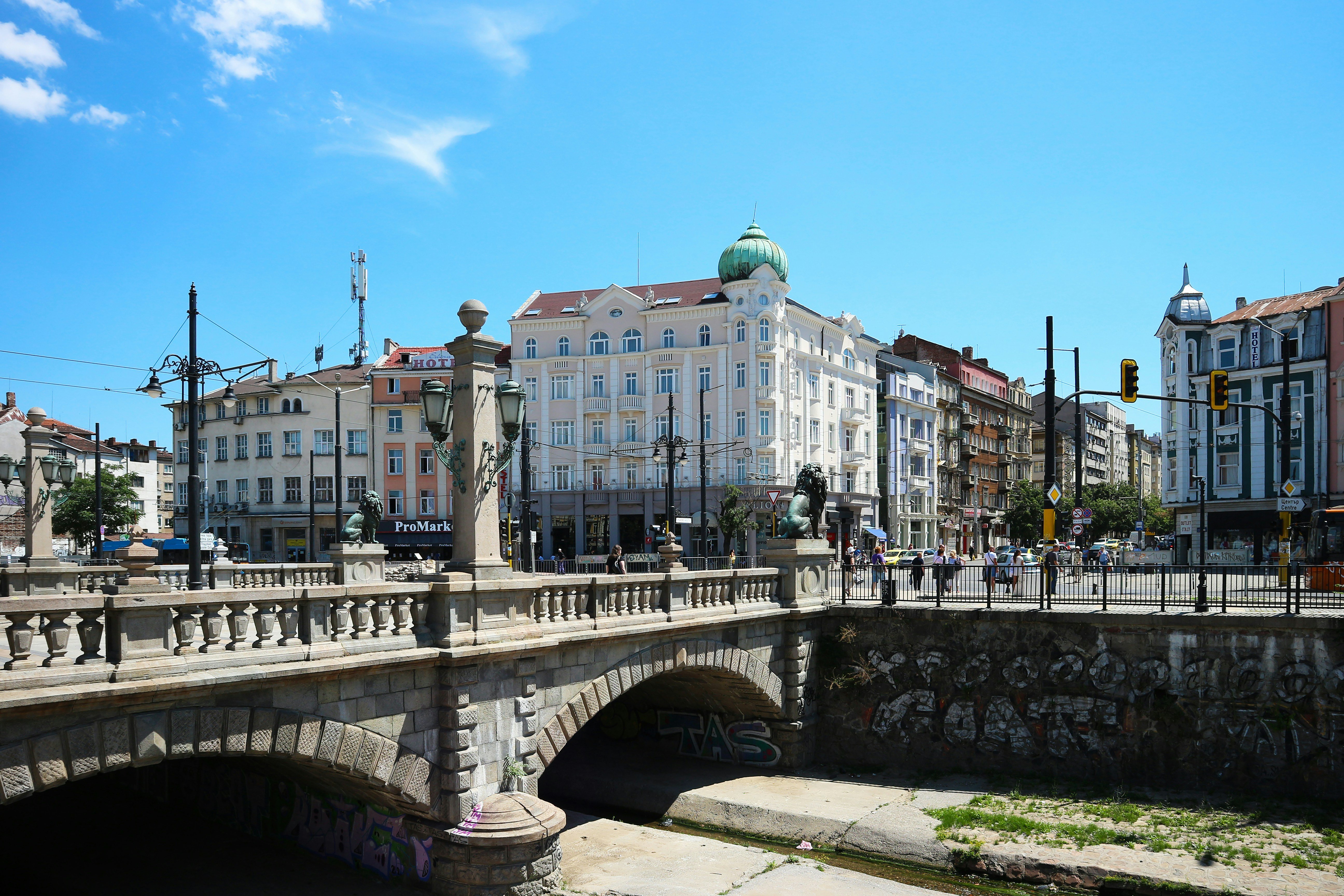
The first is scale. Sofia's historic core sits inside a rough square about a kilometre across, bounded by the National Palace of Culture in the south, Sofia University in the east, the Lions' Bridge area in the north, and Vitosha Boulevard down the western side. Almost every landmark visitors come for sits inside that square.
The second is the ground itself. Central Sofia is flat. There is no hill to climb between sights, no river to detour around, and long stretches of the route are pedestrianised, including Vitosha Boulevard and much of the area around the Largo.
The third is density of eras. In a single block you get Roman brickwork, an Ottoman mosque, a Sephardic synagogue, a Stalinist government complex, and a golden-domed Orthodox cathedral. Sofia is the sort of city where the layers sit next to each other rather than in separate districts, so walking is the only way the sequence makes sense.
When your legs give out, the metro is right there. Four lines, around fifty stations, and a flat fare of €0.80 per ride.
The Sofia walking route, stop by stop
Give this three to four hours at an unhurried pace. Start at Serdika metro station, which is where the old city and the modern one meet.
1. Serdika and the Ancient Serdica complex (30 minutes)
Come up from the metro and you are standing on top of Roman Serdica, the city Emperor Constantine liked enough to call his Rome. The excavations are exposed in an open-air complex around the station, with original paved streets, drainage channels, and the foundations of houses set below the modern pavement. Access is free and unrestricted, and the underpasses double as a museum you walk through on your way somewhere else.
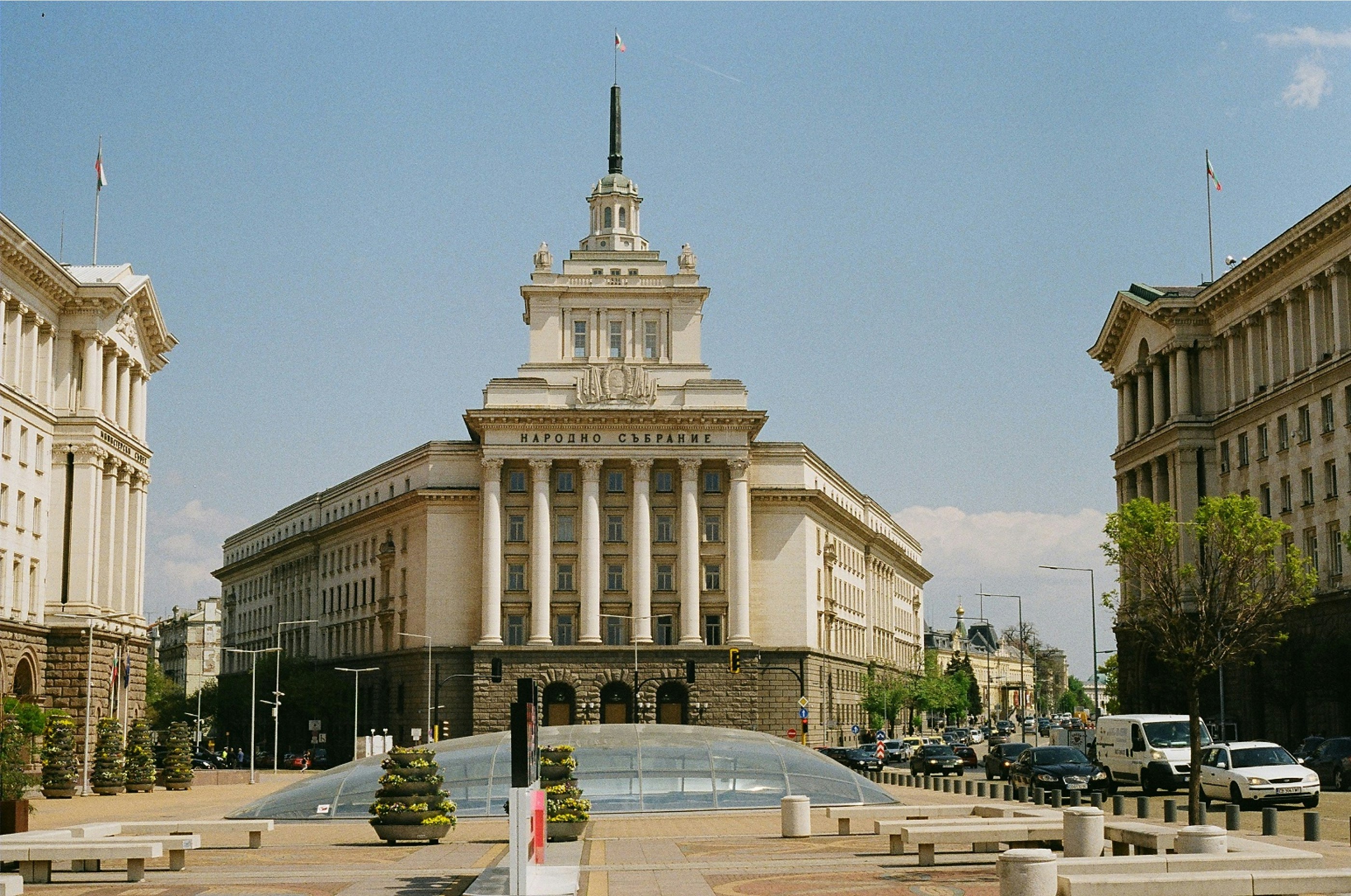
Above ground stands the Largo, the monumental government complex built in the 1950s, with the former Communist Party headquarters at its centre. Look for the sunken medieval Church of St Petka of the Saddlers, half swallowed by the plaza around it.
2. Rotunda of St George (15 minutes)
Duck into the courtyard behind the Presidency building and you find a small round church of red brick from the fourth century, the oldest building in Sofia. Inside are layers of medieval frescoes painted over each other across several centuries. Entry is free outside service times.
On your way in or out, look at the two guards at the Presidency entrance. The sentries change hourly on the hour on weekdays, in nineteenth-century uniforms, and the ceremony takes about five minutes.
3. Sveta Nedelya Church (10 minutes)
Back out to the main square and across to Sveta Nedelya, the domed cathedral that anchors the western end of the centre. It has been rebuilt repeatedly, most recently after a bombing in 1925, and the interior is dark, heavily painted, and usually busy with people lighting candles.
4. Banya Bashi Mosque, the mineral springs, and the synagogue (30 minutes)
Walk north on Maria Luisa Boulevard and you reach the stretch locals call the square of tolerance, where a mosque, a synagogue, an Orthodox cathedral, and a Catholic church all stand within roughly three hundred metres of each other.
Banya Bashi Mosque dates from the sixteenth century and is still in use. Directly behind it is the yellow-and-red former Central Mineral Baths, finished in 1913 and now the Sofia History Museum. You cannot bathe there anymore, but the public taps on Banski Square outside run free hot mineral water pulled from springs beneath the city, and there is almost always a queue of people with five-litre bottles. The water is warm, faintly sulphurous, and safe to drink.
Sofia Synagogue, a couple of minutes west, is the largest Sephardic synagogue in southeastern Europe, consecrated in 1909, with a brass chandelier hanging under a painted dome.
5. Central Market Hall and Zhenski Pazar (45 minutes, food stop)
Halite, the covered market hall from 1911, sits opposite the mosque. The ground floor is where you want to be: bakeries, delis selling white brine cheese and cured meats, and counters doing hot food by the portion.
Two minutes further north is Zhenski Pazar, the open-air market that has been trading since the 1870s. This is the least polished part of the walk and the most useful one. Produce stalls, spice sellers, honey, pickles, and bakeries turning out banitsa and gevrek. Come before noon, when it is busiest.
6. St Sofia Basilica and Alexander Nevsky (45 minutes)

Head east on Ekzarh Yosif and cut through to the Basilica of St Sofia, the sixth-century church that gave the city its name. Outside is the Monument to the Unknown Soldier with an eternal flame and a stone lion. Underneath the church is a Roman necropolis with tombs and mosaic floors, which costs a few euros to enter and takes about twenty minutes.
Next door is the building most people picture when they think of Sofia. Alexander Nevsky Cathedral was built between 1882 and 1912 in neo-Byzantine style, and its gold-leaf central dome is visible from most of the city centre. The main nave is free to enter. The crypt below holds one of Europe's great collections of Orthodox icons, some dating to the ninth century, for a small separate ticket. Cover shoulders and knees.
On the square outside, an open-air antiques market sells Soviet-era medals, old cameras, enamel signs, and icons of varying honesty. Haggling is expected.
7. Tsar Osvoboditel and the yellow cobbles (20 minutes)
Walk south-west down Tsar Osvoboditel Boulevard and the road surface changes to small yellow ceramic bricks, imported from Austria-Hungary around 1907 and now one of Sofia's signature details. Along this stretch you pass the Russian Church of St Nikolai with its gold onion domes, the National Assembly, and Sofia University.
The Doctor's Garden, a small park north of the university, is a good place to sit for ten minutes. It surrounds a memorial to medical staff killed in the Russo-Turkish War of 1877 to 1878.
8. City Garden, the theatre, and Vitosha Boulevard (30 minutes)
Cut back west into the City Garden, where the Ivan Vazov National Theatre from 1907 stands behind a fountain and rows of benches occupied by chess players most afternoons.
From there it is a short walk to Vitosha Boulevard, the pedestrian street that runs south towards the mountain. Its main asset is the view: on a clear day the boulevard frames Vitosha rising 2,290 metres at its end. Walk it to the National Palace of Culture, sit in the park, and call the loop finished.
Where to eat along the route
Sofia is inexpensive by European standards, and the best food on this walk costs very little.
Start with banitsa, the coiled filo pastry filled with white cheese and eggs, sold by weight at bakeries from around 5am. Small dedicated banitsa shops around the centre often run cash only and sell out by mid-morning, so treat it as breakfast rather than lunch. Ask for it with a cup of boza, the thick fermented wheat drink that Bulgarians either love or refuse to discuss.
For a second breakfast, mekitsa is fried yogurt dough, crisp outside and soft in the middle, served with cheese, honey, or jam. There is a small, popular place on Graf Ignatiev built entirely around it, close to the Doctor's Garden end of the route. Seating is limited, so most people take theirs to a bench in the park.
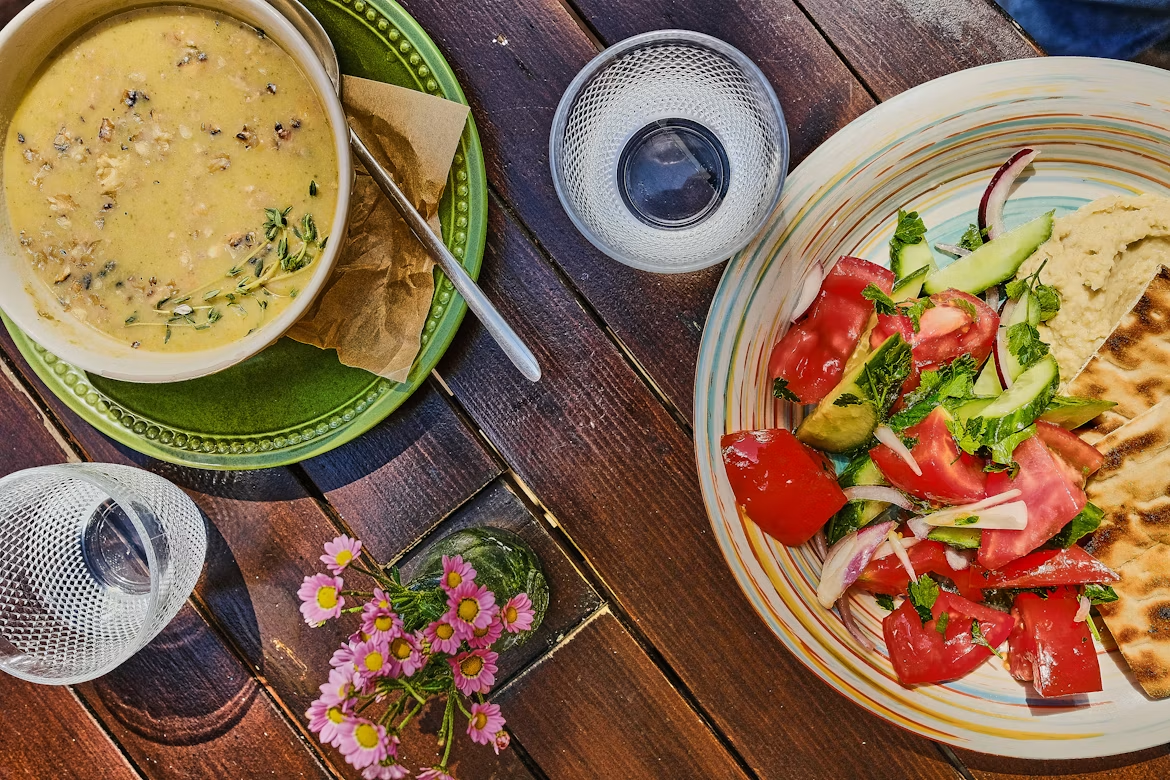
At lunch, the Halite ground floor and the Zhenski Pazar stalls handle it cheaply. If you want a proper sit-down Bulgarian meal, order shopska salad, tomatoes and cucumbers under a snowdrift of grated white cheese, and a plate of grilled meat. Ask for ayran, salted drinking yogurt, which does more against a Sofia summer afternoon than any soft drink.
A local habit worth copying: dinner starts late. Restaurants fill up around 8pm and stay busy well past 10pm.
Timing your walk
Best time of day. Start between 8am and 9am. The Roman ruins and Alexander Nevsky are close to empty, the market is at its freshest, and you finish on Vitosha Boulevard in the early afternoon.
Best time of year. May, June, September, and early October are the sweet spots. July and August regularly push past 32°C and central Sofia has limited shade. Winter is cold and often grey, though the mineral taps are at their best when the steam is visible from across the square.
How long you need. Three hours if you walk it briskly and skip interiors. Four to five if you go into the crypt, the necropolis, and the market.
What to know before you set off in 2026
- Currency. Bulgaria joined the euro on 1 January 2026, and since 1 February the euro has been the only legal tender. The mandatory dual display of prices in lev ended on 8 August 2026, so expect euro-only price tags. The old fixed rate was 1.95583 lev to the euro, useful if you are reading an older menu or guidebook.
- Transport. A single ride on metro, bus, tram, or trolleybus is €0.80. Tap a contactless card or phone at the blue validators and the system caps your daily spend at €2.00. The M4 line runs from the airport to the centre in about 25 minutes for the same flat fare.
- Taxis. There is no Uber in Sofia. Use the TaxiMe app or Yellow Taxi and avoid unmarked cars waiting outside stations.
- Water. Sofia tap water is safe and good. The mineral taps at Banski Square are free and open all day.
- Shoes. The centre is flat but the surfaces are not smooth. Yellow ceramic cobbles turn slick in rain, and market lanes are uneven.
- Dress code. Shoulders and knees covered in churches and the mosque. Scarves are sometimes available at entrances, though carrying your own is more reliable.
- Safety. Central Sofia is comfortable to walk at night, including alone. Standard city sense applies around Zhenski Pazar and the underpasses after dark.
Two half-day walks beyond the centre
Vitosha Mountain. The mountain is inside the city boundary, which very few European capitals can claim. Take the metro to Vitosha station at Hladilnika, then a bus up towards Aleko. Weekend service is more frequent than weekday service and schedules shift seasonally, so check a live transport app the morning you go. At the top there are marked trails, a stone run of enormous boulders known as the Golden Bridges, and views back over the whole city.
Boyana Church. A UNESCO site at the foot of Vitosha, small enough that entry runs in timed groups of about ten minutes. The 1259 frescoes inside are the reason to come, painted with a realism that predates the Italian Renaissance by decades. Combine it with the National History Museum next door.
See Sofia the way locals walk it
A self-guided route gets you the buildings. It does not get you the reasons: why the antiques market sells what it sells, which bakery the neighbourhood queues at, what happened on the square you are standing on in 1989, or where people eat once the tourists head back to Vitosha Boulevard.
Take a private, personalised walking experience with Lokafy in Sofia and you walk with a resident rather than a script. Your Lokafyer shapes the route around what you want, food, history, markets, architecture, or the parts of the city that never make a list, and you get the running commentary that turns a set of landmarks into a place you understand. It is a conversation with someone who lives there, not a lecture delivered to a group.
Frequently asked questions
Is Sofia walkable? Yes. Sofia's historic centre is compact, flat, and largely pedestrianised. Almost all the major sights sit within a kilometre of Serdika metro station, and the full central loop is around 4 km.
How long does a Sofia walking tour take? Three to four hours covers the central loop with short stops. Add an hour if you enter the Alexander Nevsky crypt and the necropolis under St Sofia Basilica.
Can you see Sofia in one day on foot? Comfortably. A morning covers the Roman ruins, the mosque, the mineral springs, the market, and both cathedrals. An afternoon leaves room for Vitosha Boulevard, the City Garden, and the National Palace of Culture park.
What currency do I need in Sofia in 2026? Euros. Bulgaria adopted the euro on 1 January 2026 and it has been the sole legal tender since 1 February 2026. Cards are widely accepted, though small bakeries and market stalls are often cash only.
Is it safe to walk around Sofia at night? Central Sofia is generally safe after dark and well used in the evenings. Take the usual precautions in quieter underpasses and around markets once the stalls close.
Do I have to pay to enter Sofia's main sights? Most of the highlights are free, including the Ancient Serdica ruins, the Rotunda of St George, and the main nave of Alexander Nevsky Cathedral. The cathedral crypt museum and the necropolis under St Sofia Basilica each charge a few euros.
What is the best time of year for a walking tour of Sofia? Late spring and early autumn. May, June, September, and early October give you mild temperatures and long daylight without the summer heat that pushes past 32°C in July and August.
Where should a Sofia walking tour start? Serdika metro station. It sits on the boundary between Roman Serdica and modern Sofia, it is a metro interchange, and everything on this route radiates out from it.
Enjoyed this article?