I had Trenčín filed away for years as a name on a train timetable, the place the Bratislava to Žilina line passes through while you finish your coffee. Then a friend told me the town was going to be a European Capital of Culture, and that there is a Roman inscription carved into the cliff behind a hotel staircase, and I felt a bit foolish for all the times I stayed on the train. Trenčín is small enough to walk end to end in twenty minutes and old enough to have been written about by Roman soldiers in the year 179. In 2026 it is also one of the two cities carrying Europe's biggest cultural title, and the whole town is behaving accordingly.
Quick Guide: Trenčín
- Primary recommendation: Trenčín Castle. Adult tickets start at 10 euros for the self-guided Small Circuit, 12 euros for the guided Great Circuit, and the castle is open daily from 9:00.
- Top choice for history: The Roman rock inscription from AD 179, the northernmost of its kind, visible only from inside Hotel Elizabeth. Take the lift to the first floor and follow the signs. Entry is free.
- Top choice for food: Breakfast at Clock or KAVart, then a set lunch menu anywhere in the centre for roughly 7 to 10 euros. For old-school Slovak home cooking, locals point to Hostinec u Ondreja.
- Value pick: Brezina forest park and the Cherry Orchard above the castle. A proper forest with fire pits and viewpoints, five minutes uphill from the main square, and it costs nothing.
- Best timing in 2026: The European Capital of Culture programme runs all year, with the Fiesta Bridge over the River Váh due to be finished around the end of September.
- The best way to see the city: Take a private, personalized walking experience with Lokafy in Trenčín and discover the town's courtyards, forest paths and lunch spots with a local.
Why Trenčín Matters in 2026
Trenčín was designated European Capital of Culture back in December 2021, and shares the 2026 title with Oulu in Finland. The motto the city chose is "Awakening Curiosity", which is a bigger idea than it first sounds: the project is as much about reviving unused buildings and public spaces as it is about concerts.
The year opened with a three-day weekend from 13 to 15 February, more than a hundred events across the city and its outer districts, a carnival parade, light installations and a Festival of Local Flavours. The summer that followed brought close to a hundred more events under the banner of the European Summer of Culture, from an exhibition of 17 artists and artist groups from 12 European countries to community breakfasts on ordinary residential streets.
Two things make this interesting for a visitor arriving now rather than in February. First, the programme is still running, and the autumn is when several of the big renovation projects land. The County House, one of the most significant heritage buildings in town, reopened in August to host a major international exhibition. Second, prices and crowds have not caught up with the title. This is a Slovak regional city of around 55,000 people, not a capital, and it is still priced like one.
Trenčín Castle: What It Costs and How Long You Need
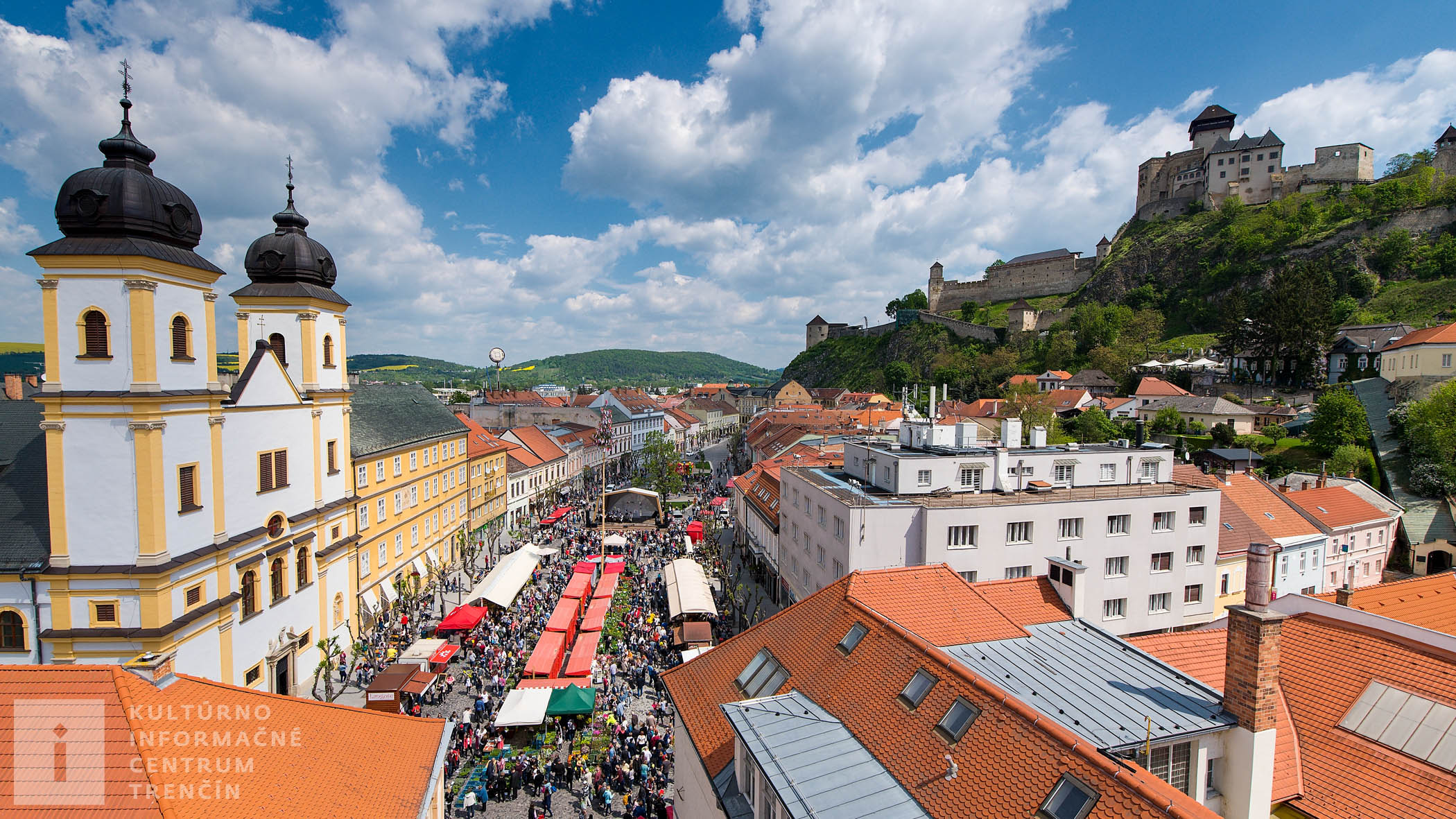
The castle sits on a limestone crag directly above the old town, which means you cannot drive to it. You walk up through the pedestrian zone, and the climb takes about ten minutes at a normal pace.
There are three ways in, and the difference matters more than most people realise:
- Small Circuit, no guide, 10 euros. Not tied to a time slot. Covers the barracks and its current exhibitions, the lower courtyard, the Well of Love, the dungeon, Ľudovít's Palace, Matúš Tower, the chapel and the whole southern fortification. Give it two hours if you want to read the panels and drink a coffee at the castle café.
- Great Circuit, with a guide, 12 euros. Includes everything above plus a 60-minute guided walk up to the upper castle, the rotunda, Barbora's Palace and the lapidarium. Tours run to fixed times and cap at 50 people. The walk starts at the Well of Love on the lower castle, and staff ask you to arrive around 20 minutes early because the climb to the meeting point takes time.
- Castle exteriors, 3 euros. Sold in the final hour before closing. You get the lower courtyard and the view over the town, the Váh and the mountains behind it. This is the sunset option and the cheapest good decision in Trenčín.
Reduced rates apply for students and pensioners at 8 and 9 euros, children aged 7 to 18 pay 4 or 5 euros, and under-sixes go free. Opening is daily from 9:00 to 18:30 in the main season, with the grounds clearing at 19:00 and the last Small Circuit entry at 17:30. Winter closing drops to 15:30, so check before you plan a late afternoon in November. Your castle ticket also opens the other branches of the Trenčín Museum under the combined-ticket terms, which is worth knowing if you plan to stay two days.
One practical detail: the southern entrance from Brezina forest park has a lot of narrow steps and is not passable with a pushchair. Use the town-side ticket office instead.
The Roman Inscription Hidden Behind a Hotel Staircase
This is the detail I would lead with if I were selling Trenčín to a sceptic. Carved into the castle rock in AD 179, on the orders of the legate Marcus Valerius Maximianus, is a Latin inscription recording the victory of 855 soldiers of the Second Legion who wintered at a place the Romans called Laugaricio. It is the most important Roman epigraphic monument preserved in place north of the Danube in central Europe, and it names Trenčín roughly 1,600 years before most European towns had anything written down about them.
The rock is now hemmed in by buildings, so there is exactly one place to see it: inside Hotel Elizabeth, the Art Nouveau hotel at the start of Mierové námestie that was built against the cliff in 1902. Go in through the main entrance, take the lift to the first floor, turn left and follow the signs to the viewing window. Admission is free and the hotel is used to people wandering in for it. The inscription is also visible from the hotel's restaurant and terrace if you would rather look at it over lunch.
It was rediscovered in 1852, when a storm brought down a tree behind the inn that stood on the site before the hotel. That is a very Trenčín kind of story.
Mierové Námestie and the Old Town
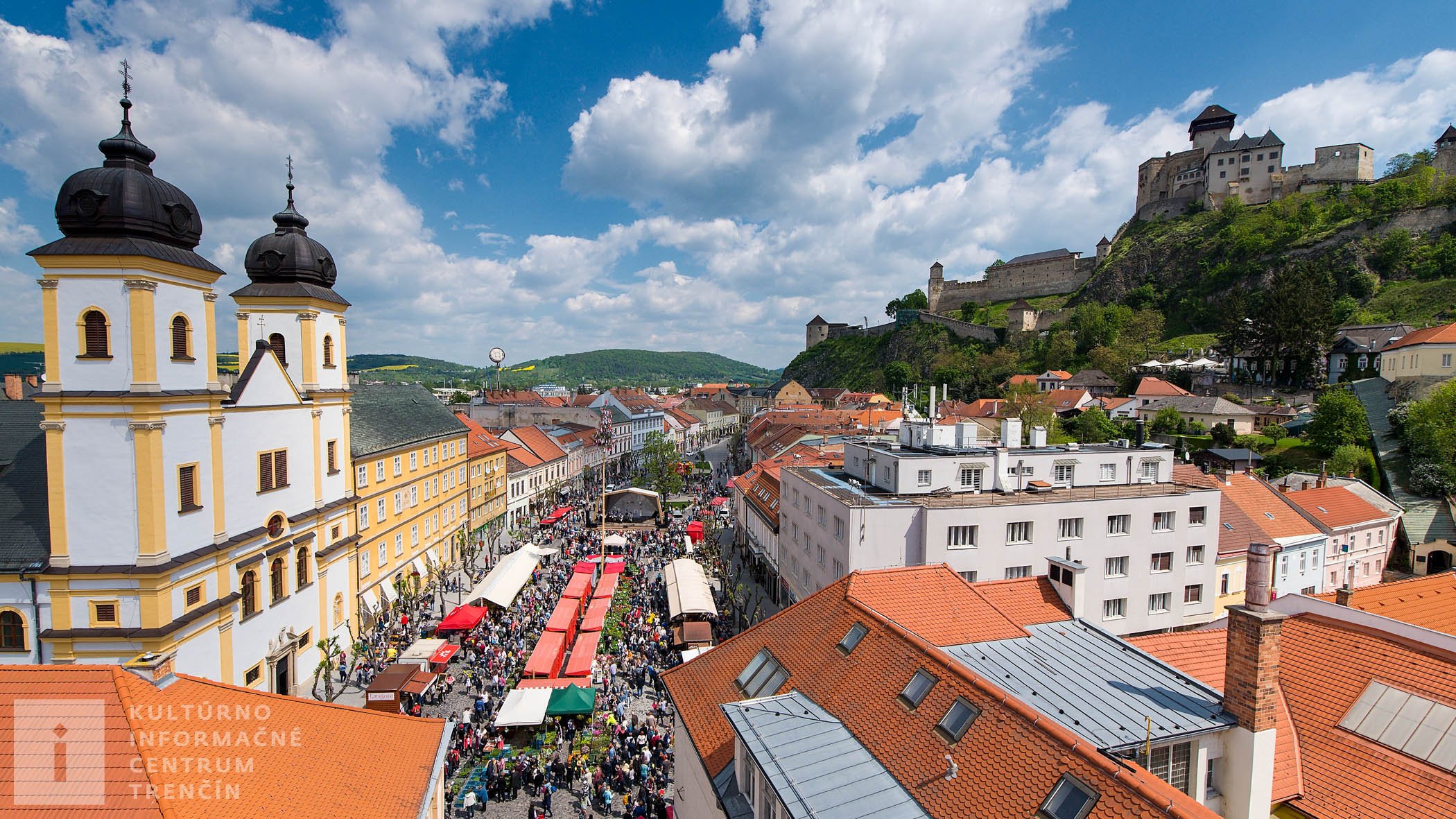
The main square is long, narrow and lined with pastel façades, with the castle rock closing off one end. The pedestrian zone was rebuilt recently and is currently up for a Slovak architecture award, and you can feel the difference in how people use it. Late afternoon, the terraces fill and stay full.
Worth twenty minutes each: the covered staircase climbing from the square to the Parish Church, which frames the castle beautifully from halfway up; the Piarist church on the square; and the Executioner's House, one of the small Trenčín Museum branches your castle ticket covers.
Where Locals Eat, According to Locals
When someone asked the Trenčania Facebook group where to get a good breakfast in town, three names came back again and again: Clock, KAVart and Café Sládkovič, the last of which once placed second in a national ranking of Slovak cafés. Other regulars in the thread: Pražiarnička on Štúrovo námestie for coffee people take seriously, Cukráreň Mišák for sweet and savoury both, and Lary Fary on the main square for pancakes and desserts.
For lunch, do what everyone here does and eat the denné menu, the weekday set lunch. A regional survey of daily menus in February 2026 found Trenčín prices running roughly 7.40 to 10.40 euros, with Čarodej at the lower end and Speranza offering everything from segedín goulash to steak. Two courses for the price of a sandwich in most European capitals.
When a different thread in the same group went looking for honest Slovak home cooking with nothing pre-made, the answers clustered around Hostinec u Ondreja, praised specifically for its sausage and fried cheese, followed by Babičkina kuchyňa across the bridges, U Zaja in the Sihoť neighbourhood and Kyselka in Kubrá. Several people mentioned the bistro attached to the Gašparík butcher's shop as the best value meal in town. If you want fried cheese, goulash with dumplings and grilled sausage in one sitting, those are the addresses locals give each other, not the ones on the tourist maps.
The Forest Above the Town
Trenčín's best free thing is a forest. Brezina forest park runs along the ridge behind the castle and starts a few minutes' walk from the square. The hill was bare pasture in the 19th century until the local archivist and priest Ľudovít Bonaventúra Stárek, the same man who identified the Roman inscription, began planting it. Birches took first, which is where the name comes from.
Two spots to aim for. The Čerešňový sad, or Cherry Orchard, sits on the slope south of the castle and is dotted with wooden shelters and fire pits, which is what Slovak families do with a Saturday. From there, steps lead down to the Memorial to the Tortured, and the path carries on along the ridge. The Štefánik viewpoint, on top of the Sokolice crags, looks out over the Pod Sokolice and Sihoť districts with the Skalka massif rising on the far side of the river.
If the climb does not appeal, the red Matúš Čák tourist train loops from the centre through Brezina and the Cherry Orchard up to the castle's southern fortification.
Two Day Trips Worth the Bus Fare
Skalka nad Váhom, a few kilometres towards Nemšová, is the oldest pilgrimage site in Slovakia and in the whole of the former Kingdom of Hungary. It comes in two parts: Malá Skalka, with a baroque church from 1745 perched on a limestone outcrop that mirrors the castle rock, and Veľká Skalka, the reconstructed ruins of a Benedictine monastery founded in the 12th century, with the cave where the hermits Svorad and Benedict lived. The big pilgrimage falls on the weekend after 17 July each year.
Trenčianske Teplice, one of the oldest spa towns in the country, is the other easy escape. Getting there is half the appeal if your timing is right: a narrow-gauge electric railway, opened in 1909 and 5.5 kilometres long, runs from Trenčianska Teplá up to the spa town. In 2026 the regular service operated on weekends and public holidays from 1 May to 30 August, so outside that window you will be taking a bus instead. Check the operator's current timetable before building a day around it.
Two Days in Trenčín
Day one. Breakfast at KAVart or Clock. Walk the main square, then into Hotel Elizabeth for the Roman inscription. Climb to the castle around 11:00 for the guided Great Circuit. Come down for a late set lunch. Spend the afternoon in Brezina and the Cherry Orchard, and finish with the 3 euro castle exteriors ticket in the last hour before closing, which puts you on the lower courtyard at sunset.
Day two. Coffee at Pražiarnička, then the current Capital of Culture exhibitions, which in the second half of 2026 include the reopened County House. Lunch at Hostinec u Ondreja or the Gašparík bistro. Afternoon bus to Skalka nad Váhom, or the river path and the Váh embankment if you would rather stay put. Evening on a terrace on Mierové námestie.
Getting There, and When to Come
Trenčín sits on the main Bratislava to Žilina line, about 108 kilometres from the capital. Direct trains run several times an hour and take somewhere between 1 hour 20 minutes and 1 hour 40 depending on the service, with one-way fares typically under 10 euros. Both the national operator and RegioJet serve the route. Trains through the region had planned engineering works and altered timetables from September 2026, so check the day before you travel. A direct bus link to the Czech Republic started running four times daily at the end of August 2026, and regional bus timetables were also reworked from September to connect better with trains.
On timing: the Capital of Culture programme runs to the end of December, and the last quarter includes an outdoor exhibition of architectural models exploring the region's brutalist buildings, along with the September events around the new bridge. The 40th edition of the city's own festival, Pri Trenčianskej bráne, filled Mierové námestie from 4 to 6 September 2026 with a craft market, folk ensembles, burčiak and concerts, including the Finnish trio Oulun Keskusta in a nod to Trenčín's twin Capital of Culture.
One honest note about the Fiesta Bridge, the converted 1883 railway bridge that is the flagship project of the year. It is being turned into a promenade with gardens, rooftop terraces, five small businesses, climbing walls and a floating stage nearby, at a cost of over 10 million euros. The work ran late, partly because of nesting swallows and river-adjacent environmental rules. In late August 2026 the city's spokesperson said construction should finish around the end of September, with the cycle and pedestrian walkway likely opening first. If you are coming in the autumn, treat it as a possible bonus rather than a fixed plan.
See Trenčín With Someone Who Lives There

Trenčín rewards the kind of knowledge that does not fit on a map. Which lunch spot stops serving at 14:00. Which path through Brezina gets you to the viewpoint without the steep bit. Which of the Capital of Culture events are worth rearranging your day for and which are aimed squarely at locals.
The best way to see the city is to take a private, personalized walking experience withLokafy in Trenčín and spend a few hours with someone who lives there, walking their town at their pace, eating where they eat and hearing the version of the story you cannot get from a plaque.
Frequently Asked Questions
Is Trenčín worth visiting? Yes, especially in 2026. Trenčín has one of Slovakia's best-preserved castles, the most important Roman inscription north of the Danube in central Europe, a forest park inside the city, and a year-long European Capital of Culture programme, all in a town small enough to cover on foot.
Why is Trenčín the European Capital of Culture in 2026? Trenčín was chosen in December 2021 and holds the title for 2026 alongside Oulu in Finland. Its programme runs under the motto "Awakening Curiosity" and combines contemporary art, community projects and the renovation of unused public spaces, funded by the city, the Trenčín Self-Governing Region and the Slovak Ministry of Culture, with support from the European Union.
How do you get from Bratislava to Trenčín? By direct train from Bratislava hlavná stanica. The journey covers 108 kilometres and takes roughly 1 hour 20 minutes to 1 hour 40, with departures several times an hour and one-way fares usually under 10 euros. Both the Slovak national railway and RegioJet run the route.
How much are Trenčín Castle tickets? Adult tickets are 10 euros for the self-guided Small Circuit and 12 euros for the guided Great Circuit, which adds a 60-minute tour of the upper castle. A 3 euro exteriors ticket is sold in the final hour before closing. Students and pensioners pay 8 or 9 euros, children aged 7 to 18 pay 4 or 5 euros, and children under 6 enter free.
Where can you see the Roman inscription in Trenčín? Inside Hotel Elizabeth on Mierové námestie. Enter through the main door, take the lift to the first floor and follow the signs to the viewing window. Entry is free, and the inscription can also be seen from the hotel restaurant and terrace. The carving dates to AD 179 and records 855 soldiers of the Second Legion wintering at Laugaricio.
Is one day enough in Trenčín? One day covers the castle, the main square and the Roman inscription comfortably. Two days lets you add Brezina forest park, a proper lunch, the Capital of Culture exhibitions and a trip out to Skalka nad Váhom or the Trenčianske Teplice spa town.
How expensive is Trenčín? Cheaper than Bratislava. Weekday set lunch menus in the city centre ran between roughly 7.40 and 10.40 euros in early 2026, castle entry starts at 10 euros, the forest park is free, and the train from the capital costs under 10 euros each way.
Enjoyed this article?