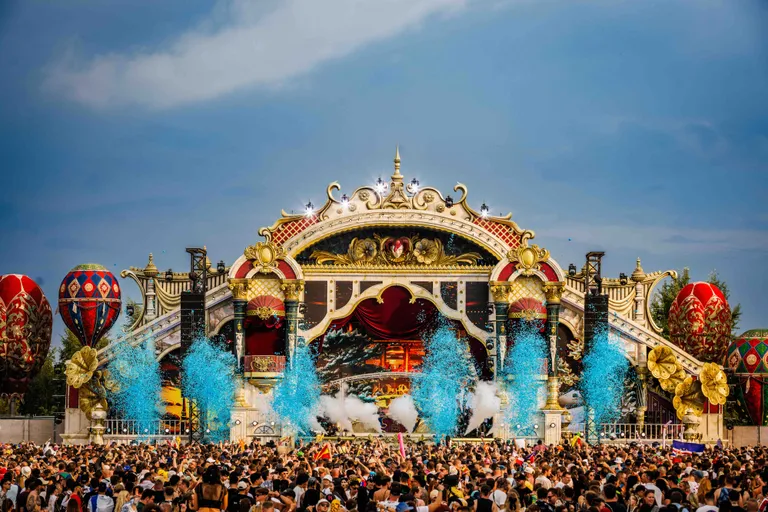
Every July, over 400,000 people from more than 200 countries travel to a small town in Belgium called Boom. They come for one thing: Tomorrowland, the world's most watched, most talked-about electronic music festival, and for the fifth consecutive year, voted number one on earth. For those few days, De Schorre park becomes another planet entirely.
Then, for most of those 400,000 people, the weekend ends and they go home. Many will have eaten overpriced pizza inside the festival grounds, slept in DreamVille, and left Belgium without so much as setting foot in Antwerp, 17 kilometres up the road.
That's the strangest paradox in modern travel: one of the most international events on the planet, sitting in the middle of one of Europe's most underrated countries, and most visitors never actually explore it.
If you're heading to Tomorrowland 2026, the CONSCIENCIA edition, running July 17–19 and July 24–26 in Boom, here's how to build the full Belgian trip around it.
Quick Guide: Belgium for Tomorrowland 2026
Primary recommendation: Base yourself in Antwerp. It's 30 minutes from Boom by train, culturally rich, and gives you the best of Belgium in a walkable city.
Top choice for culture: Antwerp's Het Zuid neighbourhood for art, food, and architecture, a 10-minute walk from Central Station.
Top choice for day trips: Ghent for food lovers and street art; Brussels for arrivals and departures.
Value pick: Book accommodation in Antwerp early. With Tomorrowland's new official hotel at Van der Valk Park Lane Antwerp, the city fills up months in advance for July weekends.
The Lokafy angle: A private walking tour with a local Lokafyer in Antwerp or Brussels turns a music trip into something you'll still be talking about next year.
The Festival Itself: What You Need to Know for 2026
Before getting to the cities, a few confirmed facts about CONSCIENCIA that matter for trip planning.
The 2026 theme, Consciencia, Portuguese for "conscience", frames a universe built around six core emotions: love, anger, joy, wonder, desire, and sadness. It's philosophical by Tomorrowland standards, and the stage design and storytelling will reflect that.
Dates are fixed: Weekend 1 is July 17–19, Weekend 2 is July 24–26. The festival site is De Schorre recreational park in Boom, in the province of Antwerp, positioned halfway between Antwerp and Brussels.
The 2026 lineup includes Calvin Harris making his first-ever appearance at Tomorrowland Belgium, alongside David Guetta, Martin Garrix, Hardwell, Dimitri Vegas & Like Mike, Sebastian Ingrosso, The Chainsmokers, and Lost Frequencies. That's a significant year for first-timers.
On the logistics side, 2026 introduces a Tomorrowland Party Train running directly from Paris, expanded Youth Packages, and the inaugural Tomorrowland Experience Hotel at Van der Valk Park Lane in Antwerp.
One transport note worth repeating from every veteran attendee: late trains back from Boom are unreliable after midnight. If you plan to stay offsite and rely on trains, either leave a bit early or secure a shuttle in advance. Official Tomorrowland shuttles depart around noon to the festival and return around 1 AM. Plan your accommodation around that reality.
Now, to the actual reason you should extend your stay.
Antwerp: The Perfect Base
Why Locals Love It (and Tourists Miss It)
Antwerp is Belgium's second city, but it doesn't feel like a runner-up. It has the country's most interesting food scene, a fashion pedigree that extends to the Royal Academy of Fine Arts, where the famous "Antwerp Six" designers trained, and a port history that shaped half of European commerce.
Trains from Antwerp Central to Boom run every 30 minutes and take about 32 minutes. You can watch an hour of the headliner and still be back in time for a late dinner on Kammenstraat. No other city offers that combination.
A 2-Day Antwerp Itinerary Around the Festival
Day 1, Arrive, Orient, Eat Like a Local
Start at Antwerp Central Station, not because it's on the tourist route, but because it's architecturally one of the most remarkable train stations in Europe and the only logical entry point. Take five minutes to look up. Then walk down to the Grote Markt, the historic city square roughly 1 kilometre southwest of the station.
From the Grote Markt, cut through to Vlaeykensgang, a hidden medieval alleyway tucked between Oude Koornmarkt and Pelgrimstraat in the historic centre, frozen in time since the 16th century. Most visitors walk past the narrow entrance without noticing it.
Head south to Het Zuid neighbourhood, Antwerp's gallery and restaurant district. The KMSKA (Royal Museum of Fine Arts), which reopened after a nine-year renovation, houses one of the finest collections of Flemish masters in the world, including a dedicated Rubens hall. Plan 2–3 hours.
For dinner, Ciro's brasserie on Amerikalei is the kind of place Spotted by Locals recommends to anyone who wants to understand what real Belgian food tastes like. Book ahead.

Day 2, Port History and Beer
Start the morning at the MAS Museum (Museum aan de Stroom) in the Eilandje docklands, about 1.5 kilometres north of the historic centre. The rooftop offers free 360-degree views over Antwerp and the Scheldt River, one of the few things in this city that costs nothing and delivers everything.
From Eilandje, walk to the Red Star Line Museum, also in the same docklands. This was where millions of European emigrants boarded ships to America between 1873 and 1934. It's quiet, moving, and largely unknown to international visitors.
In the afternoon, make your way to De Koninck Brewery on Mechelsesteenweg, a 15-minute tram ride from the centre (tram stop: Harmonie). The self-guided tour takes you through 10 interactive exhibition areas, across a 4-metre-high walkway above the brewing hall, and ends with a tasting of De Koninck's flagship amber ale, served in the traditional bolleke glass. The brewery also includes an attached chocolatier, cheese refiner, and the BBQ restaurant Black Smoke if you want to stay for dinner.
Antwerp Hidden Gems (From Local Recommendations)
These are not on the standard tourist map.
Zurenborg neighbourhood
Take tram 24 from the city centre to the Cogels-Osylei stop in the southern Zurenborg district. This is Antwerp's Art Nouveau quarter, a residential street of extraordinary turn-of-the-century houses, each in a different architectural style. No entry fee, no tour required. Walk slowly.
Bier Central
On a central street near the historic quarter, recommended by Spotted by Locals regulars, is the kind of bar where Antwerp people actually drink. Try the Leffe Ruby or a Kwak beer. The Kwak comes in a glass that requires a wooden stand to hold upright, which is either a quirky tradition or an elaborate reason to keep you at the bar, depending on your perspective.
Het Elfde Gebod
An antique-collection café tucked in the shadow of the Cathedral of Our Lady in the historic centre, on Torfbrug. The bar has kept its authenticity and appearance for 40 years and brews its own beer. The interior is a floor-to-ceiling collection of religious statues, icons, and strange artefacts. It looks like a film set.
Sunday market at Theaterplein
If your festival day is a Saturday, spend Sunday morning at the Theaterplein market in the city centre. It runs every Sunday and draws locals, not coach tours.
Brussels: For Arrivals, Departures, and Everything In Between
Getting the Most Out of Belgium's Capital
Most international flights land at Brussels Airport (BRU), making the capital your natural first or last stop. The conventional wisdom is to spend a night at the Grand Place and move on. That's a waste.
Brussels is one of the most architecturally rich and culturally layered cities in Europe. It's also one of the most misunderstood. The tourist centre around the Grand Place is genuinely beautiful, but it's not where the city lives.

A 2-Day Brussels Itinerary
Day 1, Grand Place and Beyond
The Grand Place, the central square, roughly 500 metres from Brussels-Central station, is not a tourist trap. It's genuinely one of the finest medieval squares in northern Europe. Walk it in the morning before the crowds build.
From there, head to Marolles, the neighbourhood directly south of the Grand Place, a 10-minute walk down to Place du Jeu de Balle. Marolles is a charming neighbourhood that captures the essence of old-world Brussels, with narrow streets lined with antique shops and a bustling flea market where you can find unique items and mingle with locals. The daily flea market at Place du Jeu de Balle opens at 7am and is best on weekends.
Day 2, The Brussels Locals Actually Inhabit
Ixelles is the neighbourhood that most travel guides mention once and then abandon. Don't. Head to Flagey Square in Ixelles, about 2.5 kilometres southeast of the Grand Place via the Rue Belliard corridor, where a stunning Art Deco building anchors a square that fills up with locals on weekend mornings. Don't miss the Art Nouveau houses by Victor Horta in the Ixelles area. The Horta Museum in Saint-Gilles, a 15-minute walk from Flagey, is the preserved home and studio of Victor Horta, who essentially invented Art Nouveau architecture. It's one of the most beautiful interior spaces in Belgium.
For something completely different, spend an hour in Matonge, a district within Ixelles centred around the Chaussée de Wavre that is sometimes called "Africa in Brussels." The stretch between Porte de Namur and Ixelles has been the heart of Brussels' African community since the 1960s. The food, the fabric shops, the hair salons, this is not a tourist experience. It's a neighbourhood.
Bois de la Cambre in the south of the city is a vast forested park where Brusselians go to cycle, picnic, and generally escape. The park has a bar on Robinson Island, accessible by a small ferry boat. It's worth the 30-minute tram ride from the centre.
Getting from Brussels to Boom (Festival Day)
The train from Brussels to Boom typically takes about 1 to 1.5 hours, with a connection usually at Mechelen. During festival weekends, extra services are added. Buy tickets through the Belgian Railways (NMBS/SNCB) app in advance.
Ghent: The Day Trip You'll Regret Skipping
Why Ghent Works as a Festival Add-On
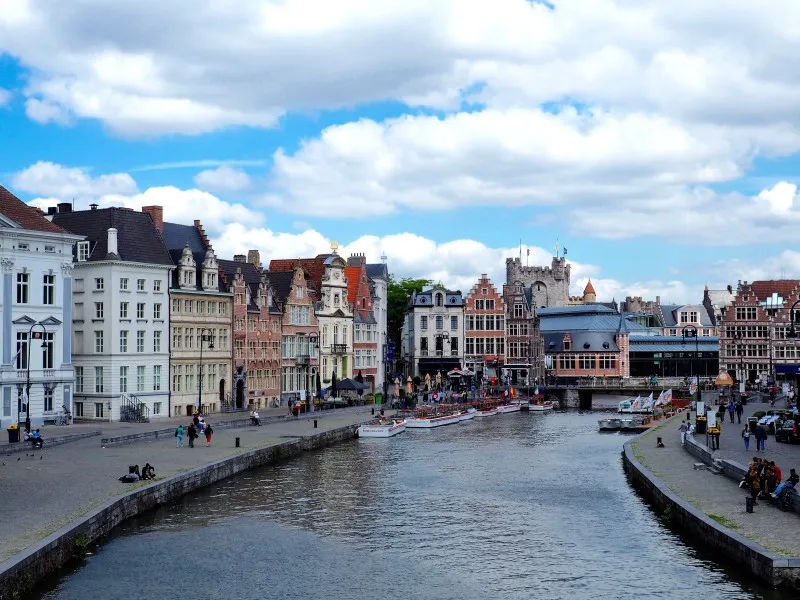
Ghent sits 60 kilometres west of Boom, about 40 minutes by train from either Antwerp or Brussels. It's the kind of city that food writers keep discovering, locals keep to themselves, and first-time visitors invariably say they should have stayed longer.
It also has no major international airport, which means the crowds here are nothing like Bruges.
One Perfect Day in Ghent
Start on the Graslei and Korenlei, the twin medieval quays along the Leie river in the city centre. This is the most photographed stretch of Ghent and worth it. Walk it, then move on quickly, the real city is elsewhere.
Head into the Patershol neighbourhood, a 10-minute walk north from the Graslei, in the old city centre. This is Ghent's most intact medieval residential area, a dense web of cobbled lanes with restaurants that locals actually frequent. No souvenir shops.
The Gravensteen castle, a 12th-century fortress, sits at the edge of Patershol, on Sint-Veerleplein. It's one of the better-preserved medieval castles in the region and worth an hour inside.
For food, eat waterzooi. Find it at almost any brasserie in Patershol.
Before leaving, pick up cuberdons, known locally as neuzekes (little noses). These are traditional raspberry-flavoured candies from Ghent. The permanent stalls on the Groentenmarkt are the best place to buy them.
For something unusual: the Werregarensteeg, a narrow alley just off the Hoogpoort in the centre, is Ghent's dedicated street art lane. New pieces appear regularly and none of it is officially sanctioned. It's one of the few places in a Belgian city where the art changes faster than the guide books.
What Locals Actually Eat

Belgian food has a reputation problem. Most visitors eat waffles from a tourist van, drink a Leffe, and declare the cuisine handled. Here's what's actually worth tracking down.
Frites
Order them from a proper fritkot (fry stand), not a restaurant. Ask for andalouse sauce, a Belgian staple that is impossible to find outside the country.
Moules-frites
Mussels and fries, Belgium's closest thing to a national dish. Best in Brussels, where the brasseries along Rue des Bouchers have been serving them for over a century.
Stoofvlees
Fritkots (fry stands) serve it as a sauce on fries and it is a late-night staple across cities like Brussels, Ghent, and Antwerp.
Jenever
It comes in two types: young (jonge) and old (oude), the latter characteristically pale yellow and smoother, both served ice-cold. In Ghent, look for O'de Flander, a local jenever served in distinctive ceramic jars.
Pralines
In Antwerp, look for Del Rey or Burie. In Ghent, the chocolatiers around the Korenmarkt.
Day Trips Worth the Journey
Bruges
30 minutes by train from Ghent. The canals and medieval centre are as beautiful as the photographs, and the beer culture, including the Halve Maan Brewery on Walplein in the Bruges city centre, is serious. Go early, leave by early afternoon before the day-tripper crowds build. Best suited to first-time Belgium visitors.
Mechelen

Often called Belgium's best-kept secret by people who have actually been there. Located between Antwerp and Brussels, roughly 20 minutes by train from either city, it has a cathedral, a beautiful market square (Grote Markt), and half the prices of its neighbours. Almost no international tourists. Mechelen is one of the most popular choices for Tomorrowland attendees looking for comfortable accommodation with a chance to explore Belgian culture, and it's understandable why.
The Lokafy Difference
Every city in this guide is walkable and manageable alone. But Belgium's history, its neighbourhood cultures, its food stories, they make significantly more sense with someone who grew up inside them.
Lokafy connects you with private, local guides in Antwerp, Brussels, and across Belgium. The tours are customised around your interests, conducted in your preferred language, and designed around what locals actually find interesting about their city, not the route every other tour takes. By the end of the tour, you'll be well-oriented and hopefully have made a new friend.
If you have two days before or after Tomorrowland, one of those days belongs to a Lokafy tour.

Festival Logistics: A Quick Reference
Tomorrowland 2026 dates: July 17–19 (Weekend 1) and July 24–26 (Weekend 2)
Location: De Schorre, Boom, Belgium, situated between Antwerp (30 min) and Brussels (1 to 1.5 hrs by train)
Train from Antwerp Central to Boom: Every 30 minutes, approximately 30 to 32 minutes journey time, approximately €4 to €8
Train from Brussels to Boom: Via Mechelen, approximately 1 to 1.5 hours
Festival currency: Pearls (pre-load online before arrival)
July weather: Average highs of 22 to 25°C. Pack one waterproof layer, Belgian summers are unpredictable
Official shuttles: Available from Brussels and Antwerp, return around 1am. Book in advance through the Tomorrowland website
2026 theme: CONSCIENCIA, Portuguese for conscience, built around six core emotions
Frequently Asked Questions
Is Antwerp a good base for Tomorrowland 2026?
Yes, it's the best option for most attendees. The train to Boom takes around 30 minutes from Antwerp Central Station, and the city offers far more to see and do than staying in Boom or the DreamVille campsite. Book accommodation as early as possible, July weekends in Antwerp sell out quickly.
How do I get from Brussels Airport to the Tomorrowland festival?
The most straightforward route is a direct train from Brussels Airport (Zaventem) to Brussels-Central or Brussels-Midi, then a connecting train towards Mechelen and Boom. Allow around 1.5 to 2 hours total. Tomorrowland also operates official shuttle packages that cover transport from Brussels, check the official website for 2026 details.
What should I do in Belgium before or after Tomorrowland?
Two days in Antwerp is the most efficient use of time, it's closest to Boom, the most interesting Belgian city for food and culture, and easily combined with a day trip to Ghent. If you're arriving via Brussels, add one to two days there before making your way to Antwerp.
What is the best way to experience Belgian food?
Skip the tourist brasseries around major landmarks and look for neighbourhood spots. In Antwerp, Het Zuid is the local restaurant district. In Brussels, the area around Flagey Square in Ixelles has better food at lower prices than the Grand Place area. In Ghent, head to Patershol for waterzooi and local cooking.
Is Belgium safe for solo travellers attending Tomorrowland?
Yes. Belgium is a safe country for solo travellers. Antwerp and Brussels are both walkable, well-connected cities with good public transport. As with any major city, exercise normal awareness around crowded areas and transport hubs during large events.
Enjoyed this article?