Most travel guides describe Sarajevo as "a city of contrasts" and leave it at that. The phrase is technically true but useless. It is the kind of thing someone writes after spending 36 hours in the city and feeling unable to summarise the experience. Sarajevo deserves better than that.
This is a city where you can drink Bosnian coffee in a 16th-century caravanserai in the morning, walk past an Austro-Hungarian post office at lunch, eat ćevapi at a place that has been grilling them the same way for three generations, and watch the sun set from a hilltop that was an active sniper position thirty years ago. The layers are real, but they are not a marketing slogan. They are how people here actually live every day.
I built this guide with help from Lokafy locals in Sarajevo, people who live in the city rather than visit it. The goal is to give you a complete picture of what Sarajevo is, what to do there, what to eat, and what most tourists miss because they only have one afternoon and a guidebook written from a distance.
About Sarajevo
Sarajevo is the capital of Bosnia and Herzegovina, a city of around 275,000 people sitting in a long, narrow valley surrounded by the Dinaric Alps. It is often called the "Jerusalem of Europe" because a Catholic church, an Orthodox church, a synagogue, and several mosques sit within a few hundred metres of each other in the old town. The city was founded in the 15th century by the Ottomans, expanded under the Austro-Hungarian Empire in the 19th century, became part of Yugoslavia in the 20th, and survived the longest siege of any capital in modern warfare between 1992 and 1996. All of those layers are still visible today, sometimes within the same block.
Why Visit Sarajevo
Three reasons locals will give you if you ask them.
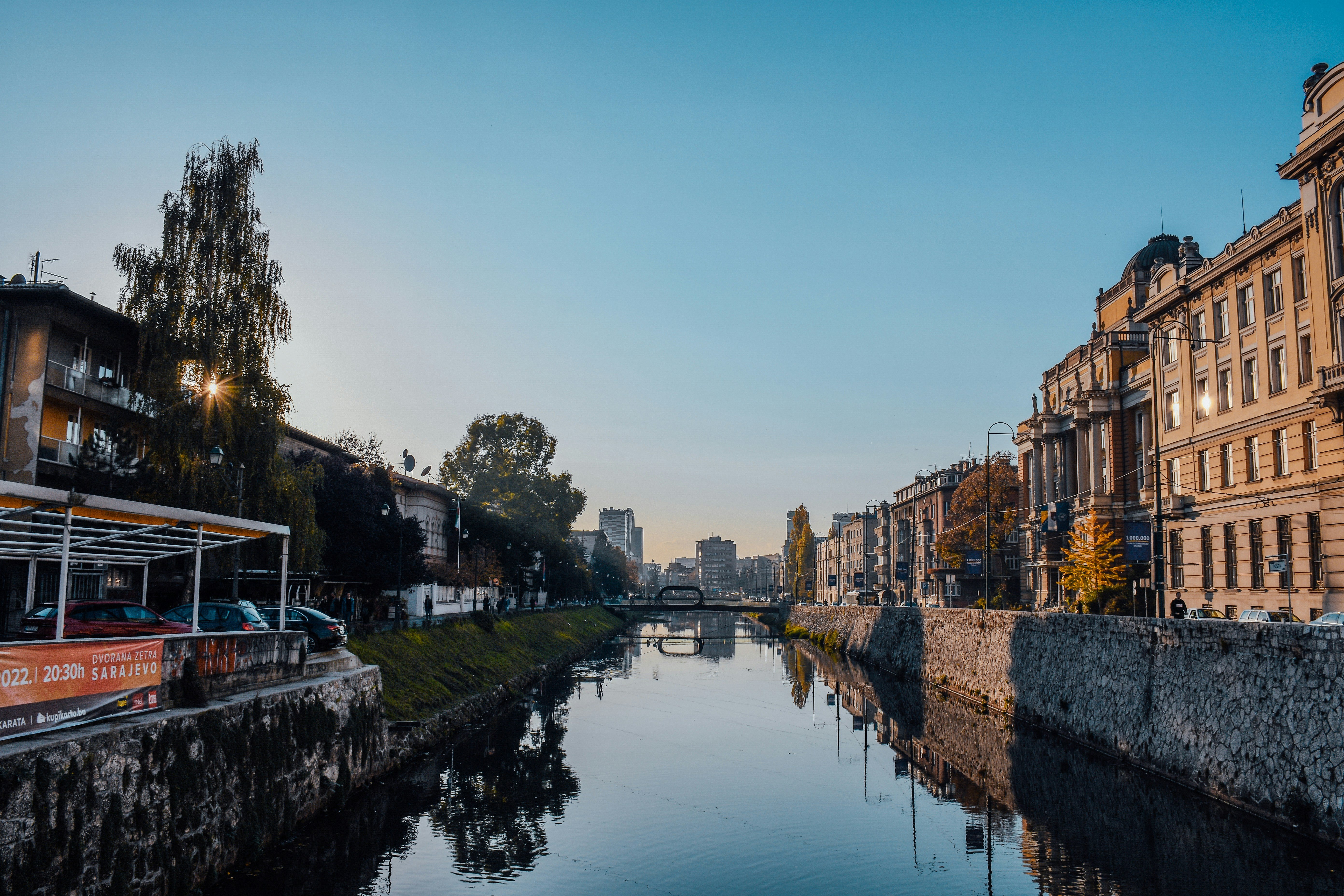
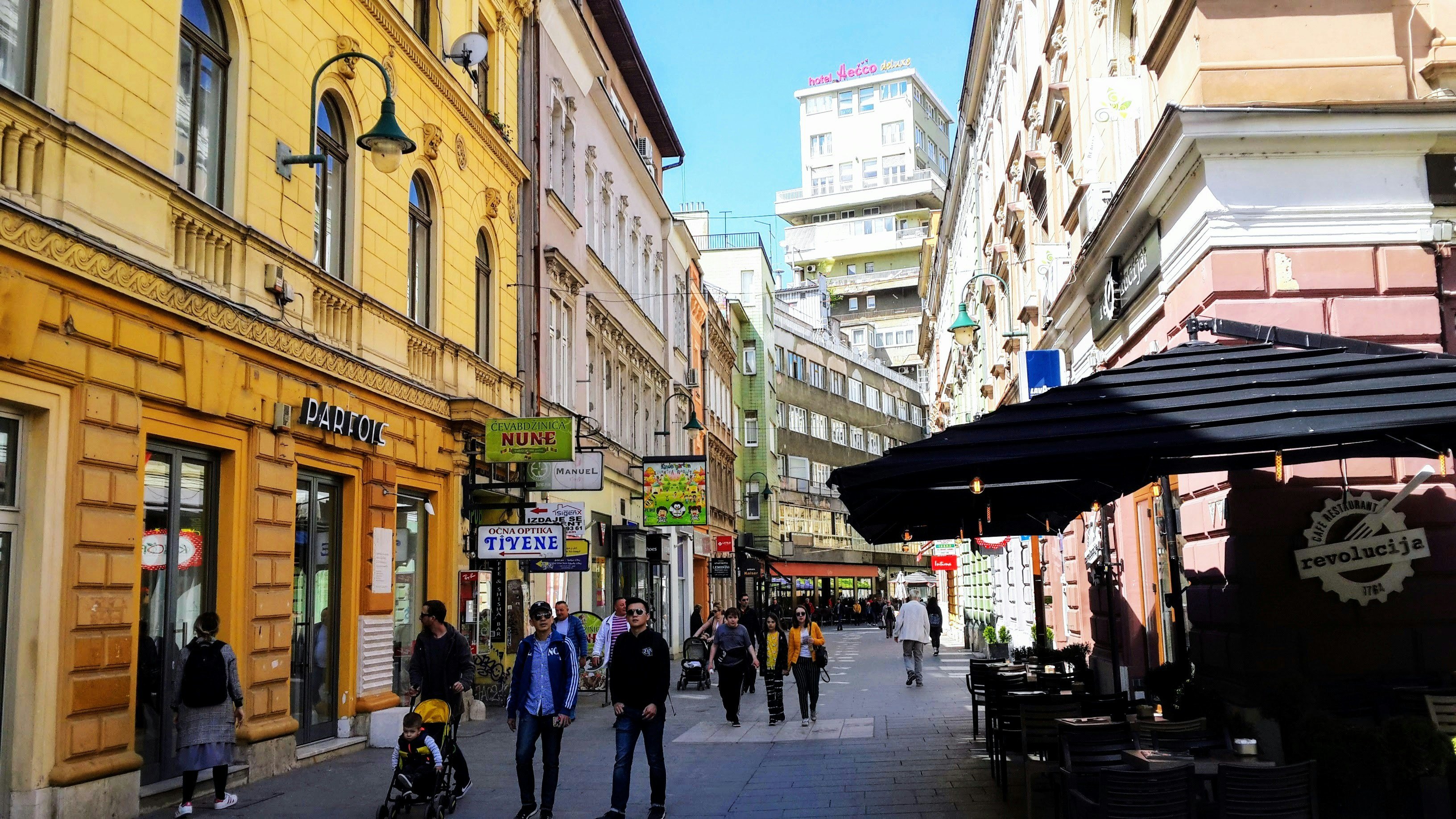
First, the architectural mix is unlike anywhere else in Europe. There is a literal physical line on Ferhadija Street called "Sarajevo Meeting of Cultures" where Ottoman bazaar architecture meets Austro-Hungarian European facades. You can stand on it. Most cities have layers of history. Sarajevo wears them on the same street.
Second, the food is excellent and affordable. Bosnian cuisine is underrated globally, partly because the country is not as well marketed as Italy or France, and partly because the best food here is humble. Ćevapi, burek, Bosnian coffee, baklava: dishes that cost a few euros and taste like they belong to this specific place.
Third, the city has a personality. People here are direct, often funny, and not particularly interested in performing for tourists. After a few days you start to understand the local sense of humour, which tends toward dry, self-aware, and slightly fatalistic. It is a city that takes itself seriously without taking itself too seriously, and that combination is rare.
Sarajevo Neighbourhoods to Know
Sarajevo is compact and walkable, but each neighbourhood has a distinct personality. Where you base yourself shapes the entire trip.
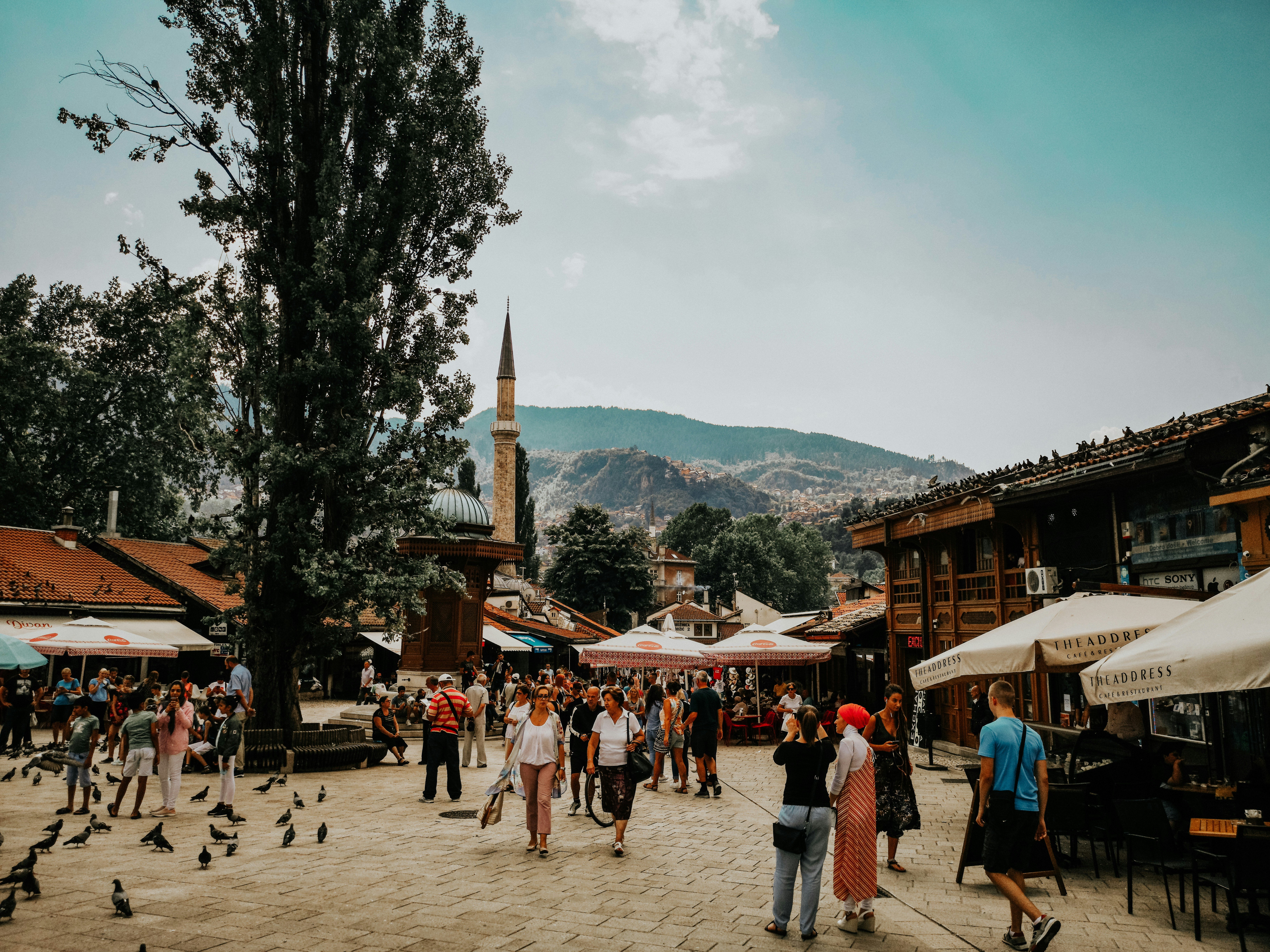
Baščaršija is the old Ottoman bazaar and the historical heart of the city. Narrow cobbled streets, copper workshops, mosques, coffee houses, and most of the city's tourist activity. Stay here if you want to be in the centre of everything, but know that it can get crowded in summer and noisy on weekend evenings. The Sebilj fountain in the main square is the most photographed spot in the city.
Ferhadija and the Austro-Hungarian Quarter sits immediately west of Baščaršija. This is where the Ottoman city ends and the European one begins, marked by the "Meeting of Cultures" mosaic on the pavement. Wider streets, elegant facades, a cathedral, and the main shopping street. More residential than Baščaršija but still central.
Bistrik is on the hillside south of the river, just a short walk from the old town. Steeper streets, older houses, fewer tourists. Locals describe it as one of the most photogenic neighbourhoods because of the views down into the valley.
Marijin Dvor is the modern business district, where you find shopping centres, the parliament, and the city's only skyscrapers. It is not where you come for charm, but it is well-connected, has good hotels, and works for travellers who prefer comfort over character.
Grbavica sits across the river, residential and quieter. It was on the front line during the siege and has a complicated history, but today it is one of the most ordinary neighbourhoods to see how Sarajevo locals actually live.
Ilidža is technically a separate municipality at the western edge of the city, around 12 km from the centre. It is where the airport is, where the river Bosna has its source at Vrelo Bosne park, and where you find more space, greenery, and a slower pace. Worth a half-day visit even if you stay in the centre.
Things to Do in Sarajevo
The list below is not exhaustive. It is what locals tell visitors to prioritise.
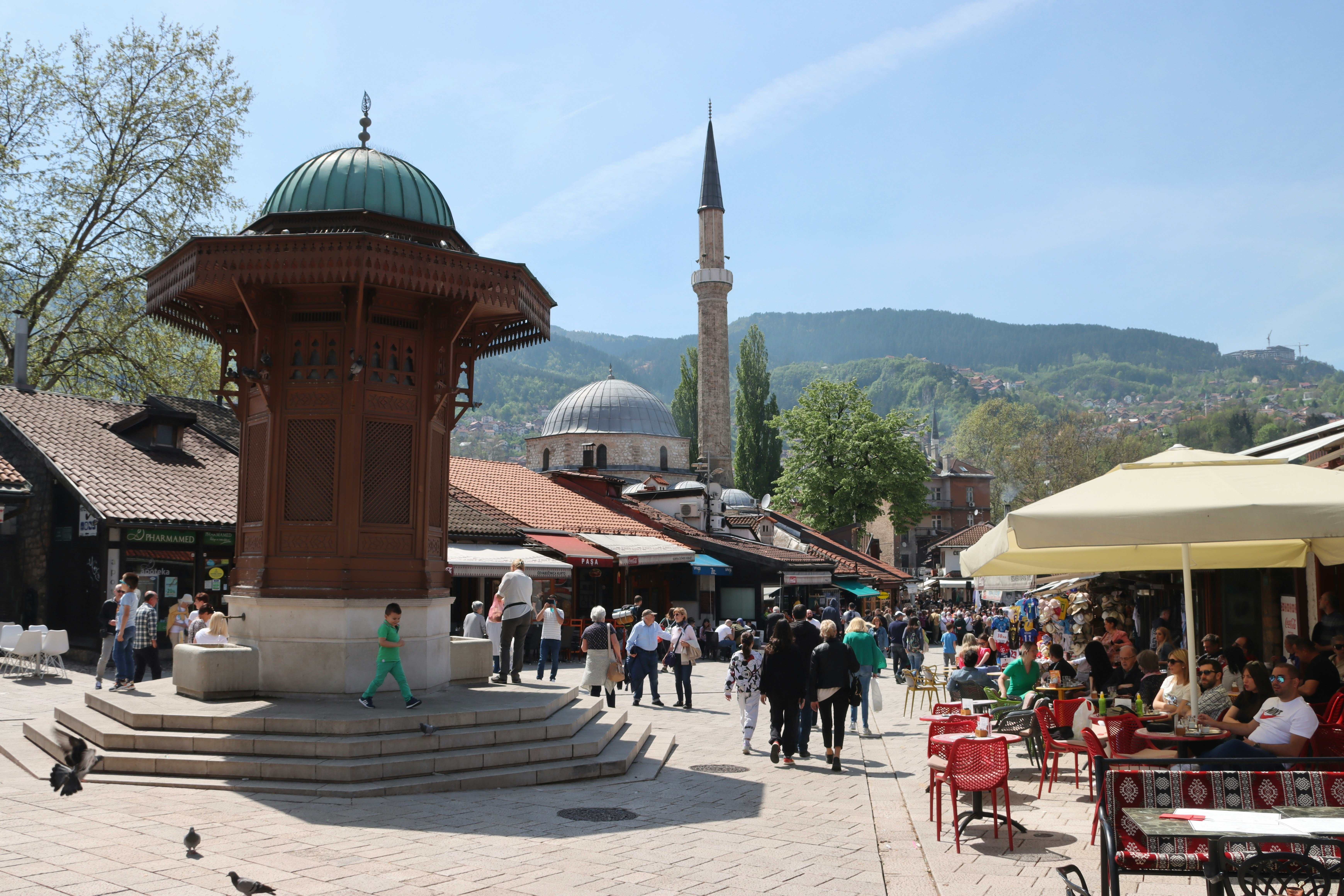
- Walk through Baščaršija slowly. The Sebilj fountain, the Gazi Husrev-beg Mosque (the largest historical mosque in the Balkans), and the Morića Han caravanserai are all here. Stop for Bosnian coffee at one of the small cafés. Do not rush this.
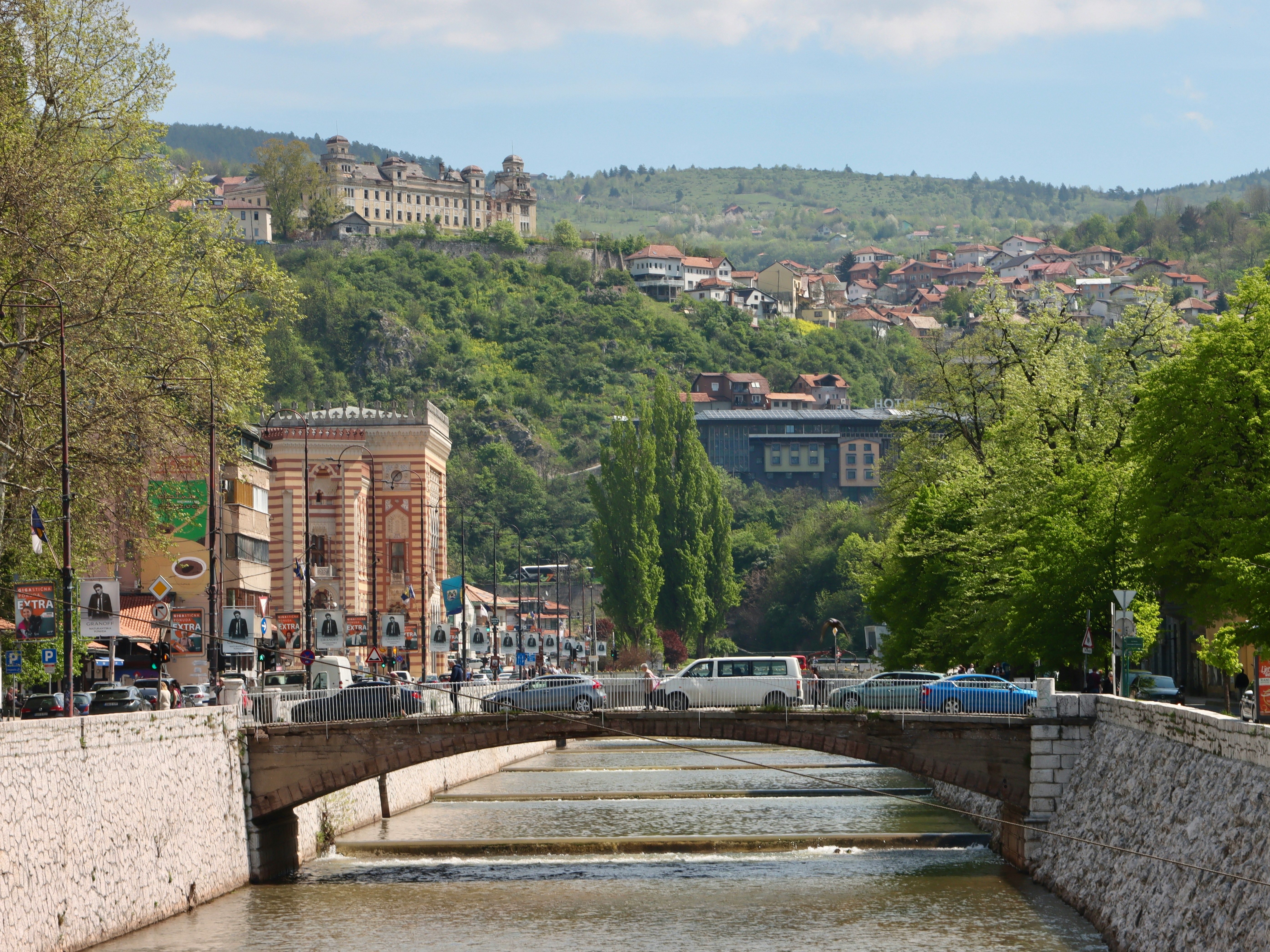
- Stand on the Latin Bridge. This is where Archduke Franz Ferdinand was assassinated in 1914, triggering the chain of events that led to World War I. The bridge itself is small and unremarkable. The weight of what happened here is the point.
- Visit the Sarajevo Tunnel Museum (Tunnel of Hope). During the siege, this 800-metre tunnel was the city's only connection to the outside world. About 25 metres of the original tunnel is still walkable. It is one of the most important sites for understanding the 1990s war, and the family who owned the house above the tunnel still runs the museum.
- Take the cable car up Mount Trebević. The cable car was destroyed during the war and reopened in 2018. The view from the top is spectacular. From there you can walk down the abandoned 1984 Olympic bobsled track, which is now covered in graffiti and is one of the strangest urban hiking routes in Europe.
- Visit Vrelo Bosne park. At the source of the Bosna River in Ilidža, this large landscaped park has tree-lined walking paths, ponds, and horse-drawn carriages. Locals come here on weekends. It is genuinely beautiful, especially in autumn.
- See the Yellow Bastion (Žuta Tabija) at sunset. A small Ottoman-era fortress overlooking the old town. Most tourist guides mention it. Locals will tell you that the view from Vidikovac Zmajevac, a little higher up the hill, is even better and less crowded, and you can actually order a drink there.
- Visit at least one museum. The Sarajevo City Hall (Vijećnica), rebuilt after being shelled during the siege, has stunning Moorish revival interiors. The Museum of Crimes Against Humanity and Genocide 1992 to 1995 is difficult but important. The Jewish Museum, housed in a 16th-century synagogue, tells the story of the city's Sephardic Jewish community.
- Sit in a café for two hours doing nothing. This is not a joke. Sarajevo café culture is a real thing. People sit. They drink coffee slowly. They talk. If you keep moving from sight to sight without ever pausing, you miss what the city is actually about.
What to Eat in Sarajevo
Bosnian food is underrated globally and obsessed over locally. You can eat very well here for very little money. Three dishes you should not leave without trying.

Ćevapi is the national dish and the one locals will keep asking if you have tried. Small grilled minced meat sausages, usually a beef and lamb mix, served in fresh somun flatbread with raw onions and sometimes kajmak (a kind of clotted cream). You order them in fives or tens. The best places are Ćevabdžinica Željo and Ćevabdžinica Petica Ferhatović, both in the old town. A note from locals: real ćevapi places do not serve alcohol. If a restaurant offers ćevapi with beer, it is a tourist-focused spot rather than a proper Ćevabdžinica.
Burek is the next non-negotiable. A spiral pastry made with thin filo dough, traditionally filled with minced beef and onions, baked in a round metal pan called a sač over hot coals. Technically, in Bosnia, "burek" refers only to the meat version. The cheese, potato, and spinach versions are called "pita." It is sold by weight and eaten with a side of cold yoghurt. Buregdžinica Bosna, Buregdžinica Sač, and Buregdžinica Oklagija in Baščaršija are the names locals will repeat. Eat it for breakfast, lunch, or as a snack at any time of day.
Bosanski Lonac is the slow-cooked Bosnian hot pot, a layered stew of mixed meats, cabbage, potatoes, carrots, and tomatoes simmered for hours in a clay pot. It is what people eat at home, and the best places to try it are traditional restaurants like Inat Kuća (the "House of Defiance," dramatically located on the river), Nanina Kuhinja in Baščaršija, and Dveri (which requires a reservation, sometimes days in advance).
Beyond these three, also worth trying:
- Bosnian coffee, served in a small copper pot called a džezva alongside a sugar cube and lokum (Turkish delight). It is slower, thicker, and stronger than Western coffee. Café Divan inside Morića Han is the most atmospheric place to try it.
- Baklava, sweeter and denser than the Turkish or Greek versions, often served at the end of a meal.
- Klepe, small Bosnian dumplings filled with minced meat and served in a garlic-yoghurt sauce.
- Begova čorba, "the bey's soup," a creamy chicken and vegetable soup that is comfort food in winter.
Should I eat in Sarajevo or Mostar? Both have good food, but Sarajevo has the depth. Mostar is more compact and tourist-heavy, with restaurants concentrated around the Old Bridge that cater mostly to day-trippers. Sarajevo has a real local restaurant culture, more variety, and better burek. If you are choosing one base for food in Bosnia, choose Sarajevo.
When to Visit Sarajevo
Spring (April to May) is when locals say the city is at its most pleasant. The hills turn green, the weather is mild, and the tourist crowds are smaller than in summer.
Summer (June to August) is warm and lively. Outdoor cafés are full, the Sarajevo Film Festival runs in August (one of the biggest in the region, worth planning around if you are interested), and the city has its best energy. Temperatures usually sit at 25 to 30°C, occasionally hotter.
Autumn (September to October) is arguably the best season for first-time visitors. Mild weather, the hills turning red and orange, and the city is less crowded. Jazz Fest Sarajevo runs in early November.
Winter (December to February) is cold, sometimes very cold, with reliable snow. Sarajevo is the gateway to two Olympic-class ski resorts, Jahorina and Bjelašnica, both about 30 minutes from the centre, and ski tourism makes winter a serious season here. The city itself is quieter, but cosy in a way that has its own appeal.
The best time to visit Sarajevo depends on what you want. Hiking and culture: April, May, September, October. Festivals and full energy: July, August. Skiing: January, February.
How Long to Spend in Sarajevo
Most travellers pass through Sarajevo in a day or two as part of a wider Balkans trip. Locals consistently say this is too short.
One day lets you walk Baščaršija, see the Latin Bridge, eat ćevapi and burek, and get a glimpse of the city. You will leave feeling like you missed something.
Two days lets you add the Tunnel Museum, the cable car up Trebević, and at least one museum. This is the minimum to feel like you have done the city justice.
Three days lets you spend half a day in Ilidža at Vrelo Bosne, explore neighbourhoods beyond the old town, do a long coffee-and-conversation afternoon, and start to understand the rhythm of the place.
Four to five days lets you do a day trip to Mostar or to one of the traditional mountain villages like Lukomir, plus take your time with everything else. This is the sweet spot if you are coming from far away.
Getting Around Sarajevo
Sarajevo is compact. Most of the things you want to see are walkable from Baščaršija. For longer distances, the tram system runs along the main east-west axis of the city, costs around 1.80 BAM per ticket, and is reliable enough. Taxis are cheap and easy to find, with a starting fare around 1.90 BAM and roughly 1.20 BAM per kilometre after that. The airport (SJJ) is around 12 km from the centre, accessible by taxi (around 20 BAM, or roughly 10 EUR) or by public bus.
The local currency is the Bosnian Convertible Mark (BAM), pegged at roughly 2 BAM to 1 Euro. Many places accept cards, but cash is still common for smaller shops, taxis, and traditional restaurants. ATMs are everywhere in the centre.
English is widely spoken in tourist-facing places, less so outside the centre. A few words of Bosnian (or German, which many older people learned during the postwar diaspora years) will go a long way.
Is Sarajevo Safe for Tourists?
Yes. Sarajevo is one of the safer European capitals for tourists, with very low rates of violent crime. Standard urban precautions apply: keep an eye on belongings in busy areas, do not flash valuables, and stay aware in crowded markets. The lingering risk that travellers sometimes mention is unexploded landmines from the 1990s war in rural areas around the city. This is a real concern if you go off marked trails when hiking in the mountains, but it does not affect normal city visits or any established tourist route.
Day Trips From Sarajevo
If you have more than three days, the surrounding area is worth exploring.
Mostar is the most popular day trip, about 2.5 hours by bus or train. The Old Bridge (Stari Most), rebuilt after being destroyed in the war, is the iconic image. It can be done as a long day but is better as an overnight if you have time.
Lukomir is the highest and most remote village in Bosnia, sitting at 1,469 metres in the Bjelašnica mountains. It is accessible by car or as part of a guided hike. The village has fewer than 20 permanent residents in winter and looks much as it did a century ago.
Travnik is the former Ottoman capital of Bosnia, about 90 minutes from Sarajevo, with a striking hillside fortress and the birthplace of Nobel laureate Ivo Andrić.
Jahorina and Bjelašnica are the Olympic ski mountains, useful as day trips year-round for hiking in summer and skiing in winter.
Frequently Asked Questions
Is Sarajevo worth visiting? Yes. Sarajevo is one of the most layered and affordable European capitals, with a unique mix of Ottoman, Austro-Hungarian, and modern history, excellent food, and a city culture you will not find anywhere else. Locals recommend at least two to three full days to do it justice. The city is also significantly cheaper than most western European capitals, with meals at traditional restaurants often costing under 10 EUR.
Is Sarajevo safe for tourists? Yes, Sarajevo is generally very safe. Violent crime against tourists is rare. Petty theft can happen in busy tourist areas, so normal precautions apply. The city itself is safe to walk in during the day and in most parts of the centre at night. The main safety concern in the wider region is unexploded ordnance in rural mountain areas, which is only a risk if you go off marked hiking trails.
How many days do I need in Sarajevo? Two full days is the minimum to see the main sights without rushing. Three days lets you go deeper into food, neighbourhoods, and the surrounding area. Four to five days lets you add day trips to Mostar or the mountains, and is the ideal length if you are coming from far away.
What is Sarajevo known for? Sarajevo is known for its religious and cultural diversity (mosques, churches, and synagogues coexisting in the same quarter), the 1914 assassination of Archduke Franz Ferdinand that triggered World War I, hosting the 1984 Winter Olympics, surviving the longest siege in modern warfare from 1992 to 1996, and a distinctive food culture built around ćevapi, burek, and Bosnian coffee.
What is the best food to eat in Sarajevo? Ćevapi (grilled minced meat sausages in fresh flatbread), burek (a spiral meat pastry baked in a sač pan), Bosanski lonac (slow-cooked Bosnian hot pot), and Bosnian coffee served in a copper džezva. Eat ćevapi at Ćevabdžinica Željo and burek at Buregdžinica Bosna or Buregdžinica Sač.
Should I visit Sarajevo or Mostar? Both, if you can. Sarajevo has the depth, the food scene, the cultural complexity, and the variety of neighbourhoods to explore. Mostar has the iconic Old Bridge, a smaller scale, and a compact day-trip experience. Most travellers base in Sarajevo and visit Mostar as a day trip (around 2.5 hours by bus or train).
What is the best time of year to visit Sarajevo? April to May and September to October are the most comfortable months, with mild weather and smaller crowds. July and August are warm and full of festivals, including the Sarajevo Film Festival. December to February is the ski season, with reliable snow at Jahorina and Bjelašnica.
How do I get from Sarajevo Airport to the city centre? Sarajevo International Airport (SJJ) is about 12 km from the centre. Taxis cost around 20 BAM (10 EUR) and take 15 to 25 minutes. Public buses run less frequently but cost only a couple of BAM. There is no metro or direct train link from the airport.
Is Sarajevo expensive? No. Sarajevo is one of the most affordable capital cities in Europe. A plate of ćevapi costs around 6 to 8 BAM (3 to 4 EUR), a Bosnian coffee around 2 BAM, and dinner at a traditional restaurant rarely goes above 25 BAM per person. Hotels and apartments in the centre are also significantly cheaper than in most western European cities.
Experience Sarajevo With a Local
Sarajevo is the kind of city where the difference between a good trip and an unforgettable one is small but specific: knowing which ćevapi place still grills with charcoal, understanding what people are actually saying when they bring up the 1990s, finding the coffee house where locals go on a Sunday afternoon rather than the one with the photogenic view.
A Lokafy local in Sarajevo can walk you through Baščaršija without making it feel like a tourist circuit, take you to the burek shop that locals queue at, and explain the city's layered history in the way that people who grew up with it actually talk about it. Not a war tour. Not a "top 10 sights" walk. Just a few hours with someone who knows the city from the inside, on your schedule.
This guide was built from conversations with Lokafy locals in Sarajevo. Their perspectives reflect a city that is proud, complicated, generous, and quietly confident that anyone who actually spends time there will understand why they would not live anywhere else.
Enjoyed this article?