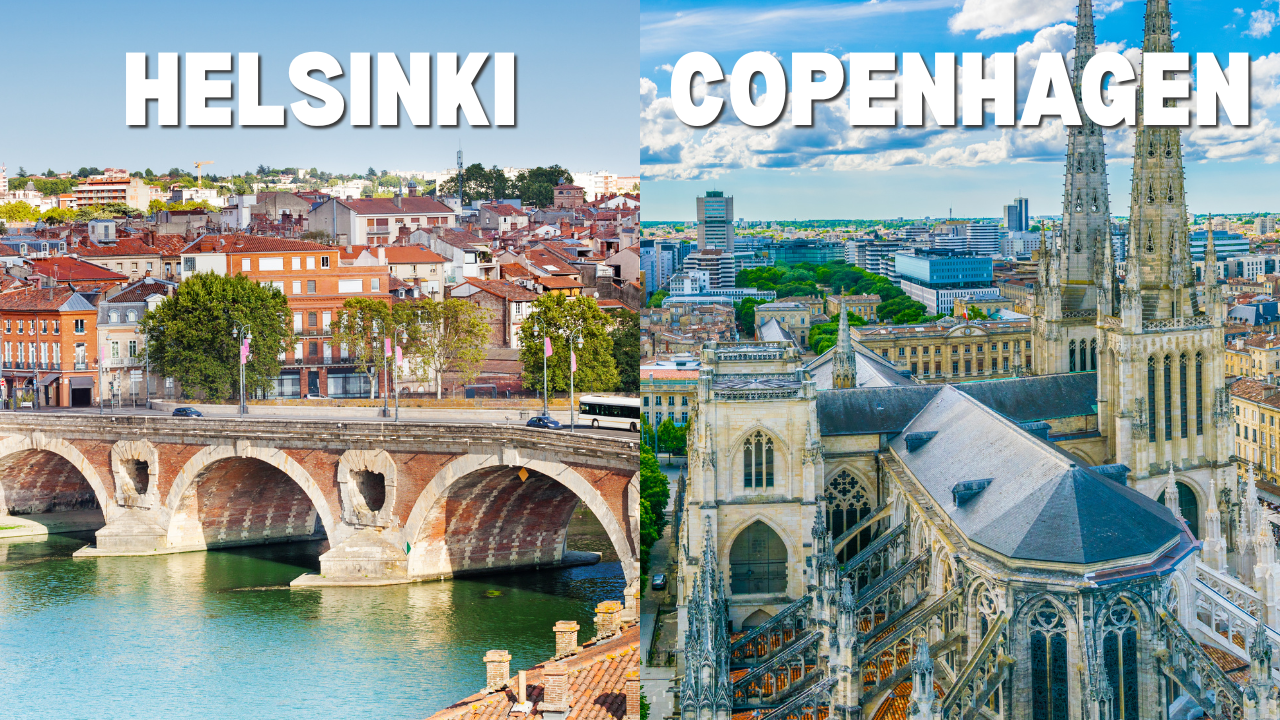
I booked both cities in the same fortnight once, mostly because the flight between them costs less than a decent dinner in either. The plan was to compare them properly. What I found instead is that they answer completely different questions. Copenhagen answers "where should we go to eat well, cycle everywhere and feel like we're in a design magazine?" Helsinki answers "where can we sit in a wood-fired sauna at midnight, jump in the Baltic, and pay less for the privilege?"
Both are small enough to walk, safe at night, easy on English speakers and reachable from most of Europe in under three hours. So the choice comes down to what you want your three days to feel like. Here is the honest comparison, with 2026 prices and the details that change your trip.
Quick Guide: Helsinki vs Copenhagen Key Takeaways
- Primary recommendation: Copenhagen for a first Nordic city break. It has the deeper food scene, the better bike infrastructure and more to fill three days.
- Top choice for value: Helsinki. Living costs run around 20% below Copenhagen, and its best experience, a public sauna by the sea, is either free or under €25.
- Top choice for food: Copenhagen. The 2026 Michelin Guide Nordic Countries awarded 31 stars across 21 Copenhagen restaurants. Insider detail: eat the same kitchens at lunch, when set menus often run 40 to 50% below dinner prices.
- Value pick or unusual angle: Helsinki for anyone who wants water, forest and quiet built into a city break. The Suomenlinna ferry is covered by a normal €3.30 transit ticket, no tourist boat needed.
- Best way to see either city: Take a private, personalised walking experience with Lokafy in Helsinki or with Lokafy in Copenhagen and see the neighbourhoods locals spend their weekends in.
- Do both: Flights between the two run 1 hour 35 to 1 hour 50 with Finnair, SAS and Norwegian, around 60 departures a week. Helsinki is one hour ahead.
The short answer: who each city suits
Copenhagen suits people who plan their trips around meals, cycle without thinking twice, and like a city that looks composed from every angle. It is bigger, busier and more expensive, and it rewards a bit of budgeting discipline.
Helsinki suits people who want a city that opens onto water and forest, who are happy sitting still, and who would rather spend €20 on a sauna than €90 on a tasting menu. It is quieter, greener in the centre, and considerably kinder to your bank balance.
If you have three days and one shot, take Copenhagen. If you have four days, a taste for the outdoors, or you have already done the classic Scandinavian capitals, take Helsinki.
Cost: what you will spend

Copenhagen is the pricier city by a clear margin. Cost comparison data updated in August 2026 puts Helsinki at roughly 20% cheaper across the board, and the gap is widest exactly where travellers feel it, in restaurants and drinks. A mid-range dinner for two in Copenhagen sits around 800 DKK. The same meal in Helsinki lands closer to €70.
Three ways the gap narrows in practice:
Lunch is the loophole in Copenhagen. Many kitchens, including starred ones, serve a set lunch at a fraction of the evening price. Build your day around a long lunch and eat lightly at night.
Helsinki's lunch buffet culture is unbeatable. Weekday lunch, roughly 11am to 2pm, gets you a hot dish, salad table, bread and coffee for €12 to €16 in ordinary restaurants across the city. Finns eat this way daily and it is the single best-value meal in the Nordics.
Alcohol costs money in both. In Denmark, supermarket beer is reasonable and bar beer is not. In Finland, anything above 8% ABV is sold only at state-run Alko shops, so plan ahead if you want wine with a picnic.
One extra Copenhagen wrinkle worth knowing: CopenPay went permanent and year-round on 22 June 2026, with more than 90 participating attractions. Arrive by train, cycle instead of driving, join a harbour clean-up or pick up litter, and you can claim rewards including free coffee, discounted museum entry and extra hours on a rental bike. It is a rare case of a city actively lowering your costs for behaving well.
Getting around: metro, trams, ferries and bikes
Copenhagen's arrival is hard to beat. The M2 metro reaches the city centre from the airport in 14 minutes, and the metro runs 24 hours a day, every day of the year. A standard 2-zone single is 24 DKK, the airport run counts as 3 zones at 30 DKK, and a City Pass Small covering zones 1 to 4 including the airport costs 100 DKK for 24 hours.
Here is the 2026 detail that catches returning visitors out: the blue plastic Rejsekort was switched off on 30 June 2026. If your old guidebook tells you to buy one at the airport, ignore it. Use the Rejsebillet app for single tickets and City Pass, the Rejsekort app if you prefer tapping in and out, or pick up a physical Basiskort. Travelling without a valid ticket carries a fine of at least 750 DKK, and inspectors are not sentimental about tourists.
Helsinki runs one integrated network of trams, buses, metro, commuter trains and ferries. From the airport, the I and P ring rail trains reach Central Station in about 30 minutes on an ABC ticket, €4.50 in the HSL app or €4.80 with a contactless card. In the centre, an AB single is €3.30 and lasts 80 minutes, and an AB day ticket is €10.60. Riding without a ticket costs you €100 plus the fare.
Bikes are where the two cities separate. Copenhagen has more than 380 kilometres of dedicated cycle lanes and a genuine cycling culture, with rental through Donkey Republic and others. Cycling there is a way of getting to work. Helsinki has city bikes too, running 1 April to 31 October in 2026, at €5 a day, €10 a week or €35 for the season through an HSL account. They work well, but Helsinki is a tram city first and you will use the trams more.
Where to eat like a local in Copenhagen
The 2026 Michelin ceremony was held at the Tivoli Concert Hall on 1 June, and Kadeau picked up a third star, joining Geranium and Jordnær at the top. Noma, having operated abroad without a permanent Copenhagen address, dropped off the starred list and has announced plans to reopen in the city. All of which is fun to read about and irrelevant to most trips, because the good news is that Copenhagen eats well at every price.
Start at Torvehallerne by Nørreport, two glass halls of fishmongers, smørrebrød counters and coffee, best before noon when locals are buying lunch rather than photographing it.
For an afternoon that feels like the city rather than the guidebook, cross to Refshaleøen. Reffen sits on a former shipyard with around 35 food stalls, ten bars and a brewery on the water. The main season runs from mid-March to the end of September, with a shorter autumn and winter programme that turns part of the site into an ice rink. Take bus 2A or harbour bus 991 or 992, or walk the 25 to 30 minutes from Nyhavn along the water.
In Nørrebro, Jægersborggade is the street to wander: coffee roasters, a porridge bar, ceramics studios and small kitchens along a few hundred metres. Walk it after a loop of Assistens Cemetery, which Copenhageners treat as a park with famous residents.
And skip the restaurants directly on Nyhavn. Photograph the houses, then eat two streets back.
→ Top 5 eateries in Copenhagen to eat like a local
Where to eat like a local in Helsinki

Helsinki's food scene is smaller and getting better fast. Boreal earned its first Michelin star in the 2026 guide, and Latitude 25 joined the Bib Gourmand list, which is a decent snapshot of a city moving from solid to interesting.
For everyday eating, the two market halls do the work. The Old Market Hall by the harbour is the polished one, good for salmon soup and archipelago rye. Hakaniemi Market Hall, a tram ride north, is where people shop rather than browse, and the upstairs lunch counters are excellent value.
Then head to Kallio, the former working-class district that turned into the city's best eating and drinking neighbourhood without losing its edges. Fleminginkatu and the streets around Karhupuisto give you neighbourhood bistros, dive bars, natural wine and Vietnamese places within a few blocks. Vallila and Punavuori are quieter versions of the same idea.
A practical Helsinki note: tap water in Finland is superb, and restaurants bring it without being asked. Buying bottled water here marks you as a visitor faster than anything else.
→ Eating Like a Local in Helsinki: A Food Lover's Guide
Saunas and swimming: the real difference between them
This is where the comparison stops being close.
Helsinki has a public sauna culture that no other capital matches. Löyly on the southern waterfront is the architectural one, with a smoke sauna and a wood-burning sauna, sea access and a restaurant, entry around €19 to €24, swimwear required, and booking strongly advised. Kotiharjun Sauna in Kallio has been running since 1928 and is the traditional neighbourhood option, at €20 for two hours, €22 for three and €24 for four, with the ritual of cooling off on the pavement in a towel while strangers discuss politics.
Then there is Sompasauna, which is free, volunteer-built, open around the clock and has no staff at all. You chop wood, stoke the stove, swim in the Baltic and leave the place tidy. One warning that most guides still get wrong: Sompasauna moved in 2025 and now sits at Kansanpuistonpolku 5 on Mustikkamaa island, not at its old Kalasatama site. There are no showers, so bring a towel and a padlock.
Copenhagen's water culture is different and also excellent. The harbour has been clean enough to swim in for two decades, and the free harbour baths at Islands Brygge and up in Nordhavn fill with office workers on any warm afternoon. It is swimming as a civic habit rather than a ritual, and it costs nothing.
If a hot room and cold sea is the memory you want, book Helsinki.
Neighbourhoods worth an afternoon

In Copenhagen, give an afternoon to Vesterbro, where the old Meatpacking District now holds bars and galleries, then walk north into Nørrebro for Superkilen, the park designed from objects sourced across dozens of countries. Christiania in Christianshavn is worth an hour with clear eyes: Pusher Street's cannabis stalls were dug up by residents in April 2024, and the lane now runs to craft shops, cafés and workshops. Photography is still off limits in parts of the community, so read the signs.
In Helsinki, the classic half day is the Suomenlinna sea fortress. The HSL ferry, route 19, leaves Market Square every day of the year from around 6am until 2:20am, takes 15 minutes, and is covered by any AB ticket. Do not pay €11 for a private boat when a €3.30 transit ticket does the same job. Back on the mainland, Oodi central library is the building that tells you most about Finland in twenty minutes, and Töölönlahti bay behind it is the local walking loop.
Three days in each city
Copenhagen in three days. Day one, Torvehallerne for lunch, then walk the inner city, the Round Tower and Nyhavn, ending at a harbour bath. Day two, hire a bike, ride to Refshaleøen for Reffen, then loop back through Christianshavn and Christiania. Day three, Nørrebro slowly: Assistens Cemetery, Jægersborggade, Superkilen, and dinner somewhere you booked before you flew.
Helsinki in three days. Day one, Market Square, the Old Market Hall and the ferry to Suomenlinna, back in time for Allas Sea Pool at dusk. Day two, Kallio and Hakaniemi for lunch and coffee, Oodi in the afternoon, Kotiharjun Sauna in the evening. Day three, either Sompasauna and the eastern islands, or a train and bus out to Nuuksio National Park for a forest walk that starts an hour from your hotel.
Day trips: Malmö versus Tallinn
Copenhagen gives you Sweden. Trains cross the Øresund Bridge to Malmö in a little over half an hour from Copenhagen Central. Bring your passport, because ID checks on this crossing have come and gone for years.
Helsinki gives you Estonia. Fast ferries reach Tallinn in about two hours, and the medieval old town is close enough to the terminal to make a day trip work comfortably. It is the better day trip of the two, and it is the reason Helsinki often wins on a longer itinerary.
→ Helsinki vs Tallinn: Which City Should You Visit (or Should You Do Both)?
When to go
June to August is the obvious window. Helsinki gets close to 19 hours of daylight around midsummer and the sea is warm enough for the sauna ritual to make sense. Copenhagen peaks in the same months, with the harbour baths open and terraces full.
Shoulder season splits them. May and September suit Copenhagen well, since the food, museums and cycling do not depend on heat. Helsinki in late autumn is dark and quiet, though that is also when sauna culture feels least like a tourist activity.
Winter favours Copenhagen for its Christmas markets and the fact that the city keeps functioning at full speed. Helsinki in December has under six hours of daylight, which some travellers find magical and others find brutal. Be honest with yourself about which you are.
See either city with someone who lives there

The neighbourhoods above are the parts of both cities that reward a local's company, because the interesting bits are the habits rather than the landmarks: when the market halls are busy with shoppers, how sauna etiquette works, which harbour bath still gets used in September.
Take a private, personalised walking experience with Lokafy in Copenhagen or Lokafy in Helsinki and spend a few hours with a resident who will show you their own city, at their own pace, on the streets they walk every week. It is the fastest way to stop feeling like a visitor in either place.
Frequently asked questions
Is Helsinki or Copenhagen better for a first Nordic city break? Copenhagen, for most people. It has more to do across three days, a deeper restaurant scene and better bike infrastructure. Choose Helsinki if you want a cheaper trip, a strong sauna and water culture, and easy access to forest and the archipelago.
Is Helsinki cheaper than Copenhagen? Yes. Cost comparison data from August 2026 puts Helsinki around 20% cheaper than Copenhagen overall, with the largest gaps in restaurants, drinks and accommodation. Weekday lunch buffets in Helsinki at €12 to €16 are the best value meal in either city.
How long is the flight from Helsinki to Copenhagen? Between 1 hour 35 minutes and 1 hour 50 minutes non-stop, with Finnair, SAS and Norwegian flying the route and roughly 60 departures a week. Helsinki is one hour ahead of Copenhagen.
How many days do you need in Copenhagen or Helsinki? Three full days covers Copenhagen's centre, Nørrebro and Refshaleøen without rushing. Helsinki works well in two to three days, or four if you add Tallinn or a national park.
Do I need cash in Denmark or Finland? No. Both countries are effectively cashless. Contactless cards work on transport, in markets and at food stalls. Denmark uses the Danish krone and Finland uses the euro, which is worth remembering if you are visiting both.
What is the best sauna in Helsinki for a first-timer? Löyly for comfort, sea access and a restaurant, at around €19 to €24 with swimwear required. Kotiharjun Sauna in Kallio for the traditional version, from €20 for two hours. Sompasauna, on Mustikkamaa island since 2025, is free and self-service, but there are no showers or staff.
Is Christiania still worth visiting in Copenhagen? Yes, with reasonable expectations. Residents dismantled Pusher Street's cannabis stalls in April 2024 and the area now runs to craft shops, cafés and workshops. Give it an hour as part of a Christianshavn walk, and respect the no-photography rules where they are posted.
Can I visit both Helsinki and Copenhagen on one trip? Easily. The flight is under two hours and runs several times a day. A common split is three nights in Copenhagen and two or three in Helsinki, with the Tallinn day trip added on the Finnish side.
More From Both Cities
→ Helsinki Real Hidden Gems: 15+ Local Secrets Most Tourists Miss
→ Authentic Helsinki: A Local’s Guide to the City’s Hidden Corners
Enjoyed this article?