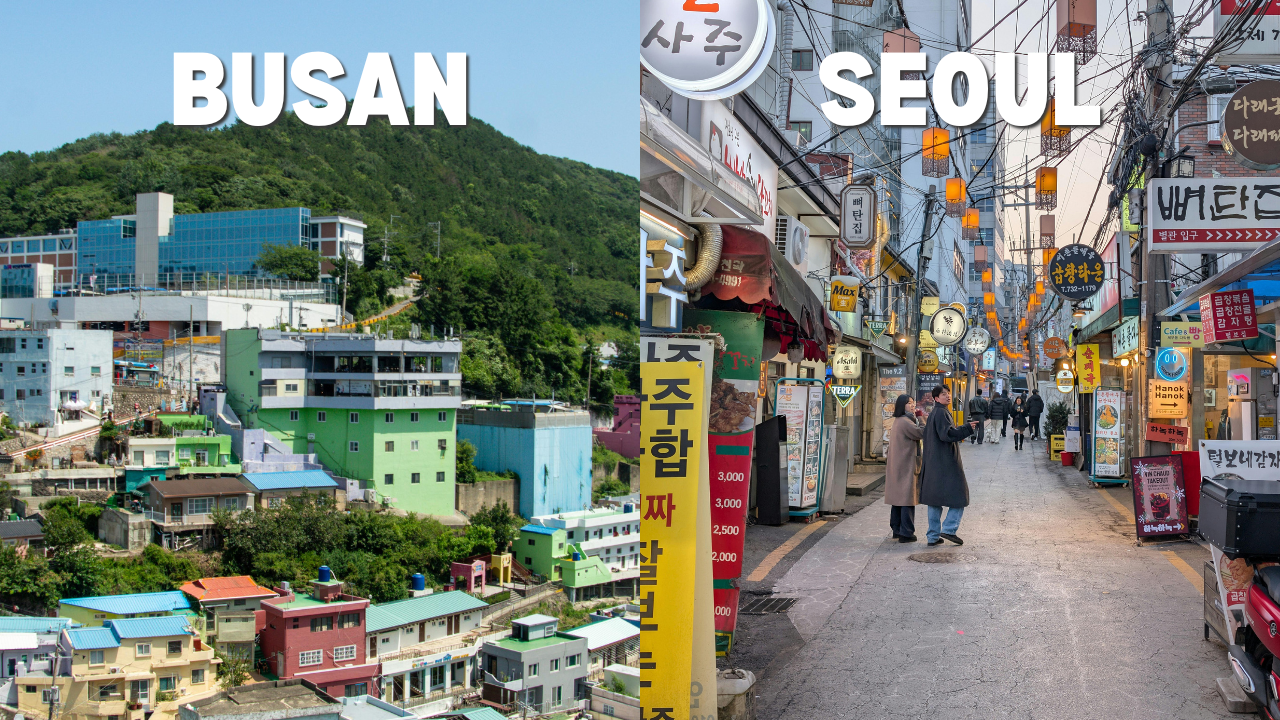
The first time I took the KTX south from Seoul, I expected Busan to be a smaller, sleepier version of the capital. Two and a half hours later I was eating pork soup at a steel table near Busan Station, the man next to me was arguing with the owner in a thick Gyeongsang accent, and the air smelled like salt and diesel from the port. By the evening I was watching hundreds of drones draw pictures over Gwangan Bridge, and I had already started to rethink the rest of my trip. Seoul and Busan are both brilliant, but they are very different places to spend your days. Here is how they compare, where locals in each city eat and hang out, and how to plan around one or both.
Quick Guide: Busan vs Seoul Key Takeaways
- Primary Recommendation: If you have five days or more, do both. The KTX connects Seoul Station and Busan Station in roughly 2 hours 15 minutes on the fastest trains, for about 54,400 won in standard class.
- Top Choice for a First Trip to Korea: Seoul. Palaces, markets, late-night food alleys and day trips all sit within one subway network. Insider tip: skip Bukchon's crowded lanes after 5pm (tourists are restricted there) and walk Seochon or Ikseon-dong instead.
- Value Pick for Food and Coast: Busan, for travellers who want beaches, cliff walks and seafood with fewer crowds. Order dwaeji gukbap and milmyeon, two dishes Busan does better than anywhere else in Korea.
- The Best Way to See the City: Take a private, personalized walking experience with Lokafy in Seoul or Lokafy in Busan and discover the alleys, markets and neighbourhood spots residents love with a Local.
Busan vs Seoul: The Short Answer
Seoul is Korea's capital and its cultural engine. It is huge, fast and endlessly layered, with five royal palaces, dozens of distinct neighbourhoods and a subway that gets you almost anywhere. Busan is Korea's second city and biggest port, built around beaches, harbour hills and mountains that drop straight into the sea. It runs at a slower pace, the seafood is fresher and the people are famously blunt and warm.
Pick Seoul if you want history, shopping, nightlife and variety. Pick Busan if you want the coast, a lower-key city break and food that tastes of the region. Most travellers with a week in Korea end up doing both, and the train makes that easy.

Getting Between Seoul and Busan
The KTX high-speed train is how almost everyone makes this trip, and locals rarely fly it. The fastest services take about 2 hours 15 minutes from Seoul Station to Busan Station, while trains with more stops take closer to 2 hours 40 minutes. A standard one-way ticket costs about 54,400 won after KTX fares were cut to match the old SRT prices.
A detail many older guides miss: the SRT trains that used to run from Suseo Station in southern Seoul are now part of the KTX network. If you are staying in Gangnam or the southeast of the city, check departures from Suseo as well as Seoul Station. You can book through Korail's app or website, and weekend and holiday trains sell out, so book as soon as your dates are fixed.
Flights between Gimpo and Gimhae airports exist, but once you add airport transfers and security, the train wins on time and stress.
What Seoul Does Better
Seoul rewards curiosity. The famous sights are worth seeing, but the city opens up when you walk the neighbourhoods where people live, work and drink after their shifts. If you want a deeper list, our guide to things to do in Seoul that feel more local goes further.

Neighbourhoods Seoul Residents Use
Seochon sits on the west side of Gyeongbokgung Palace and feels like the hanok district Bukchon used to be before the tour buses arrived. Small galleries, bookshops and old restaurants line the lanes, and Inwangsan rises behind it if you fancy an hour of hiking with a view over the palace roofs.
Bukchon is still beautiful, but its busiest residential lanes around Bukchon-ro 11-gil are now a "red zone" where tourists can only visit between 10am and 5pm. Sightseeing there outside those hours can earn you a 100,000 won fine, and residents have posted plenty of signs asking for quiet. Go mid-morning, keep your voice down, and save evening strolls for elsewhere.
Ikseon-dong is a tight maze of hanok houses converted into cafes, bars and small restaurants, a few minutes from Jongno 3-ga Station. It gets busy on weekends, so weekday afternoons are best.
Naksan Park is the local answer to N Seoul Tower. A section of the old Seoul City Wall runs along the ridge, and the path beside it gives you a free sunset view across the city without the queue for a lift.
Mangwon is a residential corner of Mapo where young Seoulites go for small cafes, cheap market snacks and evenings by the Han River. Mangwon Hangang Park is a classic spot for chimaek (fried chicken and beer) on a warm night.
Where Locals Eat in Seoul

Tongin Market in Seochon runs a dosirak cafe where you trade won for old-style brass coins, then fill a lunch tray from participating stalls. Gireum tteokbokki (stir-fried rice cakes in oil and chilli) is the stall people queue for. The lunchbox programme is closed on Mondays.
Woo Lae Oak near Euljiro 4-ga Station has served Pyongyang-style naengmyeon since 1946. The beef broth is clean and subtle, the buckwheat noodles have a soft chew, and a bowl now costs around 18,000 won. There is usually a queue at lunch, so arrive near opening.
Euljiro Nogari Alley, near Euljiro 3-ga Station Exit 3, is where office workers pull plastic stools onto the street after work and order draft beer with nogari (dried young pollack). Manseon Hof is the biggest name. Redevelopment has squeezed parts of Euljiro, but the after-work crowd and the printing-shop lanes around it are still the real draw.
Mangwon Market is a covered neighbourhood market with croquettes, kalguksu, fried chicken and hotteok at prices that make Myeongdong look silly. Graze here, then walk ten minutes to the river.
What Busan Does Better
Busan's best moments happen outdoors: on cliffside paths, in hillside villages and on beaches that fill up after dark. It is a city where you can eat breakfast in a market, hike a coastal trail in the afternoon and be on the sand for a drone show by night.
The Coast and the Hills
Gwangalli is where many Busanites spend their evenings. The beach faces Gwangan Bridge, which lights up at night, and every Saturday the free Gwangalli M Drone Light Show sends hundreds of drones over the bay. Shows run at 8pm and 10pm from March to September and at 7pm and 9pm from October to February, and strong winds can cancel them. Each November, Gwangalli also hosts the Busan Fireworks Festival, one of the biggest events in the country, so book rooms early if your trip lands that weekend.
The Igidae Coastal Walk is about 4.7 km of cliffside trail with views back to Haeundae and Gwangan Bridge, finishing near the Oryukdo Skywalk. There are plenty of stairs, so wear proper shoes and bring water.
Huinnyeoul Culture Village on Yeongdo Island is a lived-in cliffside neighbourhood above the sea, with narrow lanes, small cafes and a coastal path below. Locals often prefer it to Gamcheon Culture Village, which is colourful and worth seeing but packed with tour groups by late morning. Huinnyeoul is still home to residents, so keep things quiet.
Haeundae Blueline Park runs along an old railway line between Mipo and Songjeong. The Sky Capsule pods are priced per capsule, so solo travellers pay the two-person rate, and slots sell out on weekends. The Green Railway walking path beside the tracks is free and gives you the same sea views at your own pace.
Haedong Yonggungsa, the temple built on rocks above the sea, is stunning and also very busy. Go early in the morning and you will share it mostly with worshippers.
Where Locals Eat in Busan

Dwaeji gukbap is Busan's signature dish: pork and rice in a milky bone broth, seasoned at the table with salted shrimp, chives and chilli paste. It spread across the city during the Korean War, when refugees flooded Busan. Busanites argue endlessly about the best one, but two names come up again and again. Hapcheon Gukbapjip in Nam-gu is a Michelin Bib Gourmand pick known for a clear, old-style broth; it opens at 9:30am and its boiled pork sells out. Ssangdung-i Dwaeji Gukbap, a short walk from Daeyeon Station, sits on a second floor and is usually full of locals at lunch.
Milmyeon is Busan's own cold noodle, made with wheat flour when buckwheat was scarce during the war. Choryang Milmyeon, right by Busan Station, is a favourite with people who grew up in the city and makes an easy first meal off the train. Order mul (in icy broth) or bibim (with spicy sauce).
Raw fish (hoe) is done best at Millak, at the eastern end of Gwangalli Beach. You pick your fish downstairs at the market, then eat it upstairs in one of the restaurants overlooking the bridge. One local rule to know: Millak Waterfront Park next door has been an alcohol-free zone since 2023, so the old habit of picnicking there with sashimi and soju now earns a fine.
Jagalchi Market in Nampo-dong is Korea's largest seafood market and a brilliant place to wander in the morning. Afterwards, walk to BIFF Square for ssiat hotteok, a sweet pancake stuffed with seeds and nuts.
Jeonpo Cafe Street, a short walk from Seomyeon, is an old hardware and tool district where cafes, bakeries and small shops have taken over the workshops. A few tool stores still trade in the back lanes, which is part of the charm.
Cost, Weather and Pace
Day to day, Busan is easier on the budget. Local staples like gukbap and milmyeon are cheaper than an equivalent meal in central Seoul, and its biggest pleasures (beaches, coastal walks, the Saturday drone show) cost nothing. Seoul has more choice at every price level, from market stalls to tasting menus, but tourist districts like Myeongdong charge for the address.
Weather tips the scales too. Seoul's winters are properly cold, while Busan's coastal climate stays milder, which makes it a good winter escape. Both cities get the summer monsoon in late June and July, and Busan sits on the typhoon path in late summer. Spring and autumn are the sweet spots for both.
The pace is the biggest difference. Seoul moves fast and stays up late. Busan is relaxed, a little rough around the edges, and proud of it. Many Busanites will tell you, cheerfully, that Seoul people are cold and Busan people are honest.
Which City Should You Pick?
First time in Korea with three days or less: Seoul. You get the palaces, the food alleys and the neighbourhoods without losing time on transport.
You love the sea, hiking or seafood: Busan. No other big Korean city puts beaches, cliff trails and fish markets this close together.
Travelling in winter: Busan, for the milder weather, with a day or two in Seoul for the city lights.
Travelling with kids or older relatives: Seoul's flat central areas and dense subway make getting around easier. Busan's hillside villages involve steep climbs.
Five days or more: Do both. Fly into Incheon, out of Gimhae if you can, and take the KTX in between.

Seoul and Busan Itineraries
5 Days in Seoul and Busan
- Day 1, Seoul: Gyeongbokgung in the morning, coin lunchbox at Tongin Market, an afternoon in Seochon, then beers in Euljiro Nogari Alley.
- Day 2, Seoul: Bukchon before 5pm, Ikseon-dong for lunch, the city wall at Naksan Park for sunset.
- Day 3, Seoul: Mangwon Market for brunch, then the Han River by bike or on foot, naengmyeon at Woo Lae Oak for dinner.
- Day 4, Busan: Morning KTX south, milmyeon at Choryang Milmyeon, Jagalchi Market and BIFF Square, then Huinnyeoul on Yeongdo for sunset.
- Day 5, Busan: Dwaeji gukbap for breakfast, the Igidae Coastal Walk, then hoe at Millak and an evening on Gwangalli Beach (time it for a Saturday to catch the drone show).
3 Days in Seoul Only
- Day 1: Palace district, Seochon and Tongin Market, Euljiro at night.
- Day 2: Ikseon-dong, Naksan Park and the city wall, an evening in Mangwon by the river.
- Day 3: A morning hike on Inwangsan or in Bukhansan National Park, then a slow afternoon in whichever neighbourhood you liked most. Our Seoul walking guide has routes that link them on foot.
2 Days in Busan Only
- Day 1: Busan Station, Choryang Milmyeon, Jagalchi, BIFF Square, Huinnyeoul, then dinner in Nampo-dong.
- Day 2: Haedong Yonggungsa early, the Blueline Park path, an afternoon at Jeonpo Cafe Street, then Gwangalli and Millak for the evening.
Practical Tips for Both Cities
Use Naver Map or KakaoMap, not Google Maps. Google Maps cannot give reliable walking directions in Korea because of map-data export rules. Naver Map works in English and handles walking, subway and bus routes in both cities.
One transit card covers both. A T-money card works on subways and buses in Seoul and Busan, and you can top it up at convenience stores.
Check entry rules before you fly. Korea has temporarily waived the K-ETA for many visa-free nationalities. Check the official K-ETA site for your passport, and if you are exempt, fill in the e-Arrival card online before landing.
Book the busy stuff early. KTX seats on weekends and holidays, Busan Sky Capsule slots and rooms during the November fireworks all go fast.
Explore Seoul and Busan with a Local
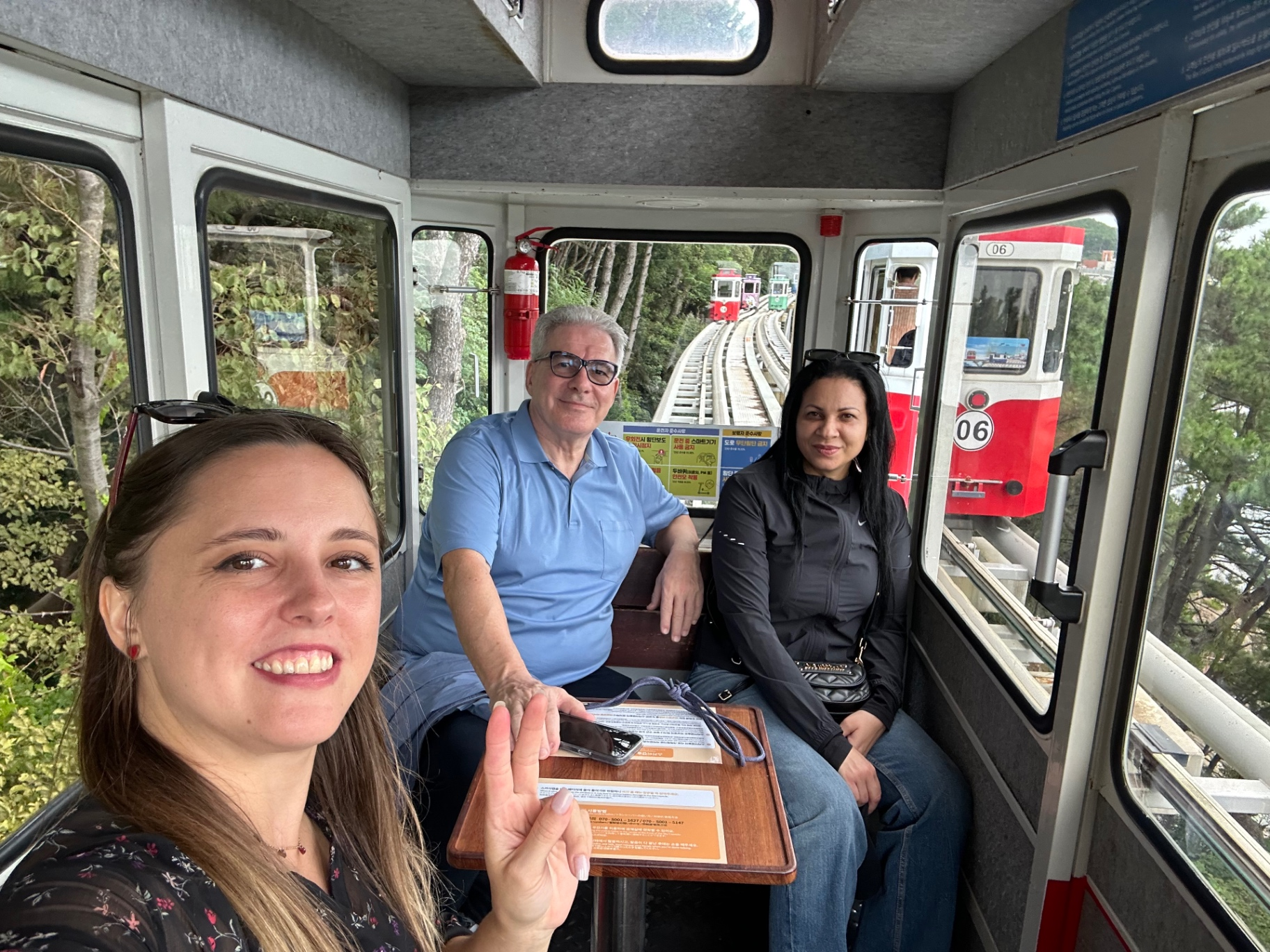
Seoul and Busan reward the traveller who knows which alley to turn into, which gukbap shop the neighbourhood swears by and which viewpoint is worth the climb. A Lokafyer is a local who walks with you, shapes the day around what you love and points you to the places they go themselves. Take a private, personalized walking experience with Lokafy in Seoul to explore Seochon's lanes and Euljiro's after-work alleys, or with Lokafy in Busan to discover the markets, hillside villages and seaside spots Busanites love with a Local.
Frequently Asked Questions
Is Busan or Seoul better for a first trip to Korea?
Seoul is the better base for a first trip of three days or less, because palaces, markets, nightlife and day trips are all on one subway network. With five days or more, add Busan for beaches, coastal walks and the country's best seafood. The KTX makes combining the two simple.
How long is the train from Seoul to Busan?
The fastest KTX trains take about 2 hours 15 minutes from Seoul Station to Busan Station, and trains with more stops take around 2 hours 40 minutes. A standard one-way ticket costs about 54,400 won. Trains also leave from Suseo Station in southern Seoul.
How many days do you need in Busan?
Two full days covers the essentials: Jagalchi Market, Huinnyeoul Culture Village, the Igidae Coastal Walk, Gwangalli Beach and a proper dwaeji gukbap. Three days lets you add Haedong Yonggungsa, Blueline Park and Jeonpo Cafe Street at a relaxed pace.
Is Busan worth visiting with only a week in Korea?
Yes. A week fits four or five days in Seoul and two or three in Busan comfortably. Busan offers things Seoul cannot, including city beaches, cliffside trails and dishes like milmyeon and dwaeji gukbap that are rooted in the city.
Is Busan cheaper than Seoul?
Generally, yes. Everyday local meals tend to cost less in Busan, and many of its highlights, such as beaches, coastal walks and the Saturday drone show at Gwangalli, are free. Seoul has more options at every budget but charges more in tourist districts.
What food is Busan famous for?
Busan is famous for dwaeji gukbap (pork and rice soup in bone broth), milmyeon (wheat cold noodles), fish cakes (eomuk), raw fish (hoe) and ssiat hotteok, a seed-filled sweet pancake sold around BIFF Square.
Can you use Google Maps in Seoul and Busan?
Google Maps is fine for finding places but unreliable for walking directions in Korea. Download Naver Map or KakaoMap, both of which offer English menus and accurate walking and transit routes in Seoul and Busan.
Enjoyed this article?