The 2026 FIFA World Cup kicks off on June 11 at Mexico City Stadium, the venue most of us still call Estadio Azteca, with Mexico playing South Africa in front of 87,000 people. By July 19, when MetLife Stadium hosts the final outside New York, fans will have watched 104 matches across 16 cities in three countries. It is the biggest World Cup ever staged, and most of us watching it will not be inside any of those stadiums.
That is fine. Actually, in my experience, it is often better.
I have spent the last several months travelling between the three host countries, talking to locals, and figuring out where people who live in these cities actually plan to watch the tournament. The official FIFA Fan Festivals are excellent, free, and worth visiting at least once. But the real character of a World Cup in a host city lives in the neighbourhood bars, the family-run cantinas, the streets that close down when a national team scores, and the supporters' clubs that have been doing this for decades before FIFA arrived.
This guide covers three cities where the local viewing culture runs deepest: Mexico City, Toronto, and Los Angeles. Not the most expensive tourist sports bars, not the hotel rooftops, but the places locals are actually going.
What "watching like a local" actually means
Before I get into specific bars, it helps to define what I mean by watching the World Cup like a local. Tourist sports bars optimise for size: hundreds of screens, hundreds of beers on tap, food that travels well to a hotel room. Local viewing is the opposite. It tends to be smaller, often louder, almost always cheaper, and tied to a specific community. The crowd at Café Diplomatico in Toronto's Little Italy is mostly Italian-Canadian families who have been watching Azzurri matches at that corner since 1968. The crowd at La Chuperia in Lincoln Heights, LA, is mostly Mexican-American supporters who treat El Tri's group stage like a religious holiday. The crowd at a cantina in Roma Norte is just locals doing what locals do when there is a match on.
That is the energy you cannot manufacture, and it is what makes watching a World Cup in a host city worth doing properly.
Mexico City: cantinas, Condesa pubs, and the Zócalo
Mexico City opens the tournament on June 11, and the city has been building toward this for over a decade. The original Estadio Azteca renovation took two years, the stadium reopened in late March 2026 with a friendly against Portugal, and the cultural buildup is now everywhere: flags on apartment balconies in Roma, jerseys in every cafe in Condesa, taco trucks already printing fixture-specific menus.
The official fan zone: Zócalo
The FIFA Fan Festival in Mexico City is at the Zócalo, the enormous central square in the historic centre. It is free, it will be screening every one of the 104 matches, and it is the single largest public viewing space in the country during the tournament. For El Tri matches it will be electric. For any other match it is still worth experiencing once because the scale is genuinely unique: tens of thousands of people, the cathedral in the background, the National Palace lit up.
But if you want to spend a full month watching matches at the Zócalo, the crowds, security checkpoints, and distance from where most travellers stay will wear you down by week two. That is where the neighbourhood spots come in.
Roma and Condesa: where most travellers and many locals actually watch
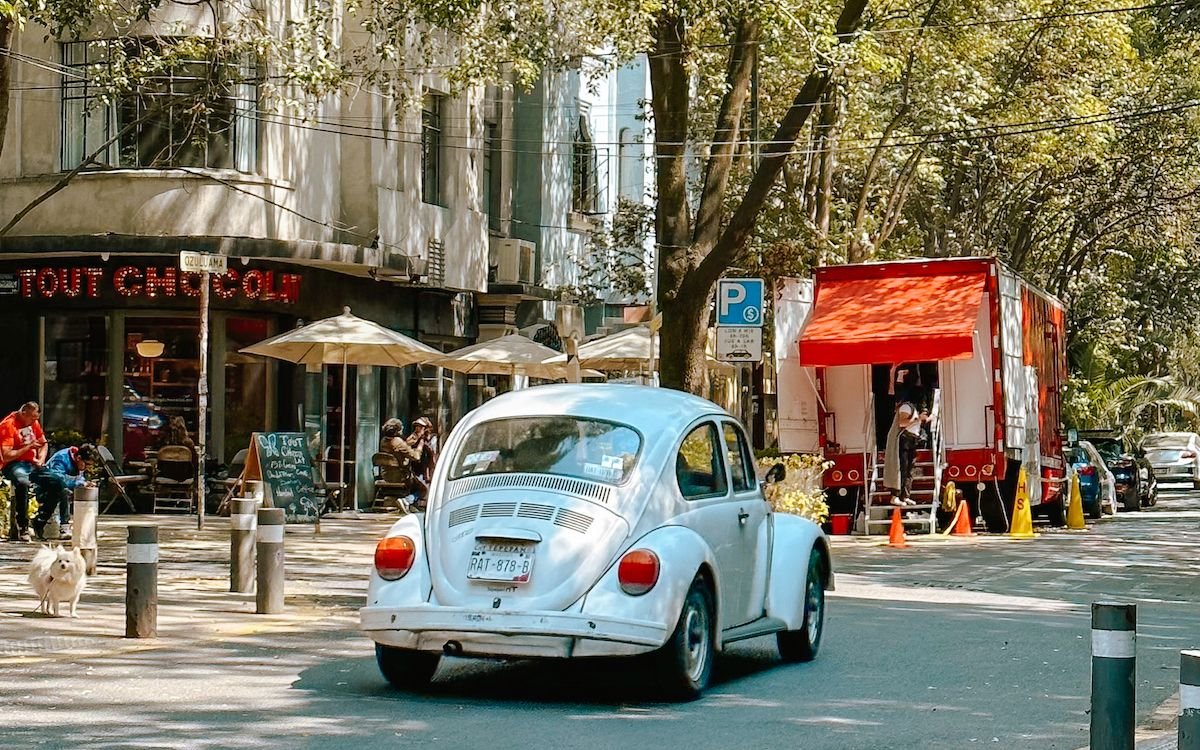
Most visitors to Mexico City stay in Roma Norte, Roma Sur, or Condesa, and conveniently those are also some of the best neighbourhoods for watching football outside the Zócalo. The trick is knowing which spots are aimed at locals and which are aimed at the post-yoga brunch crowd.
The Dog House Pub in Juárez is the one most expat football fans default to. It is British-owned, has wall-to-wall TVs, soccer memorabilia covering everything, and it pulses on match days. Every key World Cup fixture will be on, and for European games especially it will be packed. Real football bar atmosphere, food is decent pub fare, and the crowd is a genuine mix of locals and expats.
BeerGarden Roma is the more relaxed option a block over in Roma Norte. Plant-filled, open-air, and known for actually showing major sporting events properly rather than treating the match as background noise. The food menu is wider than at a typical sports bar and includes burgers and Korean fried chicken, which means it works for a group where not everyone wants traditional pub food. It also has karaoke rooms in the back, which becomes relevant after a Mexico win.
Celtics Pub in northern Condesa, on Avenida Tamaulipas 37, is the long-running Irish-themed spot that locals genuinely use. Multiple screens, a good beer selection, rooftop seating, and it stays open until 2:30 AM most nights. Walking distance to Parque México and a short stroll from Churrería El Moro, which is where everyone ends up after late matches for churros and hot chocolate.
Torito Lucas Sports Bar just off Reforma is the most football-first of the central-area bars. Its tagline is essentially "beer, football, and good vibes," and it shows every Liga MX match with promotions on game days. Multiple screens, every seat has a view, and the crowd is largely local after-work professionals rather than tourists. It is closed Sundays usually, but stays open for major Sunday matches, so check before you head out.
The cantina experience locals will tell you about if you ask
If you want the most authentic Mexico City World Cup experience, skip the sports bar entirely and find a traditional cantina. Cantinas exist in every neighbourhood, they are dark, the beer is cold and cheap, and most of them give you free botanas (small plates of snacks) with each round of drinks. The atmosphere when El Tri scores in a cantina is something a commercial sports bar cannot manufacture, because it is not designed to: it is just what happens when a roomful of locals who have been watching football in that same spot for years react to a goal.
Look for cantinas in Centro Histórico, the older parts of Roma Sur, and around Coyoacán if you are near the stadium. A draught beer runs 30 to 60 pesos, which is between $1.50 and $3 USD, and the crowd will be a complete mix of grandparents, construction workers, young professionals, and football diehards. This is the version of Mexico's football culture most travellers never see because no guidebook will give you a specific cantina name, since the whole point is that they are neighbourhood spots.
Closer to the stadium
If you are watching a match while staying near Coyoacán or have been at a game earlier in the day, Arena Sports (sometimes called Arena Cantina) on Avenida Insurgentes is the most reliable option. It is easy to access, the food has a good local reputation, and it has the screen volume to handle major matches.
Toronto: Little Portugal, Little Italy, and Fort York
Toronto hosts six World Cup matches at BMO Field, including the historic first men's FIFA World Cup match ever played on Canadian soil on June 12. The city's football culture is genuinely deep, layered through immigrant communities who have been watching tournaments in the same neighbourhood bars for decades.
The official fan zone: Fort York and The Bentway
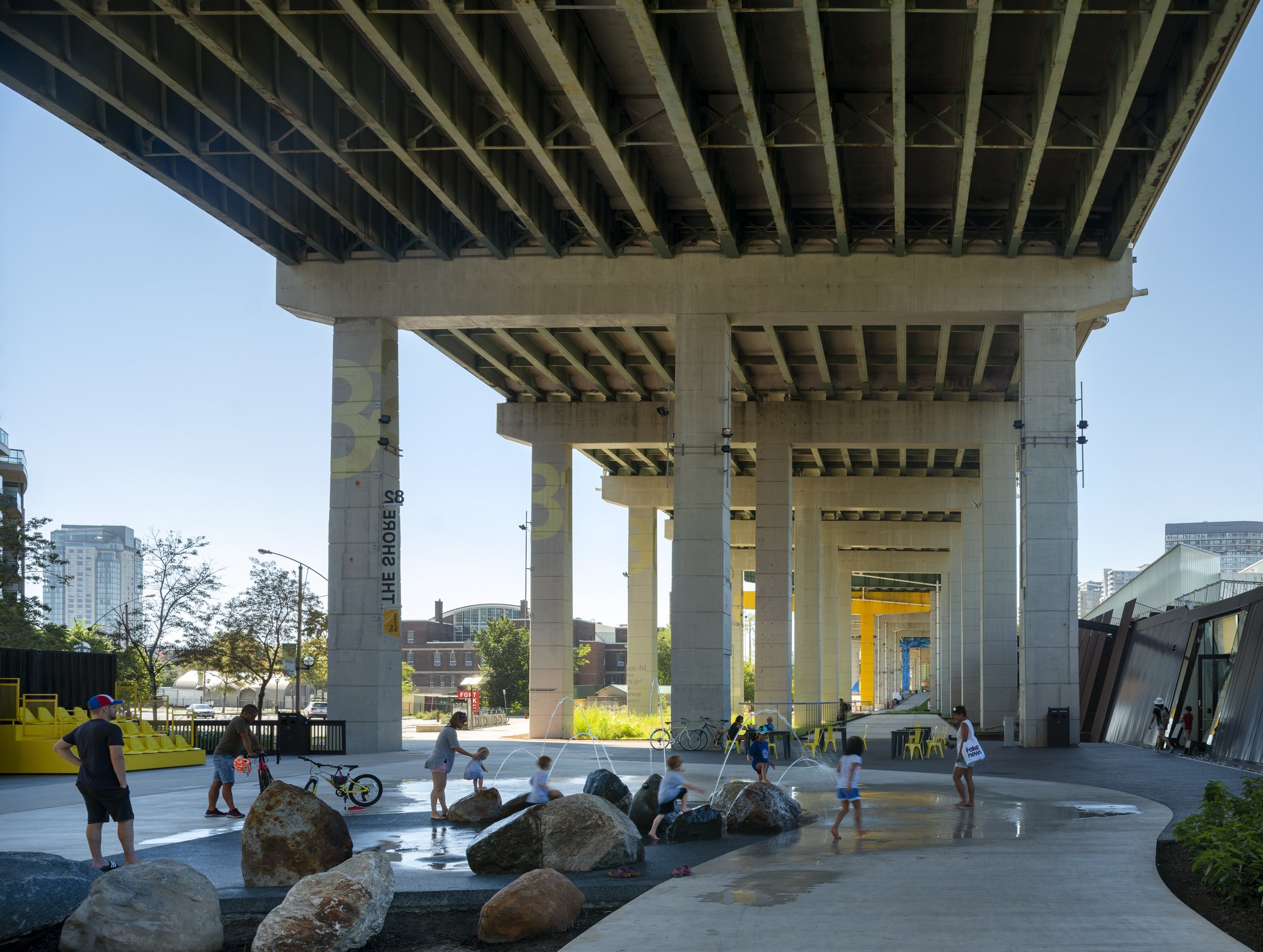
Toronto's FIFA Fan Festival is split across two adjacent venues: Fort York National Historic Site and The Bentway, the public space under the Gardiner Expressway. It runs across 22 event days from June 11 to July 19, and broadcasts 46 of the 104 matches live on large screens with cultural programming, food vendors, and family-friendly zones. The festival is free, but Toronto requires advance ticket reservations to manage capacity, which is unusual among the host cities. Tickets are released through the City of Toronto's website. About 500 tickets per day go through community organisations, so they go quickly for popular fixtures.
The location is good: walking distance from Toronto Stadium and accessible by streetcar from downtown. For the Canada matches and the round of 32 match on July 2, this will be the biggest party in the city.
Little Italy: Café Diplomatico is the soccer HQ
If you ask any longtime Torontonian where Italian fans watch football, the answer is Café Diplomatico at 594 College Street. It has been there since 1968, has 15 medium screens, two large screens, and one large panelled video wall on the patio. During major Italy matches the patio spills onto the sidewalk, then onto College Street itself. Locals call it "Soccer HQ" and the nickname is accurate.
A few doors down, The Dip has built its own loyal following over the past decade, especially among younger Italian-Canadian fans who treat the College and Clinton corner as their match-day home. When the World Cup is on, the entire block between Bathurst and Grace becomes a viewing party.
Little Portugal: Dundas West is the most underrated football neighbourhood in Toronto
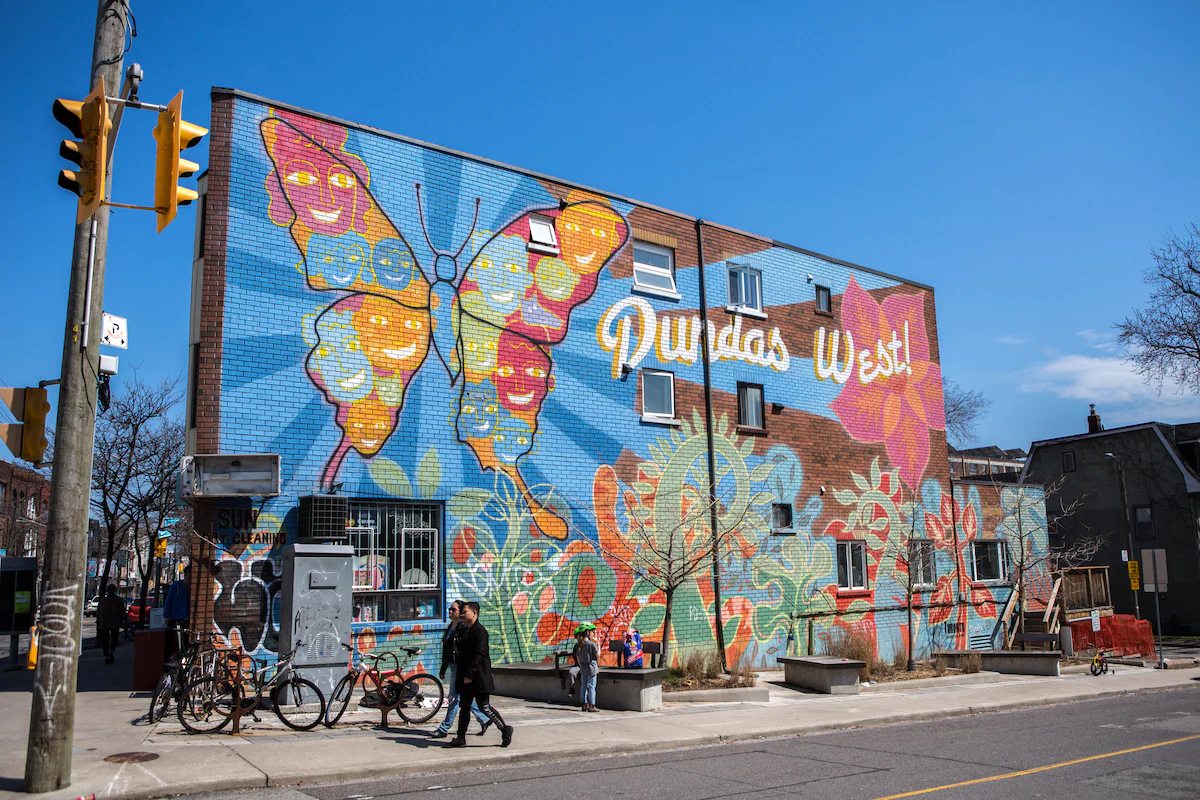
This is the area locals consistently point to when I ask where the best atmosphere will be. The Dock Ellis at 1280 Dundas West has 11 TVs, three projectors, foosball and pool, and a soccer-first regular crowd. The bar opens early for European matches and runs deep into the night when the timezone math works in its favour.
Amigos da Dundas is the bar to find if you want to watch Brazil with people who actually care. It is the regular hangout for Toronto's Bahia and Flamengo supporters clubs, and the atmosphere during Seleção matches is unmatched. Portuguese-Brazilian food (bifanas, pastel de nata, Super Bock beer) and karaoke after the match.
Rosa Branca Sports Bar is in the same neighbourhood, open until 2 AM every night, and has a pool table. Opera Bob's Public House is another nearby option that locals favour during big tournaments. The whole stretch of Dundas West between Ossington and Lansdowne becomes a viewing district during the World Cup. The advantage of basing yourself here is choice: if one place is too packed, walk a block.
Downtown for accessibility, neighbourhood pubs for character
For sheer size, Real Sports Bar & Grill next to Scotiabank Arena is the biggest spectacle: 25,000 square feet, 200 HD televisions including a 39-foot indoor screen, 125 draft taps, and seating for over 1,000. It is the obvious choice if you are downtown and need a guaranteed seat at a major match. It will be where Canada watches the national team for the games that are not at BMO Field.
The Football Factory at 164 Bathurst Street is the opposite end of the spectrum: 13 high-definition screens, four private viewing booths, and a soccer-first crowd. The booths are an underrated feature because for major matches you can essentially reserve your own controlled space rather than fighting for sightlines.
Scotland Yard in Old Town Toronto, around since 1976, is the unofficial home of Tottenham supporters and a strong choice for any England match. Queen and Beaver Public House near Eaton Centre is the other classic British pub option, and Brighton fans claim it as their own. Both are reservation-free during matches, so arrival timing matters: I would aim for 90 minutes before kickoff for any Three Lions or Brazil fixture.
For the bigger, multi-floor rooftop experience, Hemingway's at 142 Cumberland Street in Yorkville has 25 TVs across four floors and one of the largest rooftop patios in the city. It will be one of the best summer atmospheres in town for daytime matches.
Los Angeles: Boyle Heights, Koreatown, and supporters clubs scattered everywhere
Los Angeles hosts eight World Cup matches at SoFi Stadium, including two USMNT group stage games and a quarterfinal. The official FIFA Fan Festival is at the LA Memorial Coliseum, but only for the first five days of the tournament (June 11 to 15), after which the city transitions to multiple smaller fan zones distributed across LA.
LA does not have the same depth of dedicated football pub culture as Toronto or New York. What it has instead is something more interesting: the largest Mexican-American community in the United States, sizeable diaspora populations for nearly every team in the tournament, and a city geography that means watching the World Cup in LA is less a single bar experience and more a neighbourhood-by-neighbourhood map.
Boyle Heights and East LA: where Mexico plays
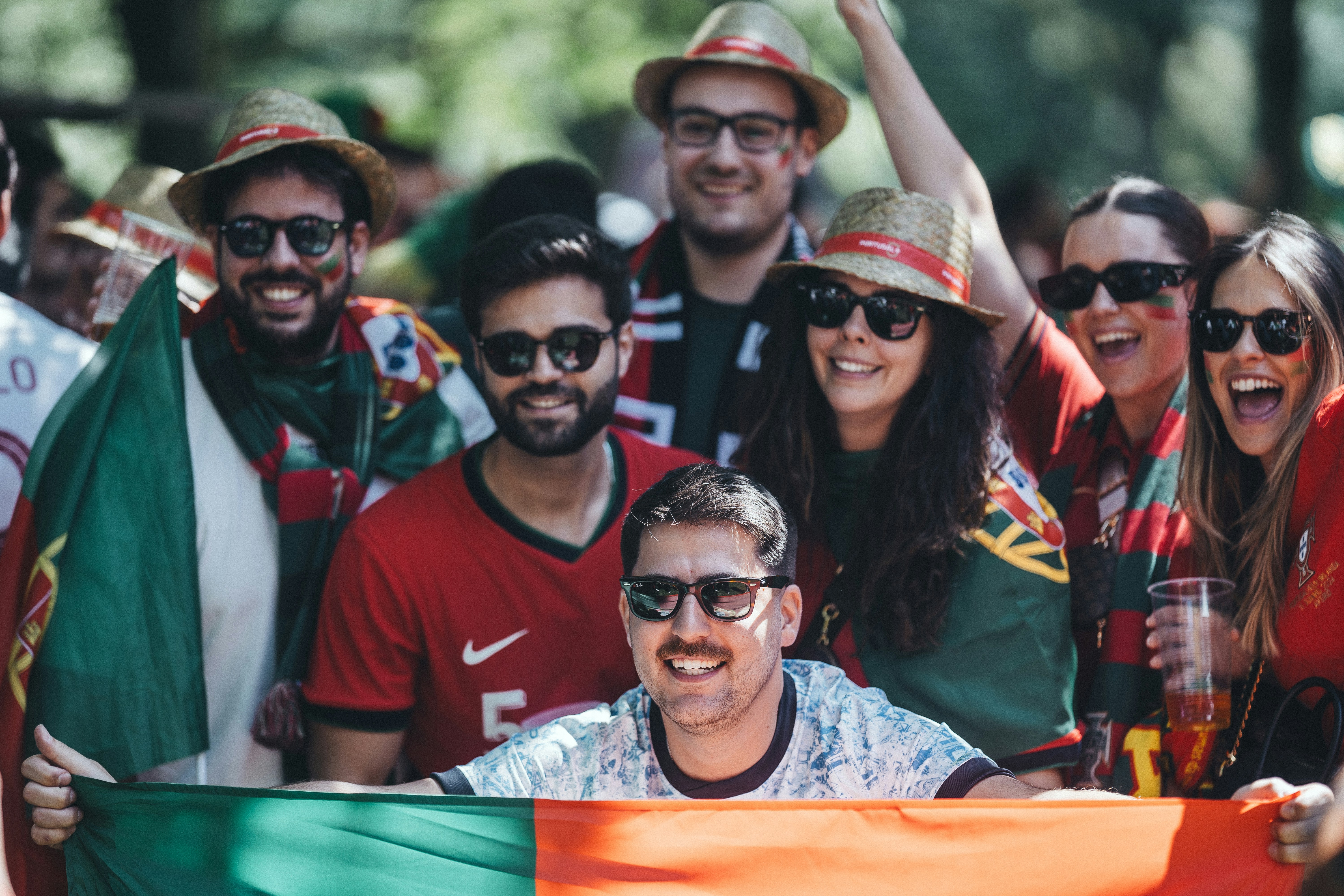
No sports bar in Los Angeles, or arguably in the United States, replicates the experience of watching Mexico play at the World Cup in Boyle Heights or East LA. This is the heartland of Mexican-American football culture in the city. When El Tri scores, cars honk from every direction, people emerge onto sidewalks, Mexican flags appear on every business, and the celebration is genuinely communal in a way commercial venues cannot engineer.
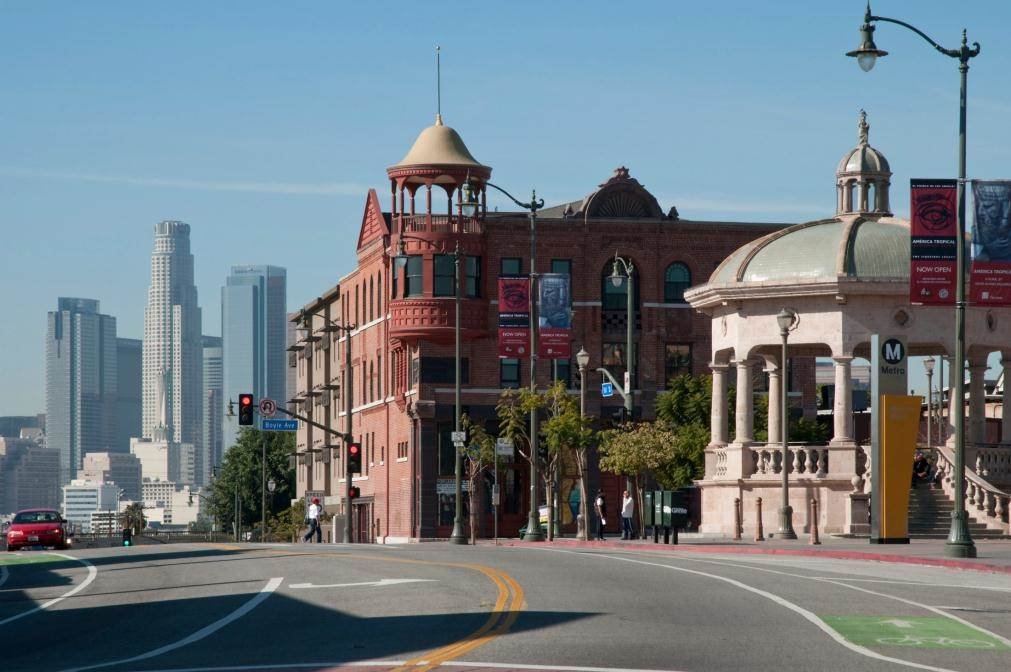
1st Street in Boyle Heights is hosting an official block party for the opening match on June 11, with a large LED screen set up near Eastside Luv. The street between Vicente Fernandez and State streets is closed for the event, and businesses along the corridor (Espacio 1839, Street Tacos and Grill, Tenampal, Casa Fina, Birrieria Don Boni, SuperNova Thrift, Distrito Catorce) are participating. The Boyle Heights Chamber of Commerce organised it specifically as a community event, with the Mariachi Plaza Metro station functioning as a welcoming platform with screens showing highlights.
Distrito Catorce at 1837 E 1st Street is one of the most interesting bars in the neighbourhood: women-owned, Latino-owned, with a taco pop-up that was named in the top 25 restaurants in LA by the New York Times. It has three TVs and a projector for evening screenings, and it is dedicated to showing both LAFC and Angel City FC games as well as international football.
César Chávez Avenue in East LA has multiple smaller bars and restaurants screening Mexico matches that locals walk to rather than drive. The street atmosphere during major El Tri games exceeds anything happening inside a formal sports bar across the city.
Lincoln Heights: La Chuperia for Liga MX die-hards
La Chuperia in Lincoln Heights is the LA bar most committed to Liga MX and the Mexican national team. It is small, walls covered in soccer memorabilia, every match shown on multiple screens usually with Spanish-language commentary. The signature drink is a michelada with a tajin-rimmed glass, and during El Tri games the energy approximates being inside the stadium. It will be intensely busy for Mexico's group stage games, so arrive early.
Koreatown: Biergarten and the international diaspora crowd
Biergarten at 206 N Western Avenue is the LA bar that gets overlooked in most sports bar guides but is actually one of the best places in the city to watch international football. Korean and German food mashup (the "Chosun" burger with grilled spam, kimchi, and pickled daikon is the menu's most famous item), parking lot seating, and they show major matches consistently. For Korea, Germany, and Japan group stage matches, it is the obvious choice. For neutrals it is one of the more interesting bar atmospheres in K-Town.
Guelaguetza in Koreatown is a Oaxacan restaurant rather than a sports bar, but it has been one of the longest-running Mexican community gathering spots for World Cup viewing in the city.
Highland Park, Culver City, and the supporters club map
LA's English Premier League supporters clubs are organised by neighbourhood, and several have their own bars. The Greyhound Bar & Grill in Highland Park is the official home of the LA Spurs (Tottenham supporters). The Fox and Hounds in Studio City is the Arsenal LA bar and opens as early as 4:30 AM for major Premier League matches with an English breakfast menu. Joxer Daly's in Culver City hosts both Liverpool and Arsenal supporter groups. Underdogs in Glendale is the official meeting spot for the Barcelona FC supporters club. Ye Olde King's Head in Santa Monica is the longstanding British pub option on the westside, and Lucky Baldwins Pub in Pasadena claims to be in the top five Belgian beer bars in the US, which translates to a very serious match-day setup with over 60 beers on tap.
Downtown LA for proximity to LA Live and SoFi
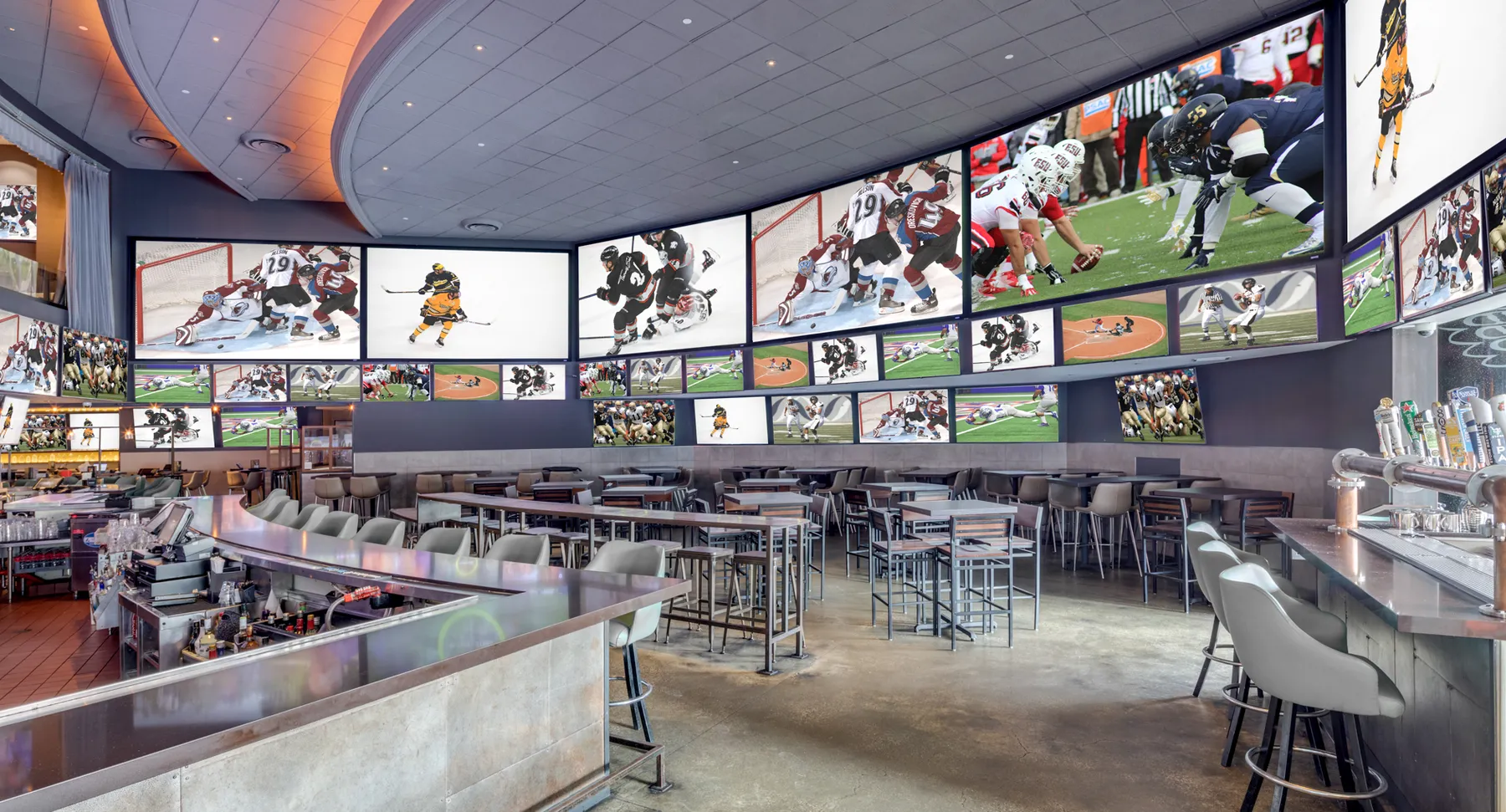
Tom's Watch Bar at 1011 S Figueroa Street, a few blocks from the place formerly known as Staples Center, has hundreds of screens and a 360-degree central screen designed specifically for sports. Founded in 2014, it does not have a cover charge and opens for 11 AM kickoffs. For pure convenience and accessibility for downtown visitors, it is the easiest option.
La Cita Bar in Downtown LA is an LAFC bar partner and one of the best places in the central area to watch Mexican soccer, both El Tri matches and Liga MX fixtures. Cork & Batter is the closest legitimate sports bar to SoFi Stadium itself, which makes it the natural pre- and post-match spot for the LA matches you cannot get inside the stadium for.
How to actually plan your viewing
A few practical things I learned the hard way during preparation for this tournament:
For the opening match on June 11 (Mexico vs South Africa) and any subsequent Mexico match, every Mexican neighbourhood in every host city will be packed. Arrive 90 minutes before kickoff or accept that you will not get a seat. The Zócalo in Mexico City and Boyle Heights in LA will be the two highest-energy viewing locations on the planet for that match.
For matches involving any team with a significant diaspora in your city (Italy in Toronto's Little Italy, Brazil in Toronto's Little Portugal, Korea in Koreatown LA, England at Scotland Yard, Spain at Underdogs), go to the diaspora neighbourhood. The atmosphere is fundamentally different from a neutral sports bar.
For the official FIFA Fan Festivals, Toronto requires advance ticket reservations through the City of Toronto's website. Mexico City and LA do not, but capacity will be a real constraint for major matches, so plan to arrive early or come at off-peak hours.
For matches you do not care about strongly, smaller neighbourhood bars are almost always a better experience than the larger downtown sports bars. The crowd is more invested, the screens are easier to see, and the seats are easier to get.
Experience the World Cup Beyond the Stadium
Reading about these neighbourhoods is one thing. Walking through them with someone who actually lives there on match day is something else entirely.
It is grabbing tacos in Roma Norte before kickoff with a local who knows where fans gather before the streets fill up. It is wandering through Kensington Market in Toronto discussing the match with someone who grew up there. It is discovering a tucked-away food spot in Boyle Heights you never would have found on your own, talking football, culture, music, and the city between matches.
That is the experience Lokafy is built for. We connect travellers with locals who can walk the city with you before the match, after the match, or on the days in between. Not a scripted tour. Not a generic fan package. Just real conversations, local stories, hidden spots, neighbourhood energy, and the kind of experience you only get when someone who actually lives there shows you around.
Flying in for a game? Book a local on your first day.
They will show you where fans actually gather before kickoff, which cafés and neighbourhood spots locals actually love, which areas are worth exploring on foot, which places are overcrowded with tourists, and where the city feels most alive during the tournament.
Because the best part of the World Cup is never just the stadium. It is the city around it.
Frequently Asked Questions
Where is the 2026 FIFA Fan Festival in Mexico City?
The official FIFA Fan Festival in Mexico City is at the Zócalo, the historic central plaza in the Centro Histórico district. It runs throughout the entire tournament from June 11 to July 19, broadcasts every match live on large screens, and is free to enter with no advance ticket required. It is the largest single fan zone in Mexico for the World Cup and the natural choice for the opening match and any Mexico fixture.
Do I need a ticket for the FIFA Fan Festival in Toronto?
Yes. Toronto is the only major host city requiring advance ticket reservations for its FIFA Fan Festival. The festival runs at Fort York National Historic Site and The Bentway across 22 event days from June 11 to July 19. General admission is free but you need to reserve tickets in advance through the City of Toronto's official website. Capacity is limited daily, and about 500 tickets per day are distributed through community organisations, so book early for the matches you care about.
What is the best neighbourhood in Los Angeles to watch the World Cup as a local?
It depends which team you are watching. For Mexico matches, Boyle Heights and East LA have the most authentic and intense atmosphere in the city, with 1st Street hosting an official block party for the opening match. For Korean and German matches, Koreatown is the strongest choice, particularly Biergarten on N Western Avenue. For English Premier League nations, Highland Park (Greyhound), Studio City (Fox and Hounds), and Culver City (Joxer Daly's) each have established supporters clubs. Downtown LA is the easiest base if you want flexibility and proximity to SoFi Stadium.
Are the FIFA Fan Festivals free?
Yes, every official FIFA Fan Festival across the 16 host cities is free to enter, though Toronto uniquely requires advance ticket reservations to manage capacity. Inside the festivals there are paid food vendors, premium hospitality upgrades, and sponsor activations, but standard admission to watch matches costs nothing. This is the largest free public viewing initiative in World Cup history, with FIFA broadcasting all 104 matches across 39 days.
Where do locals in Mexico City actually watch football, away from the tourist sports bars?
Traditional cantinas in Centro Histórico, Roma Sur, and Coyoacán are where most locals watch matches, especially older fans and working-class crowds. Cantinas are typically dark, cheap (beer runs 30 to 60 pesos, around $1.50 to $3 USD), and serve free botanas with each round of drinks. The atmosphere when Mexico scores in a cantina is uniquely communal. For younger locals and a mix of locals and expats, the Roma and Condesa pubs like Celtics Pub, BeerGarden Roma, and The Dog House Pub draw the crowds. Torito Lucas near Reforma is the most football-first option among the central-area bars.
What is the best bar to watch the World Cup in Toronto's Little Portugal?
The Dock Ellis at 1280 Dundas West is the most established option, with 11 TVs, three projectors, and a soccer-first regular crowd. Amigos da Dundas is the place to be for Brazil matches, as it is the regular hangout for Toronto's Bahia and Flamengo supporters clubs. Rosa Branca Sports Bar stays open until 2 AM nightly with a pool table for downtime between matches. Opera Bob's Public House and Man of Kent are other neighbourhood options. The entire stretch of Dundas West between Ossington and Lansdowne functions as a viewing district during the tournament.
Can I watch every World Cup 2026 match for free at a fan zone?
Yes. The FIFA Fan Festival programme across all 16 host cities broadcasts every one of the 104 matches live on large screens for free, from the opening match on June 11 at Mexico City Stadium through the final on July 19 at MetLife Stadium near New York. Some host cities operate for the full 39 days of the tournament (Philadelphia, Houston, Toronto over 22 event days), while others run shorter windows (Los Angeles' Coliseum festival runs only June 11 to 15 before transitioning to distributed fan zones across the city). Check the FIFA Fan Festival page for your host city for exact daily operating hours.
What I would actually do if I had a few days in each city
In Mexico City, I would watch the opening match at the Zócalo for the spectacle, then base my evenings around Roma and Condesa bars (BeerGarden Roma, Torito Lucas, Celtics Pub) for the rest of the tournament, with one cantina detour in Centro Histórico for a midweek match. Skip the touristy hotel rooftops entirely.
In Toronto, I would do at least one match at the FIFA Fan Festival at Fort York, but spend the rest of my time on Dundas West in Little Portugal for European matches and on College Street in Little Italy if Italy makes a run. Real Sports works for one big group outing, but it is not where the actual character of the city lives.
In Los Angeles, I would watch a Mexico match in Boyle Heights without question. The 1st Street block party on June 11 will be one of the most memorable single events of the tournament anywhere in the world. For European matches, Biergarten in Koreatown or the specific supporters club bar for your team. For everything else, La Cita Bar or Tom's Watch Bar downtown will get the job done.
The best part of watching a World Cup in a host city is not the official fan zone or the most famous sports bar. It is finding the neighbourhood that has been waiting for this moment for years, and being inside it when their team scores.
Enjoyed this article?