Antalya has a problem most cities would envy. It has too much. Roman gates, Ottoman alleys, a 13th-century minaret, two of the best-preserved ancient theatres in the world, mountains that drop straight into the Mediterranean, and a beach scene that pulls more than fifteen million visitors a year. The guidebooks try to cover all of it. They end up covering none of it well.
Locals are quietly tired of this. They are tired of watching travellers pay heavily inflated prices for a watered-down juice on the marina when there is a perfectly fine version three streets up. They are tired of the same five Kaleiçi photos, taken from the same angle, by people who never made it past Hadrian's Gate and they are tired of the assumption that Antalya is a beach city. It is not. It is an ancient port city with very good beaches attached.
This guide is what I wish I had been handed when I first arrived. It is the version locals would actually write if guidebooks paid them to be honest. What to see, what to eat, and what to skip without guilt.
A Quick Definition Before You Plan Anything
Antalya is not one place. It is a sprawling Mediterranean province on Turkey's southern coast, anchored by a city of the same name. The city itself is split into three areas that matter to a visitor. Kaleiçi is the walled old town where almost every traveller stays. Muratpaşa is the modern city centre that wraps around it, where most of the actual residents live, eat, and drink. Konyaaltı is the long pebble beach to the west, backed by the Taurus Mountains. Lara is the sandy beach strip to the east, dominated by all-inclusive resorts.
If you book a hotel in Lara, you are not really in Antalya. You are in a resort that happens to share a postcode. Locals will tell you this without softening it.
Kaleiçi: What Locals Actually Think
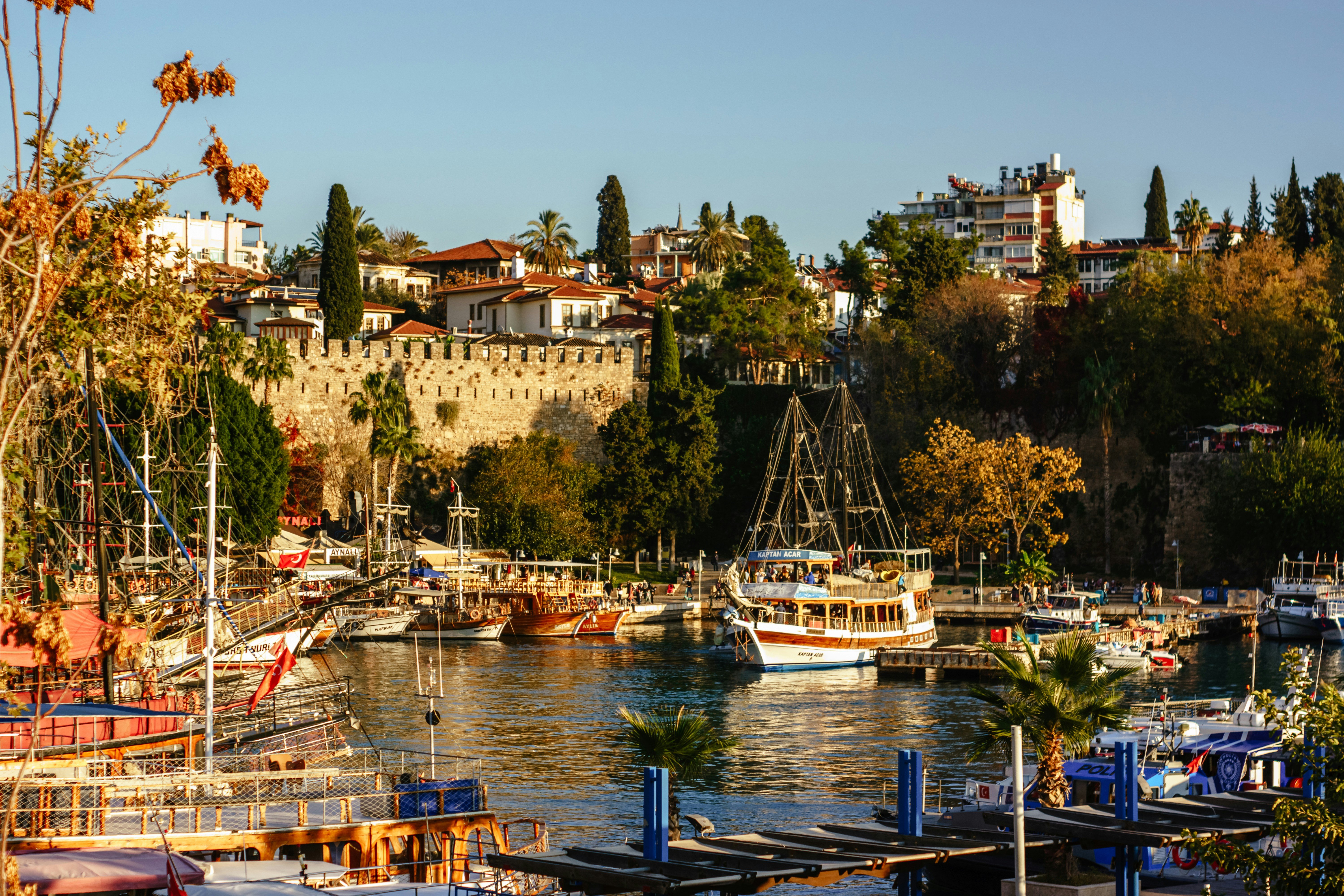
Yes, you should go. No, you should not stay there longer than half a day on your first pass.
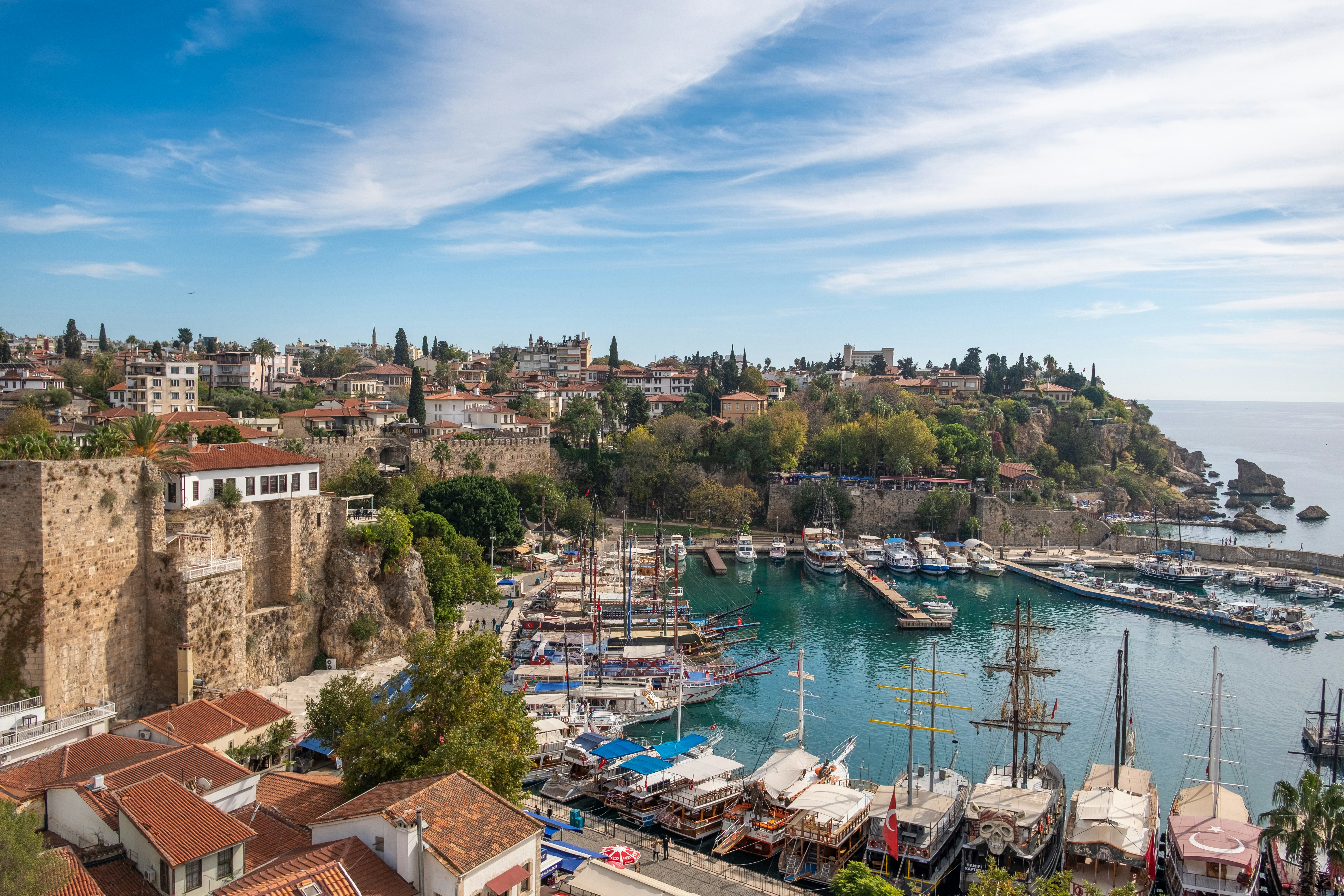
Kaleiçi is genuinely beautiful. The cobblestone lanes, the Ottoman houses with wooden bay windows, the orange trees in courtyards, the cats sleeping on every flat surface. It is one of the most atmospheric old towns in Turkey, and the fact that you can walk through Hadrian's Gate, past a 13th-century mosque, and onto a Roman harbour in fifteen minutes is genuinely extraordinary.
But here is what locals know that guidebooks do not say out loud. The Kaleiçi you see between Hadrian's Gate and the marina is the most heavily worked tourist strip in the city. The carpet shops will pull you in for tea and spend ninety minutes wearing you down. The restaurant menus in the lanes immediately around the harbour are translated into eight languages and priced accordingly. The "authentic Turkish breakfast" advertised on chalkboards in this strip will cost you several times what the same spread costs three blocks inland.
The fix is simple. Walk in through Hadrian's Gate, see the Yivli Minaret and the clock tower, take your photos at the harbour, and then leave. The good half of Kaleiçi is the southern half, around Hıdırlık Tower and Karaalioğlu Park, where the cliffs drop into the sea and locals actually come for sunset.
Hadrian's Gate Is Free. Treat It That Way.
Hadrian's Gate is the most photographed thing in the city. It was built in 130 AD to welcome the Emperor Hadrian. The marble carving is still extraordinary, and standing under the central arch where Roman emperors once rode through is a real moment.
It is also free, open 24 hours a day with no ticket required, and you do not need a guide for it. If anyone approaches you near the gate offering to take you on a private historical tour for a "small donation," be cautious. Real licensed guides in Turkey go through a long official accreditation process and carry ID. Ask to see it. If they cannot produce it, walk away.
Best time to actually enjoy the gate: 7 to 9am, before the cruise ship groups arrive, and again around sunset when the light hits the marble.
The Marina Is Where Locals Lose Their Patience
The Roman Harbour is one of the prettiest spots in the city. Wooden gulet boats, blue water, restored stone walls, the old town climbing the cliff behind it. Worth a walk. Worth a photo.
Not worth a meal.
The restaurants directly on the marina are the textbook tourist trap that locals warn every visiting friend about. Three common issues to watch for. First, the menu switch, where you are handed a menu with prices and then billed from a different one. Always photograph the menu before you order. Second, unrequested extras, where bread, olives, salad, or a small plate of meze arrive uninvited and appear on the bill. Ask before you touch anything. If you did not order it, it is not free unless they explicitly say so. Third, the fish-by-the-kilo trick, where you point at a fish, do not get a written price, and discover at the end that the "fresh catch" costs significantly more than the going rate.
None of this means Antalya is unsafe. It is one of the friendliest cities you will visit. It just means the marina restaurants are working a tourist economy, and locals never eat there.
Where locals actually go for seafood: Lara Balık, which has two branches, one in Konyaaltı with sea views and one on the cliffs of Işıklar in Muratpaşa. Both are sit-down, properly local, and worth the trip. The Şirinyalı neighbourhood, a residential pocket east of the centre, also has some of the best mid-range Turkish food in the city.
What to Eat (That Is Genuinely Local)
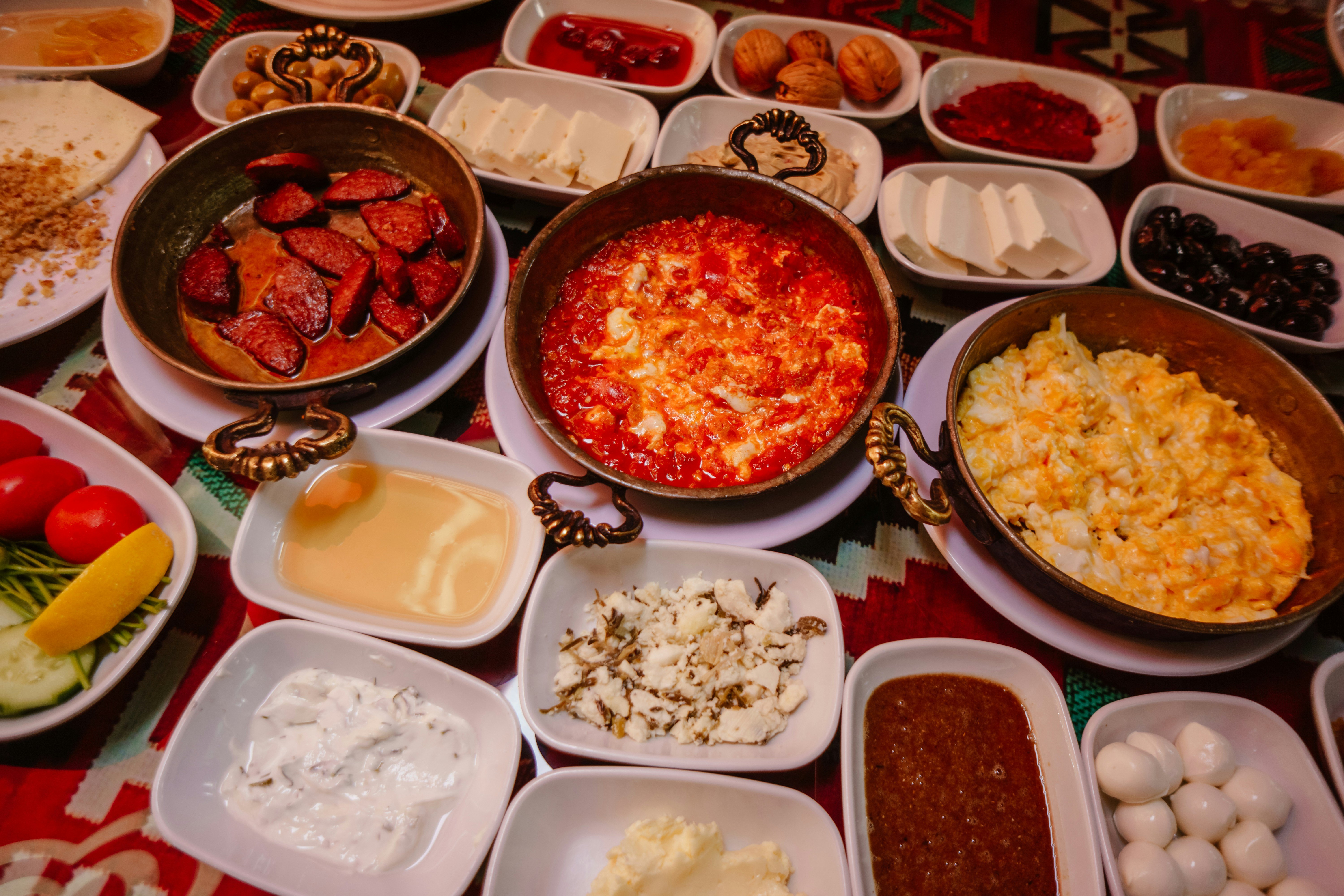
Antalya has a food identity that gets buried under the all-inclusive buffet experience. Most visitors leave having eaten generic kebabs and never tasted anything specifically Antalyan. That is a small tragedy.
Here is what to actually order, in rough priority.
- Piyaz. This is Antalya's signature dish, and you will not find this version anywhere else in Turkey. White beans, hard-boiled egg, tahini, vinegar, sumac, a lot of garlic. Eaten as a meal, not a side. Piyazcı Ahmet in Muratpaşa is the institution, family-run since 1996, open daily, and the piyaz comes with kofte and a small pumpkin dessert that you should also order. Address: Altındağ Mahallesi, 166. Sokak, Muratpaşa.
- Şiş köfte from the bazaar district. Grilled lamb meatballs, served with rice, salad, and flatbread. Cheap, fast, and the versions sold around the Dönerciler Çarşısı (the doner sellers' market on Atatürk Boulevard) are better than most of what you will be served in restaurants.
- Tandır kebab. Slow-cooked lamb that has been sitting in a clay oven for hours until it falls apart at a glance. Look for places where the sign actually says tandır rather than restaurants where it appears as one item among a hundred on a tourist menu.
- Hülüklü çorba. A meatball and chickpea soup that locals eat at home, especially in colder months. Rare on tourist menus, common in lokantas (no-nonsense home-style restaurants where you point at what you want behind a glass counter). Order it when you see it.
- Pide and lahmacun on Işıklar Street. Pide is the boat-shaped Turkish flatbread loaded with cheese, meat, or vegetables. Lahmacun is the thin, crispy version that looks like pizza and costs almost nothing. Atatürk Boulevard transitions into Işıklar Street and that whole stretch has the cafés and pide spots locals actually use.
- Çay in a çay bahçesi (tea garden). Karaalioğlu Park, the long clifftop park at the southern edge of Kaleiçi, has tea gardens where a glass of çay costs almost nothing and buys you an hour of sea view. This is what Antalya residents do on a Sunday afternoon. Join them.
- A proper Turkish breakfast (kahvaltı) in Konyaaltı. Cheeses, olives, eggs, honey, fresh bread, tomato and cucumber, a dozen small plates. The Konyaaltı promenade has a string of cafés with sea views where the spread is generous and the prices are sensible. The same breakfast on the Kaleiçi tourist strip costs several times more.
The Cafés That Are Worth Ducking Into
Kaleiçi has hundreds of cafés. Most are designed for one-time visitors. The ones locals actually return to tend to be tucked into Hıdırlık Sokak (the quieter southern lane near the tower), or sit just outside the old town walls along Işıklar Street and Atatürk Boulevard, where the nostalgic tram passes every few minutes.
A few practical pointers locals use to pick a café. Look for tables full of Turkish speakers rather than empty terraces facing the main lane. Look for menus written in Turkish first, with translations as an afterthought. Avoid anywhere with an English-speaking host trying to wave you in from the door.
The tea gardens along the edges of Karaalioğlu Park are the most reliable bet in the old town. They are not Instagram destinations. They are where Antalya residents read newspapers, smoke, and stretch one tea over an entire afternoon.
For specialty coffee, head into Muratpaşa proper rather than the old town. Konyaaltı has a small but real third-wave scene around the Akdeniz Boulevard area.
Aspendos vs Termessos vs Perge: Pick One, Maybe Two
This is where most visitors waste a day. They book a generic tour that promises "Perge, Aspendos, and Düden Waterfalls in one day," get rushed through all three, and remember none. Locals would tell you to pick one, do it properly, and add a swim or a meal instead of cramming a third site.
Here is the honest breakdown.
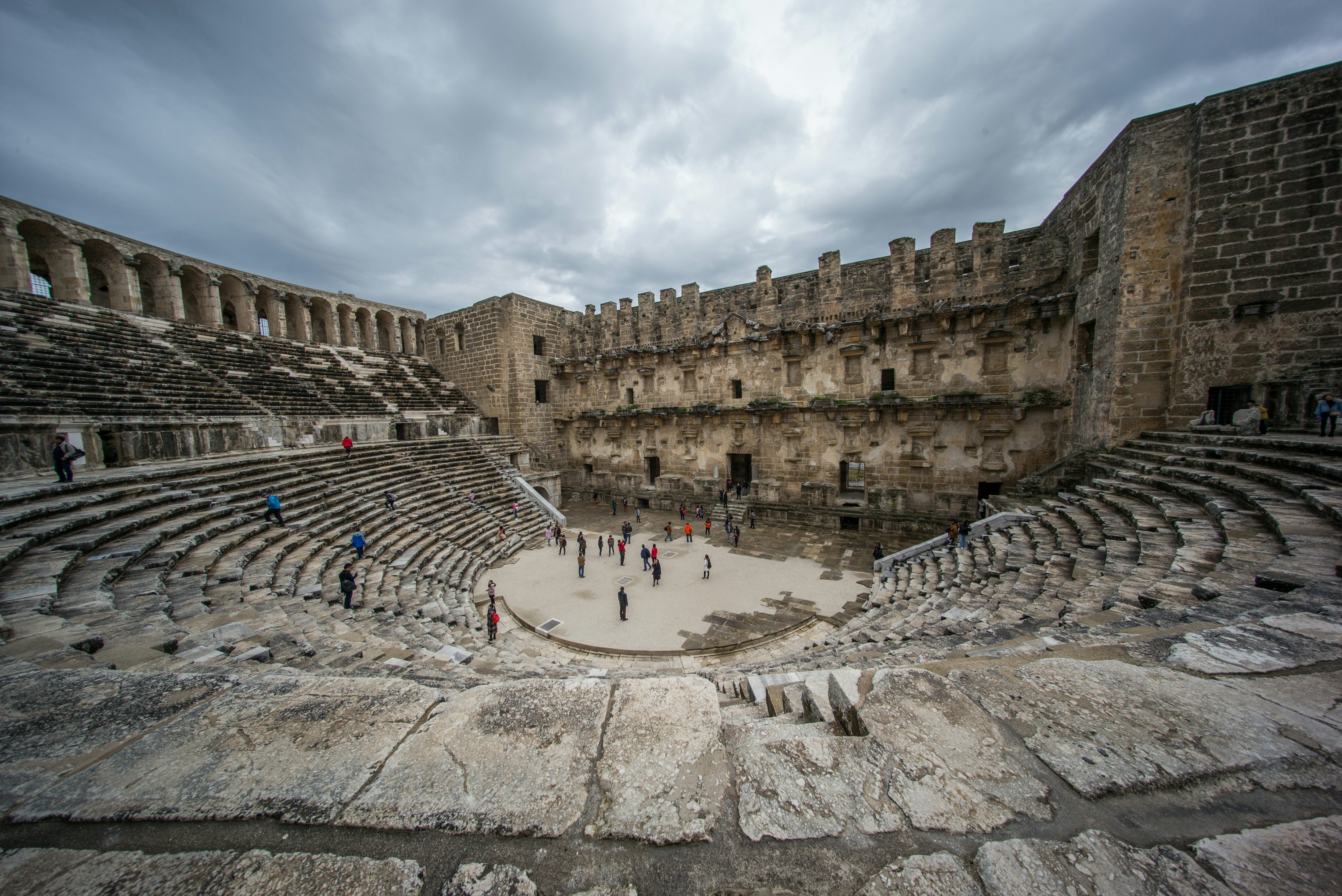
Aspendos is the spectacle. A nearly intact Roman theatre from the 2nd century AD, still acoustically functional, still used for the annual International Opera and Ballet Festival. The structure is one of the best-preserved Roman theatres in the world. If you have only one day for ancient sites and you want the "wow" moment, this is it. About 45 minutes east of Antalya. Entrance is currently €15, free if you have the Museum Pass. Open 8am to 7pm in summer (April to October) and 8:30am to 5:30pm in winter. Most people miss the aqueduct and acropolis behind the theatre, which is worth the extra half hour.
Termessos is the adventure. An unexcavated Pisidian mountain city at over 1,000 metres altitude that Alexander the Great famously failed to conquer in 333 BC. The ruins are wild, scattered through pine forest, and the theatre carved into the mountainside has views that genuinely make you stop talking. It is inside Güllük Dağı National Park, about 30 km from Antalya. You drive (or take a taxi) up a winding road through the national park, park near the entrance, and then there is a steep uphill hike to reach the main ruins. Wear proper shoes, bring water, and budget at least 3 to 4 hours. Far fewer tourists than Aspendos. The Museum Pass is also valid here. If you only see one site and you can handle the climb, locals would point you here.
Perge is the academic choice. A flat, sprawling Greco-Roman city with the best-preserved stadium and street grid in the region. Less dramatic than Aspendos, less wild than Termessos, but the most complete picture of what an ancient city actually looked like day-to-day. Entrance currently €11. Easily reached via the AntRay tram to Aksu and a short walk. Worth it if you have a genuine interest in archaeology. Skip it if you do not.
The combination locals quietly recommend: Termessos in the morning, then back via Düden Upper Waterfalls (in a pine forest, where locals actually picnic) for a swim and a late lunch. Aspendos on a different day, paired with Köprülü Canyon for white-water rafting or a riverside trout lunch.
If you have a Museum Pass Turkey, both Aspendos and Termessos are included, along with many other sites across the country. Worth doing the maths if you are visiting more than two ticketed sites.
The Beaches: Konyaaltı, Lara, and Why Locals Skip Both in July
Konyaaltı is the long pebble beach to the west of the city, backed by the Taurus Mountains. The view is genuinely cinematic. Bring water shoes because the pebbles are unforgiving.
Lara is the sandy beach to the east, lined with five-star all-inclusive hotels. The sand is fine. The experience is essentially private resort frontage.
What locals actually do in July and August, when both beaches are crowded by mid-morning and the city is regularly above 35 degrees: they leave. Çıralı, a small village about an hour and a half south, is a protected sea-turtle nesting beach with no hotel towers, simple guesthouses, and a long stretch of unspoiled coast. The Olympos ruins are walkable from the beach, and the eternal flames of the Chimaera burn from the rocks above the village. This is where Antalya residents take their families for the weekend.
Other quiet beach moves: Mermerli Beach, a tiny private cove tucked behind the Kaleiçi cliffs that almost no one notices, and Kaputaş Beach, a turquoise cove a few hours west on the way to Kaş, with views that look photoshopped.
Sunset: Where to Be at 7pm
There is no debate about this among locals. The two correct answers are Hıdırlık Tower at the southern edge of Kaleiçi, and the cliffs of Karaalioğlu Park just behind it.
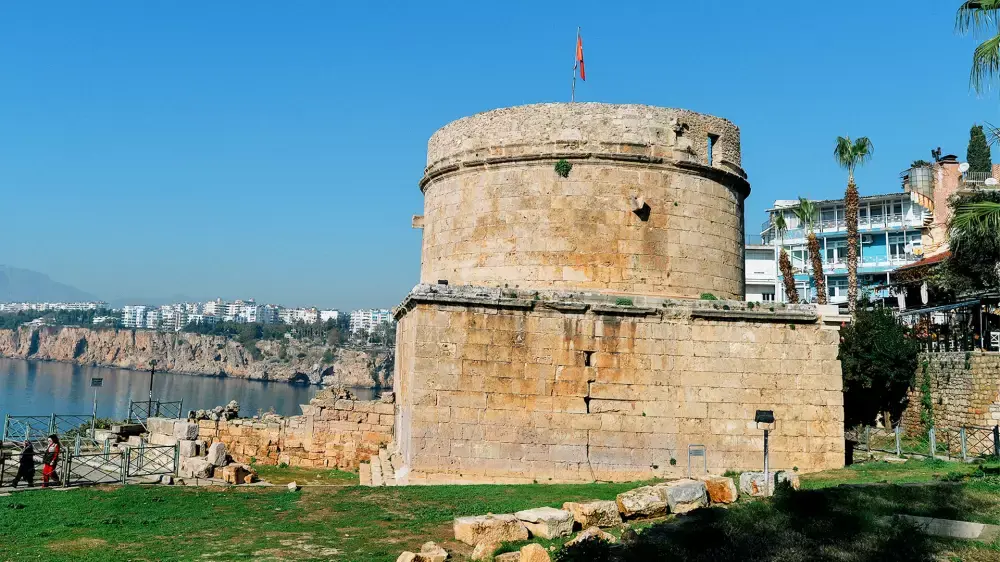
Hıdırlık Tower is a Roman-era stone tower at the corner where Kaleiçi's walls meet the sea. The bench in front of it faces directly west across the bay toward the mountains. The light at sunset turns the whole bay orange. This is the photo your friends will think you took for a magazine.
Karaalioğlu Park has tea gardens spread along the clifftop with tables facing the same view. You pay for a tea and you can sit there as long as you want. No one will rush you.
The other option, less obvious but worth mentioning: cross to the Konyaaltı side of the bay and look back at the city. From there, Antalya's old town and the Taurus Mountains line up in a way that no marina cruise will give you.
Day Trips Worth Your Time, Day Trips That Aren't
Worth the drive: Termessos for the adventure, Aspendos if you only want one ruin, Köprülü Canyon for the rafting and trout lunches, Olympos and Çıralı for the beach and Chimaera flames, and the Düden Upper Waterfalls for a forest picnic.
Skip on a short trip: Pamukkale (it is roughly a four-hour drive each way, with a €30 entrance fee, and access to the travertines is now restricted to barefoot walking on designated paths only). The "Land of Legends" theme park is well-built but you did not come to Antalya for a water park. Most day-trip tours that promise Side, Manavgat Waterfall, and a boat trip in one day mean you will spend more time on a bus than at any actual destination.
Side has its moments, particularly the Temple of Apollo at sunset, but the town itself is now wall-to-wall souvenir shops and a heavy package-tourism scene.
When to Visit (Locals Have Strong Opinions)
April to early June: the best window. Warm but not punishing, sea swimmable from mid-May, wildflowers in the Taurus, ruins without sun damage. Most locals will name this as the right time.
July to August: the wrong time, unless you specifically want the beach-resort experience. Daytime temperatures often above 35 degrees, ruins are unwalkable by mid-morning, hotels at peak prices, Konyaaltı packed early. If you must come, plan your sightseeing for the very early morning and after 6pm.
September to October: locals' second favourite. The sea is still warm, summer crowds drop sharply after mid-September, evenings are perfect.
November to March: quiet, mild, occasionally rainy. The light is beautiful, the ruins are almost empty, you can have Aspendos to yourself on a winter morning. The catch is that smaller seaside villages like Çıralı largely close down.
Things Almost No Guidebook Mentions
A few specific things locals know that rarely appear in print.
Get an AntalyaKart at the airport, a kiosk, or one of the vending machines around tram and bus stations. You will need it for almost all public transport, since most buses no longer accept cash. The card itself costs very little and you load Turkish lira onto it. It works on the AntRay tram, the nostalgic heritage tram along Atatürk Boulevard, and city buses. Transfers within an hour are free. The AntalyaKart Mobil app lets you check balances, top up, and look up bus routes in real time.
The nostalgic tram (Nostalji Tramvayı) that runs the short coastal route past the Antalya Museum, along the Konyaaltı cliffs, and on to Kaleiçi is one of the great cheap pleasures of the city. Hop on at the museum end, ride to the old town, and you have done a low-effort city tour for the price of a bus fare.
Bargaining is expected in the bazaars and souvenir shops, but not in restaurants, cafés, or anywhere with set prices. Starting at around 60 percent of the asking price is standard. Walking away politely usually drops the price further.
Friday afternoon mosque prayer is loud and beautiful in Kaleiçi, with calls echoing between the walls of multiple mosques at once. If you can be near the Yivli Minaret around 1pm on a Friday, do it.
Antalya is more liberal than Istanbul or Ankara on dress. Bikinis and shorts are fine in the old town and beaches. But cover shoulders and knees if you are entering a mosque, and dress slightly more modestly if you head into traditional rural villages on day trips.
Yellow taxis are metered. If a driver tells you the meter is broken or quotes a flat price upfront, get out and find another one. The Uber and BiTaksi apps both work in Antalya and remove the negotiation entirely.
Frequently Asked Questions
Is Antalya worth visiting beyond the beach? Yes, and the beach is arguably the least interesting reason to come. The combination of Roman ruins, an Ottoman old town, mountain canyons, and one of the best ancient theatres in the world makes Antalya one of the richest single bases in Turkey. The beaches are a bonus, not the headline.
What should I eat in Antalya that I cannot get elsewhere? Piyaz, the local white-bean and tahini dish, is unique to this region. Beyond that, Antalya does mezze, fresh seafood, and slow-cooked lamb (tandır kebab) very well. Hülüklü çorba, a chickpea and meatball soup, is a local home-cooking dish worth ordering when you see it on a lokanta menu.
Which ancient site should I prioritise: Aspendos, Termessos, or Perge? If you only have time for one, the answer depends on what you want. Aspendos for the most dramatic preserved theatre, Termessos for the wildest setting and the lightest crowds, Perge for the most complete city layout. Most locals would send a first-time visitor to Aspendos, then Termessos on a return trip. Entrance fees are currently €15 for Aspendos and €11 for Perge, both included on the Museum Pass Turkey.
Are there tourist scams I should watch for in Antalya? A few common ones. The menu switch (always photograph the menu before ordering), unrequested extras added to your bill (ask if anything you did not order is free), unlicensed "guides" near Hadrian's Gate (real guides are officially licensed and carry ID), and fish-by-the-kilo restaurants on the marina that quote you a price only at the end. Taxis with "broken" meters are another classic. Stay in the old town, away from the harbour-front restaurants, and use a ride app for taxis, and you avoid almost all of it.
What is the best neighbourhood to stay in Antalya? Kaleiçi for atmosphere, history, and walking access to almost everything. Konyaaltı if you want a beach holiday with proper local restaurants. Avoid Lara unless you specifically want an all-inclusive resort experience, because you will be cut off from the city.
When is the best time to visit Antalya? April to early June, and September to October. Warm, dry, and sea-swimmable, without the July and August peak crowds and prices. November to March is quiet and atmospheric but some coastal villages shut down.
How many days do I need in Antalya? Three full days is the minimum to see the old town properly, do one ancient site, and have a half-day on the beach. Five days lets you do two ancient sites, a Çıralı or Olympos overnight, and slow down enough to actually eat well. A week opens up Köprülü Canyon, Pamukkale (a long day trip), or Kaş.

See Antalya the Way Locals Live It
A city with this much history rewards slow walking and local context. The carved details on Hadrian's Gate, the right table at Piyazcı Ahmet, the side lane in Kaleiçi where the cats sleep and no one is selling you anything, the bench at Hıdırlık Tower at sunset. None of this is hard to find once someone shows you. All of it is easy to miss if you arrive cold.
A Lokafy local in Antalya can walk you through Kaleiçi without you eating a 900 lira breakfast, take you to the right neighbourhood lokanta for piyaz, and tell you which day trip is worth your time based on what kind of traveller you are. A private walking tour in Antalya with someone who actually lives there is the difference between a city you photographed and a city you understood.
This guide is built from conversations with Lokafy locals in Antalya and from on-the-ground insights that consistently surface among residents rather than guidebook publishers. It reflects a city that is generous with its visitors and quietly hopes they will look past the marina.
Enjoyed this article?