The first time I took the train from Vienna to Bratislava, I spent the whole hour convinced I had made some kind of mistake. Two capital cities, two countries, and the ride was shorter than my morning commute back home. I kept waiting for the catch. There wasn't one. You can have breakfast under the chandeliers of a Viennese coffeehouse and be eating warm sheep cheese dumplings in a Slovak pub before the afternoon is out, and the only thing you cross on the way is a quiet stretch of the Danube and some farmland. So when people ask me to settle the Vienna vs Bratislava question once and for all, my honest first answer is: why pick? They are the closest pair of capital cities in the European Union, and the smartest travelers treat that as a gift rather than a decision.
That said, the two cities are nothing alike, and if your time really is short, the differences matter. Here is the quick version before we get into it.
Quick Guide: Vienna vs Bratislava
- Primary recommendation: If you only have time for one, choose Vienna. It is one of Europe's great cultural capitals and needs at least two full days. But it sits an hour from Bratislava by direct train, so the better move is to base in Vienna and give Bratislava a day.
- Top choice for food and coffee culture: Vienna, for its coffeehouses, beisl bistros, and Heuriger wine taverns.
- Value pick and easygoing vibe: Bratislava, where a hearty traditional meal runs under twelve euros and a local beer can cost under three. Ideal for travelers who want charm and old-town cobbles without Western European prices.
- The best way to see either city: Take a private, personalized walking experience with a local in Vienna or a local in Bratislava on Lokafy and discover the neighborhoods, bites, and back streets a local actually loves, built around your own pace and interests.
Two Capitals, an Hour and a River Apart
Here is the geography that makes this whole comparison unusual. Vienna and Bratislava are around 55 kilometres apart, close enough that on a clear day you can see across the border from the hills above the Slovak capital. No two national capitals in the EU sit nearer to each other. For most of history they were part of the same empire, which is why Bratislava's old town carries the same imperial fingerprints you see in Vienna: the same yellow Habsburg facades, the same baroque churches, the same Central European love of cake.

Getting from Vienna to Bratislava (and Back)
This is the part people overthink, so here is the simple version. The easiest option is the train. An hourly REX8 regional express runs direct from Vienna Hauptbahnhof to Bratislava's main station, Bratislava hlavná stanica, in about 56 minutes. The line was electrified in late 2025, which shaved the journey down, and there are no reservations and no way to sell out. You walk up, buy a ticket, and step on.
If you are doing a round trip out of Vienna, buy the Bratislava Ticket from ÖBB. As of 2026 it costs around 19 euros, covers your return train, and doubles as a day pass for buses and trams inside Bratislava on the day you travel. That last part is genuinely useful, because Bratislava's main station sits about a twenty-minute walk from the old town, and tram number 1 covers the distance in under ten minutes for the price of nothing extra.
A quick note on stations so you avoid the common mix-up. Aim for trains to Bratislava hlavná stanica (the main station, closest to the centre) rather than Bratislava-Petržalka, which is south of the river and needs a connecting bus. Both routes exist and run hourly, so when you book, look for the one ending at hlavná stanica.
Two other ways across, if you want them:
- Bus: FlixBus, RegioJet, and Slovak Lines run frequently from around 5 to 10 euros, leaving from Vienna's Erdberg stop on the U3 line. It is the cheapest option and takes a little over an hour, though comfort is hit or miss.
- Boat: The Twin City Liner glides down the Danube in about 75 minutes from roughly 38 euros one way, running spring through autumn. Slower and pricier, but a lovely way to arrive. Plenty of people take the boat one direction and the train back for flexibility.
Last trains back to Vienna run late into the evening, so a long day with dinner in Bratislava is entirely doable.
Vienna: The Grand One
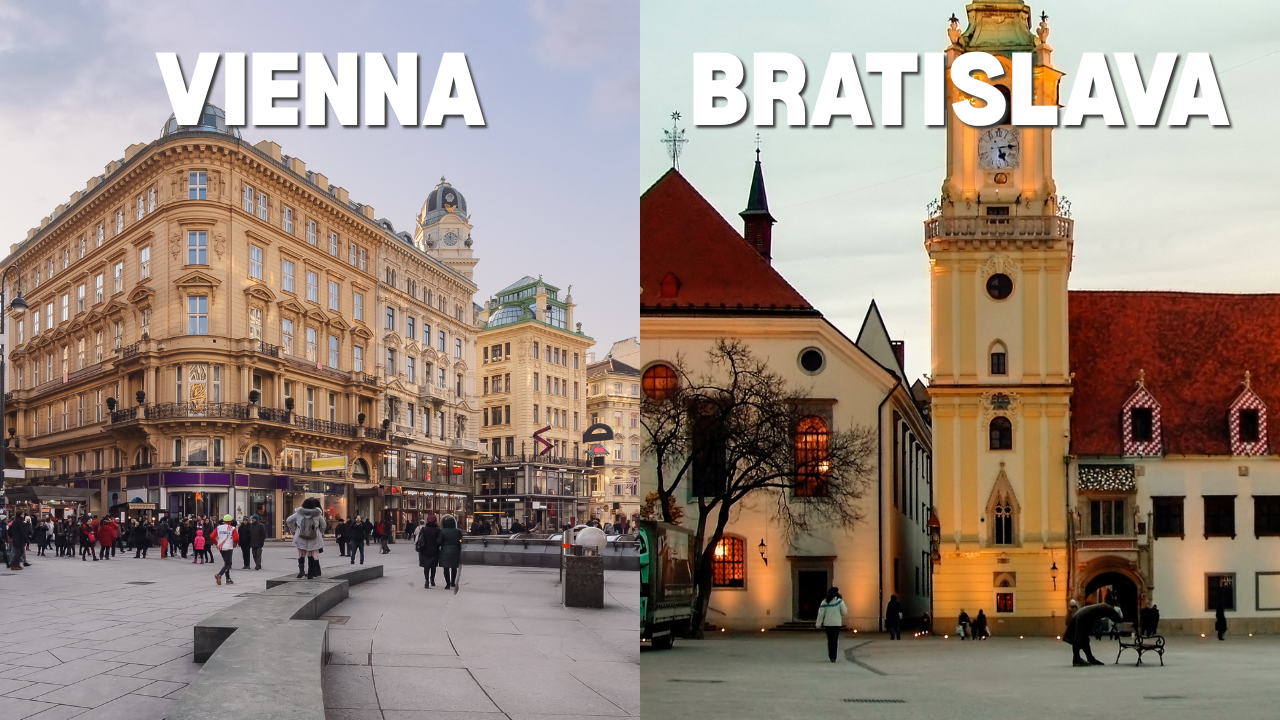
Vienna does not really do casual. This is a city of marble staircases, gilded opera houses, and waiters in waistcoats who have been carrying the same silver trays for forty years. The big sights earn their reputation: Schönbrunn Palace and its gardens, the Hofburg, St Stephen's Cathedral spearing up over the rooftops, and Klimt's golden The Kiss hanging in the Belvedere. You could spend two days only ticking those off and feel you had done Vienna properly.
But the version of Vienna worth slowing down for is the one the locals keep. It lives in the Kaffeehaus, the coffeehouse, where you order one melange and are welcome to sit for three hours with a newspaper and nobody hurries you. Café Central gets the crowds, so the locals drift to places like Café Sperl, Café Hawelka, or the tiny, candlelit Kleines Café on Franziskanerplatz. Cake is not optional here. Sachertorte, apple strudel, and the shredded pancake called Kaiserschmarrn are part of the daily routine, not a tourist gimmick.
For a proper meal, look for a Beisl, the Viennese bistro-pub. Glacis Beisl, tucked into the old city walls behind the MuseumsQuartier, and the leafy courtyard of the Amerling Beisl in the seventh district are two locals love. Order Wiener Schnitzel or Tafelspitz, the boiled beef dish that was supposedly Emperor Franz Joseph's favourite. And if you visit in late summer or autumn, do the most Viennese thing of all and take a tram to the edge of the city, out to the wine taverns of Stammersdorf or Grinzing, where families have poured their own young white wine for generations.
A few local-priced moves most visitors miss: standing-room tickets at the State Opera go for the cost of a sandwich if you queue. The Danube Canal turns into a string of open-air beach bars in summer. And the Naschmarkt's Saturday flea market is where the city actually shops. Vienna is not cheap, a coffee and cake easily runs ten to fourteen euros, but it rewards the time you give it.
Bratislava: The Underrated One
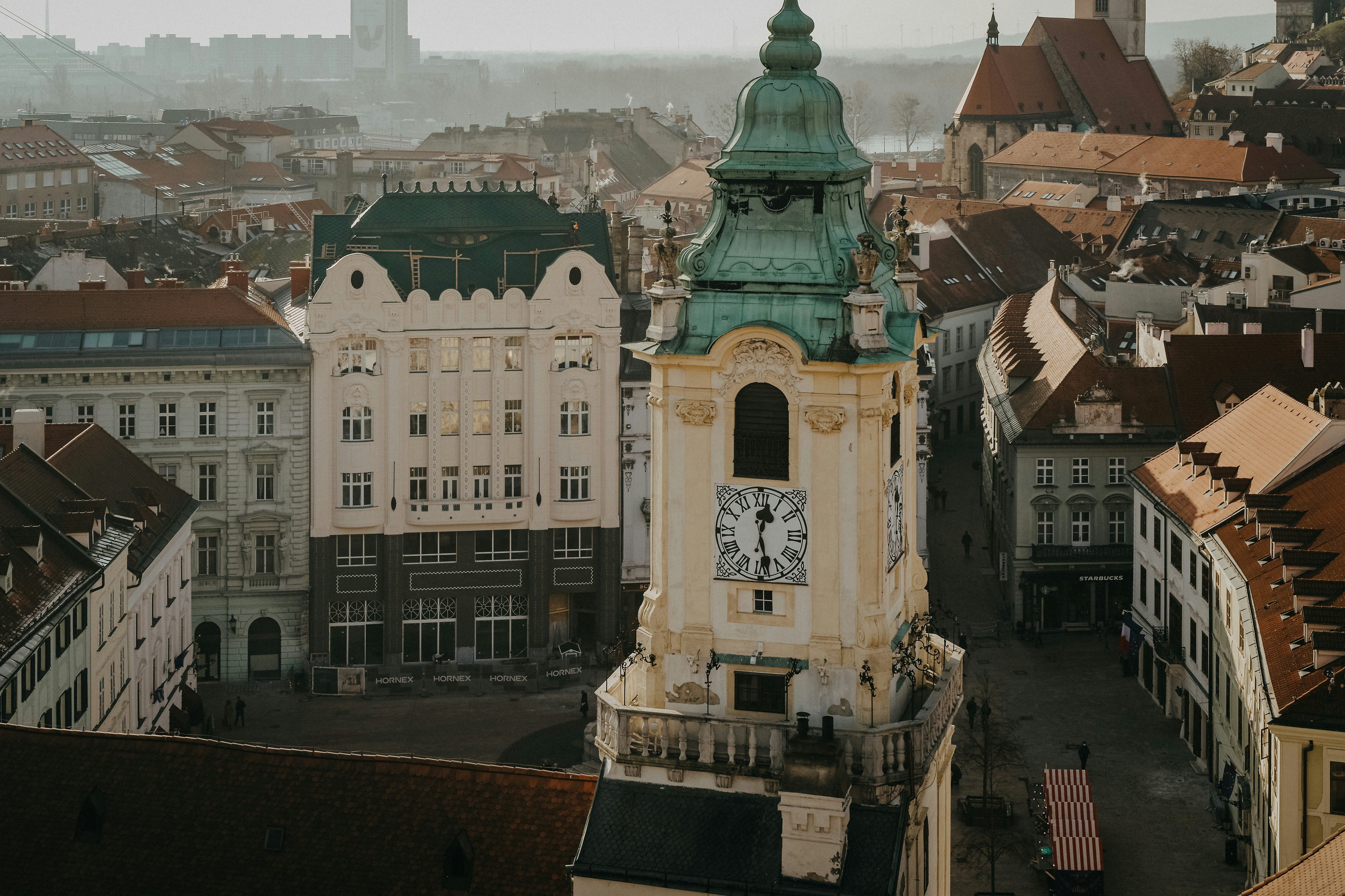
Now for the city that surprises people. Bratislava is small, and that is its whole charm. The old town is compact enough to walk end to end in an hour, but dense enough to fill a full day. You enter through Michael's Gate, the last surviving medieval gate, into a tangle of cobbled lanes lined with pastel palaces, pavement cafés, and the occasional bronze statue popping out of the ground. The most famous, Čumil the "Man at Work," peers up out of a manhole and has been photographed more than most politicians.
Climb to Bratislava Castle for the postcard view: the Danube below, Austria on one horizon, Hungary on the other. Down in the centre, St Martin's Cathedral was the coronation church of the Kingdom of Hungary for nearly 250 years, where eleven monarchs were crowned. A short walk east brings you to the Blue Church, an Art Nouveau confection in powder blue by the architect Ödön Lechner, often called the Hungarian Gaudí. It looks like something iced rather than built.
The local layer here is easy to reach and genuinely rewarding. Take a bus out to Devín Castle, a dramatic ruin on a cliff where the Danube meets the Morava, on the old Austrian border. Walk through Horský park, the forest park a few minutes uphill from the castle, where a cottage coffee shop hides among the trees. Ride a tram to the Trnavské Mýto market hall, a working local market with beekeepers on the roof and homemade wine for next to nothing. Architecture fans should not skip the Slovak Radio Building, an upside-down concrete pyramid that once made a list of the world's ugliest buildings and is beloved by locals precisely for it.
And the food. This is where Bratislava quietly wins. The dish to order is bryndzové halušky, soft potato dumplings smothered in sharp sheep cheese and bacon, the unofficial national plate. Pair it with garlic soup served inside a hollowed bread roll. The cheap, no-frills local favourite is Viecha U Sedliaka, an old-school alehouse where a filling meal and a couple of beers barely dents twenty euros. Slovak Pub on Obchodná is a student institution with enormous portions, and Meštiansky Pivovar, the oldest brewery in Slovakia, pours its own beer alongside that famous garlic soup. For something theatrical, the over-the-top Konditorei Kormuth serves cakes on century-old porcelain in rooms dressed like a Renaissance painting. Wine lovers can hop a short train into the Small Carpathian vineyards around Svätý Jur and Pezinok, a side of Slovakia almost no day-tripper sees.
So, is Bratislava worth visiting? If you come expecting a second Vienna you will be underwhelmed. Come expecting a relaxed, affordable, slightly offbeat capital you can actually get your arms around, and you will leave wishing you had stayed the night.
Vienna or Bratislava: Which Should You Choose?
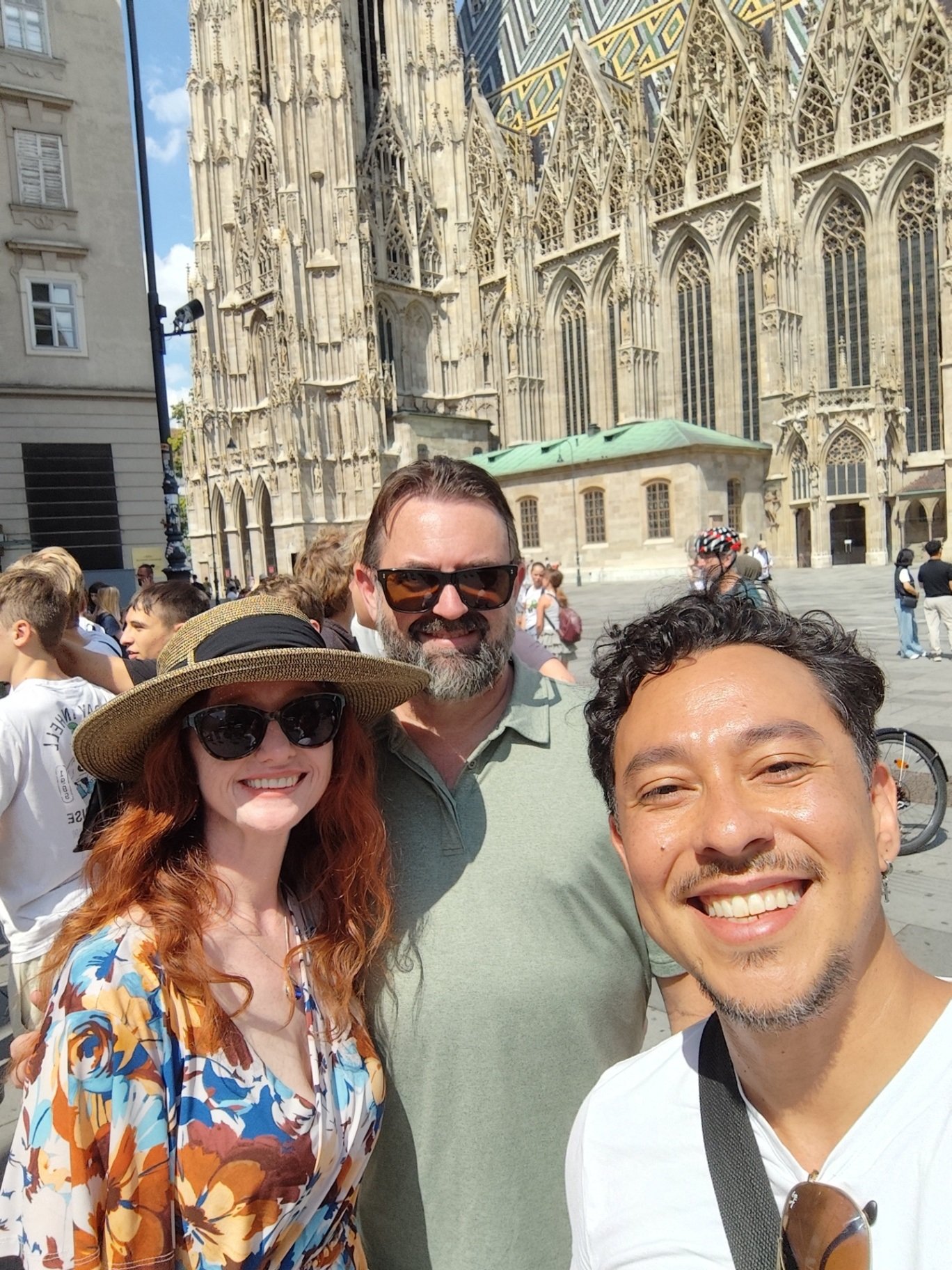
If you are still forcing a single answer, here is the honest breakdown.
Choose Vienna if you care about world-class museums, opera and classical music, grand imperial architecture, and coffeehouse culture, and if you have at least two days to do it justice. It is the deeper, richer city, and the one most travelers should anchor their trip around.
Choose Bratislava if you want a lower-key, walkable old town, far smaller crowds, and prices that feel like a holiday in themselves. It is the better pick for a short, easygoing city break, for budget travelers, and for anyone who has already seen the big-hitter European capitals and wants somewhere with fewer tour groups.
Do both if you possibly can, which thanks to that one-hour train is realistic for almost everyone. Use Vienna as your base and give Bratislava a full day. You get the grand and the relaxed, two countries, and one of the easiest international day trips in Europe, all in a single trip.
How to See Both in One Trip
The classic approach is the Bratislava day trip from Vienna. Catch a morning REX8 train, arrive before the day-tour crowds, and walk straight up to the castle for the early view before dropping into the old town. Spend the afternoon on Michael's Gate, the main square, the Blue Church, and a long lunch of halušky. Climb the UFO observation deck on the SNP bridge for sunset, then take an evening train back to Vienna for dinner. One relaxed day covers the highlights without a forced march.
If you have a little more time, flip the usual rhythm. Give Vienna three days for its museums, palaces, and coffeehouses, then spend a single night in Bratislava rather than rushing back. An evening in the old town, once the day-trippers have gone, is when the city is at its best: candlelit pubs, quiet squares, and a glass of Slovak wine for the price of a Viennese espresso. Two capitals, two countries, and a trip that feels far bigger than the map suggests.
See Either City the Way Locals Actually Live It

Guidebooks can point you to the castle and the cathedral. What they cannot do is walk you down the side street a local has been eating on for years, or explain why the upside-down radio building is secretly everyone's favourite, or steer you to the wine tavern that never makes the lists. That is the whole idea behind Lokafy. Every experience is private, fully customizable, and led by someone who actually calls the city home, shaped around what you want to see rather than a fixed script.
Take a personalized walking experience with Lokafy in Vienna and trade the tourist trail for the coffeehouses, markets, and neighborhoods Viennese people love. Or meet a Lokafy local in Bratislava and discover the old town, the food, and the offbeat corners that make this little Danube capital so easy to fall for. Two cities, two locals, one trip you will actually remember.
Frequently Asked Questions
How far is Bratislava from Vienna, and how do I get there? Bratislava is about 55 kilometres from Vienna, the closest pair of capital cities in the European Union. The easiest way across is the direct REX8 train from Vienna Hauptbahnhof to Bratislava's main station, which takes around 56 minutes and runs hourly. Buses and a seasonal Danube boat are also available.
Is Bratislava worth visiting, or should I stay in Vienna? Bratislava is worth visiting, especially as a day trip from Vienna. It will not match Vienna for museums or grand architecture, but it offers a charming, walkable old town, far smaller crowds, and much lower prices. The ideal plan is to base in Vienna and give Bratislava one full day.
Is Bratislava cheaper than Vienna? Yes, noticeably. A traditional meal in Bratislava often costs under twelve euros and a local beer can be under three, while the same in Vienna costs roughly double. Accommodation and coffee are cheaper in Bratislava too, which makes it a strong value pick within an expensive part of Europe.
Can you do Bratislava as a day trip from Vienna? Easily. With direct trains every hour and a journey of under an hour each way, you can leave Vienna after breakfast, see Bratislava's castle, old town, and Blue Church, eat a proper Slovak lunch, and be back in Vienna for dinner. The ÖBB Bratislava Ticket bundles the return train with Bratislava public transport for around 19 euros.
Which is better, Vienna or Bratislava? Vienna is the better all-round destination for culture, food, and architecture, and the one to choose if you only have time for a single city. Bratislava is the better choice for budget travelers and short, low-key breaks. Since they sit an hour apart by train, the best answer for most people is to visit both.
Which Bratislava train station should I use? Use Bratislava hlavná stanica, the main station, which is closest to the old town and connected by tram number 1 and several buses. The alternative, Bratislava-Petržalka, sits south of the river and needs a connecting bus, so check that your train ends at hlavná stanica when you book.
How many days do you need for Vienna and Bratislava together? Three to four days is the sweet spot. Give Vienna two to three full days for its palaces, museums, and coffeehouses, then add one day for Bratislava as a day trip or an overnight. That covers both capitals comfortably without rushing either.
Enjoyed this article?