Ancient Civilizations and Archeological Sites:
If there’s something that you need to understand about Cyprus, it is that it has witnessed and been home to some of the most important ancient civilizations of the world. From the Hittites, to the Egyptians, Persians, Greeks and Romans, Cyprus has seen everyone rule the world. Thus, there are plenty of archeological sites throughout the island that recount how it has become this mesmerizing melting pot of different cultures, languages and beliefs. Let us walk you through some of the most important archeological sites in Cyprus and pay attention to what they whisper about the civilizations that inhabited the island long time ago.
Our journey begins in New Pafos, where once stood the ancient city of Pafos, which was the center of political and administrative life in Cyprus. Even though there’s plenty to see and enjoy, there’s one collection that you simply cannot miss: the colorful and detailed mosaics that tell stories about ancient Greek mythology. You’d think that their discovery was the result of a complicated archaeological work, but in reality, they were discovered by accident by a farmer in 1962. The biggest mosaic complex is called the House of Dionysus, a series of intricate mosaics which feature Dionysus, god of wine, in what is believed to be the floor of a wealthy Roman residence.
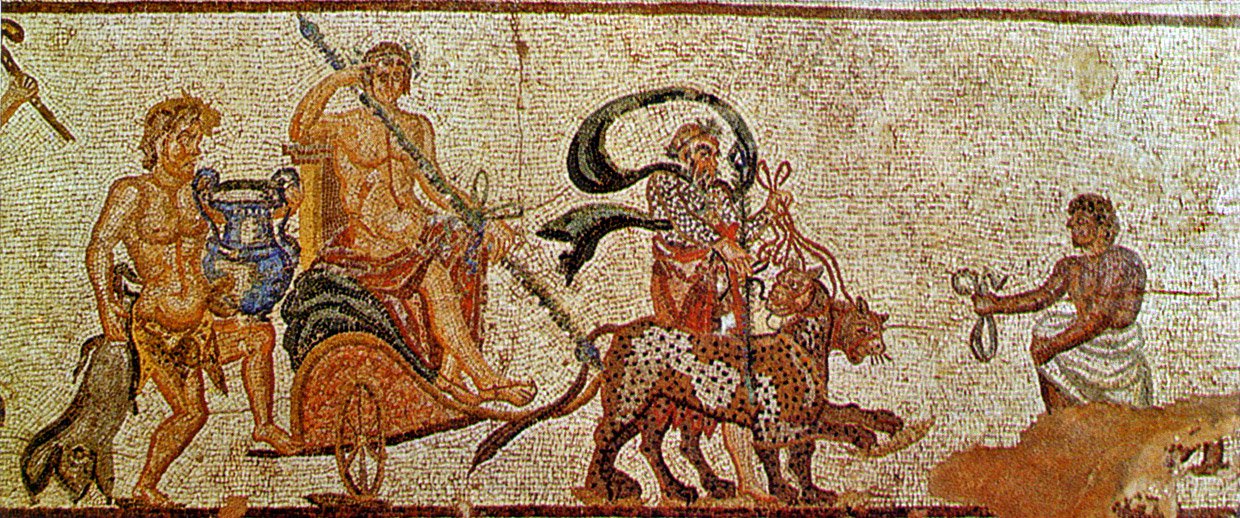
The mosaics of Pafos are colorful and intricate designs that tell stories of Greek mythology.
Aside from the mosaics, this archeological site holds the Agora and Asklipieion. The former consists of the Odeion, a semicircular theater that unfortunately does not reveal its age or origin since it was restored in 1970. The latter was a healing center and altar of Asklepios, god of medicine, and what remains of it is located not very far from the Odeion. Additionally, you’ll find the remains of the medieval Saranta Kolones Fortress, named for the 40 columns that were key to the structure. What is known about the site is that it was built by the Lusignans in the 12th century, although its nature or history are not clear. An earthquake in 1222 destroyed most of the fortress, but you can still see the remnants of its grandeur.
Finally, the perfect example of Cyprus’ kaleidoscope of cultures is the fact that near Pafos, you’ll find the Tombs of the Kings, a UNESCO World Heritage Site unique to the island. The design of these tombs was heavily influenced by ancient Egyptian tradition, but they were used during the Hellenistic and Roman periods by residents of Nea Pafos.

If there’s something that captures Cyprus’ rich heritage is the fact that the Tombs of the Kings have an Egyptian design, but were used during the Hellenistic and Roman periods.
Medieval Castles and Fortresses:
Did you think that the archeological sites were where Cyprus’ history ended? Well, actually, that’s just a small fraction of it. We also have to make a memorable mention of the medieval castles and fortresses that stand tall in the harbors of every city of the island. They served Venetians, Ottomans and British into protecting their territories and now are living proof of the island’s important location in the historical geopolitical game of the world.
One of the most recognized castles in Cyprus is the St Hilarion Castle, a place that looks like it has been taken out of a fairy tale and now embellishes the rocky landscape with its presence. The castle’s complex has three main parts: two enceintes (the lower is a fortified defensive enclosure) and Prince John’s Tower. They are all linked by a steep staircase and if you’re willing to make the climb, you’ll see that the marvelous views at the top are an incredible reward. If you aren’t convinced about St Hilarion’s fairy tale-like aura, think about this: it is said that Walt Disney drew inspiration from this castle when he created Snow White. Either way, you’ll see that it is a wonderful postcard worthy sight.
Another example of castles scattered across Cyprus is the Kolossi Castle, a medieval fortress located in the village of Kolossi, near the city of Limassol. It was first built in 1210 by the Franks and after being destroyed by the Genoese, it was rebuilt in 1454. It was constructed in a key location as a way to protect the fertile grounds of Kolossi, and today guards the coasts of one of the island’s most important cities, Limassol. If you get confused by all the different names of civilizations and conquerors that built fortresses and castles in Cyprus, don’t worry, it’s normal, there aren’t many places that have seen so many changes and power struggles as this island. We tell you this, because another castle we want to present to you is the Kantara Castle, built in the 11th century by the Byzantines and destroyed in the 16th century by the Venetians. It is believed that its name originates from Arabic, since Kandar means steep rock, and that’s basically where the castle is located.

It is said that Walt Disney was inspired by St Hilarion Castle to create the castle of the animated movie Snow White.
Ottoman and British Colonial Heritage:
The Cyprus that we see today is the result of a combination of multiple cultures and civilizations, but if there’s something that has shaped the modern island, it is the Ottoman and British colonial heritage. From its customs, to the gastronomy and architecture, you’ll see bits of both of them all across the island. On the one hand, the Ottomans ruled Cyprus for four centuries, and even today you can find their influence in the mosques, public baths and other constructions with arches, domes and intricate decorations, classic features of Ottoman architecture. Culturally speaking, there’s also a huge Ottoman influence, because Turkish cuisine, music and arts have become integral to Cypriot culture… Where do you think kebabs, mezes and Turkish coffee came from?
On the other hand, the British ruled Cyprus from 1878 to 1960, and despite the fact that their time on the island was short, they left a strong influence in Cyprus’ legal system, architecture and society. Near one of the Ottoman constructions of the city, you can easily find a British-style neoclassical building, and as easily as you can order a Turkish coffee, you can order a typical dish with a distinct British influence.

Modern Cyprus was built into the cultural heritage of the Ottoman and British empires.
Museums and Galleries:
Galleries are a great way to explore a country’s sensitivities and history, which applies to Cyprus as well. Thus, we encourage you to visit the A.G. Leventis Gallery, created based on the vision of Anastasios G. Leventis, who wanted his personal art collection to serve his community and the country as a whole. The gallery is focused on educational, cultural and artistic projects that dive into Cyprus’ cultural heritage, its history, and even its deep connection with Greece. A.G. Leventis Gallery has become the perfect place to celebrate diversity and multiculturality, and we’re sure you’ll enjoy it. There’s another place that will let you see the folklore of Cyprus and the soul of the country: the Museum-Workshop of Shadow Theater Pafios. In this museum, you’ll find figures, theatrical objects and family artifacts of Christodoulos Pafios, a popular karagioz player, as well as Achilleas Pafios, his son, and Christos A. Pafios, his grandson. All of them kept this incredible portrayal of Cypriot folklore alive in the Shadow Theater Karagiozis, and now you have the opportunity to witness and enjoy it.
Yes, we know that we have devoted a whole section to archeological sites, so why would we talk even more about archeology? The truth is, you’ll never get enough of it in Cyprus because there’s just so much to discover! If you’ve been ruled by Byzantines, Romas, Greeks and everything in between, chances are that there are countless elements to exhibit and that can help reconstruct such a vast history. That’s precisely what the Cyprus Museum, the island’s largest and best archeological museum, tries to do. It is located in the capital, Nicosia, and it houses the biggest collection of Cypriot antiquities in the world. From the Neolithic Era to the end of the Roman rule in the island, there are artifacts, statues and sculptures that capture fragments of Cyprus’ past lives and give you a clear idea of how it became this mosaic of different cultures and stories interwoven into this island. The museum is divided into 14 halls organized in chronological order and by themes.
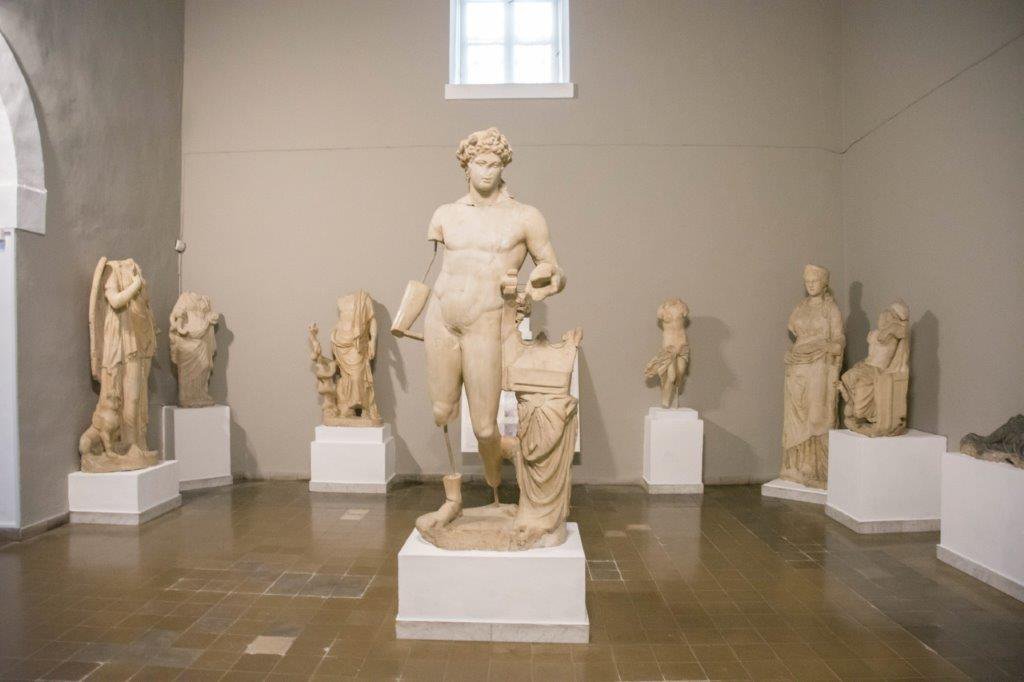
Since there are so many archeological treasures in Cyprus, you cannot avoid a visit to the Cyprus Museum.
Insider Tips for History Enthusiasts:
If you want to dive deep into Cyprus’ history, your visit cannot be restricted to the biggest cities such as Nicosia or Limassol, you have to wander around the island, discovering the old small villages where traditions are kept alive and that remind you of a time that has been long gone. Lefkara, Omodos, and Kakopetria are some of the examples of towns worth the visit, where the cultural heritage and the amazing natural landscapes are more than enough to make you fall in love. That way, you’ll witness in real time the diverse heritage of Cyprus and the idyllic views of the island.
Additionally, we think there’s another tip that’s worth not only for history enthusiasts, but for everyone who really wants to understand Cyprus. The country is divided into the north (Turkish Republic of Northern Cyprus) and the south (Republic of Cyprus), through a UN-administered Green Line, in place since 1974. This means that there are deep political and ideological divides, and that peace is still frail in the zone, without mentioning that the vast cultural, archeological and natural wealth of the country is also divided into the north and the south. Oftentimes, the Republic of Cyprus is the most visited, but the northern part of the island is easy to visit as well. Because of this, we invite you to listen to people’s stories closely, educate yourself on the complex history of the island and ultimately, keep an open mind when visiting both the northern and southern part of Cyprus.
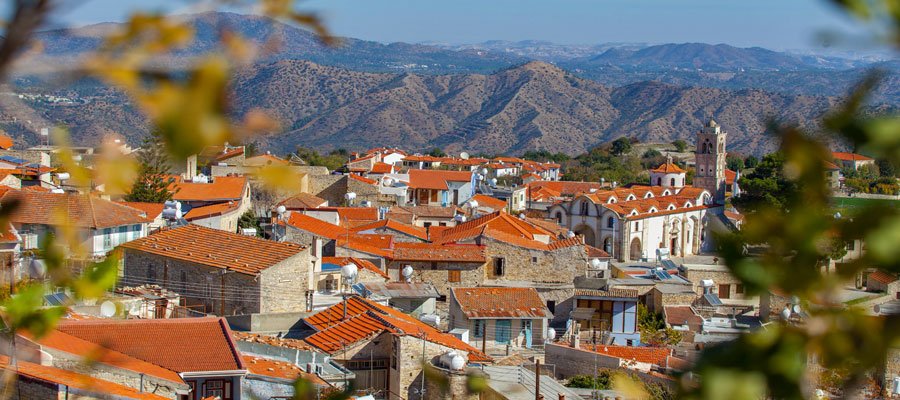
To see through Cyprus’ soul, you have to visit its small old villages.
Enjoyed this article?