Ah, Amsterdam, a true European jewel that has become a beloved destination thanks to its big personality, which might not match the city’s small size. And that’s exactly the magic of Amsterdam! You don’t quite understand how so many incredible things, from some of the most beautiful museums in the world (let’s think about the Rijksmuseum or the Van Gogh Museum), to the greatest nightlife in all of Europe, can be condensed into Amsterdam’s slender streets, arched bridges and refreshing Golden Age canals. The thing is, you have to be in Amsterdam to truly experience the constant flow of the city, and the easiness with which people can go from watching a masterpiece in a museum, to eating dinner in the trendiest restaurant, and finally going to the most creative bar in town, all in the span of a few hours.
Right there, we gave you a big hint about today’s blog. Yes, we are going to be talking about Amsterdam, but we’re going to focus on something quite specific: its movement. What we’ll try to show you today, is that the key to understanding Amsterdam is to think about how it moves, because it can tell you a lot about locals and their relationship with the city. But how do people in Amsterdam actually move? In bicycles! Amsterdam is the second most bicycle-friendly city in the whole world, just behind Copenhagen, and it is just a reflection of a general trend in The Netherlands, because with a population of 17,2 million people, there are more bikes than people (22,8 million) and around 4.25 million people cycle every day in the country. Then, keep reading our blog to learn more about biking through Amsterdam and get to know the city through the perspective of its cycling lanes.
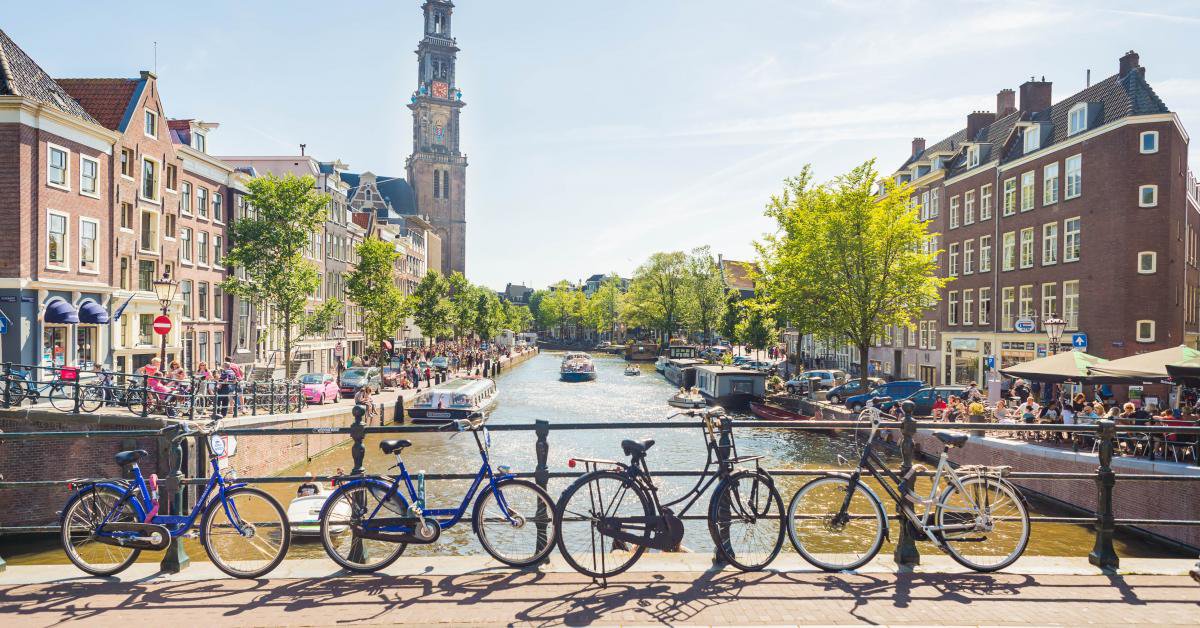
Amsterdam is the second most bicycle-friendly city in the world, so riding a cycle is part of local’s DNA.
Cycling in Amsterdam: A Local Perspective
There’s a few things that you have to know before you try to explore the city on a bicycle. You’ll see that locals normally fly through the designated lanes without helmets or any kind of protection, and they’ll likely cross the roads without even flinching at the presence of a car. At the end of the day, they have been riding a bike since they were little kids, so they probably know how to do it with their eyes closed. Don’t you ever try to ride like them, because you’ll be risking having an accident that would ruin your visit. If you see people cycling poorly in the city center, they’re most likely inexperienced tourists trying to get a hold on how to move around. If you want to have a pleasant time riding a bicycle in Amsterdam, pay attention to what we’re about to tell you.

Tips for Riding Like a Local:
- Obey Traffic Rules: Amsterdam boasts an extensive network of cycling lanes, but rules still apply. Respect cycle traffic lights and obey traffic signs for a safe ride.
- Stay Vigilant: Watch out for trams, pedestrians, and fellow cyclists. The city's popularity with tourists can lead to distractions.
- Stick to Designated Lanes: With hundreds of kilometers of cycle lanes, there's no need to veer onto pavements or sidewalks. Avoid encounters with pedestrians or drivers by staying in your lane.
- Signal Clearly: Use hand signals when turning right or left. This communicates your intentions to others on the road.
- Avoid Rush Hours: The morning (8:00-9:00 am) and evening (5:00-6:00 pm) rush hours see heavy bike traffic. Plan your rides outside these times for a more relaxed experience.
- Secure Your Bike: Amsterdam's bike-friendly reputation doesn't mean you can park anywhere. Use designated bicycle parking areas, indoor facilities, and always lock your bike securely to prevent theft.

Cycling around Amsterdam can become a bit chaotic if you don’t follow certain rules and try to emulate the way locals move.
Exploring Amsterdam's Local Gems by Bicycle:
Now that you know a few tips for cycling calmly through the city, let’s see the places that you can get to know from your bike. Before we tell you about specific spots, bear in mind that the city has its own cycleseeing routes, designed for people to discover different sides of Amsterdam. If you're more interested in nature, the waterland and beach routes could be the best for you, but if you're passionate about history, we're sure that the castles and gardens, as well as the new land routes (focused on architecture) will delight you. On the other hand, a great way to start your cycling adventure in Amsterdam is to head to the city’s downtown district, while you get a hold on how biking works there.
- Botanical Gardens and Hermitage Amsterdam: These tranquil spots are perfect for unwinding amid nature and art.
- Iconic Canals: Pedal alongside Amsterdam's picturesque canals, capturing postcard-perfect moments.
- The Jordaan: Dive into this vintage district, brimming with bars, galleries, and creative boutiques. Its narrow streets and cozy buildings exude charm.

- Westerpark: Revel in the lush greenery and captivating landscapes of one of Amsterdam's most beautiful parks.
- Negen Straatjes (Nine Streets): A UNESCO World Heritage site, this shopping haven offers unique shops and boutiques for the avid shopper.
- Ijburg: Explore this modern architectural marvel comprising five man-made islands, where cycling perfectly complements the experience.

Once you’ve mastered the art of riding a bike in Amsterdam, you’ll be able to explore every corner of the city by cycling.
Even if we have come to the end of our blog, there are still a lot of iconic places left to visit in Amsterdam. Today we wanted to focus on the great activity of cycling around the city, which is an essential part of becoming a true local in Amsterdam. And now that you’ll be able to dominate it, you’re ready to go around the city and explore its most famous landmarks and museums, and why not, go around the outskirts of town to be closer to nature (don’t worry, there are cycling lanes for those zones too!). Also, whenever you feel like it, you can leave your bicycle secured and start walking to get closer to each place. That’s part of the benefits of cycling in Amsterdam, that the bike becomes an integral part of you, but when the moment is right, you can leave it behind and start exploring on your own.
Enjoyed this article?