The first thing I learned in Trieste is that asking for "un caffè" gets you a polite nod and a quiet note that you are not from here. The second thing I learned is that this city makes far more sense on foot than from a bus window. Trieste sits squeezed between the Adriatic and the limestone wall of the Karst, it spent most of its modern history as the Habsburg Empire's main seaport, and you can feel all of it in the space of an afternoon walk: Viennese coffeehouses, a Roman arch, Serbian Orthodox domes reflected in a canal, and pork boiling in a copper pot behind a bar counter at eleven in the morning.
Quick Guide: Trieste Walking Tour Key Takeaways
- Primary Recommendation: Walk the loop from Piazza Unità d'Italia up San Giusto Hill, down through Borgo Teresiano and back to the sea along the Canal Grande. It covers roughly 4 to 5 km and fills a relaxed half day.
- Top Choice for Coffee: Antico Caffè San Marco on Via Cesare Battisti. Order a "capo in b" (a small macchiato served in a glass) and you will sound like a regular.
- Value Pick: A "rebechin," the Triestine mid-morning snack, at a traditional buffet such as Buffet da Pepi. Ideal for walkers who want local food without committing to a long lunch.
- The Best Way to See the City: Take a private/personalized walking experience with Lokafy in Trieste and discover the coffeehouses, buffets and Habsburg backstreets with a Local.
Is Trieste Walkable?
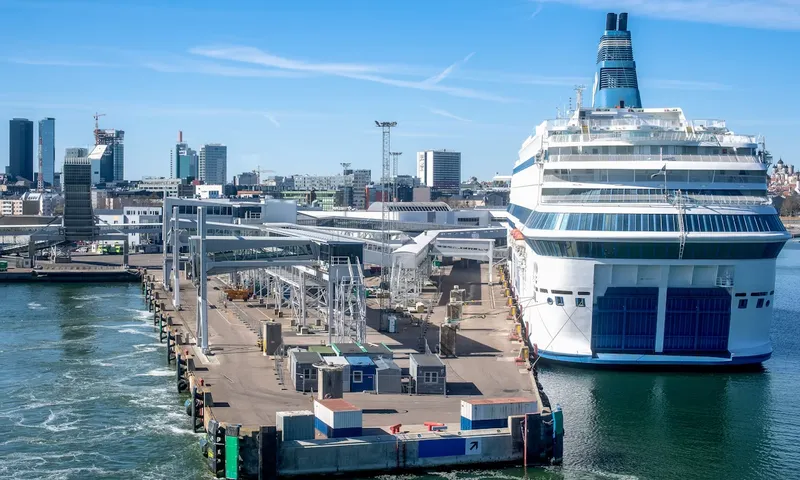
Yes. Trieste is one of the most walkable cities in Italy, with nearly every major sight packed into a centre you can cross in about 20 minutes. The train station (Trieste Centrale) is roughly a 15-minute stroll from Piazza Unità d'Italia, and cruise ships dock at the Stazione Marittima, which sits beside the square itself.
Two things make walking here a little different from flat lagoon cities. The old town climbs a steep hill, so the walk up to San Giusto Cathedral and Castle is a real climb. And then there is the bora, the cold northeasterly wind that comes down off the Karst, mostly in winter. On a bora day, gusts can knock you sideways on the seafront, and you will notice locals sticking to the sheltered streets of Borgo Teresiano instead of the open waterfront.
A Self-Guided Trieste Walking Tour, Stop by Stop
This route starts and finishes by the sea, saves the uphill section for when your legs are fresh, and puts coffee and food stops where you will want them. Allow three to four hours with breaks.
1. Piazza Unità d'Italia
Every Trieste walk begins here, and for good reason. The square is often called the largest sea-facing square in Europe: three sides are lined with grand palazzi, including the Town Hall, and the fourth side is open water. It was built to impress visitors arriving by ship in the days when Trieste was Vienna's gateway to the Mediterranean.
Most people photograph it from the middle. Locals will tell you to walk out to the water's edge and turn around, because the square looks best framed from the sea side, especially in the evening when the facades light up.
2. Molo Audace
From the square, wander onto Molo Audace, the long stone pier that pokes into the gulf. It takes its name from the Italian destroyer Audace, the first Italian ship to dock in Trieste at the end of the First World War in November 1918. Today it is where the whole city comes to stroll, sit on the bollards and watch the sunset. On a clear day you can see across the gulf to the coast of Grado and, if you are lucky, the outline of the Alps.
3. Cavana and the Old Ghetto Lanes
Cross back over the Rive and slip into Piazza Cavana. This is the oldest part of the lower town, a knot of narrow lanes climbing away from the sea, and it feels nothing like the formal squares you have left behind. The streets behind Piazza Unità once formed the Jewish ghetto, and today they are full of small osterie, antique dealers and wine bars.
A short detour takes you to Piazza Hortis, where a bronze Italo Svevo strolls toward the civic library with his hat in hand. Svevo, author of Zeno's Conscience, was born here, and he is one of three writers the city has put on the pavement in bronze. You will meet the other two later.
4. Arco di Riccardo and the Roman Theatre
Follow the lanes uphill to Piazza Barbacan and duck under the Arco di Riccardo, a Roman arch dating from the first century AD that is now wedged between ordinary apartment buildings. Few things in Trieste capture the city's layered history so neatly: you can stand under two thousand years of stone while someone hangs laundry from the window above.
A few minutes away, at the foot of San Giusto Hill, the Teatro Romano sits in the middle of modern traffic. You can see most of it from the street, and it is a good reminder that Trieste was a Roman town called Tergeste long before anyone in Vienna had heard of it.
5. San Giusto Cathedral and Castle
Now comes the climb. Via della Cattedrale winds up the hill to the Cattedrale di San Giusto, which was created in the 14th century by joining two older churches into one. Step inside for the medieval mosaics and frescoes, and look up at the rose window on the facade. Entry to the cathedral is free, but cover your shoulders and knees.
Next door, the Castello di San Giusto is a ticketed museum built over several centuries by the Venetians and the Habsburgs. Even if you skip the armoury and exhibits, walk the bastions. From up here the whole city spreads below you: the port, the gulf, and the pale grey edge of the Karst plateau rising behind the rooftops.
6. Down the Scala dei Giganti
Rather than retracing your steps, take the Scala dei Giganti, the Giants' Staircase, down to Piazza Goldoni. It is a monumental stairway of around 265 steps, much kinder going down than up, and it drops you right onto Via Carducci, one of Trieste's main shopping streets.
Hungry already? Buffet L'Approdo sits at Via Carducci 34 and is a favourite with locals for a quick rebechin of Liptauer (a paprika-spiced cheese spread) on bread with a cold beer.
7. Pirona and Caffè San Marco
Follow Via Carducci to Largo Barriera Vecchia and Pasticceria Pirona, open since 1900. James Joyce lived nearby and was a frequent customer, and the pastry shop has long been linked to the early writing of Ulysses. The house speciality is presnitz, a spiral pastry stuffed with walnuts and raisins. Locals buy it to take home; you should buy it to eat on the pavement.
From here it is a short walk to Antico Caffè San Marco at Via Cesare Battisti 18. Opened in 1914, it was a meeting point for Italian nationalists under Austrian rule and later a second home for Svevo, Umberto Saba and Joyce. The Viennese Secession interior, marble tables and frescoed ceiling are largely original, and since 2013 part of the café has been a bookshop. Of all the historic cafés in Trieste, this is the one where students still spread out their notes next to retirees reading the paper.
8. Borgo Teresiano and the Canal Grande
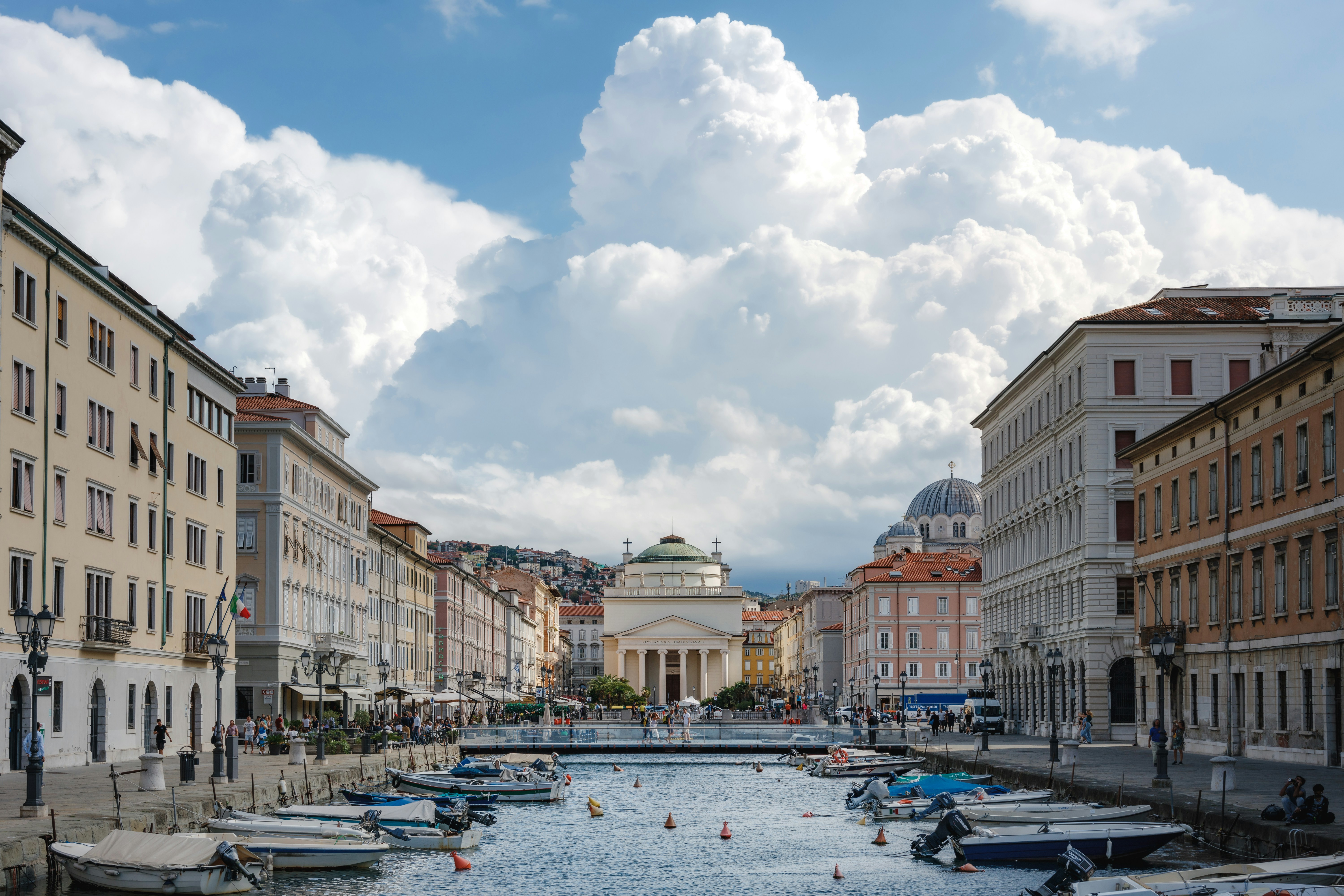
Head back toward the sea through Borgo Teresiano, the grid of 18th-century streets laid out under Empress Maria Theresa when Trieste was booming as a free port. Its centrepiece is the Canal Grande, dug in the mid-1700s so ships could unload goods right at the merchants' doors.
At the head of the canal stands the neoclassical church of Sant'Antonio Taumaturgo with its six columns. Halfway along, the blue domes of the Serbian Orthodox church of San Spiridione are a reminder of how many communities once traded here. And on the Ponterosso bridge you will find writer number two: a life-size bronze James Joyce, strolling across the canal near where he once lived. Saba, the third, stands near his old bookshop on Via San Nicolò, a couple of blocks away.
9. The Rive at Sunset
Finish where you started, on the Rive, the long seafront promenade. If you timed things well, this is aperitivo hour. Locals order a glass of Malvasia or Vitovska from the Karst vineyards and watch the light drop behind the gulf. It is a fitting end to a city that makes a quiet ritual of slowing down.
How to Order Coffee Like a Triestino
Trieste has been one of the Mediterranean's great coffee ports for centuries, and it developed its own coffee vocabulary along the way. Learn four words and you are set:
- Nero: an espresso. Ask for "un caffè" and you will still get one, but "un nero" is what locals say.
- Capo: an espresso with a little foamed milk, closer to a macchiato than a cappuccino.
- Capo in b: the same capo, served in a small glass. This is the city's signature order.
- Goccia (or gocciato): an espresso with a single drop of milk foam on top.
For the setting, pair your coffee with a historic café. Caffè Tommaseo, opened in 1830, is the oldest in the city. Caffè degli Specchi has occupied its spot on Piazza Unità since 1839. And Pasticceria La Bomboniera, dating back to 1836, is where many Triestini go for traditional Austro-Hungarian cakes.
Where to Eat on a Trieste Walking Day
The Buffet: Trieste's Original Fast Food
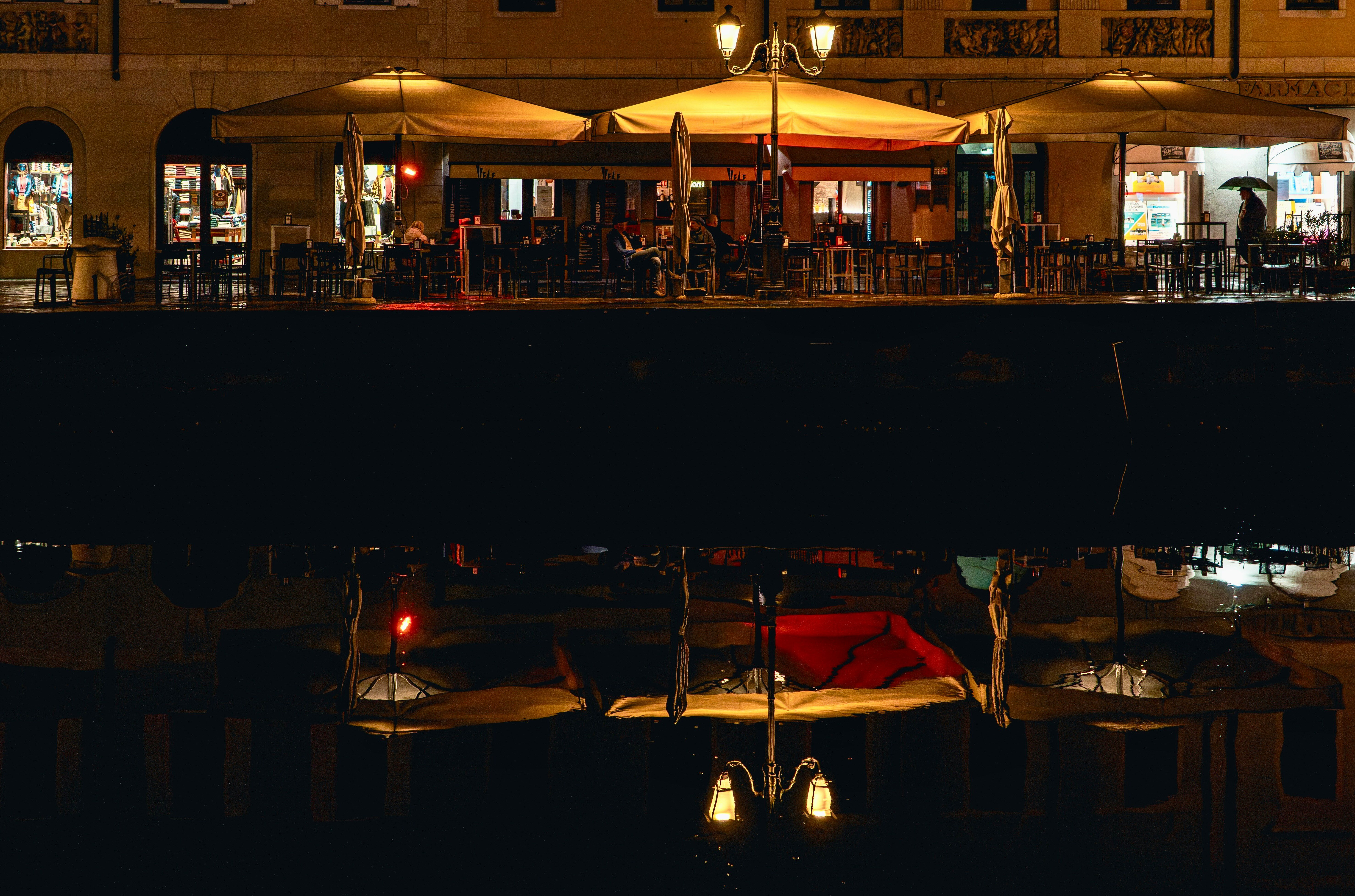
Forget what "buffet" means anywhere else. In Trieste, a buffet is a Habsburg-era bar and eatery built around the caldaia, a steaming pot of boiled pork cuts. You point at what you want (porcina, which is pork shoulder, sausages, smoked pork loin) and it comes sliced with sauerkraut, mustard and a heap of freshly grated horseradish called cren. Wash it down with beer.
- Buffet da Pepi, Via della Cassa di Risparmio 3: open since 1897 and the name most locals say first. Order the mixed platter or a hot ham sandwich at the counter.
- Buffet L'Approdo, Via Carducci 34: homely dishes alongside the cold cuts, plus jota, the local bean and sauerkraut soup.
- Buffet Clai, Via Ugo Foscolo 4: a lunchtime spot packed with office workers, good for a stand-up snack at the bar. It keeps daytime hours, so do not plan dinner here.
Many buffets close on Sundays, so plan your rebechin for a weekday or Saturday.
Osmize: Wine at the Farmer's Table
If you have an extra half day, do what Triestini do on weekends and head up to an osmiza on the Karst. These are farmhouses that open for limited periods each year to sell their own wine, cured meats, cheese and hard-boiled eggs directly to visitors. There are no signs. You follow a branch of ivy (the frasca) hung by the road, often with a red arrow pointing the way. Openings rotate through the year, and locals check osmize.com to see which ones are serving that week.
Gelato
The great Trieste debate is which gelateria is best, and every local will give you a different answer. Gelateria Zampolli at Via Ghega 10, near the train station, has been the reference point for generations and is usually crowded for a reason.
Walks Beyond the Centre That Locals Love
Barcola to Miramare Along the Sea
When the weather is warm, Trieste goes to Barcola. This long seafront promenade north of the centre is the city's free beach: no sand, no sunbed rentals, only stone terraces, ladders down into clear water and half the town working on a tan. The semicircular platforms along the way are called the Topolini ("little mice"). Locals swim here from spring well into autumn.
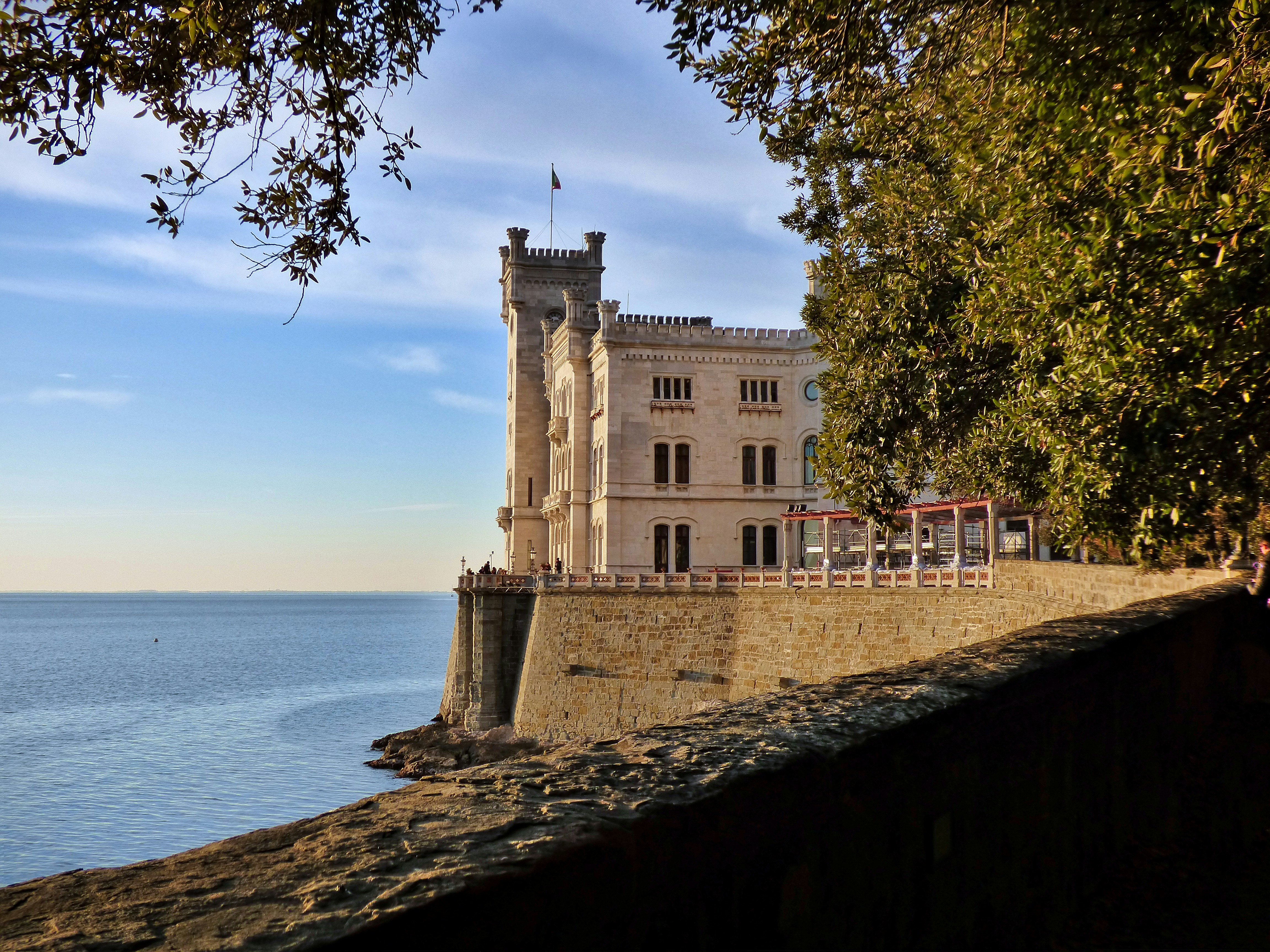
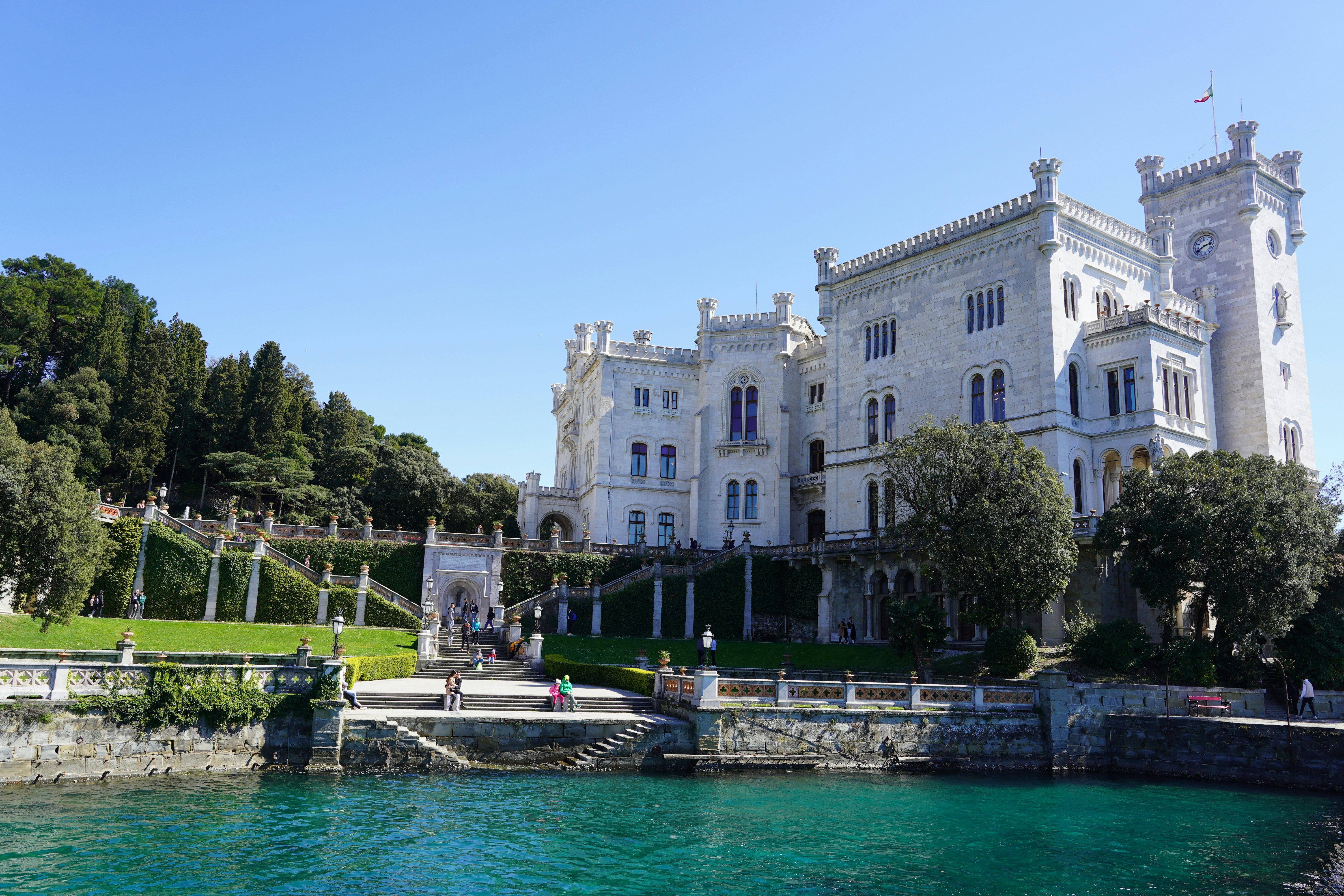
Keep walking past the white Faro della Vittoria lighthouse and the promenade carries on toward Miramare Castle, the white seaside palace built for Archduke Maximilian of Habsburg. The whole stretch from the city centre to Miramare is about 7 km one way, so many walkers do it in one direction and take the number 6 bus back.
The Strada Napoleonica
For the best panorama of the city, take the historic Opicina tram up to the Karst plateau and walk the Strada Napoleonica (officially the Strada Vicentina). The trail runs about 5 km from the Obelisco in Opicina to the village of Prosecco along the edge of the cliffs, with views straight down onto the gulf, the port and Miramare. It is wide and easy, partly sheltered from the bora, and near the Prosecco end you will pass limestone walls where local climbers train.
The tram is part tram, part funicular, and it has a long history of closures for repairs. While the historic Piazza Oberdan terminus is being rebuilt, it departs from nearby Piazza Dalmazia. Check the Trieste Trasporti website before you plan around it; if it is not running, city buses also climb to Opicina.
The Pedocin
Here is one for the curious. At the Bagno Marino La Lanterna, known to everyone as the Pedocin, a white wall about three metres high and 74 metres long has divided the beach into a men's side and a women's side for more than a century. Boys under 12 go with their mothers. It is widely believed to be the last beach in Europe split this way, and Triestini, especially the women who use it, are fiercely attached to it. It is open in the summer season and costs very little to enter, but respect the rules: tourists ignoring the division have caused more than one argument.
When to Walk Trieste
Spring and early autumn are the sweet spot, with mild temperatures that make the San Giusto climb comfortable and the sea still swimmable into September and beyond.
Summer is hot but lively, with Barcola packed and long evenings on the Rive. Start your walk early and save the hill for the morning.
Winter is quiet and atmospheric, ideal for coffeehouses and buffets, but this is bora season. Check the forecast; on a strong bora day, skip Molo Audace and stick to the sheltered streets.
The second Sunday of October brings the Barcolana, one of the largest sailing regattas in the world, when the gulf fills with boats and the waterfront fills with people. Wonderful to see, but expect crowds and road closures along the Rive.
Practical Tips for Walking Trieste
- Wear proper walking shoes. The old town is steep and the paving stones get slippery after rain.
- Cover shoulders and knees for San Giusto Cathedral and the Serbian Orthodox church.
- Cruise passengers can start this route straight from the gangway, since the Stazione Marittima is next to Piazza Unità.
- Stand at the bar for coffee like the locals do; it is the normal way to drink it here, and usually cheaper than a table.
- Look up. Trieste's best details, from Secession balconies to Habsburg crests, sit above street level.
Walk Trieste With Someone Who Lives There

A map gets you from Piazza Unità to the Canal Grande. A local tells you which buffet their grandfather swore by, why the city still argues about a wall on a beach, and where to stand for the best view of the gulf when the bora clears the sky.
Take a private/personalized walking experience with Lokafy in Trieste and explore the city with a Lokafyer, a local who loves showing visitors their home town. Every tour is private and built around your interests, from Habsburg history and James Joyce to coffee culture and Karst wine. You choose the length, anywhere from 2 to 6 hours, and your Lokafyer can meet you at your hotel, a café or right by the cruise terminal.
Travellers who have walked Trieste with Lokafy say their Lokafyer got in touch before the tour to ask what they were curious about, then shaped the whole walk around it. That is the difference between seeing the city and understanding it. Bookings come with free cancellation up to 24 hours in advance.
Book your Trieste walking tour with a local
Frequently Asked Questions About Walking Tours in Trieste
Is Trieste a walkable city? Yes. Trieste's historic centre is compact, and Piazza Unità d'Italia, Borgo Teresiano, the Canal Grande and San Giusto Hill are all within easy walking distance of each other. The main challenge is the steep climb to San Giusto Cathedral and Castle, plus the bora wind on cold days.
How long does a Trieste walking tour take? A loop covering Piazza Unità, Cavana, San Giusto, Borgo Teresiano and the Canal Grande is roughly 4 to 5 km and takes three to four hours with coffee and food stops. Add a full extra half day if you want to walk the Barcola seafront or the Strada Napoleonica.
What is the best walking route in Trieste? Start at Piazza Unità d'Italia and Molo Audace, climb through Cavana past the Arco di Riccardo to San Giusto Cathedral and Castle, descend the Scala dei Giganti to Piazza Goldoni, then walk via Pirona and Caffè San Marco to Borgo Teresiano and the Canal Grande before finishing on the seafront.
Can cruise passengers walk into Trieste from the port? Yes. Ships dock at the Stazione Marittima, right next to Piazza Unità d'Italia, so you can begin exploring on foot within minutes of leaving the ship. Most of the city's main sights are less than 20 minutes' walk from the terminal.
How do you order coffee in Trieste? Trieste uses its own coffee terms. A "nero" is an espresso, a "capo" is an espresso with a little foamed milk, a "capo in b" is the same drink served in a small glass, and a "goccia" is an espresso with a drop of milk foam.
What food should I try while walking in Trieste? Try a rebechin (mid-morning snack) at a traditional buffet, where boiled pork is served with sauerkraut, mustard and fresh horseradish. Also look for jota, a bean and sauerkraut soup, Liptauer cheese spread, and presnitz, a walnut and raisin pastry sold at historic pasticcerie like Pirona.
Is a private walking tour of Trieste worth it? For first-time visitors and cruise passengers with limited time, a private walk with a local is the fastest way to understand Trieste's mix of Italian, Austrian and Slavic influences. A Lokafyer can adapt the route to your pace and interests, steer you to the buffets and cafés locals use, and explain the stories behind the statues, churches and squares.
Enjoyed this article?