Santiago is a big, busy city with a lot to see, but it becomes much easier to enjoy once you know where to go and how people actually spend their time here. Some areas are full of historic buildings and museums, others are known for food, nightlife, or parks, and each neighborhood feels different from the next. For a first visit, it helps to have a simple plan so you are not wasting time moving back and forth across the city or missing places locals consider essential.
Why Santiago Deserves More Than a Layover
Santiago gets underestimated. Most travelers use it as a jumping-off point for Patagonia, the Atacama, or wine country, and pass through the capital in a fog of jetlag and airport transfers. That is a mistake.
Santiago is a city of layers. It has a world-class food scene, neighborhoods with distinct personalities, a mountain backdrop that turns pink at dusk, and a cultural energy that has been building quietly for the last decade. The locals know this. Tourists are starting to catch on.
This itinerary is designed for first-time visitors who want to experience Santiago properly. We have gathered insights from locals to help you navigate the city across three days, including places most tourists miss, honest advice about safety and getting around, and food recommendations.
How to Get Around Santiago

One of the reasons first-timers get anxious about Santiago is the transit system. Once you understand how it works, it is actually one of the best in the region.
The Santiago Metro
The Metro de Santiago is clean, efficient, air-conditioned and covers most of the areas you will want to visit as a tourist. To use it, you must buy a Bip! card at any station. You cannot pay with cash or credit cards directly at the turnstile. This card also works for the Red Metropolitana buses.
Local tip: Avoid the Metro during "hora punta" (rush hour, 8:00 AM – 9:00 AM and 6:00 PM – 7:30 PM). It becomes incredibly crowded, and while it is safe, the physical squeeze is not the best way to start your holiday.
Key lines for tourists: Line 1 runs east-west and connects Baquedano, Universidad de Chile, and Blas Cañas, covering most of the central neighborhoods. Line 2 connects to the Patronato area near La Vega Central market. Line 5 links Providencia to Baquedano, useful for evenings out.
Uber and Cabify
Both apps are widely used in Santiago and are cheap by international standards. Uber is generally the most reliable and is the recommended option for late nights or when you are carrying bags. They offer transparent pricing and avoid the occasional "tourist tax" sometimes encountered in street taxis. If you do take a street taxi, ensure the "taxímetro" is visible and running.
Cycling
Santiago has expanded its cycling infrastructure significantly in recent years, and neighborhoods like Providencia and Bellavista are genuinely bikeable. Several rental shops operate near Parque Balmaceda and in Barrio Italia.
Walking
Many of the best experiences in Santiago are walkable within neighborhoods. The mistake most tourists make is trying to walk between neighborhoods rather than within them. Use the metro to hop between areas, then explore on foot once you arrive.
Cable Car and Funicular
To reach the top of San Cristóbal Hill, ride the Teleférico de Santiago or the historic Funicular de Santiago. Both offer sweeping views of the city and mountains.
Understanding Santiago's Neighborhoods
Santiago is a city of neighborhoods, and each one has a different personality. Understanding this before you arrive helps you plan your days much more efficiently and makes the city feel navigable rather than overwhelming.
Barrio Italia

This is the neighborhood that locals love and tourists are only now beginning to discover. Barrio Italia sits between the center and the eastern residential areas and has developed over the last decade into a hub for design studios, independent cafés, vintage shops, and small galleries. The streets are lined with early 20th-century houses, many of which have been repurposed as coffee shops and restaurants without losing their original character.
This is not a tourist area in the traditional sense. You will not find bus tours or souvenir stalls. What you will find is a genuinely local atmosphere, Santiaguinos spending Sunday mornings in café windows, designers selling handmade goods at weekend markets, and some of the best specialty coffee in the city.
Streets to walk: Avenida Italia, Condell, Girardi.
Bellavista
Bellavista is Santiago's arts and nightlife district, sitting below Cerro San Cristóbal on the north side of the Mapocho River. It is home to Pablo Neruda's house (La Chascona), murals across nearly every surface, and a dense concentration of restaurants, bars, and live music venues.
During the day it is bohemian and walkable. At night it comes alive, this is where Santiaguinos go out, and the energy between Thursday and Saturday is genuinely impressive. It is also one of the most photographed neighborhoods in the city, and for good reason.
Do not miss: La Feria Artesanal on weekends near Patio Bellavista, and the street art along Loreto and Constitución.
Providencia
Providencia is the upscale residential and commercial district east of the center, and it is where most mid-range and boutique hotels are concentrated. It is a comfortable base for first-time visitors, well-connected by metro, walkable, and safe at all hours.
The stretch of Avenida Providencia from Metro Manuel Montt toward Plaza Italia is lined with restaurants, wine bars, and bookshops. This is a good neighborhood for your first evening, when you are adjusting to the city and want to eat well without navigating anywhere complex.
El Centro (Downtown Santiago)

The historic center is where you will find Plaza de Armas, the Palacio de la Moneda, the Mercado Central, and the Barrio Lastarria. It is busy, visually striking, and essential for understanding Santiago's history and architecture. During the day it is lively and full of energy; at night the commercial streets quiet down considerably.
Barrio Lastarria, on the southern edge of the center, deserves special attention. It is arguably Santiago's most picturesque neighborhood, small plazas, independent bookshops, terrace restaurants, and weekend street markets. It connects to Barrio Bellas Artes and sits close to Cerro Santa Lucía, making it a natural anchor for a morning or afternoon.
Las Condes and Vitacura
These eastern districts are Santiago's wealthiest residential areas and home to major museums, international restaurants, and upscale shopping. The Costanera Center (South America's tallest building) is here, as is the Museo de la Moda and several contemporary art spaces. As a tourist, you may visit for a specific museum or meal, but these areas lack the street-level energy of Bellavista or Barrio Italia and are less rewarding to wander.
The Best Things to Do in Santiago That Tourists Miss
The standard tourist list for Santiago includes Cerro San Cristóbal, the Palacio de la Moneda, and the Mercado Central. These are all worth visiting but you should also look beyond.
Cerro San Cristóbal at Dawn
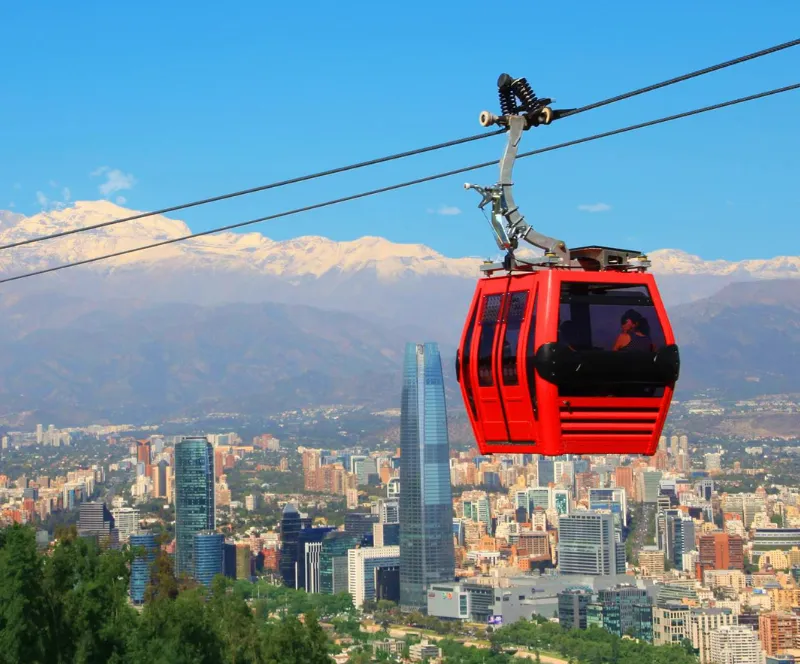
Most visitors take the funicular up Cerro San Cristóbal at midday. Locals know that the mountain is spectacular at dawn, when the city is still quiet, the smog has not built up, and the view of the Andes is at its clearest. A 6am walk up one of the trails takes about 45 minutes and rewards you with a near-empty summit and a panorama that justifies every step.
Watch the Andes Change Color at Sunset
Our Local guide, Alejandra recommends going up to Sky Costanera or Cerro San Cristóbal. On a clear day, the Andes turn pink, gold, then purple. This is peak Santiago energy to see the urban skyline and massive mountains. Go 1 hour before sunset.
The Weekend Markets of Barrio Italia and Barrio Lastarria
Santiago has developed a serious market culture over the last five years. The Feria de Barrio Italia on weekends draws local designers, food vendors, and vintage traders. Barrio Lastarria's market around Plaza Mulato Gil de Castro operates on Saturday and Sunday mornings and is one of the most pleasant ways to spend a few hours in the city.
Persa Bío Bío: The Ultimate Weekend Flea Market

On weekends, head to the Franklin neighborhood for this massive market. It is a sprawling labyrinth of vintage vinyl, antique furniture, industrial tools, and incredible street food. It is gritty, loud, and entirely authentic.
Local Secret: Look for the small stalls serving "arrollado de huaso" (pork roll) or authentic Colombian coffee inside the converted warehouses.
The Wines of Barrio Lastarria's Wine Bars
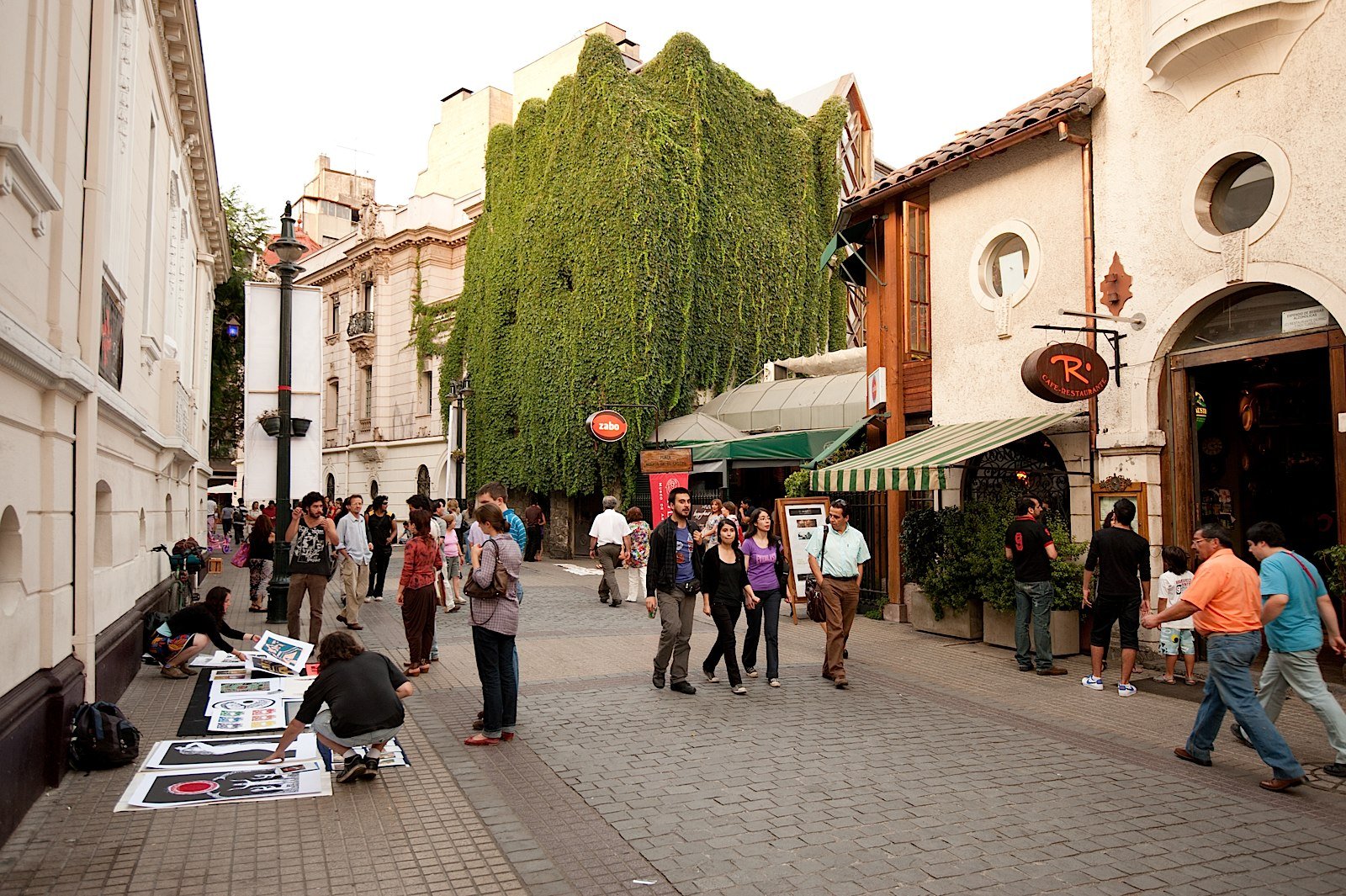
Chile is one of the world's top wine producers, and Santiago's wine bar scene has grown to reflect this. The concentration of small wine bars in Barrio Lastarria and Barrio Italia offers access to bottles from small producers in the Colchagua, Maule, and Casablanca valleys that you will not easily find outside the country. Ask for natural or low-intervention wines if that is your preference, the scene has grown significantly in that direction.
The Telefónica Building Viewpoint (Free and Almost Nobody Goes)
While the Sky Costanera observation deck in Las Condes attracts lines, there is a free viewpoint on the 24th floor of the Telefónica building in Barrio Lastarria that offers a comparable view of the central city with almost no other visitors. Hours vary, so confirm before visiting.
Visiting a Local Produce Market
La Vega Central is a working wholesale and retail produce market about ten minutes by metro from the city center. Locals shop here for everything from Chilean peppers and fresh fish to dried herbs and local cheeses. Having a cheap lunch at one of the market's small eateries (look for cazuela or charquicán) is one of the best food experiences in the city, and it costs almost nothing.
Cementerio General

It might sound unusual to visit a cemetery, but the architecture of the mausoleums is stunning, ranging from Gothic to Modernist. It serves as a profound history lesson on Chile’s political past, housing the graves of presidents, poets like Víctor Jara, and the moving Memorial to the Detained and Disappeared.
Santiago Food Guide
Chilean food has a reputation for being unremarkable. Santiago has developed a genuinely exciting restaurant scene over the last decade that draws on Chilean ingredients in creative ways. Food tourism often overlaps with guided experiences because locals know where to prioritize across your three days.
Chilean Breakfasts Worth Seeking Out

The marraqueta (a crusty bread roll split and filled with avocado, tomato, and cheese) is Santiago's default breakfast, and it is better than it sounds. Santiaguinos eat this with café con leche at one of the city's traditional fuentes de soda, old-school lunch counters that open early and serve food all day.
For a more contemporary breakfast, Barrio Italia and Barrio Lastarria have excellent specialty coffee shops that serve quality pastries and egg dishes. Locals have high standards for coffee, and you will not struggle to find a well-made flat white or pour-over.
Lunch
In Santiago, lunch is the biggest meal of the day. The standard format is a three-course menú del día, offered at almost every restaurant from noon to 3pm for a fixed price (usually between 4,000 and 8,000 Chilean pesos, roughly $5–$10 USD). You get a starter, a main course, and dessert or coffee. The quality varies, but the value is universally good.
For the best lunch experiences, ask a local to take you. The best menú del día spots are often unlabeled from the street, tucked into residential neighborhoods, and not visible on any app.
Seafood

Chile has some of the best seafood in South America, and this is most accessible in Santiago at the Mercado Central. The fish market itself is touristy, but the restaurants around its perimeter are less so. Order the paila marina (a rich seafood stew), locos (Chilean abalone, served cold with a mayonnaise sauce), or machas a la parmesana (razor clams baked with white wine and parmesan). These are the dishes that Chileans are genuinely proud of.
Modern Chilean Cuisine
Santiago's fine dining and casual creative restaurant scene has exploded. Restaurants like Boragó (consistently ranked among Latin America's best) have put Chilean gastronomy on the global map. These places require advance booking and are not cheap, but a meal at one of them is a genuine culinary experience, using endemic Chilean ingredients like maqui berries, ulte seaweed, and piure (a sea creature that is unlike anything else).
For something more accessible, the restaurants of Barrio Italia and Barrio Lastarria offer creative Chilean cooking at mid-range prices, with menus that change seasonally and wine lists focused on local producers.
Street Food and Empanadas

The empanada de pino (beef, olive, hard-boiled egg, and raisin) is Chile's most iconic pastry, and it is available everywhere. Quality varies enormously. The best ones in Santiago are found at traditional bakeries (panaderías) in residential neighborhoods.
The Completo is not your average hot dog. A "Completo Italiano" comes topped with a mountain of mashed avocado (palta), chopped tomatoes, and a generous layer of mayonnaise. The colors mimic the Italian flag, hence the name.
Don’t leave without trying Sopaipillas. On a rainy day, you will see lines of people at street carts buying these, often slathered in "pebre" (a spicy Chilean salsa). Ask your local guide where they go, this is exactly the kind of question that gets a strong opinion.
Day-by-Day Santiago Itinerary According to a Local
This three-day plan is built around how Santiago actually works, including travel times, when things are most crowded, and where local energy peaks throughout the day.
Day 1: Historic Santiago and Cultural Foundations
Morning: Plaza de Armas and La Moneda
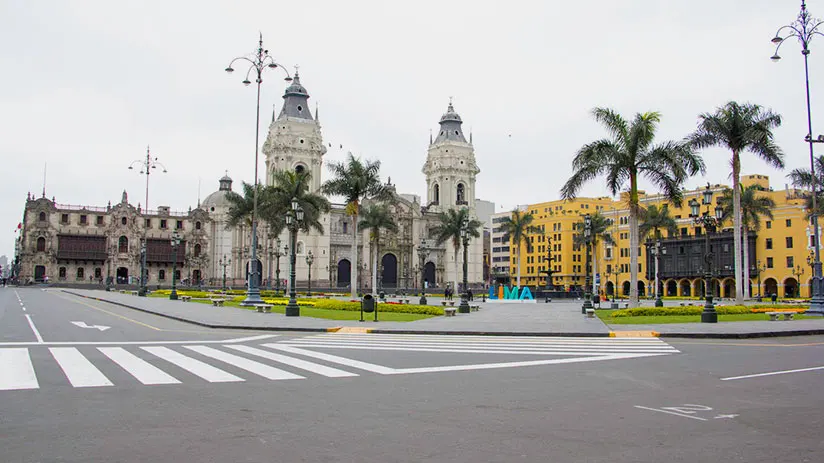
Start at Plaza de Armas, the historic heart of Santiago, in the morning before the crowds build. The energy here in the morning is authentic and local, vendors setting up, workers crossing to offices, older residents occupying the benches.
From Plaza de Armas, walk south along Paseo Ahumada toward the Palacio de la Moneda. The changing of the guard at La Moneda happens at 10am on even-numbered days, if the timing works, it is worth seeing. The palace itself has free underground exhibitions that are often overlooked. Your Lokafyer local guide will show you the best spots.
Late Morning: Barrio Lastarria
Walk east from La Moneda through Parque de los Reyes and up to Barrio Lastarria. This walk takes about 20 minutes and passes through the arts district connecting to the Bellas Artes museum (free on Sundays). Barrio Lastarria is at its best on weekend mornings when the street market is active and the cafés are full.
Stop for coffee at one of the neighborhood's independent spots and spend an hour walking the side streets. This is one of the most photogenic areas in the city.
For lunch: Look for a traditional fuente de soda or a mid-range restaurant doing a menú del día near Plaza Mulato Gil de Castro. Budget around 6,000–8,000 pesos for a full three-course lunch with a glass of wine.
Afternoon: Cerro Santa Lucía
After lunch, climb Cerro Santa Lucía, a small, forested hill in the center of the city that served as the original founding site of Santiago in 1541. The climb takes about 15 minutes and offers good views of the central city. It is undervisited relative to Cerro San Cristóbal and has a pleasant, quiet energy in the afternoon. From Cerro Santa Lucía, you can walk or metro to Bellavista for the evening.
Evening: Bellavista for Dinner and a Walk
Bellavista is best explored in the early evening before the nightlife peaks. Walk the streets around Loreto and Constitución to see the murals, browse the shops, and settle into the neighborhood energy. Dinner in Bellavista runs from around 7:30–8pm and there is a huge range of options from classic Chilean to Japanese, Peruvian, and Middle Eastern (Santiago has a large Palestinian community and some excellent Lebanese-influenced restaurants).
If you want to stay out, the bars on Avenida Pío Nono run late and are generally lively from Thursday through Saturday. For something more low-key, Patio Bellavista has several bar options and a more comfortable, contained atmosphere.
Day 2: Chilean Market and Panoramic Views
Early Morning: Cerro San Cristóbal

The views from Cerro San Cristóbal are best before 9am, when the Andes are clear and the city is quiet. You can walk up via the main trail from the Bellavista entrance (about 45 minutes), which is free. The funicular also runs from the same entrance but does not open until 10am on weekdays.
The summit has a large statue of the Virgin Mary, a small chapel, and a terrace with a 360-degree view of Santiago and the surrounding Andes. On a clear day, especially in winter when the mountain air is crisp, this is one of the most impressive urban views in South America. Come back down by 9:30am to avoid the tour groups and have breakfast in Bellavista.
Mid-Morning: La Vega Central Market
Take the metro from Baquedano to Patronato (Line 2) and walk to La Vega Central. Give yourself an hour to explore the market. Wander through the produce sections, try a small bowl of mote con huesillo (a traditional cold drink made from peaches and wheat, sweet and slightly fermented), and have a cheap breakfast or early lunch at one of the market's informal eateries. This is one of the most honest introductions to everyday Santiago life available to visitors. Nothing here is curated for tourists.
Afternoon: Barrio Italia
From La Vega, take the metro or a short Uber to Barrio Italia. This neighborhood rewards slow, unhurried exploration. Walk the main streets, stop into the design shops and vintage stores, have a coffee, look at the architecture of the old family homes that have been converted into small businesses.
Local Insight: If it is a weekend, the Feria Barrio Italia market will be running and is worth an hour of your time. If it is a weekday, the neighborhood is quieter but the cafés and shops are still open and the atmosphere is still pleasant.
Recommended stop: The Barrio Italia wine bars begin filling up from 6pm and are an excellent option for a pre-dinner drink. Ask staff for recommendations on small Chilean producers, they will often have selections from valleys you will not find easily outside Chile.
Evening: Dinner in Barrio Italia or Providencia
Both neighborhoods have strong restaurant options for dinner. Barrio Italia leans toward creative mid-range dining with menus that change regularly. Providencia offers more variety, including some of the city's best Japanese, seafood, and contemporary Chilean restaurants. Budget for a dinner with wine at a mid-range restaurant: around 25,000–40,000 pesos per person.
Day 3: A Final Look at the City
Morning: Providencia and Parque Balmaceda

Start your final morning in Providencia with a slow breakfast. The stretch of Avenida Providencia between Metro Manuel Montt and Metro Pedro de Valdivia has several good café options, and the pace here is more relaxed than the center.
After breakfast, walk or bike through Parque Balmaceda along the Mapocho River. The park is long and linear, popular with joggers and cyclists in the morning, and connects Providencia to the city center through a green corridor.
Late Morning: Museo de Bellas Artes or MAC (Museo de Arte Contemporáneo)
Both museums sit adjacent to each other at the Bello de Bellas Artes neighborhood and are excellent options for a late morning cultural stop. The Bellas Artes museum has a strong permanent collection of Chilean and Latin American art; the MAC runs consistently interesting contemporary exhibitions. Both are free or very low cost.
Afternoon: Casablanca or Maipo Valley Wine Experience (Optional Day Trip)
If your third day is flexible and you want to leave the city for a few hours, the Casablanca Valley (about an hour by bus toward Valparaíso) and the Maipo Valley (40 minutes south) are both accessible for afternoon visits. Several wineries in both regions are set up for visitors without advance bookings, and the quality of the wine, particularly Carménère and Sauvignon Blanc is excellent.
This works well as a half-day excursion, returning to Santiago in the late afternoon. A local guide who knows the wine regions will be able to take you to smaller producers that do not have international distribution or tourist infrastructure, making for a much more rewarding visit than arriving independently at a larger commercial winery.
Alternatively, you don't need to drive two hours to see a vineyard. Cousiño Macul is located right in the city (accessible by Metro). It is one of the oldest wineries in Chile and still feels like a country estate. Take a tour of their underground cellars, which were built in the 19th century.
Final Evening: Dinner with a View
For your final night in Santiago, head to the top of the Sky Costanera for sunset. It is the highest viewpoint in South America. Follow it up with dinner in Isidora Goyenechea, a street in Las Condes lined with high-end restaurants and outdoor seating, perfect for reflecting on your trip.
You can also consider one of the restaurants in Barrio Lastarria with terrace seating, or head up to one of the rooftop bars in the city center for a drink with the Andes skyline behind you. The stretch of Rooftop along Santa Lucía hill area has several options that are reliably good for a final evening. End the night with a pisco sour. It is the national drink, it is good in Santiago, and it is the appropriate way to close out three days in the city.
Hidden Santiago: What Most Tourists Never See

Beyond the itinerary, there are corners of Santiago that take local knowledge to find. These are the kinds of places that do not appear on travel blogs written by people who spent a week in the city three years ago.
The street art of Barrio Yungay is more substantial and less commercial than Bellavista's murals, and the neighborhood itself, one of Santiago's oldest and most architecturally intact is largely unknown to tourists.
The Thursday evening concerts at the GAM cultural center near Barrio Lastarria are free, high quality, and populated almost entirely by locals. Music ranges from contemporary classical to folk and jazz.
The palimpsest of pre-earthquake architecture in Barrio Brasil, west of the center, preserves blocks of 1920s and 1930s buildings that give a sense of what Santiago looked like before development pressure changed the city's skyline.
The walking trails inside Cerro San Cristóbal beyond the main summit path lead through forested sections with almost no foot traffic. These are used by morning runners from the neighborhood and are a completely different experience from the tourist-facing funicular route.
How to Make the Most of Your Santiago Trip: Practical Tips
When to visit: Santiago is best from September through November (spring) and March through May (fall). Summer (December–February) can be hot and smoggy; winter (June–August) is cold but brings clear skies and the Andes views are at their best.
Language: Spanish is the language of the city. Chileans speak quickly and use a lot of slang (chilenismos) that can be hard to follow even for strong Spanish speakers. In tourist-facing restaurants and hotels, English is commonly spoken, but outside of those environments, basic Spanish phrases will serve you well. A bi-lingual Lokafyer guide would help you easily navigate the city.
Currency: The Chilean peso (CLP). Credit cards are widely accepted in restaurants and hotels. For markets, smaller vendors, and taxis, cash is useful. ATMs are abundant and generally reliable.
Tipping: In restaurants, a 10% propina is included in most bills. It is optional but standard to leave it. Tipping is appreciated and common.

A Local's Take: What Most Travel Guides Get Wrong
We asked Alejandra Góngora, a Santiago local and Lokafy guide, one question: What do you wish tourists knew before visiting that most travel guides get wrong?
"Most visitors go to Concha y Toro because it's the name they recognize. But Viña Cousiño Macul is closer to the city, family-owned, far less crowded, and the tasting experience is genuinely intimate.
The Parque Quinta Normal is also missed. We usually picnic here, but many tourists skip it. Inside the park is The Museo de la Memoria y los Derechos Humanos which adds emotional depth to understanding Chile.
And before visitors even think about wine, they walk straight over the Centro Cultural Palacio La Moneda without knowing it exists. It's underneath the presidential palace. Excellent exhibitions, beautiful modern space. Tourists literally walk over it every single day.
Don;t leave without tasting my must-try dishes, which are Ceviche, Congrio frito and Paila marina. Late nights, head to Barrio Brasil and order a Terremoto (pipeño wine, pineapple ice cream & grenadine). It’s sweet, strong and chaotic, just like its name (“earthquake”)"
— Alejandra Góngora A., Santiago local and Lokafyer
Is Santiago Safe for Tourists?
This is one of the most searched questions about the city, and it deserves a straight answer. Santiago is generally safe for tourists, and it is one of the safest major capitals in Latin America. The city has well-functioning infrastructure, a good metro system, and a large population of travelers who move through it without incident every year.
That said, like any large city, Santiago has neighborhoods that are better to avoid after dark, and petty theft, especially phone snatching and pickpocketing in crowded areas does happen. The areas covered in this itinerary are all considered safe for tourists, including at night, as long as you apply the same common sense you would anywhere else.
The best way to navigate safety in Santiago is to move around with someone who knows the city. A local guide knows which streets to take at night, which vendors are trustworthy, and when a situation feels off. That local knowledge is genuinely hard to replicate with a guidebook.

Experience Santiago With a Local Guide
Three days is enough time to get to know Santiago properly if you know where to look. The itinerary above gives you the structure but what fills it in is local knowledge.
With Lokafy, you can connect with Santiago locals who offer guided experiences built around their neighborhoods, passions, and insider knowledge. This is not a traditional tour but more like spending a day in the city with a well-connected friend who knows every wine bar, which market vendors to trust, and where to eat cazuela that will make you reconsider everything you thought about Chilean food.
Our Santiago guides cover everything from morning market walks in La Vega to food tours through Barrio Italia, wine experiences in the Maipo Valley, and photography walks through neighborhoods most visitors never reach.
Ready to see Santiago the way locals see it? Book a personalized Santiago experience with Lokafy and discover the city through the people who know it best.
Written with input from Lokafy's local guides in Santiago de Chile.
Enjoyed this article?