The first time I stood in the middle of Shinjuku Station, I was armed with a phone full of screenshots and absolute confidence. Twenty minutes later I was still underground, following yellow signs in circles, while my travel companion (whose English is about as good as my Japanese) asked me in Spanish what every announcement meant. I had no idea. That afternoon taught me something useful: Tokyo is easy once someone explains it to you, and it is a lot more fun when that someone speaks your language. If Spanish is the language your group jokes and argues in, a Spanish-speaking local guide changes the whole trip.
Quick Guide: Spanish-Speaking Guides in Tokyo
- Primary recommendation: Book a private, customised walking tour with a local who speaks fluent Spanish, so the route is built around your interests and nothing gets lost in translation.
- Top choice for first-timers: A morning in Yanaka, Nezu and Sendagi. Start with coffee at Kayaba Coffee (opens at 8am) and ask your guide to point out the last shogun's grave in Yanaka Cemetery.
- Value pick for food lovers: Jimbocho and Kanda, where a plate of European-style curry at Bondy and a tray of cold soba at Kanda Matsuya both come in under ¥2,000 a plate.
- Best for multigenerational or Spanish-only groups: Ask for a slower half-day route with seated food stops, so grandparents can ask every question they want without anyone translating.
- The best way to see the city: Take a private, personalised walking experience with Lokafy in Tokyo and discover the neighbourhoods behind the neon with a Local, in Spanish.
Why a Spanish-Speaking Guide Makes Such a Difference in Tokyo

A Spanish-speaking local guide in Tokyo is a resident of the city who walks you through neighbourhoods, food and everyday customs in Spanish, so you can ask questions naturally instead of filtering everything through English.
That matters more here than in most big cities. Station signs and restaurant menus in Tokyo switch between Japanese and English, and Spanish rarely makes an appearance. Even the official safety net leaves Spanish speakers out: the Japan Visitor Hotline, the 24-hour line run by the Japan National Tourism Organization, supports English, Chinese and Korean, but not Spanish.
For a solo traveller who is comfortable in English, that is manageable. For a family where one parent speaks only Spanish, or a group of friends from Bogotá who want to joke around while they eat, it means someone ends up acting as the full-time interpreter. A guide who speaks your language takes that job off everyone's shoulders.
There is a quieter benefit too. Japanese etiquette is full of small rules, from where to stand on an escalator to why nobody eats while walking down certain streets. Hearing those explained in your own language, with room for follow-up questions, makes them stick.
Do Guides in Tokyo Need a Licence?
No. Since a change to Japan's Licensed Guide Interpreters Act came into effect on 4 January 2018, anyone can guide foreign visitors for a fee without holding the national licence. Only people who have passed the national exam can use the official title of "Licensed Guide Interpreter" (tsūyaku annaishi).
In practice, that means Tokyo has two kinds of Spanish-speaking guides. Some are licensed professionals who know their history down to the year. Others are locals with Spanish woven into their own story, such as a Japanese local who spent university years in Spain or Mexico, or a Latin American who moved to Tokyo a decade ago and never left. For a history-heavy temple tour, a licensed guide makes sense. For understanding how people live day to day, a local who calls the city home is often the better fit.
How to Find the Right Spanish-Speaking Guide in Tokyo
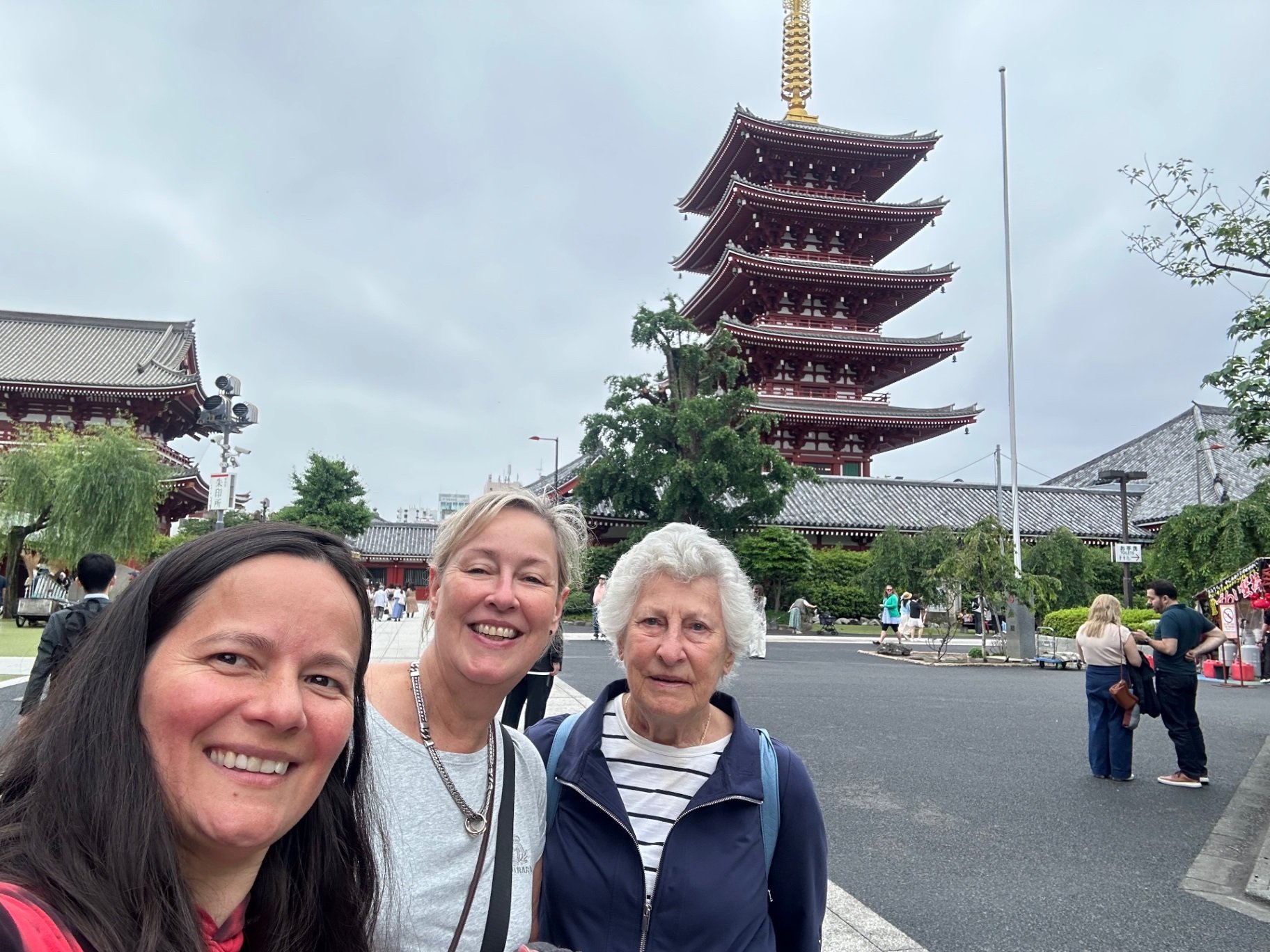
Booking a guide in a language that is less common in Japan takes a little more planning than booking an English-speaking one. These steps save a lot of back-and-forth:
- Book early. Spanish-speaking guides in Tokyo are fewer than English-speaking ones, so give at least a couple of weeks' notice, and more for cherry blossom season or autumn leaves.
- Confirm the level of Spanish. Ask if your guide is a native speaker, fluent, or conversational. Native and fluent speakers will catch jokes, slang and the questions your abuela asks halfway through a sentence.
- Mention where your Spanish comes from. A guide who grew up in Buenos Aires and one who learned in Madrid will sound different. Most Spanish speakers adapt easily, but it is a nice detail to share.
- Share your interests, not a checklist. "We love food markets and old neighbourhoods, and my dad hates crowds" gives a local far more to work with than a list of landmarks.
- Agree on pace and duration. A three-hour walk suits a first afternoon. A six-hour day works if you want to cover two neighbourhoods with lunch in between.
- Ask who pays for what. Entry fees, train fares and food are usually extra, and with most private tours you also cover your guide's entry tickets if you visit paid attractions.
- Settle the meeting point in writing. Tokyo stations have dozens of exits. "Ueno Station, Shinobazu exit" is a plan. "Ueno Station" is a scavenger hunt.
Tokyo Routes Worth Asking Your Guide For
The beauty of a private tour is that the route is yours. Still, it helps to arrive with ideas. These neighbourhoods are the ones Tokyo residents recommend again and again on local forums when visitors ask where to go beyond Shibuya Crossing and Senso-ji, and each one becomes far richer with someone who can explain it in Spanish.
Old Tokyo Morning: Yanaka, Nezu and Sendagi
Locals call this area Yanesen, and it survived both the 1923 earthquake and wartime bombing better than most of the city. Start at Kayaba Coffee, a kissaten (old-style coffee house) in a wooden house that opens at 8am. Order the egg sandwich and the "Russian", a mix of coffee, chocolate and milk that has been on the menu for decades.
From there, wander through Yanaka Cemetery, where Tokugawa Yoshinobu, the last shogun of Japan, is buried. It sounds like a strange tourist stop until you are walking under the trees with locals out for their morning walk. Then head down to Yanaka Ginza, the old shopping street, via the Yuyake Dandan steps. Grab a menchi katsu (a fried minced meat croquette) from one of the butchers and eat it standing near the shop, which is the polite way to do it here.
Ask your guide about: why so many shopping streets in Tokyo are called "Ginza" when they are nowhere near the real Ginza.

Books, Curry and Soba: Jimbocho and Kanda
Jimbocho is Tokyo's secondhand book district, with shops stacked floor to ceiling in Japanese, English and the occasional Spanish title. It is also, a little unexpectedly, the city's curry capital, with well over a hundred curry shops in the wider Kanda area.
The local favourite is Bondy, tucked on the second floor of the Kanda Old Books Centre. It has served European-style curry since 1973 and won the very first Kanda Curry Grand Prix in 2011. Your curry arrives with boiled potatoes and butter on the side, and regulars mix the potato into the sauce. There is often a queue at lunch, so go early.
A short walk away, Kanda Matsuya has been making handmade soba since 1884, in a wooden building that dates from 1924. Tables are shared, the room is loud, and office workers slurp their noodles at speed. It closes on Sundays.
Ask your guide about: how Japanese curry, which arrived with the British in the late 1800s, became a comfort food every Japanese kid grows up with.
Canals and Clams: Kiyosumi-Shirakawa and Fukagawa
East of the Sumida River, Kiyosumi-Shirakawa feels like a different city. Warehouses have become coffee roasters and small galleries, and Kiyosumi Gardens is one of the most peaceful traditional gardens in central Tokyo, with stepping stones across the pond and turtles sunning themselves on the rocks.
This is also the home of fukagawa-meshi, rice with short-neck clams that fishermen ate when this area was still on the water's edge. Try it at Fukagawa Kamasho, a few minutes from Kiyosumi-Shirakawa Station, or at Fukagawajuku nearby. Both close on Mondays.
Ask your guide about: how much of eastern Tokyo is reclaimed land, and where the old shoreline used to run.
Street Food on a Local Shopping Street: Togoshi Ginza or Sunamachi Ginza
If you want to see how Tokyo families shop for dinner, skip the department stores and walk a shotengai (neighbourhood shopping street). Togoshi Ginza in Shinagawa is the longest in Tokyo at about 1.3 kilometres, and it is famous for croquettes. Finish with a soak at Togoshi Ginza Onsen, a public bath with naturally dark hot spring water.
Sunamachi Ginza in Koto Ward is shorter, at around 670 metres, and even less touristy. Locals come here for oden, side dishes and fried snacks that cost a couple of hundred yen each.
Ask your guide about: how a shotengai works as a community, and which shops have been run by the same family for generations.

Evening Drinks: Harmonica Yokocho in Kichijoji
Kichijoji, west of central Tokyo, is regularly voted one of the most desirable places to live in the city. Right outside the station's north exit, Harmonica Yokocho is a postwar maze of around 100 tiny bars and eateries, named because the narrow shopfronts look like the holes of a harmonica. Many seat only five or six people. A few are for regulars only, which is exactly when a local guide earns their fee: they know where you will be welcomed.
Ask your guide about: how izakaya ordering works, including the small "otoshi" appetiser and cover charge that appears on your bill.
Small Things That Catch Spanish-Speaking Visitors Out
Some of Tokyo's surprises hit harder if you are used to the way people eat and socialise in Spain or Latin America. A few to know:
Dinner happens earlier. If you are used to eating at 9:30pm, Tokyo will test you. Plenty of smaller restaurants take last orders around 9pm. Izakayas stay open later, but plan your main meal earlier than you would in Madrid or Mexico City.
Sobremesa is rare. In busy restaurants, especially at lunch, people eat and leave. Lingering for an hour over coffee is better suited to a kissaten than a ramen counter.
Tipping is not expected. Leaving cash on the table can cause confusion. A sincere "gochisōsama deshita" (thank you for the meal) on your way out is the local version.
Some Japanese will sound familiar. "Pan" means bread in Japanese, borrowed from Portuguese traders in the 16th century. The sponge cake castella takes its name from Castilla. Your guide will have fun with this one.
Get an IC card on day one. A Suica or PASMO card covers trains, buses, convenience stores and vending machines. iPhone users can download the Welcome Suica Mobile app before they land.
Carry some cash anyway. Card payments are widely accepted now, but small shotengai stalls, older restaurants and shrines often prefer yen.
Tax-free shopping now works as a refund. Japan switched to a refund system, so you pay the full price including consumption tax at tax-free stores and claim it back when you leave the country, after customs confirms your purchases. Keep your goods unopened and allow extra time at the airport.
The departure tax is ¥3,000. It is usually built into your flight ticket, so you will rarely pay it separately.
Spanish-Language Help Worth Saving on Your Phone
Even with a guide for part of your trip, you will spend most days on your own. These are useful to have ready:
- Himawari medical information line (03-5285-8181): Run by the Tokyo Metropolitan Government, it helps you find clinics and hospitals with staff who speak your language. Spanish is supported, every day from 9am to 8pm.
- VoiceTra: A free speech translation app from Japan's National Institute of Information and Communications Technology, built for travel conversations and supporting Spanish. Keep it updated, as older versions stop working.
- GO TOKYO and JNTO in Spanish: Both the official Tokyo tourism site and the Japan National Tourism Organization site have Spanish-language versions for planning.
- Instituto Cervantes Tokyo: Spain's cultural institute sits in Rokubancho, a short walk from Ichigaya, Yotsuya and Kojimachi stations. It hosts exhibitions and events, and it is a fun stop if you want to see how Tokyo engages with Spanish-speaking culture.
Explore Tokyo in Spanish with a Lokafyer
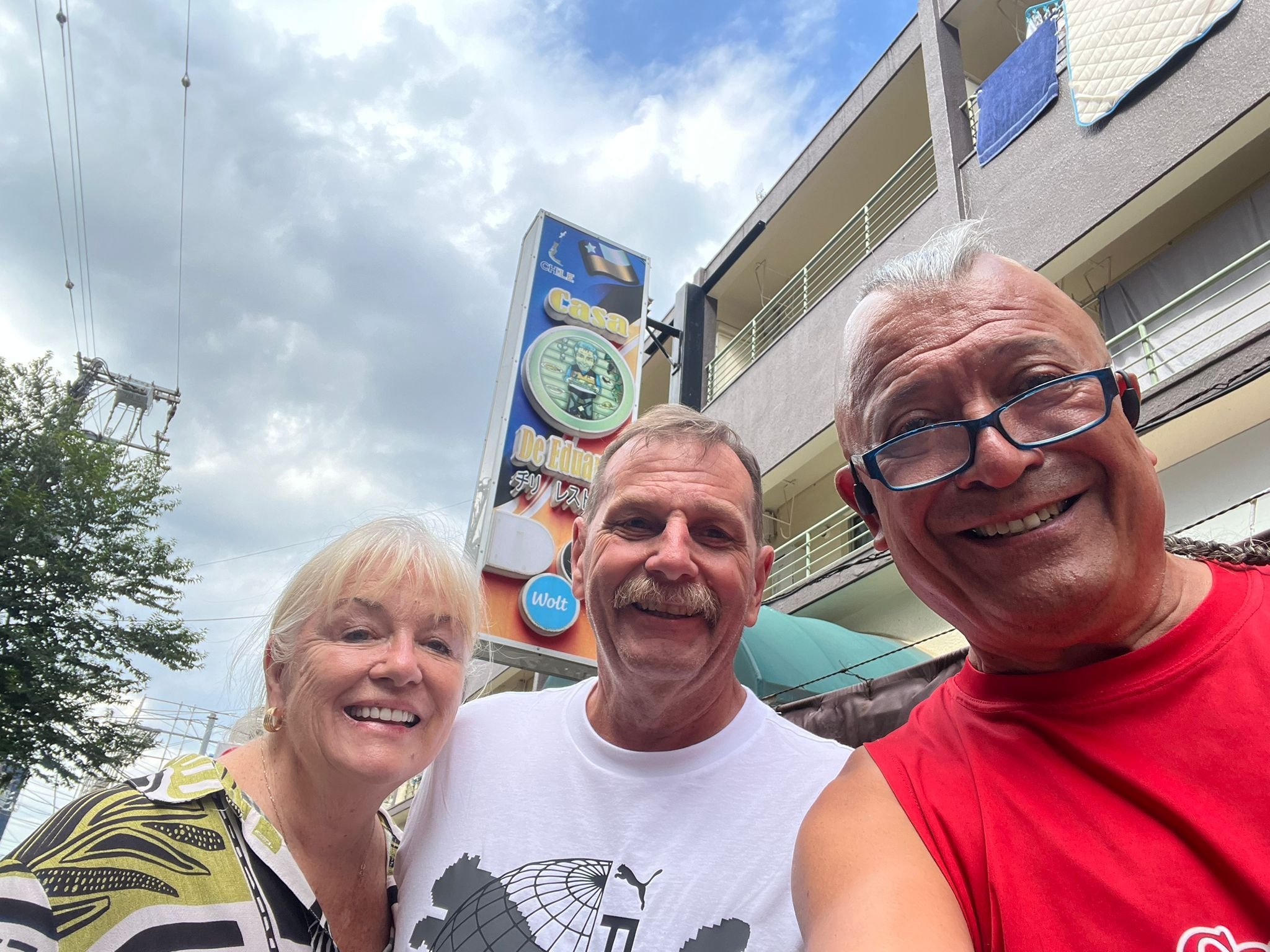
Tokyo rewards people who ask questions, and that is a lot easier in your own language. With Lokafy, you are matched with a Lokafyer, a Tokyo local who shows you the city the way they live it. Every tour is private and personalised: you choose a 3, 4 or 6-hour walk, tell us what you love, and your Lokafyer builds the route around you. That might mean curry in Jimbocho, croquettes in Togoshi Ginza or a slow morning in Yanaka with your parents.
Tokyo tours with Lokafy are available in Spanish, as well as English and French. Expect a day out with a friend who knows the back streets and the lunch counters worth queuing for, with plenty of room for your questions along the way.
Take a private, personalised walking experience with Lokafy in Tokyo and discover the neighbourhoods most visitors walk straight past, with a Local who speaks Spanish.
FAQ: Spanish-Speaking Guides in Tokyo
Can I find a Spanish-speaking tour guide in Tokyo?
Yes. Tokyo has Spanish-speaking guides, including Japanese locals who studied in Spain or Latin America and Spanish speakers who live in the city. They are fewer than English-speaking guides, so book at least a couple of weeks in advance, especially in spring and autumn.
How much does a private Spanish-speaking guide in Tokyo cost?
Prices depend on duration and group size. Private customised walking tours in Tokyo typically start from around US80toUS100 for a shorter walk, with longer full-day tours costing more. Entry fees, transport and food are usually extra.
Do I need a guide in Tokyo if I don't speak English or Japanese?
You can get around Tokyo independently, since trains are well signposted in Japanese and English. Without either language, though, menus, etiquette and station layouts get harder. A Spanish-speaking local guide is most useful on your first day or two, when you are learning how the city works.
Do guides in Tokyo need a licence?
No. Since January 2018, anyone in Japan can guide foreign visitors for a fee without the national licence. Only those who pass the national exam can use the official title of Licensed Guide Interpreter.
Is there an emergency or tourist helpline in Spanish in Tokyo?
The Japan Visitor Hotline (050-3816-2787) supports English, Chinese and Korean, not Spanish. For medical help, the Tokyo Metropolitan Government's Himawari line (03-5285-8181) offers support in Spanish every day from 9am to 8pm. For emergencies, dial 119 for an ambulance or fire and 110 for police.
What are the best Tokyo neighbourhoods to explore with a local guide?
Yanaka, Nezu and Sendagi for old Tokyo, Jimbocho and Kanda for books, curry and soba, Kiyosumi-Shirakawa for gardens and coffee, Togoshi Ginza or Sunamachi Ginza for street food, and Kichijoji's Harmonica Yokocho for an evening drink. A local guide can combine two or three of these in a single day.
Is tipping expected for tour guides in Japan?
Tipping is not part of Japanese culture, and it is not expected in restaurants or shops. On private tours, a tip for your guide is optional and always appreciated, but never required.
Enjoyed this article?