I came to Tbilisi for the sulphur baths and the wine, and I left talking about doorways. Sololaki does that to people. It starts a few minutes uphill from Freedom Square, yet most visitors march straight past it on their way to the cable car. Wander up one of its sloping streets, lean on a heavy wooden door that happens to be open, and you may find a stairwell painted like a Persian carpet, with a neighbour on the landing curious about where you are from. This is the guide I wish I'd had: what locals want you to see in Sololaki, where they eat, and how to walk the whole neighbourhood in an afternoon.
Quick Guide: Sololaki Guide
- Primary Recommendation: Walk Ivane Machabeli and Lado Asatiani streets slowly and look into the old entrance halls, starting with the neo-Moorish Kalantarov House at 17 Machabeli Street.
- Top Choice for Food: Amo Rame on Pavle Ingorokva Street for hand-pinched khinkali. Locals rate the vegetarian nadughi (soft cheese) and potato fillings as some of the best in the city.
- Value Pick: Veliaminov, a basement dining room at 8 Shalva Dadiani Street, for cheap Georgian classics at tables full of local families.
- Best View: Climb the 120-step Betlemi Stair-Street from Asatiani Street to the Upper Betlemi Church garden, then follow the ridge path to the Mother of Georgia statue.
- The Best Way to See Sololaki: Take a private, personalised walking experience with Lokafy in Tbilisi and discover Sololaki's courtyards, stairwells and khinkali cellars with a local.
What Is Sololaki?
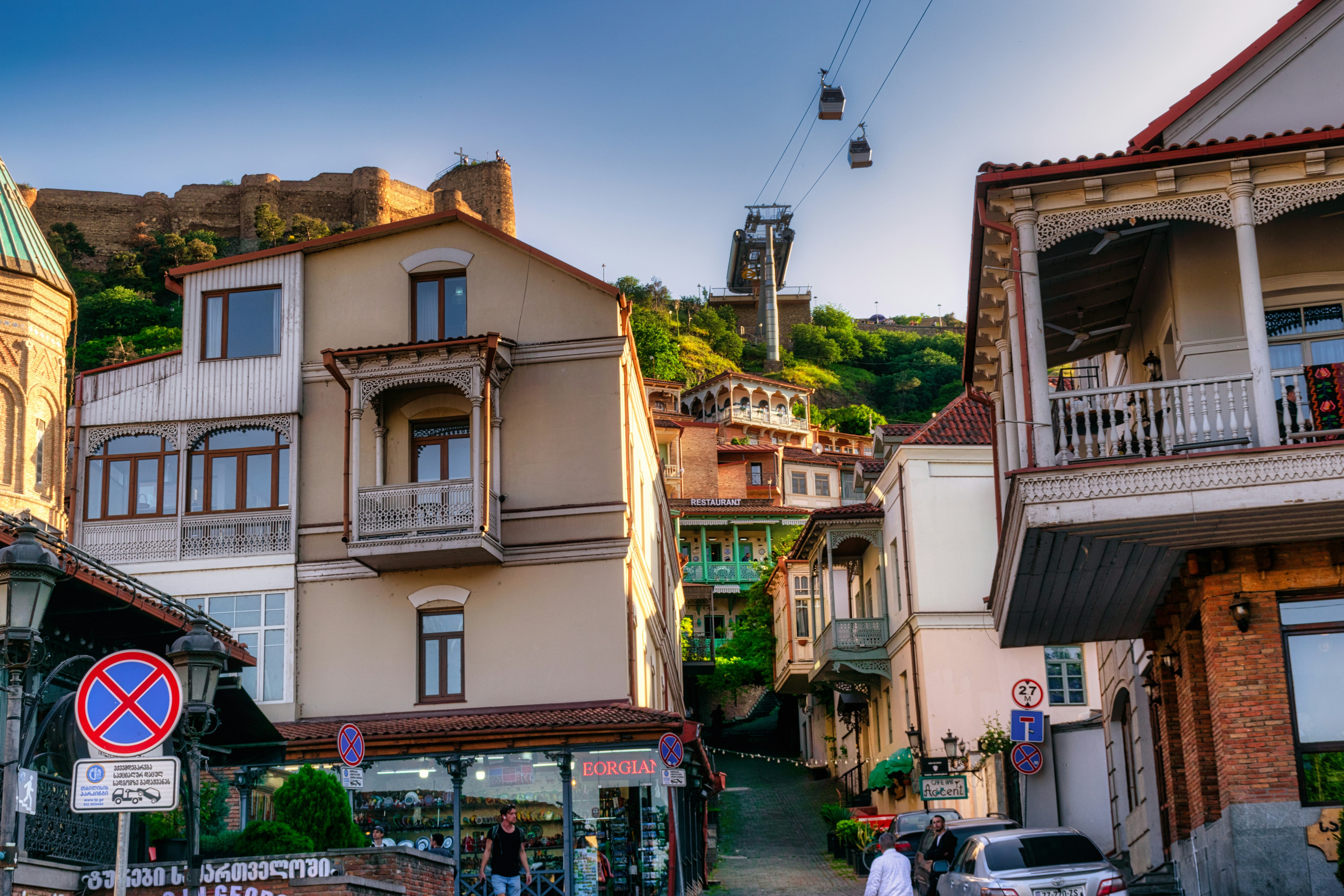
Sololaki is a historic residential neighbourhood in central Tbilisi, built mainly in the 19th and early 20th centuries on the slope between Freedom Square and the Sololaki Ridge, below Narikala Fortress. It is known for merchant mansions, Art Nouveau facades and painted entrance halls, and it sits right beside Kala (the Old Town) while feeling far calmer.
The name is usually traced to an Arabic word for an irrigation canal, a reminder that this hillside was once royal and noble gardens. Building took off in the mid-1800s, starting with the stretch around today's Leonidze Street and Freedom Square, and by the end of the century Sololaki was where Tbilisi's wealthiest merchants and industrialists chose to live. Writers, scientists and artists followed. The Soviet decades, earthquakes and the hard years after 1991 left many of the mansions peeling and propped up, and locals will tell you that is part of the charm.
Roughly speaking, Sololaki runs west of Shalva Dadiani Street and south of Giorgi Leonidze Street, climbing up towards Amaghleba Street and the ridge. Nobody will quiz you on the borders. If the balconies are wrought iron rather than carved wood and the streets get steeper, you are in Sololaki.
Getting to Sololaki and Getting Around
The easiest starting point is Freedom Square metro station (Tavisuplebis Moedani). From there you are a short uphill walk from Lermontov, Machabeli and Asatiani streets, the three that hold most of the neighbourhood's best buildings. The Writers' House on Machabeli Street is only about 600 metres from the metro exit.
After that, walk. Sololaki is compact, but it is a hillside, and the pavements are uneven in places, so leave the sandals at the hotel. If you would rather not climb at the end of the day, do the route below in reverse: ride the Rike to Narikala cable car up to the ridge, walk to the Mother of Georgia statue, and come down through the Betlemi gardens into Sololaki. Gravity does the work and you finish near dinner.
A Half-Day Sololaki Walking Route
Allow three to four hours with stops. Most of it is free.
- Start at Gudiashvili Square. This small square on the seam between Kala and Sololaki appears on a city plan from 1785 and has carried the name of painter Lado Gudiashvili since 1988. After a long and much-debated restoration it has benches, swirling cobbles and a bronze couple kissing under an umbrella. The Russian poet Mikhail Lermontov stayed nearby in 1838, which is why the street running off the square bears his name.
- Walk up Lermontov Street to Machabeli Street. Look up rather than ahead. On the corner of 10 Machabeli and 14 Lermontov, the owner's initials, A.M., are worked into the window grilles, and this sort of detail is everywhere once you start noticing it.
- Visit the Writers' House at 13 Machabeli Street. This mansion was built from 1903 to 1905 by German architect Karl Zaar for David Sarajishvili, the pioneer of Georgian brandy. It now holds the Sarajishvili house museum and the Museum of Repressed Writers, which tells the story of the poets and novelists lost to the Soviet purges. Opening hours shift, so check before you go. A local tip: if the gate looks shut, ring the bell, and the guard will usually let you into the courtyard.
- Stop outside 17 Machabeli Street. The Kalantarov House, built in 1908 for merchant Mikhail Kalantarov by architect Ghazar Sarkisian, is often called the most beautiful house in Tbilisi. Its neo-Moorish facade is the warm-up. The entrance hall inside is one of the city's famous "Persian-style" halls, painted with carpet patterns and stalactite-like plasterwork. It is a lived-in apartment building, so read the etiquette section below first.
- Cut through to Lado Asatiani Street. The Kalantarov House has a second entrance on Asatiani (number 27), and this street is often described as the stronghold of Tbilisi Art Nouveau. Wander it end to end. Peek into any courtyard with an open archway and you will see the Tbilisi idea of shared living: wooden galleries, laundry lines, vines and somebody's cat.
- Climb the Betlemi Stair-Street. From Asatiani Street, 120 stone steps laid in 1850 lead up the cliff. Halfway up is the brick Lower Betlemi Church; at the top, the Upper Betlemi Church sits in a small garden with roses, benches and old vines on a trellis. Catch your breath here. The view over the rooftops of Sololaki and Kala is one locals bring visiting friends to see.
- Follow the ridge to the Mother of Georgia. A footpath runs from the Upper Betlemi garden up to Kartlis Deda, the 20-metre aluminium Mother of Georgia, raised in 1958 for the city's 1,500th birthday. She holds a bowl of wine for guests and a sword for enemies, which is about as good a summary of Georgian hospitality as you will get. Narikala Fortress is roughly a ten-minute walk further along the ridge.
- Head down for a glass of wine. Take the cable car down to Rike Park, or walk back into Sololaki and end at Vino Underground on Galaktion Tabidze Street (more on that below).
How to Visit Sololaki's Entrance Halls Respectfully
The painted entrance halls, called sadarbazo locally, are the reason many Tbilisians call Sololaki their favourite part of the city. From the 1850s and 60s, a lavishly decorated entrance became a status symbol for well-off families. Local craftsmen from the old Amkari guilds painted the walls in full, often using stencils copied from European pattern books, then mixed in Persian ornament, stained-glass skylights and tiled stoves imported from Italy or France. The result looks like nowhere else.
They are also people's front halls, not museums, and that is worth keeping in mind:
- Many doors are locked. Only step in when a door is already open, and never climb to the apartment landings.
- Keep your voice down and say gamarjoba (hello) if you meet a resident. It goes a long way.
- Ask before photographing anyone, and skip the flash, since many halls are dim and the paint is fragile.
- For courtyards, mid-morning light (roughly 10:00 to 12:00) is the most flattering.
- Beyond Machabeli 17, the restored hall at 42 Tabukashvili Street is a fine example where the original wall paintings, coffered ceilings and railings were brought back.
This is the part of Sololaki where a local companion makes the biggest difference. Residents are far more relaxed when a Georgian speaker is the one asking.
Where Locals Eat and Drink in Sololaki
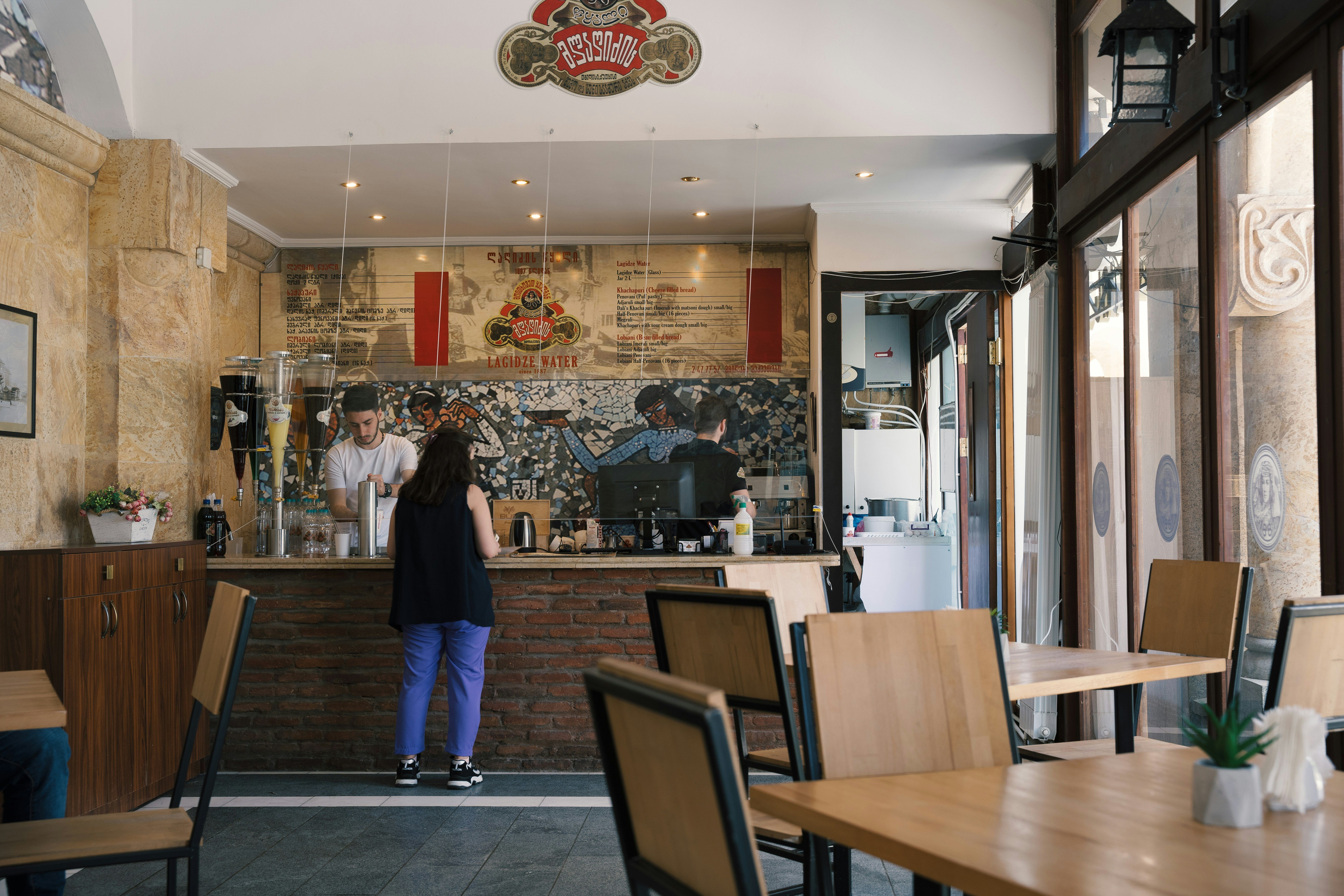
Sololaki has been one of Tbilisi's best food neighbourhoods for more than a decade, and it still mixes old basement taverns with some of the country's most respected kitchens.
Amo Rame, 4 Pavle Ingorokva Street. A cosy cafe owned by the family of Georgian painter Levan Kharanauli, whose expressive canvases cover the walls. Khinkali are the main event, and the family runs a dedicated khinkali room across the street, so check which door you want. Order the nadughi and potato dumplings even if you are a meat eater.
Klike's Khinkali, 1 Shio Chitadze Street. A brick-lined basement on the hillside a few minutes from Freedom Square, with seven fillings and a reputation for big, generously filled dumplings. When one r/tbilisi user was asked for the best restaurants of each cuisine, this was their khinkali answer. It is also the easy fallback when Amo Rame is full.
Veliaminov, 8 Shalva Dadiani Street. An underground dining room serving the Georgian classics at low prices, close to Freedom Square yet firmly a locals' spot. Expect long tables of Tbilisians working through platters of khinkali. Get the mushroom ojakhuri, fried sulguni cheese and the walnut salad.
Iasamani, 33 Lado Asatiani Street. Crisp white tablecloths against peeling walls and old radiators, which is Sololaki style in a sentence. The kitchen does a strong line in vegetarian and vegan Georgian dishes. Try the gebjalia, rolled cheese in a minty sauce.
Café Littera, 13 Ivane Machabeli Street. The splurge. Chef Tekuna Gachechiladze, a pioneer of modern Georgian cooking, runs this restaurant in the garden behind the Writers' House, under a towering pine. It holds a place in international rankings, so book ahead and ask for a garden table.
Vino Underground, 15 Galaktion Tabidze Street. A brick-vaulted cellar owned collectively by Georgian natural winemakers and pouring qvevri wines since 2012. It was the first bar in Tbilisi to focus only on natural wine. Ask whoever is pouring for an amber rkatsiteli and a story about the grower.
Dadi, 4 Shalva Dadiani Street. A small natural wine bar and shop opened in 2017, good for a flight of wines from different Georgian regions with bread and cheese. It stays open late, which makes it a handy last stop.
A few khinkali rules before you sit down. Eat them with your hands, hold the knot, bite a small hole and sip the broth first. Leave the doughy knot on the plate. Most places have a minimum order, often five pieces, and in Sololaki you can expect to pay roughly 1.50 to 3 lari per dumpling.
Local Tips for Sololaki
- Look at the metalwork. Balconies, gates and door handles often carry the original owners' initials or dates. Spotting them becomes a game.
- Carry small notes. Older taverns and corner shops are happier with lari in cash than a large note.
- Go slowly. Sololaki rewards drifting more than ticking off sights. Plan at least an hour for courtyards alone.
- Respect the residents. People have lived in these buildings for generations, often in tight conditions. A smile and a quiet voice keep the welcome warm for the next visitor.
- Stay here if you can. Many travellers who return to Tbilisi base themselves in Sololaki. It is within walking distance of the Old Town but without its crowds, and staying in an apartment with a shared courtyard is the closest you will get to Tbilisi daily life.
When to Visit Sololaki
Spring and autumn are the sweet spots. The light on the old facades is softer, and climbing the Betlemi stairs does not leave you soaked. In summer, do the hillside sections early or late and save the middle of the day for a long lunch underground. Aim to reach the ridge in the late afternoon for sunset over the city, and bring a light jacket, as it gets windy up there after dark. In winter, the paths near the ridge can be icy, so the cable car is the safer way up.
See Sololaki With a Local Through Lokafy

You can walk Sololaki on your own with this guide in hand. You will still walk past most of it. The best stairwells sit behind doors that look like any other, the courtyards that welcome guests are known by the people who live nearby, and the stories behind the mansions (who built them, who lost them, who lives there now) rarely make it into guidebooks.
With Lokafy, you explore Tbilisi with a Lokafyer, a local who lives in the city and shows you around the way they would show a friend. Lokafyers are locals first, not scripted tour guides, so your walk is built around what you care about. Spend the morning in entrance halls and courtyards, stop for khinkali in a basement your Lokafyer swears by, and finish on the ridge at sunset. Every experience is private and personalised, so the pace, the route and the number of stairs are up to you.
Take a private, personalised walking experience with Lokafy in Tbilisi and discover Sololaki with a local.
Frequently Asked Questions About Sololaki
Is Sololaki worth visiting? Yes. Sololaki is one of the best places in Tbilisi to see 19th and early 20th century architecture up close, including painted entrance halls, Art Nouveau facades and courtyard houses. It is a short walk from Freedom Square, it is calmer than the Old Town, and it has some of the city's best khinkali and natural wine bars.
Is Sololaki part of Old Tbilisi? Sololaki is usually counted as part of historic Tbilisi, but it is a separate neighbourhood from Kala, the medieval Old Town. Sololaki was mostly built in the 1800s and early 1900s by wealthy merchants, so it looks more European, with grand mansions and wrought iron balconies, while Kala has older winding lanes and carved wooden balconies.
How long do you need to explore Sololaki? Half a day is enough to walk the main streets, look into a few entrance halls, climb the Betlemi stairs and reach the Mother of Georgia statue. Add a long lunch or an evening at a wine bar and it easily fills a full day.
Can you go inside the entrance halls in Sololaki? Some of them. The entrance halls belong to private residential buildings, so many doors are locked. When a door is open, you can usually step into the ground-floor hall quietly to look, but you should not go up to the apartments. Visiting with a local helps, as residents are more comfortable when a Georgian speaker asks first.
Where should I eat in Sololaki? For khinkali, locals recommend Amo Rame on Pavle Ingorokva Street and Klike's Khinkali on Shio Chitadze Street. Veliaminov on Shalva Dadiani Street is the budget local favourite, Iasamani on Lado Asatiani Street is strong for vegetarian Georgian food, and Café Littera at the Writers' House is the special-occasion choice. For natural wine, try Vino Underground or Dadi.
How do you walk from Sololaki to the Mother of Georgia statue? From Lado Asatiani Street, climb the 120-step Betlemi Stair-Street past the Lower Betlemi Church to the Upper Betlemi Church garden. A footpath continues from the garden up to the Mother of Georgia statue on the Sololaki Ridge. Narikala Fortress is about ten minutes further along the ridge, and the cable car down to Rike Park starts nearby.
Is Sololaki a good area to stay in Tbilisi? Sololaki is a popular base for travellers who want to walk everywhere without staying in the busiest part of the Old Town. It is close to Freedom Square metro, the Old Town and Rustaveli Avenue, and it is a residential area with plenty of restaurants. The trade-off is hills and steps, so it suits people who do not mind a climb.
Enjoyed this article?