I almost skipped Plovdiv. I was working my way through the Balkans on a route that made sense on paper, Sofia, then south toward Greece, with Plovdiv as little more than a stop to break up the bus journey. A night, maybe two, and then onward. Three days later I was still there, sitting in a courtyard in Kapana with a glass of local wine, trying to work out how a city this good had stayed so quiet for so long.
That was the thing that struck me most. Plovdiv was European Capital of Culture in 2019, an honour shared that year with Matera in Italy, and Matera now turns up on every "underrated Europe" list going. Plovdiv barely got a mention. Bulgaria's second city has Roman ruins running through its main street, an Old Town spread across three hills, a creative district that feels like Berlin before the rents went up, and prices that make the rest of the continent look faintly absurd. None of that has translated into crowds. Not yet, anyway.
Quick Guide to Plovdiv
- Best first stop: Kapana for coffee, then walk up into the Old Town before the heat builds.
- Best time to visit: Early morning, 8am to 10am, when the Old Town's cobbled lanes are empty and the light on the National Revival houses is at its best.
- Pro tip: Plovdiv is one of the hottest cities in Bulgaria in July and August. Visit in May, June or September if you want to actually enjoy being outside.
- Best way to understand Plovdiv: Walk it with a Lokafy guide who grew up here. The Old Town has stories that no plaque will ever tell you.
The Old Town: Kapana District vs the Three Hills
Plovdiv's centre splits roughly into two characters, and most first time visitors get the order wrong. They head straight up into the Old Town on the hills, tick off the sights, and only discover Kapana on their way back down, by which point they are tired and the light is gone.
Do it the other way round.
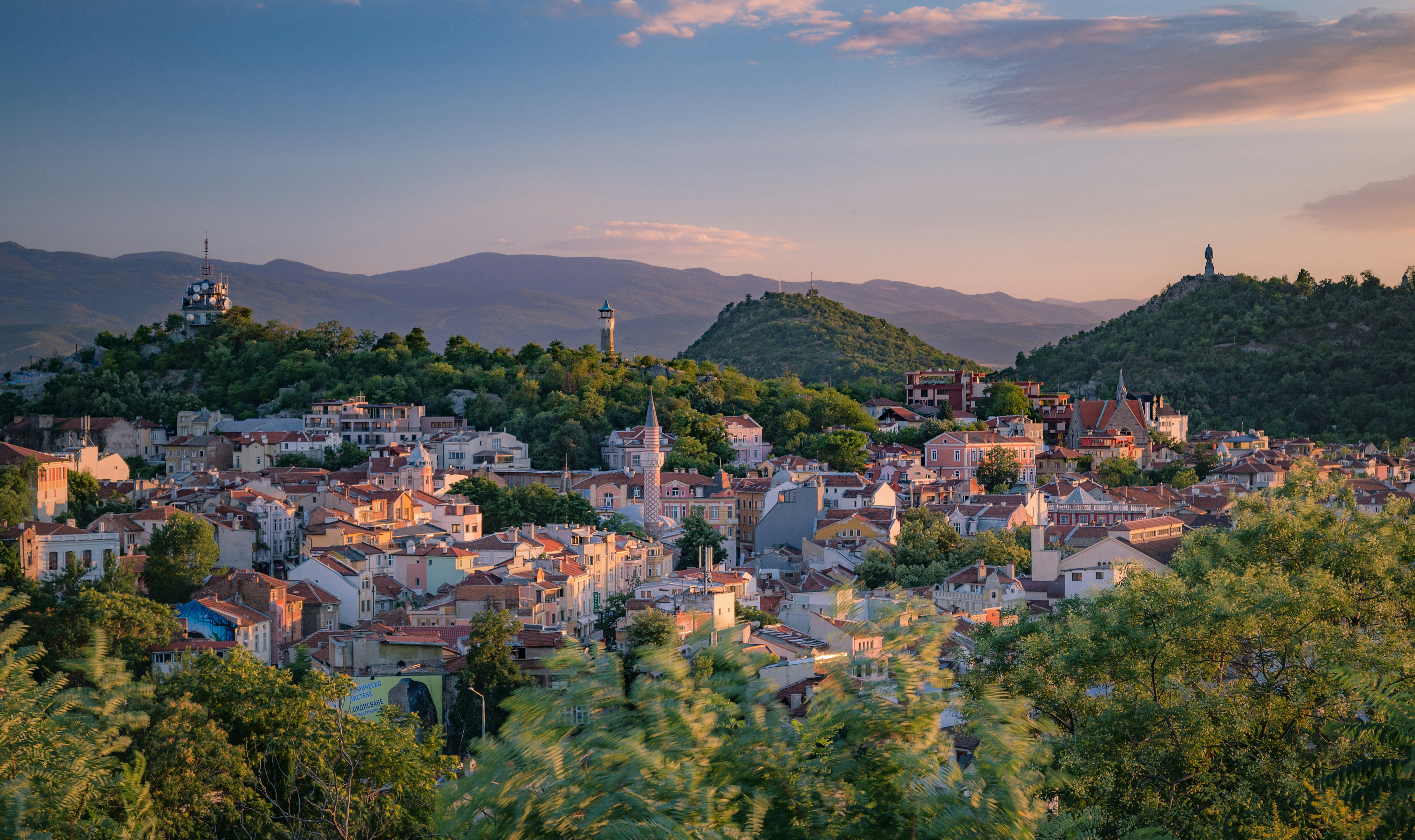
The Old Town sits across what locals still call the tepeta, the hills, using the old Turkish word that has stuck around from the Ottoman period. This is where the National Revival houses are, tall wooden buildings painted in deep reds and blues, leaning slightly into the narrow lanes as if they are trying to get a better look at each other. Wander up through Nebet Tepe, the oldest fortified hill in the city, where almost nothing remains except low stone walls and one of the best views in Plovdiv, out across the rooftops to the Rhodope Mountains on a clear day.
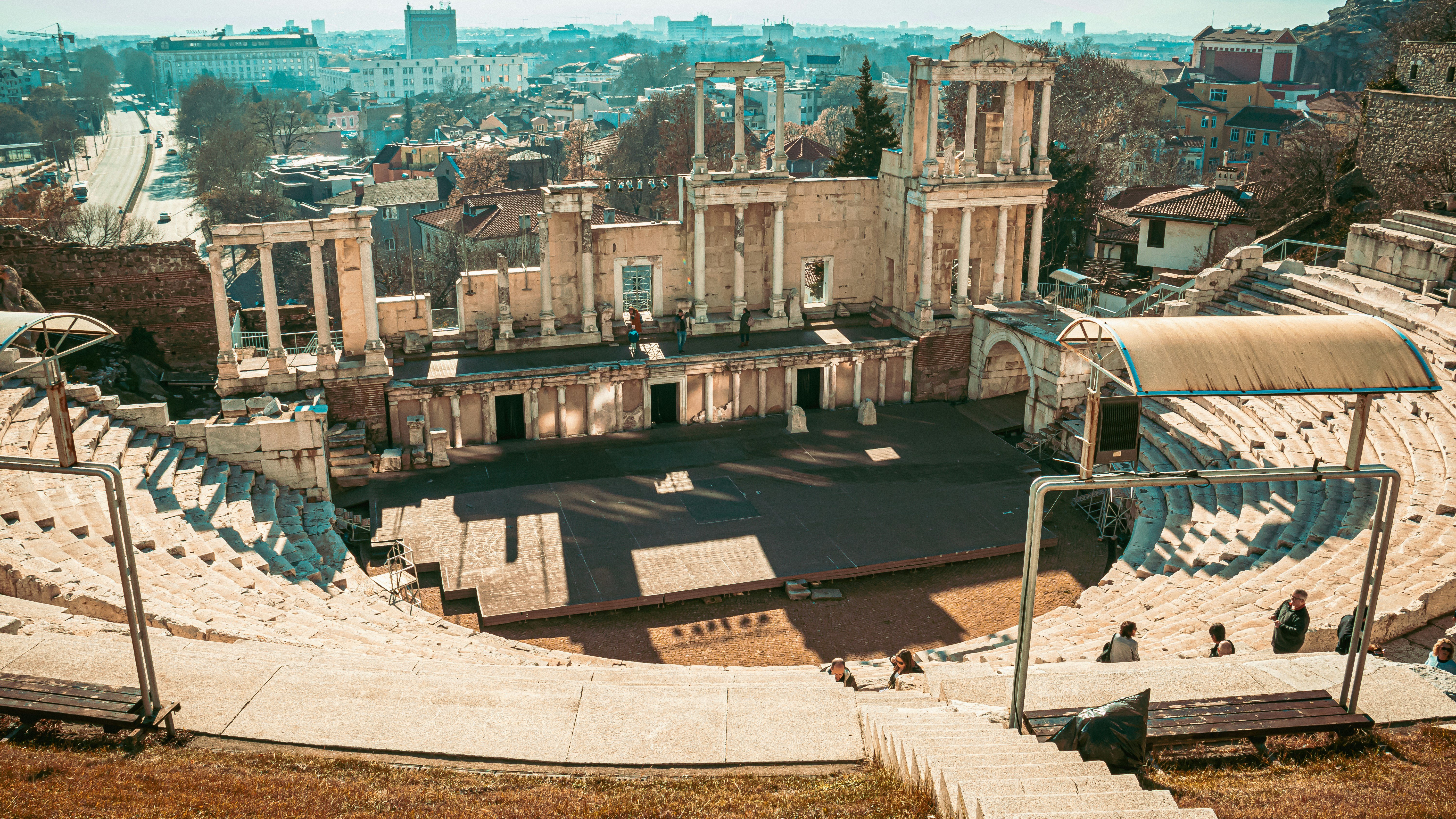
Lower down, the houses become museums, galleries and small guesthouses, and the Ancient Theatre appears almost without warning, carved into the hillside and still in remarkably good shape after roughly two thousand years. Below that again, the streets start to flatten out and the city becomes properly modern again, pedestrian shopping streets, cafes, the kind of place where you can buy a phone charger and a cappuccino on the same block.
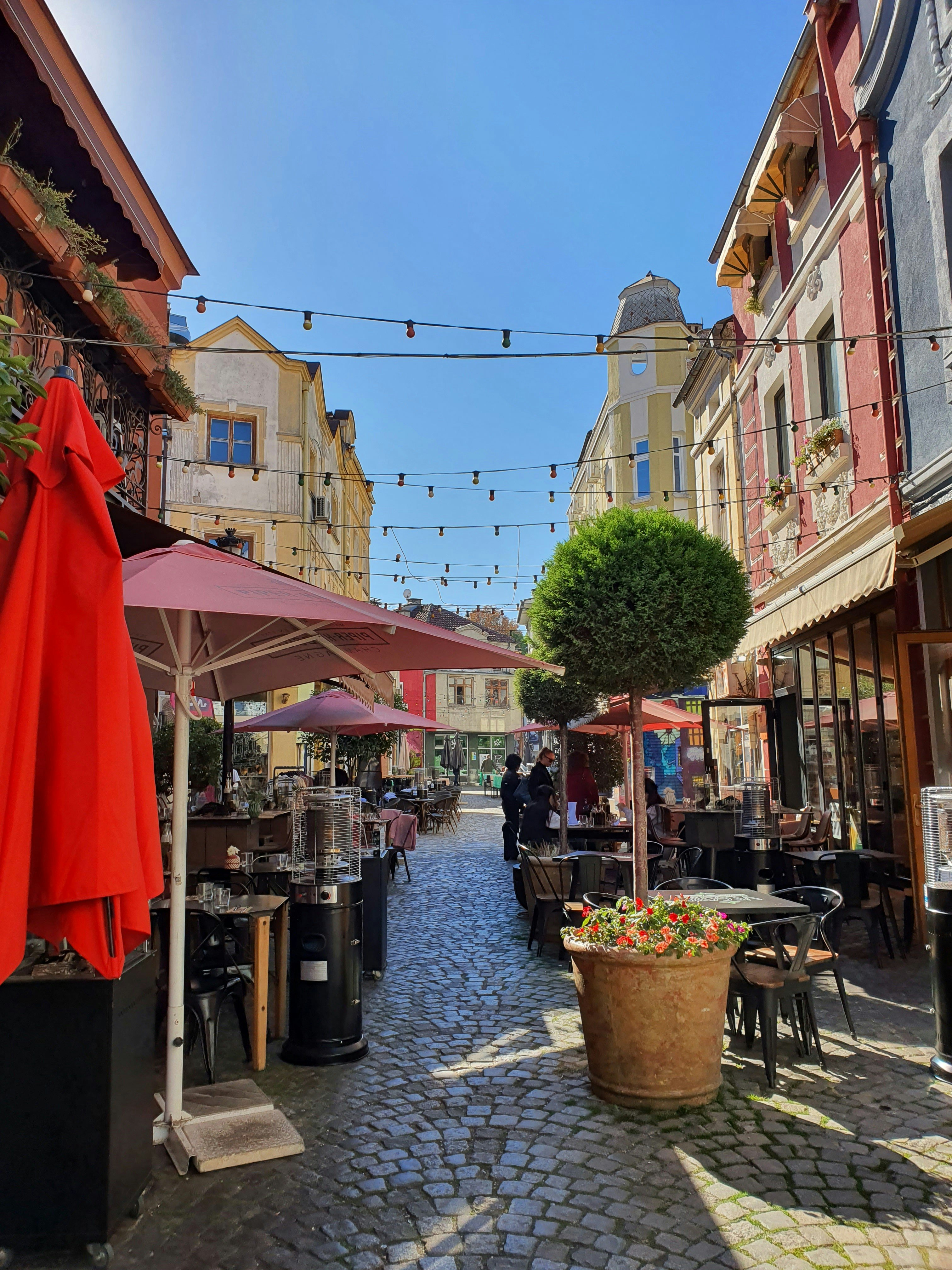
Kapana is a different rhythm entirely. Flat, compact, and packed into a few blocks just below the Old Town, it was once the city's craft and trading quarter, full of small workshops and artisans. The name itself means "the trap", supposedly because the tangle of narrow streets made it easy to get lost in, which is still true and still part of the fun.
Kapana, the Creative Quarter
If the Old Town is Plovdiv's history, Kapana is its present. This is where the city's artists, musicians and small business owners actually spend their time, and it shows in the details. Murals cover the sides of buildings. Tiny galleries open off side streets with no signage beyond a hand painted sign. Independent coffee roasters share the block with bars that do not get going until well after dark.
Locals treat Kapana the way people in other cities treat their favourite neighbourhood bar, somewhere to drift toward without much of a plan. A morning coffee turns into lunch, lunch turns into an afternoon drink, and somewhere along the way you have wandered into three different shops and a pop up exhibition you did not know was happening.
What to do here:
- Start with coffee at one of the small specialty roasters tucked into the side streets, several of which roast their own beans on site.
- Spend an hour just walking without a destination. Kapana rewards aimlessness more than almost anywhere else in the city.
- Time a visit for the evening if you can. Live music spills out of bars most weekends, and the district has a genuinely local nightlife scene that has nothing to do with tourists.
- Look up. A lot of Kapana's best street art is on upper floors and rooftops, easy to miss if you are only looking at shopfronts.
Where Locals Eat in Plovdiv
Bulgarian food does not get the international attention it deserves, and Plovdiv is one of the best places to understand why that is a shame. The cuisine sits at a crossroads, Thracian wine traditions going back to before the Romans, Ottoman spice routes, Greek influence from merchant families who once lived in the Old Town, and a more recent layer of communist era comfort food that Bulgarians of a certain age are unexpectedly nostalgic about.
The meal that sums it up best is the one most visitors eat without realising how central it is. Shopska salad, rough chopped tomatoes and cucumbers under a thick layer of crumbled sirene cheese, finished with sunflower oil, appears on almost every table in the country, but in Plovdiv, where the Thracian Valley's tomatoes are grown a short drive away, it tastes like a different dish entirely.
Then there is banitsa, which is less a single food than a way of life. It is a flaky pastry filled with cheese, sometimes egg, sometimes spinach or pumpkin depending on the season, and it is breakfast for an enormous number of people in this city. Small bakeries selling banitsa by the slice are everywhere, and the routine of grabbing one with a cup of boza, a thick, slightly fermented grain drink that Bulgarians either love or have strong opinions about, is as Plovdiv as anything in the guidebooks.
For a proper sit down meal, Kapana is the obvious place to head. Pavaj has become something of a Plovdiv institution, mixing traditional Bulgarian dishes with a more modern approach, and it is popular enough with locals that turning up without a reservation in the evening is a gamble. Aylyakria leans into the city's unofficial motto, aylyak, a word that roughly means living without rushing, taking things easy, enjoying a slow coffee or a long lunch without watching the clock. The restaurant's menu and atmosphere are built entirely around that idea.
Just outside Kapana, near the Roman Odeon, Hemingway is worth the short walk for its terrace alone, with a menu heavy on local cheeses, cured meats and slow cooked lamb. And if you want the dish that defines Bulgarian home cooking, look for kavarma on any menu, pork or chicken slow cooked with peppers and paprika in a clay pot until it falls apart, the kind of meal that explains why lunch in Plovdiv tends to run long.
Wine deserves a mention too. The Thracian Valley has been producing wine since long before anyone called it Bulgaria, and even modest neighbourhood restaurants will pour something local by the carafe that is far better than the price suggests.

What to Do Outside the Old Town
Plovdiv rewards a slower pace once you have done the obvious things, and a lot of what locals actually do with their free time happens outside the historic centre.
Tsar Simeon Garden is the city's green lung, a large nineteenth century park right in the centre with mature trees that make it noticeably cooler than the streets around it, which matters more than you would expect in a Plovdiv summer. At its heart is the Singing Fountain, recently renovated with light and music shows in the evenings that draw a steady stream of families and couples. It is an easy, free way to spend an hour and see how locals actually use the city, rather than just pass through it.
Further out, the Rowing Canal runs along the Maritsa River and has become one of the city's most popular spots for an early morning run, a bike ride, or simply sitting by the water with a coffee. It is flat, shaded in parts, and a useful reminder that Plovdiv is not only an open air museum, it is also a city people live ordinary lives in.
For a proper day out, the Rhodope Mountains are close enough to make a half day or full day trip easy. Bachkovo Monastery, founded in the eleventh century and the second largest monastery in Bulgaria, sits about thirty kilometres south of the city in a wooded valley, with mural paintings inside that have survived remarkably well. A short distance away, Asen's Fortress perches dramatically on a rocky ridge above the town of Asenovgrad, mostly in ruins now except for its church, but the views across the valley are worth the climb on their own. Both can be reached by bus from Plovdiv's South Bus Station, or combined into a guided day trip from either Plovdiv or Sofia if you would rather not work out the timetables yourself.
Experience Plovdiv Like a Local

Everything above will get you a long way on your own, but the version of Plovdiv that stays with you longest is usually the one a local shows you. The bakery with no sign that makes the best banitsa in Kapana. The bar that only fills up after eleven. The exact bench in Tsar Simeon Garden where the light hits best in the evening.
That is the gap Lokafy is built to close. Instead of following a fixed itinerary, you spend time with a local guide who lives in Plovdiv, shaped around what you actually want to see and eat, at whatever pace suits you. If aylyak is the spirit of this city, exploring it without a rigid schedule is the most fitting way to do it.
→ Find a local guide in Plovdiv
Frequently Asked Questions
Is Plovdiv worth visiting?
Yes, and increasingly so. Plovdiv combines an intact Roman theatre and stadium, a hillside Old Town of National Revival houses, and Kapana, one of the most interesting creative districts in the Balkans, all within walking distance of each other. It was European Capital of Culture in 2019, yet still receives a fraction of the visitors that go to Sofia, which means sights that would have queues elsewhere in Europe are often nearly empty.
How many days do you need in Plovdiv?
Two full days cover the Old Town, Kapana, the Roman sites and Tsar Simeon Garden at a comfortable pace. A third day allows time for a day trip into the Rhodope Mountains to see Bachkovo Monastery and Asen's Fortress, or simply more time in Kapana, which tends to be where people end up spending longer than planned.
Is Plovdiv safe?
Plovdiv is generally a safe city for visitors, with low rates of violent crime and an Old Town that is comfortable to walk through even at night. The main thing to watch for is unmarked taxis at the train and bus stations, which have a reputation for overcharging tourists. Stick to clearly marked taxis, use a ride hailing app, or simply walk, since most of the centre is compact enough to cover on foot.
How do you get to Plovdiv from Sofia?
Trains run regularly from Sofia Central Station to Plovdiv, with the journey taking around two to two and a half hours. Buses cover the same route in a similar time and run frequently throughout the day. By car, the drive along the Trakiya highway takes roughly an hour and a half, making Plovdiv an easy add on for anyone already spending time in Sofia.
Is Plovdiv cheap?
Plovdiv is noticeably cheaper than Sofia, and significantly cheaper than most of Western Europe. A sit down meal with wine at a good restaurant in Kapana typically costs a fraction of the equivalent in cities like Vienna or Florence, and a coffee, a beer or a taxi ride across town all come in at prices that make it easy to live well without watching the budget closely.
What is Plovdiv known for?
Plovdiv is known for being one of the oldest continuously inhabited cities in Europe, with roughly seven thousand years of history layered into a single site. It is best known for its Old Town of nineteenth century National Revival houses, its remarkably well preserved Roman Theatre and Stadium, and Kapana, its creative quarter of galleries, bars and independent cafes. It also held the title of European Capital of Culture in 2019.
What is the best time to visit Plovdiv?
Late spring and early autumn, roughly May, June and September, offer the best balance of warm weather and manageable heat. Plovdiv is one of the hottest cities in Bulgaria during July and August, when daytime temperatures can make sightseeing on the hills uncomfortable. Winters are mild by Eastern European standards but quieter, with many outdoor events in the Old Town and Ancient Theatre running only through the warmer months.
Enjoyed this article?