I have walked into Nuremberg from the Hauptbahnhof more times than I can count, and the thing that gets me every time is how fast the city changes character. You cross under a stone gate, and forty seconds later a tram is gone and there are cobbles under your feet. The whole Old Town sits inside a five-kilometre medieval wall that still stands, which is the reason a Nuremberg walking tour works so well. You are never more than twenty-five minutes from anything worth seeing.
Quick Guide: Nuremberg Walking Tours
- Primary recommendation: Walk the Old Town from the Handwerkerhof up to the Imperial Castle. It is roughly 2.5 km, all of it inside the walls, and it covers the sights people fly here for.
- Top choice for history: The official English Old Town tour from the tourist office runs Friday to Monday at 2 pm, lasts 90 minutes, and costs €15 for adults. It meets at Tourist Information, Hauptmarkt 18.
- Value pick: The self-guided route below costs nothing. The Castle Gardens, the Kettensteg, Weißgerbergasse, and every square on the way are free to walk.
- For the second day: The former Nazi Party Rally Grounds are a separate walk, 4 km southeast, reached in ten minutes on the S2 to Frankenstadion. As of 22 May 2026 the Documentation Centre's new permanent exhibition is open in trial operation.
- The best way to see the city: Take a private, personalised walk with Lokafy in Nuremberg and see the place through the eyes of someone who lives here.

Why Nuremberg Is Built for Walking
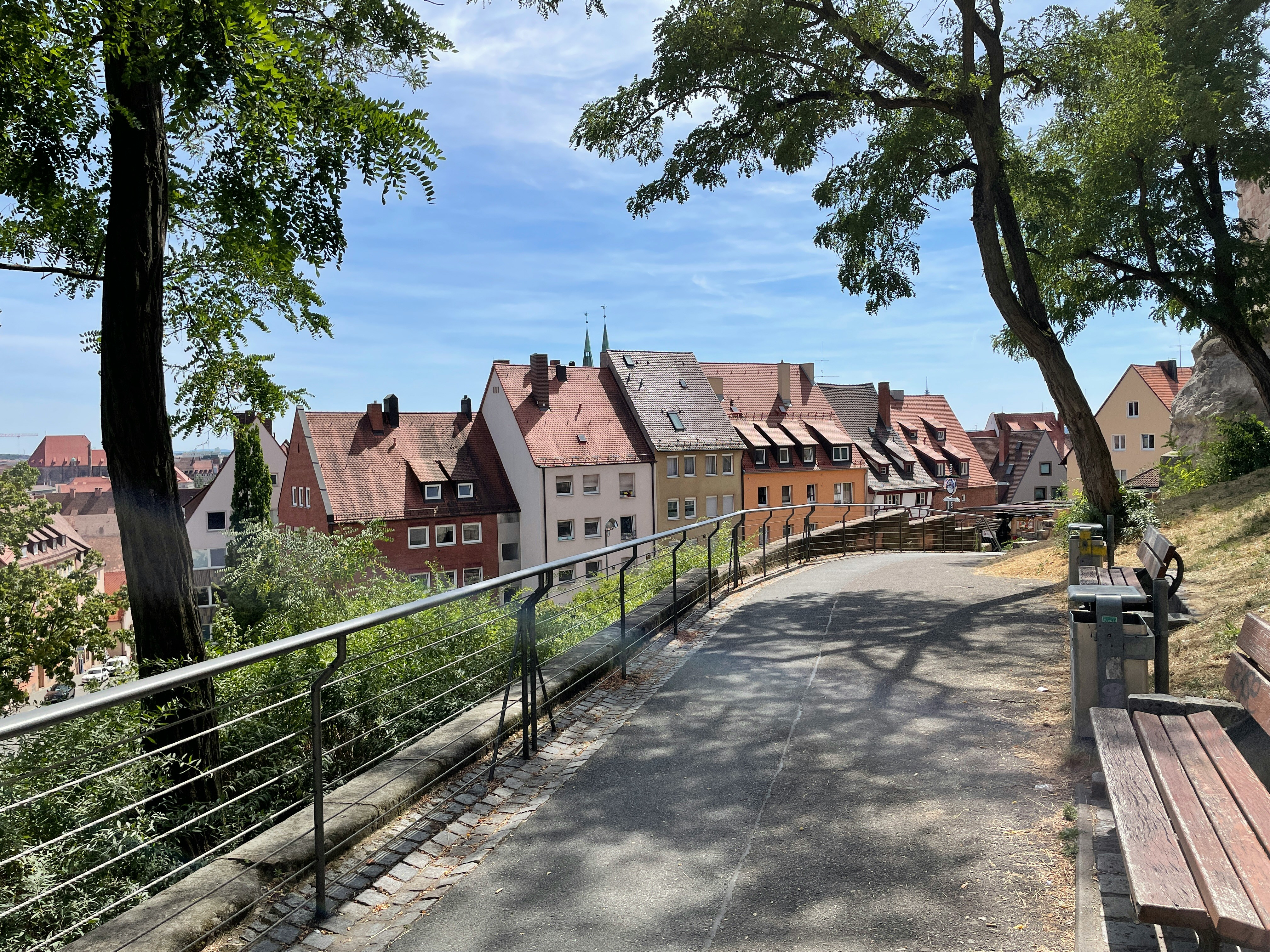
Most German cities ask you to work out a tram map before you see anything. Nuremberg does not. The Altstadt is a walled oval split down the middle by the Pegnitz river, with St. Lorenz anchoring the south half and St. Sebald the north. The Imperial Castle sits on a sandstone outcrop at the top, and everything slopes gently up towards it. From the station to the castle gate is about 1.6 km in a straight line, and nobody walks it in a straight line, which is the point.
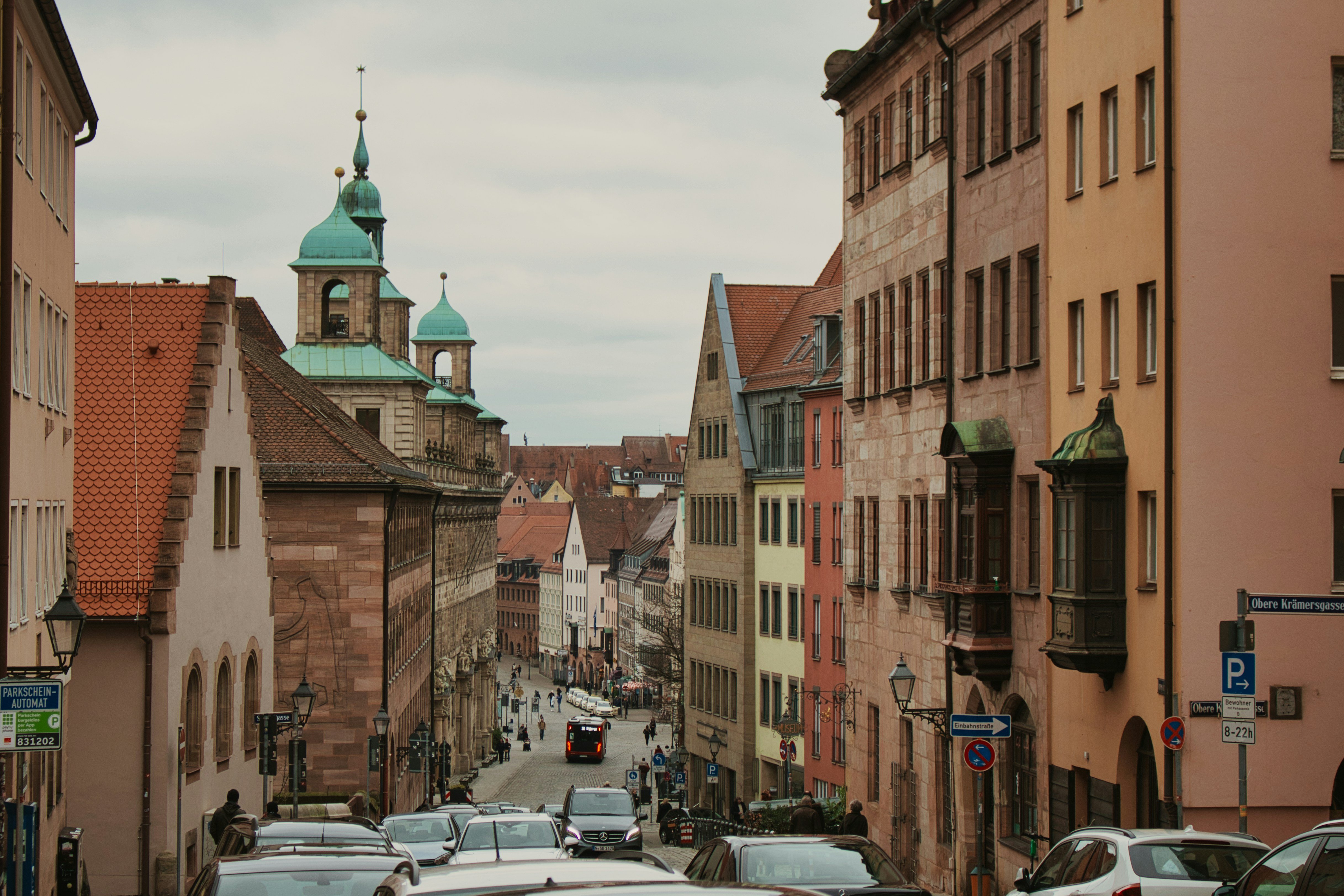
The other reason it rewards walking is that ninety percent of the Old Town was flattened in January 1945. What stands now is a reconstruction, rebuilt on the original medieval street plan with the original stone where it could be salvaged. Walk it and you notice the seams. Drive past it and you notice nothing.
The Self-Guided Nuremberg Walking Tour Route
Give this three hours if you stop for coffee, five if you go into the castle and a church or two. It runs south to north, so you finish at the highest point with the view.
- Handwerkerhof (start, 8 am to 10 pm daily). A walled courtyard of half-timbered workshops directly outside the station, at Königstraße 82. It was built in 1971 for the city's 500th Dürer anniversary, so it is not medieval, and the shops are priced for people with train tickets. Walk through anyway. It takes four minutes and it puts you at the right gate.
- Königstraße to St. Lorenz. The main shopping run north. St. Lorenz is the Gothic church with the twin towers and the enormous rose window; step inside for Veit Stoß's carved Angelic Salutation, suspended from the ceiling. Entry is free, donations welcome.
- Museumsbrücke and the Heilig-Geist-Spital. Cross the river here and turn to look right. The medieval hospital sitting on arches over the water is the shot that ends up on every postcard of the city. It has been a hospital, a refuge, and now a restaurant.
- Hauptmarkt. The main square, and the Christkindlesmarkt site every December. The gilded Schöner Brunnen fountain has a brass ring set into the railing that everyone turns for luck. Locals will tell you it does nothing. Locals also turn it.
- Old Town Hall and the Medieval Dungeons. Under the town hall are the Lochgefängnisse, the pre-trial cells used from the 14th century. Guided tour only, and worth the detour if the weather turns.
- St. Sebald and Bratwursthäusle. The other big Gothic church, and next to it a small stone house at Rathausplatz 1 where sausages have been grilled over beechwood since 1312. More on eating below.
- Weißgerbergasse. The tanners' lane, and the single prettiest street in the city. It survived the bombing largely intact, which is why the timber framing here is real rather than rebuilt.
- Kettensteg. A pedestrian chain bridge from 1824, the oldest surviving one in Europe, tucked at the western edge of the walls. It wobbles. Kids love it.
- Tiergärtnertor and the Albrecht Dürer House. The cobbled square below the castle gate, ringed with half-timbered houses. On any warm evening it fills with people sitting on the stones drinking beer, and nobody minds.
- Imperial Castle (Kaiserburg). The finish. April to September it opens 9 am to 6 pm daily, with last entry an hour before closing. In 2026 the combination ticket covering the Palas, double chapel, Imperial Castle Museum, Deep Well, and Sinwell Tower is €10, reduced €9. The Palas and museum alone are €7. The Deep Well and Sinwell Tower together are €4. Under-18s go free. The Castle Gardens are free to everyone. The Deep Well can only be seen on a guided tour; the rest you wander at your own pace. Tickets are cash or card at the outer courtyard desk, and cannot be bought online.
Climb the Sinwell Tower if your legs are willing. The spiral staircase is long, and the platform at the top gives you the whole red-roofed Altstadt in one frame, with wartime photographs on the wall showing you the same view as rubble.
Guided Walking Tours in Nuremberg: What They Cost in 2026
The official tourist office option is the Public Old Town Walking Tour in English, run by the city's certified guides' association. It goes Friday to Monday at 2 pm, takes 90 minutes, and meets at Tourist Information on Hauptmarkt 18. Adults €15, reduced €14, teenagers aged 10 to 17 €11, under-9s free. Minimum two people.
There are also free walking tours operating on the tip model, which are the standard budget option and generally decent for orientation, though group sizes swing wildly in summer. And there are private guides, which is where the range gets wide: mainstream private operators on the big booking platforms sit around the €220 mark per adult for two hours, while a Lokafy private walk starts near $99 and is shaped around what you actually want to see.
If you want a themed walk, two are genuinely good. The historic rock-cut cellars tour takes you into the sandstone tunnels under the castle rock and finishes with a Nuremberg red beer at the Hausbrauerei Altstadthof. The Art Bunker tour goes into the fortified cellars where the imperial regalia and the Dürer works were hidden while the city above burned. Both run in English and both are underground, which makes them the right call on a wet afternoon.
The Second Walk: The Former Nazi Party Rally Grounds
This is not part of the Old Town route and should not be squeezed onto the end of it. Take the S2 from the Hauptbahnhof to Frankenstadion, about ten minutes, or tram 8 to Doku-Zentrum.
Here is the 2026 situation, and it matters, because most guides online are out of date. After a renovation that began in 2021, the Documentation Centre's new permanent exhibition, Nuremberg and the Nazi Party Rally Grounds, has been running in trial operation since 22 May 2026. The formal opening is 4 November 2026, twenty-five years to the day after the centre first opened. It is bilingual German and English, with a new ground-level barrier-free entrance. Admission is €7.50 for adults, €2.50 reduced, €8 for families, and it is free with the NÜRNBERG CARD. Hours are 9 am to 6 pm Monday to Friday and 10 am to 6 pm at weekends.
The Zeppelin Tribune, the grandstand from the newsreels, is only partially accessible because of structural damage, and the Zeppelin Field and its ramparts are closed to visitors. Part of the field is used as a training pitch by a local American football club, which tells you a lot about how the city has chosen to live with the place. The plan is to open the interior, including the mosaic-ceilinged Golden Hall, by 2030.
Across town, the Memorium Nuremberg Trials in the Palace of Justice puts you in Courtroom 600 itself, which has held no hearings since March 2020 and is now part of the exhibition. Closed Tuesdays, and occasionally shut for events, so check before you go.
Where to Eat and Drink Along the Route
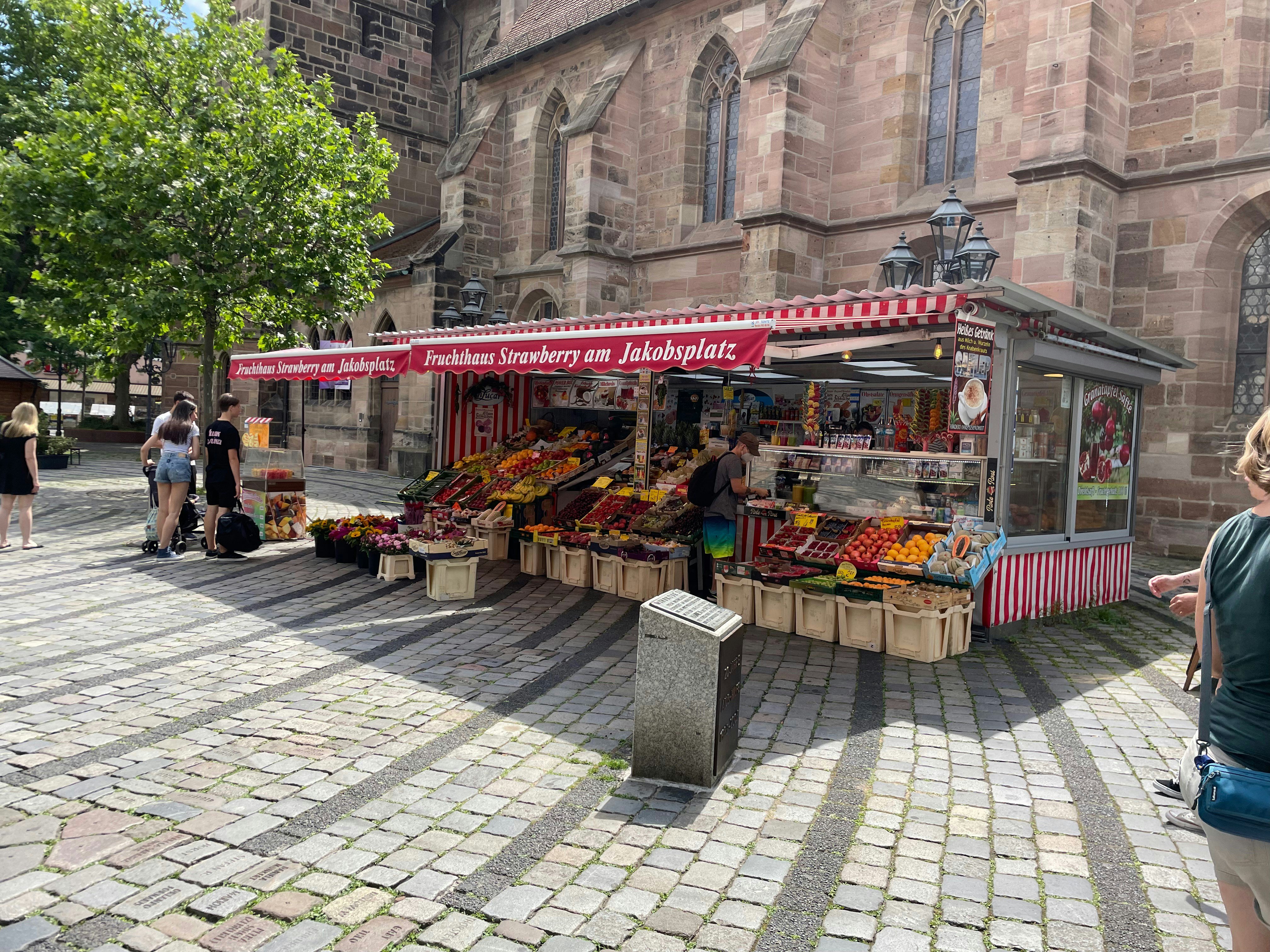
Bratwursthäusle, Rathausplatz 1. Right on your route between the Hauptmarkt and St. Sebald. Grilling since 1312, sausages made fresh each morning in the butchery on site, cooked over beechwood, served with sauerkraut or potato salad. Communal tables mean you may end up next to a Nuremberger. Open 11 am to 10 pm, to 8 pm Sundays.
Café Wanderer & Bieramt, Beim Tiergärtnertor 2-6. The square under the castle gate. A rotating tap of Franconian beers from regional breweries, a glass deposit you get back, and a crowd sitting on the cobbles from about four in the afternoon. Bring cash. Open daily 10 am to 11.30 pm.
Hexenhäusle, Vestnertorgraben 4. A beer garden built into the castle wall on the far side, three minutes past the Sinwell Tower. Order the Schäufele, Franconia's slow-roasted pork shoulder with crackling. Closed Mondays.
Hausbrauerei Altstadthof, Bergstraße 19. Brews the Nuremberg Rotbier, the malty red lager the city has been making since the Middle Ages, and it is the surface end of the rock-cut cellars tour.
Schanzenbräu Schankwirtschaft, Adam-Klein-Straße 27. Off the route in Gostenhof, the district west of the walls, and worth the twenty-minute walk. Small brewery pub, Rotbier and Schwarzbier on tap, Franconian food at prices the Altstadt gave up on years ago. Closed Mondays, opens 3 pm Tuesday to Friday, 11 am at weekends. Book ahead in summer.
Practical Tips for Walking Nuremberg
- Wear real shoes. Cobbles the whole way, and the climb to the castle is steeper than the photos suggest.
- The NÜRNBERG CARD + FÜRTH costs €38 for adults and €12 for children aged 6 to 11, covers two days, includes entry to the museums and free public transport in zone A. It pays for itself if you do the castle, the Doku-Zentrum, and the Memorium.
- Carry cash. Several of the best bars are card-shy, and this is Bavaria.
- Sundays are quiet. Shops shut, churches and beer gardens do not. It is a good walking day.
- Late July 2026, plan around Bardentreffen. The free open-air music festival runs Thursday 30 July to Sunday 2 August 2026 across eight stages in the Old Town, and 2026 is its 50th edition. Around 200,000 people come. Beautiful, and hopeless for a quiet walk.
- Bamberg is an hour away by regional train, unbombed, and UNESCO-listed. Easy day trip if you have a spare morning.
See Nuremberg With Someone Who Lives There

A route gets you to the right places. It does not tell you which family kept that bakery, why the Gostenhof crowd rolls its eyes at the Hauptmarkt, or where to be at nine on a Thursday evening. That part comes from a person.
A private walking tour with a Lokafyer in Nuremberg is a couple of hours with a local who builds the walk around you. No fixed script, no umbrella held above a crowd of forty, no rushing to the next photo stop. If you want the castle and the churches, you get them. If you would rather see where people go after work, you get that instead. Tours start from around $99, they are private, and they are shaped by what you tell your Lokafyer before you meet.
Book a private walking tour in Nuremberg with a local →
Frequently Asked Questions
Is Nuremberg walkable? Yes. The Old Town sits inside a five-kilometre medieval wall and measures roughly 1.5 km across. From the Hauptbahnhof to the Imperial Castle at the far end is about a 25-minute walk. Almost every major sight, including St. Lorenz, the Hauptmarkt, Weißgerbergasse, and the castle, falls inside that circle. The only attraction needing transport is the former Nazi Party Rally Grounds, 4 km southeast and ten minutes on the S2.
How long does a Nuremberg walking tour take? The official English Old Town tour lasts 90 minutes. A self-guided version of the same route takes about three hours at a relaxed pace, or five if you go inside the Imperial Castle and a church or two. Add a separate half-day for the Rally Grounds and the Documentation Centre.
Is there a free walking tour in Nuremberg? Yes. Several operators run tip-based free walking tours from central meeting points, and they are a reasonable orientation option, though group sizes get large in summer. Walking the Old Town yourself costs nothing either: the Castle Gardens, Kettensteg, Weißgerbergasse, Tiergärtnertor, and all the squares are free to enter. You only pay to go inside the castle buildings and the museums.
How much does the Imperial Castle cost in 2026? The combination ticket covering the Palas with double chapel, the Imperial Castle Museum, the Deep Well, and the Sinwell Tower is €10 for adults and €9 reduced in 2026. The Palas and museum alone are €7. The Deep Well plus Sinwell Tower are €4. Under-18s enter free, and the Castle Gardens are free for everyone. Tickets are sold at the outer courtyard desk in cash or by card, and cannot be booked online. Hours are 9 am to 6 pm daily from April to September, and 10 am to 4 pm October to March.
Can you visit the Nazi Party Rally Grounds in 2026? Yes. The Documentation Centre's new permanent exhibition, Nuremberg and the Nazi Party Rally Grounds, has been open in trial operation since 22 May 2026, with the official opening set for 4 November 2026. Admission is €7.50 for adults and €2.50 reduced, free with the NÜRNBERG CARD. The Zeppelin Tribune is only partially accessible due to structural damage, and the Zeppelin Field and ramparts are closed to visitors. Restoration into a place of learning is scheduled for completion by 2030.
How many days do you need in Nuremberg? Two is the sweet spot. Day one covers the Old Town walk from the Handwerkerhof to the Imperial Castle, with a beer garden at the end. Day two covers the Rally Grounds, the Documentation Centre, and the Memorium Nuremberg Trials, which are heavy going and deserve their own space. A third day gives you Gostenhof, the Wöhrder See, or a train to Bamberg.
What is the best month for a walking tour in Nuremberg? May, June, and September give you long light, castle hours running to 6 pm, and beer gardens open without the peak crowds. Late July brings Bardentreffen, on 30 July to 2 August in 2026, which fills the Old Town with 200,000 people and free live music: wonderful, but not a walking week. December is the Christkindlesmarkt, beautiful and shoulder-to-shoulder. Winter cuts castle hours back to 10 am to 4 pm.
Enjoyed this article?