There are times when you plan a vacation for months and months because you have been dreaming of going to that destination for as long as you can remember. Then, there are occasions when you simply think to yourself… Where should I travel next? When that happens, you might look at different recommendations or lists of destinations that have become extremely popular. Precisely, we decided to look into Tripadvisor’s “Travellers Choice Awards” and see the places that people from all over the world have been recommending for this 2024. We were pleased to see Bogotá on the list, and we decided that that’s the perfect excuse to dive deeper into Colombia’s capital and see for ourselves why it has become so beloved among travelers.
You surely have heard about Colombia a lot in the last few years, and have seen how tourism has blossomed spectacularly throughout the country. But, although it is the capital, Bogotá is not the first city that may come into mind… There’s Cartagena, Medellín, Cali, the Eje Cafetero and so forth. Yes, they are all incredible and breathtaking destinations, but Bogotá shouldn’t be left behind. As you’ll see throughout this blog, it is a cosmopolitan city filled with an interesting history, rich culture, delicious gastronomy and fun plans and activities for all tastes. It might be a concrete jungle, but that doesn’t mean that there aren’t huge green spaces to take a deep breath and reconnect with nature. Without further delay, let’s discover Bogotá.

Past meets present:
If there’s one thing to know about Bogotá, it is the fact that it is a city of contrasts; from the weather to the divisions between rich and poor, it is astonishing how the city changes so abruptly. Now, this also happens with the architecture, because between the skyscrapers and business buildings, there’s a place that preserves Bogotá’s past immaculately and reminds us how this city of traditions and cold weather became the metropolis that we know and love nowadays. We’re talking about La Candelaria, a historic neighborhood that evoques colonial times with its colorful houses and clay roof tiles. It is located in the city center and is close to the most important buildings of the city (and the country), so you’ll need plenty of time to uncover everything that is to be seen.
It would be a good idea to begin your visit at the Plaza de Bolívar, the most important square of Bogotá. It might not be the most beautiful, because to the best style of Bogotá, it is a bit crowded and chaotic, with lots of pigeons roaming around, but the surrounding sight of the Palacio de Justicia, National Congress and Catedral Primada are worthy of admiration. Just a few blocks away, you’ll find the Teatro Colón, one of the city’s most important theaters where you can enjoy opera, classical music and even ballet spectacles. It is an astonishing view of the neighborhood thanks to its Italian-style facade and its exquisite interiors (which went through a six-year makeover and reopened in 2014) are amazing sights. If you have the opportunity, attend one of the events hosted at the Teatro Colón to get a closer look at Bogotá’s cultural offer. Finally, something that is a must see in La Candelaria are all the graffiti and street art that create an explosion of colors and bring the colonial houses to the 21st century.

La Candelaria is a colonial-style neighborhood in Bogotá that’s just a few blocks away from the Plaza de Bolívar.
Breathe fresh air:
People in Bogotá love saying that the city is 2600 mts closer to the stars, and once you go to one of its highest points, you’ll understand why that’s true. We’re talking about the Cerro de Monserrate, which you can see from various spots in the city because it appears as a white pearl among the green forest of the mountain. The main attraction in Monserrate is its Sanctuary, but in the surroundings there are several souvenir stalls as well as restaurants and cafés to enjoy typical meals of Bogotá. You can go all the way up in the cable car, but if you’re feeling adventurous, perhaps you would like to take the trail to ascend walking, which can take around one hour. There are wonderful views of the city and as you are surrounded by nature, you’ll be breathing fresh air.
Even if it appears as if Bogotá is pure concrete, that’s actually a misconception, because aside from being surrounded by the Cerros Orientales, there are plenty of green spaces scattered around the city. However, we want to focus on something that has become extremely popular in the last few years, and that’s the perfect opportunity to explore Bogotá’s natural side. There are several trails ready to be discovered on the Cerros Orientales, the mountains located on the eastern edge of the city. They are an incredible way to walk through the cloud forest and disconnect from the hustle and bustle of Bogotá, while appreciating all the species that are so close to this giant metropolis: eucalyptus trees, pines, ferns and different bird species are just some of the wonderful surprises waiting for you.
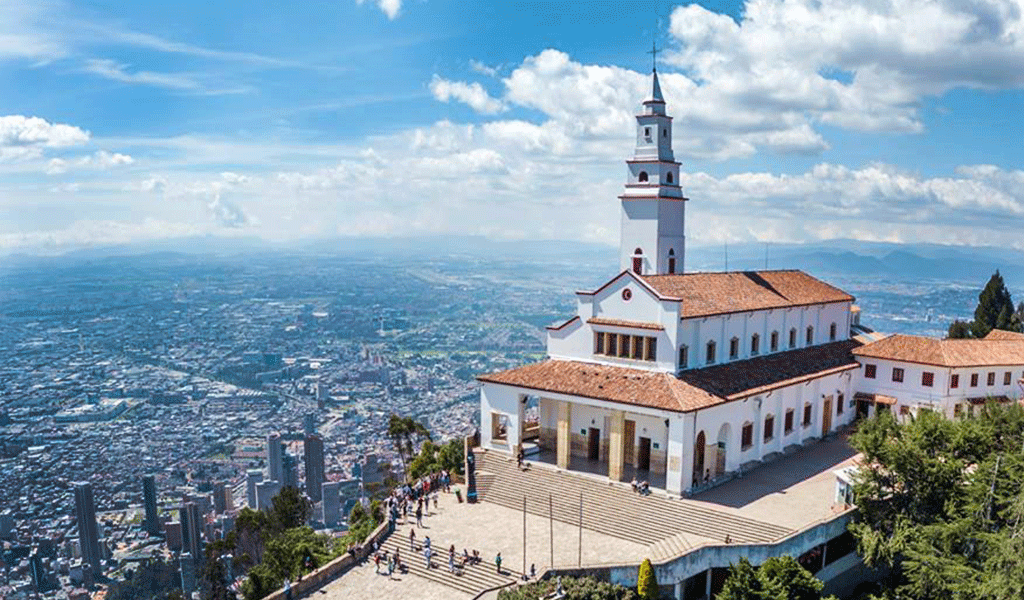
Monserrate takes you a little bit closer to the stars at over 3000 mts, granting you a mesmerizing view of Bogotá.
History and Art:
You cannot visit Bogotá without getting a glimpse of its history and artistic side from its multiple museums. We’ll mention the most renowned ones, but depending on your interests, we’re sure there are others that you can discover. Obviously, the most famous museum in Colombia is the Museo del Oro, which centers around the pre-Columbian period and the most impressive indigenous creations. Here, everything revolves around gold and specially, intricate pieces of jewelry that were created with ceremonial or quotidian purposes, such as earrings, necklaces and nose plates. The museum is managed by the Banco de la República, Colombia’s central bank, and the collection now has over 34,000 items. The most famous piece of the Museo del Oro is the Poporo, a golden gourd topped by four spheres that might’ve had ordinary purposes, but that nowadays is a fascinating insight into the lives and beliefs of indigenous people.
For a little bit more history, you must go to the Museo Nacional, where you’ll find art, history, archeology and ethnography collections recounting how Colombia came to be. It is one of America’s oldest museums and it was created in 1823, although it first was built as a penitentiary and was designed as a panoptic, and later turned into a museum. Additionally, for art lovers there’s a vast offer as well. The Banco de la República has an impressive art collection that it has organized in different museums, guarding masterpieces by national and international artists for different periods. The most representative museum of the circuit is the Museo de Arte Miguel Urrutia, MAMU, that is organized in different rooms by chronological order, so that people are able to witness how art and life has changed from the 16th century to the late 20th century. On the other hand, in 2000 Colombian artist Fernando Botero donated a collection of 208 pieces (123 his and 85 from international artists) to the Banco de la República, and in return the bank founded the Museo Botero to exhibit his generous gift. It is located right next to the MAMU and it has become an incredible opportunity to understand the vision of a genius such as Botero.
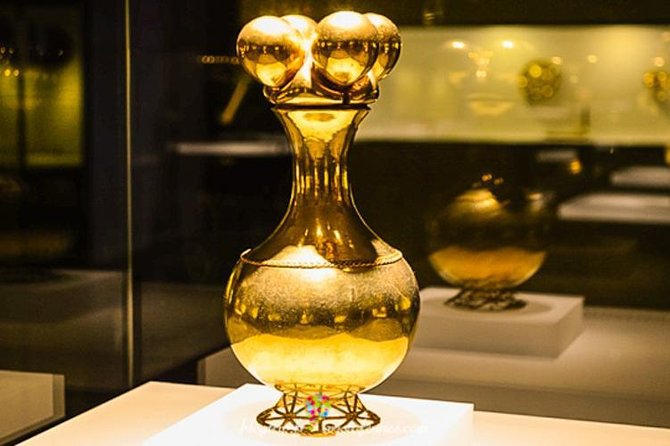
The Museo del Oro is an astonishing journey through Pre-Columbian Colombia.
Where the locals eat:
Since Bogotá is a city that welcomes people from all over Colombia, its gastronomic offer is very diverse and you can actually find restaurants with delicious meals from all regions of the country. But if you want to taste the essence of Bogotá, you must try the ajiaco santafereño (it’s a thick soup made up by different varieties of potatoes, with chicken, maize, rice, avocado and a leaf called guasca) and the chocolate santafereño with cheese. There’s a restaurant in La Candelaria called La Puerta Falsa, which has become a symbol of the city and that will serve you these delicious plates. Another way to experience gastronomy as a local would be to go to one of Bogotá’s marketplaces, where you can find the freshest and most exotic ingredients, as well as exquisite food. For example, the Plaza de la Concordia has been recently rebuilt and now hosts a series of restaurants and cafés ready to welcome locals and visitors alike.

The ajiaco santafereño is Bogotá's most exquisite dish, and something that you cannot avoid while visiting the city.
Maybe it feels as if we’ve been talking about Bogotá for centuries, and that you’re now practically an expert on the city. In reality, there’s still quite a lot that we couldn’t mention (because otherwise the blog could turn into a book) and that’s yet to be discovered about Bogotá. It might not be as glamorous as some European capitals, but there’s just so much soul, energy and light in Bogotá that it’s hard not to fall in love with it. That’s why so many travelers have given the message loud and clear: visit Bogotá!
Enjoyed this article?