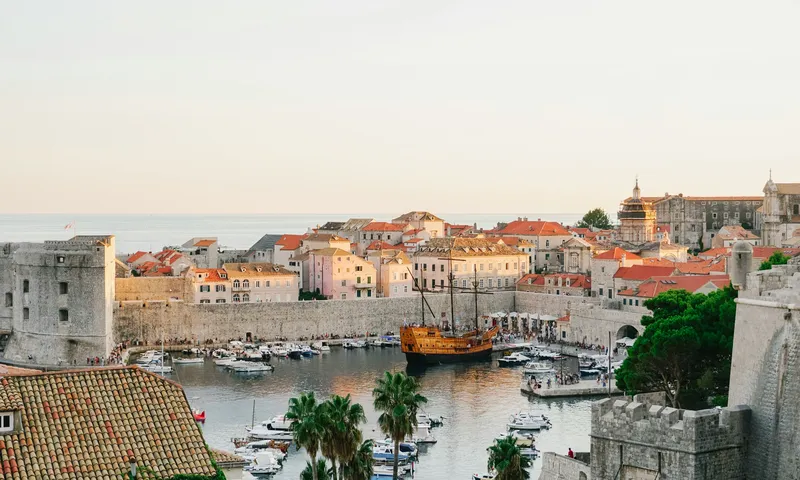
Most people meet Nairobi through a car window. You land, someone collects you, you sit in traffic on Mombasa Road, and by the time you reach your hotel the city has been reduced to a blur of matatu artwork and roadside stalls. The first time I stayed long enough to walk it, I covered the stretch from Jeevanjee Gardens to the KICC rooftop in under half an hour, stopping at a mosque, a market and a park along the way. Nairobi rewards people who slow down to three miles an hour, and it does it faster than you would expect.
Quick Guide: Walking Nairobi
- Primary recommendation: Walk the central heritage loop (Jeevanjee Gardens to City Market to Jamia Mosque to the National Archives to KICC to Uhuru Park). It is roughly 3 km, takes a half day with stops, and covers most of what people fly in to see.
- Top choice for views: The KICC rooftop helipad on Harambee Avenue.
- Value pick: Michuki Memorial Park on Kijabe Street.
- Best for a proper forest walk: Karura Forest, 1,041 hectares of gazetted forest inside the city, with a waterfall, Mau Mau caves and a café in the trees.
- The best way to see the city: Take a private, personalised walking experience with Lokafy in Nairobi and see the streets, markets and lunch spots through the eyes of someone who uses them every week.
Can you walk around Nairobi?
Yes. Nairobi's walkable core is the upper Central Business District, bounded roughly by Moi Avenue to the east, Haile Selassie Avenue to the south and University Way to the north. Inside that box you get wide pavements, heavy foot traffic, visible police presence and almost everything a first-time visitor wants to see. Karura Forest, the Arboretum and Michuki Memorial Park sit outside it and are safe, fenced green spaces with paid or controlled entry.

Route 1: The central heritage loop (about 3 km, half a day)
This is the walk that makes sense of the city, and it works as a self-guided route or as the backbone of a guided one.
- Start at Jeevanjee Gardens, between Moi Avenue and Monrovia Street. A.M. Jeevanjee, a trader who arrived from Karachi and built much of early Nairobi, gave the land to the public in 1906. It remains the one central park held in trust for the people of the city rather than owned by government. Office workers eat lunch here from noon.
- Walk south to City Market on Muindi Mbingu Street. Inside one hall you get soapstone carvings, kikoys and beadwork at the front, then flowers, then a butchery and fish section at the back that has nothing to do with tourism. Vendors work hard and will follow you. Open with about a third of the first price and settle somewhere near half.
- Cut across to Jamia Mosque on Banda Street, founded in 1902 and built between 1925 and 1933. The silver domes and Arabic inscription are the most photographed piece of Islamic architecture in East Africa. Dress modestly, ask at the gate before going in, and pick a time outside Friday midday prayers.
- Head down Kimathi Street past the Sarova Stanley and its Thorn Tree, once the notice board where travellers pinned messages for each other before email existed. This is also your lunch street, more on that below.
- Stop at the Kenya National Archives on Moi Avenue, next to the Ambassadeur Hotel. Entry is a few dozen shillings and the ground floor holds part of the Murumbi collection of African art, masks, stamps and photographs. Photography is permitted on the ground floor only. Kenyans use the steps outside as the city's default meeting point, which tells you something about how central it is.
- Climb the KICC on Harambee Avenue, the 28-storey tower that has stood as Nairobi's signature since 1973. The lift goes to the 26th floor, then it is stairs to the helipad. From the top you see the thing nobody expects: how green Nairobi is between the towers, with Uhuru Park, Central Park and the Railways golf course laid out below and the Ngong Hills on the horizon on a clear morning. Bring a jacket, it is windy up there.
- Finish in Uhuru Park, across Uhuru Highway. It reopened in March 2024 after a two-year closure and now has a botanical trail, restored monuments and a footpath crossing the lake. Entry is free and you carry ID. This is also where Wangari Maathai and her supporters stopped a 60-storey tower from being built in 1989, which is worth knowing while you stand in it.
Add-on: the Nairobi Railway Museum sits about 1.7 km further south on Station Road, next to the railway station. Nairobi exists because the Uganda Railway needed a depot here in 1899, and the museum still holds the carriage from which a British superintendent was taken by one of the Tsavo lions. Walk down Haile Selassie Avenue in daylight or take a cab.
Route 2: Museum Hill and the river trail (about 4 km, half a day)
A greener, quieter alternative that suits a second day.
Begin at the Nairobi National Museum on Museum Hill Road. Under the National Museums of Kenya rates that took effect on 7 May 2026, adult admission is KSh 350 for Kenyan and East African citizens, USD 9 for residents and visitors from the rest of Africa, and USD 18 for everyone else. A combined ticket with the Snake Park costs USD 25 for adults from outside Africa. Payment is cashless through the eCitizen portal, so sort that out before you arrive at the desk.
From the museum grounds you can drop into Michuki Memorial Park, which follows the Nairobi River between Kijabe Street and the Globe Cinema roundabout. Individual entry is free, gates run roughly nine to five on weekdays, and the shaded trails are used by runners and birdwatchers.
If you have energy left, continue to the Nairobi Arboretum off State House Road, about 3 km from the city centre. It opens at six in the morning and closes at six in the evening, holds more than 350 tree species and over 100 bird species, and comes with a reliable population of Sykes' and vervet monkeys. Sunday mornings bring joggers, church groups and picnic families, which is the best time to see how Nairobians spend a weekend.
The Nairobi Gallery deserves a mention here and catches a lot of people out. It stands at the Kenyatta Avenue and Uhuru Highway corner on the spot known as Point Zero, from which all road distances in Kenya are measured, in a 1913 building that once registered births, marriages and deaths and earned the nickname Hatches, Matches and Dispatches. It houses the Murumbi African Heritage Collection. It opens nine to five on weekdays and closes at weekends, so do not save it for Saturday.
Route 3: Karura Forest (as long as you like)
Ask Nairobians where they go when they need out of the city and a good number say Karura. It covers 1,041 hectares inside the city limits, which makes it one of the largest gazetted urban forests anywhere, and it holds marked trails, the Mau Mau caves, a small waterfall on the Karura River, Lily Lake and more than 200 bird species.
Practical points that trip people up. Gate A is on Limuru Road opposite the Belgian Embassy, Gate C is on Kiambu Road. Non-resident adult entry is around KSh 600 before VAT and the platform fee, so budget closer to KSh 700. Gate payments now run through eCitizen and no cash is accepted, so have M-Pesa or a card ready. The forest opens at six in the morning with last entry at 5:45pm. Single-use plastic bottles are not allowed in. The River Café inside the forest fills up at weekend brunch and takes bookings.
For a quieter version, Oloolua Nature Trail in Karen runs 5 km through indigenous forest to a waterfall on the Mbagathi River and another Mau Mau cave. There are no matatus at the gate, so arrange your ride both ways.
Where to eat while you walk
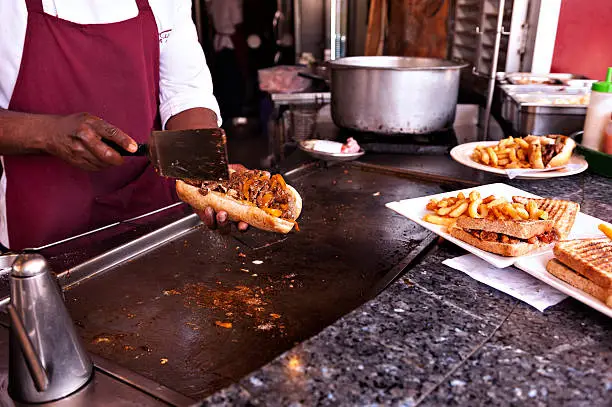
Lunch in the CBD is one of the better arguments for exploring Nairobi on foot, because the food is quick, cheap and aimed at people who work in the city rather than at visitors.
K'Osewe Ranalo Foods on Kimathi Street is the default answer for Kenyan food downtown. There is no written menu. You go upstairs, someone tells you what is available, and you pick a protein and a side. Order the tilapia wet fry with ugali and greens. Get there before one o'clock, because the popular dishes run out by two and the room fills with office workers.
Kilimanjaro Jamia on Kimathi Street opens at six in the morning and is the easiest breakfast in the city centre. Try the Somali-style spiced tea with camel milk alongside a plate of mahamri.
For an afternoon detour, Diamond Plaza in Parklands is where Nairobi's Indian community eats. The open-air food court does Maru bhajia, thalis, sugarcane juice and kulfi at prices that make sense. It is a 15-minute cab ride from the CBD rather than a walk.
Two more worth building an evening around: Mama Oliech on Marcus Garvey Road in Kilimani, the tilapia institution that has fed presidents, and Nairobi Street Kitchen on Mpaka Road in Westlands, a courtyard of food stalls and bars that turns into a dance floor on Thursday and Friday nights.
What to know before you set off
Money. M-Pesa runs the country. Museums, national parks and Karura all take payment through the government eCitizen platform and refuse cash, so set up mobile money or bring a card that works. Small shops, matatus and market vendors still take notes.
Entry. Kenya replaced visas with an Electronic Travel Authorisation in January 2024. It costs USD 30, you apply at etakenya.go.ke, and airlines check for approval before boarding. Most African passport holders are now exempt and enter visa-free. Apply at least a week out.
Weather. Nairobi sits around 1,700 metres above sea level, so it is cooler than people expect. July and August are the coolest and driest months and also the least sunny, with daytime highs near 22°C and mornings closer to 12°C. Good walking weather, poor sunbathing weather. Carry a light jacket regardless of the month and remember that the altitude sharpens the sun even under cloud.
Markets. The Maasai Market moves around the city by day. The two that suit a CBD walk are Tuesday on Kijabe Street opposite the Norfolk, and Saturday in the High Court parking lot behind the Hilton, which is the biggest of the week. Entry is free and first prices run two to three times what you should pay. Locations do shift, so confirm the day before.
Getting between routes. Uber, Bolt and Little all work well and cost a few hundred shillings for a cross-town hop. Matatus are cheap and fun with someone who knows the routes, and confusing without one.
Walk Nairobi with someone who lives here

A guidebook can tell you that City Market sells soapstone. It cannot tell you which vendor carves his own, which lunch counter on Kimathi Street the lawyers use, or when the Saturday market is worth crossing town for. That gap is the reason to walk with a local.
Lokafy pairs you with a Nairobi local for a private, personalised walking experience built around what you care about, be it colonial-era architecture, street food, the art scene or the history behind Uhuru Park. Your Lokafyer sets the pace, handles the bargaining, orders in Swahili and takes you to the places that never make a listicle. It is the difference between seeing Nairobi and being shown it.
Book a walking experience with a Nairobi local →
Frequently asked questions
Is it safe to walk around Nairobi? Walking in Nairobi is safe in daylight in the upper Central Business District and in controlled green spaces such as Karura Forest, the Arboretum and Michuki Memorial Park. For safety purpose, do not walk in the city centre after dark.
Can tourists walk around Nairobi CBD? Yes. The upper CBD around Kimathi Street, Muindi Mbingu Street, Standard Street and Harambee Avenue has good pavements, constant foot traffic and a visible police presence during business hours. Most of the city centre's main sights sit within a 3 km loop.
What is the best walking route in Nairobi city centre? The standard heritage loop runs Jeevanjee Gardens, City Market, Jamia Mosque, Kimathi Street, the Kenya National Archives, the KICC rooftop and Uhuru Park. It covers around 3 km and takes four to five hours with stops for photographs, the archives and lunch.
How many days do you need in Nairobi? Two full days covers the city properly. Day one for the central heritage walk and lunch downtown, day two for the Nairobi National Museum, Michuki Memorial Park and the Arboretum, or a morning in Karura Forest. Add a third day if you want Nairobi National Park, the Giraffe Centre or the Karen museums, all of which need a car.
Do I need cash in Nairobi? Carry some, but expect to pay digitally. Museums run by the National Museums of Kenya and Karura Forest both refuse cash and process payments through the eCitizen platform, so set up M-Pesa or bring a working card. Cash is still useful at markets, small kiosks and for matatu fares.
What is the best time of year to visit Nairobi for walking? June to September. These are the driest months, and July and August are the coolest, with daytime highs near 22°C and cloudier skies that make long walks comfortable. April and May bring the long rains and turn forest trails to mud. December to March is warmer and sunnier if you prefer heat.
Is Nairobi worth visiting beyond a safari stopover? Yes, and the walking is the argument. Few capital cities let you cross from a 1930s mosque to a rooftop view to a national park within a morning, and Nairobi's food, art and history hold up on their own. Two days on foot changes it from an airport you pass through into a city you remember.
Enjoyed this article?