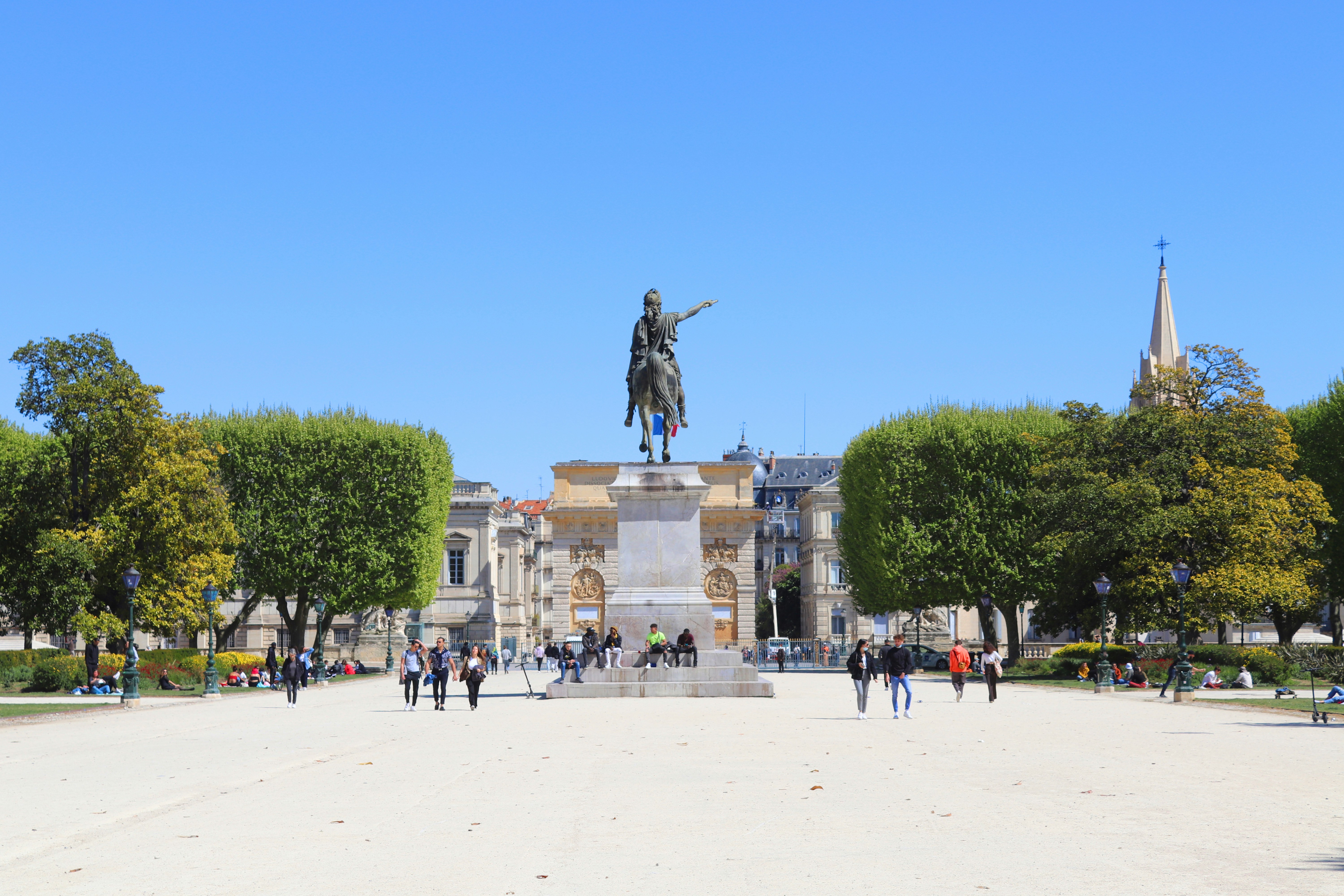
I came to Montpellier expecting one of those pleasant but forgettable southern French cities. Three days later, I was looking at train schedules to figure out when I could come back. That is what this place does to you. It is not Paris with sunshine, and it is nothing like Nice.
It has its own rhythm, wide tram-lined boulevards, sun-bleached medieval streets, and a young, confident energy that comes from having 100,000 students in a city of 300,000 people. Once you fall into that rhythm, it is hard to shake.
Quick Guide: Montpellier, France
- Primary Recommendation: Base yourself in L'Ecusson or Les Arceaux and explore on foot. The old city is compact, almost entirely pedestrianized, and easy to navigate without a map.
- Top Choice for Food: Hit the Marche des Arceaux on a Tuesday or Saturday morning for fresh local produce, artisan cheeses, and the best fougasse in the south.
- Best Free Afternoon Activity: Wander Rue de l'Ancien Courrier in the old city. Independent shops, old limestone buildings, sunlight coming off pale stone walls. One of the most beautiful shopping streets in any French city.
- The Best Way to See the City: Take a personalized walking experience with Lokafy in Montpellier and discover the secret squares, local haunts, and stories that no guidebook captures, with someone who actually lives there.
What Makes Montpellier Different
Montpellier is a university city first. The Faculty of Medicine here dates to 1220, making it one of the oldest in Europe, and the city has been built around that academic identity ever since. Around a third of the population are students, which shapes everything: the food options, the bar scene, the pace of life, the number of second-hand bookshops. The city grows faster than any other in France, but it has not lost the feeling that real people live here.
It is also a city that takes public transport seriously. Since December 2023, the four-line tram network has been free for residents. Visitors pay 1.60 euros per trip, and the network covers almost everything worth seeing. The streets in the historic center are mostly closed to cars, so the city moves at a pace that suits wandering.
What you will not find in Montpellier is the kind of carefully packaged tourist experience that flattens everything into the same few sights. The city is too young and too busy living to have settled into that. Which is exactly why it is worth visiting.
The Neighborhoods Worth Knowing
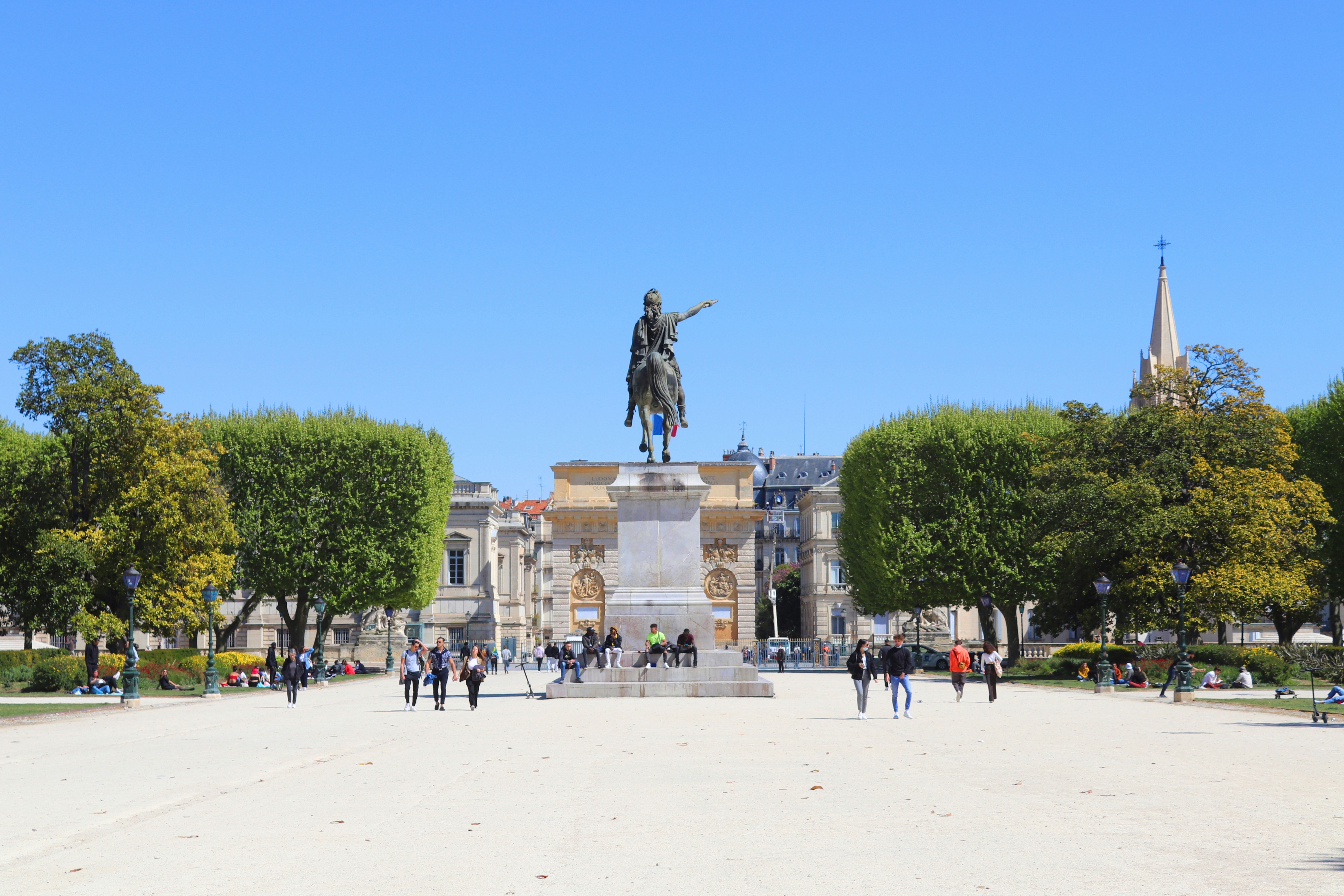
L'Ecusson is Montpellier's historic center, named for its shield-like shape. Medieval streets open unexpectedly into grand 17th and 18th-century squares built during periods of wealth and trade. The streets are narrow, the stone is warm, and the whole area is traffic-free. This is where most of the city's hôtels particuliers are: ornate private mansions built by wealthy merchants, many of which are still standing with their original facades. You do not need a plan. Pick a direction and walk.
Rue de l'Ancien Courrier is the street that stops people mid-stride. It runs through the heart of L'Ecusson with independent concept stores, small galleries, and the kind of quiet elegance that takes centuries to accumulate. Rue de Bras de Fer, nearby, has a well-photographed colorful tiled staircase that is small but genuinely charming. These streets reward slow walking.
Les Arceaux sits just west of the center, named after the Saint-Clement Aqueduct that runs through it. The aqueduct, modeled after those built in ancient Rome, forms the visual backbone of the neighborhood. Under it, twice a week, one of the best food markets in the south of France sets up and runs until midday. Outside market hours, Les Arceaux feels like a village: small streets, local shops, residents who know each other, and the kind of café where a long lunch is encouraged rather than tolerated.
Antigone is easy to walk past without stopping, which would be a mistake. Built in the 1980s to a design by Catalan architect Ricardo Bofill, it is a neoclassical district that looks like ancient Rome reconceived through a modern lens. Palm-lined avenues, monumental archways, wide public squares, and a remarkable architectural coherence throughout. It connects L'Ecusson to the Lez river and feels like a completely different city from the medieval center, in the best way.
Port Marianne is the modern quarter along the Lez. This is where the Marche du Lez is: a converted industrial site on the riverbank that has become one of the city's most interesting food and social spaces. It is busiest on weekend afternoons, when it fills with a mix of students, families, and people who have nowhere specific to be and are happy about it.
Where to Eat in Montpellier

Montpellier sits in a corner of France that takes food seriously. The Mediterranean is 10 kilometers east. The Languedoc wine region surrounds the city on three sides. Fresh ingredients arrive daily, and the cooking reflects that.
Marche des Arceaux is where locals start their week. The market runs every Tuesday and Saturday from 7am to 1:30pm under the arches of the aqueduct, with around 80 stalls covering seasonal vegetables, fresh fish, artisan cheeses, olives, honey, wine, and bread. Go early enough to talk to the vendors. It is the kind of market where you stop for a taste of something and end up having a conversation for twenty minutes. The fougasse bread, a flatbread from Languedoc flavored with olives or herbs, is worth buying at the first stall you find that makes it.
Bistro Urbain in L'Ecusson has built a loyal following without trying to. The approach is seasonal: the kitchen works with what looks good that morning, and the results tend to be inventive without being confusing. The lunch menu offers particularly good value for cooking of this quality. Booking ahead is a good idea.
La Cigale on Boulevard des Arceaux is a neighborhood institution. A large French café and bistro with a terrace that fills up on market mornings, it has the feel of somewhere that has always been there and will continue to be there regardless of trends. Good coffee, straightforward cooking, no pretense.
Ripailles in the old town is the kind of French bistro that gets every detail right: stone walls, checkered tablecloths, a rotisserie running in the open kitchen. The portions are generous, the wine list is serious, and the cooking centers on poultry, lamb, and seasonal produce done without fuss.
Halles Laissac is Montpellier's central covered market, open every day. Useful for fresh oysters, decent charcuterie, seafood, and a quick lunch without going far from the center. The oysters in particular are worth ordering.
Marche du Lez near Port Marianne is a different experience altogether. A sprawling food and social complex in a former agricultural site on the Lez river, it has street food from multiple cuisines, bars, a rooftop terrace at Muchacha (Latin American, good cocktails, stays open late), and a general atmosphere that is hard to replicate elsewhere in the city. Come on a weekend.
For a special occasion, La Reserve Rimbaud holds a Michelin star and sits on the Lez with a beautiful riverfront terrace. The seasonal tasting menus are polished and specific in the way you want a restaurant of this level to be.
What to eat in Montpellier:
Tielle Setoise is an octopus and tomato pie that originates from nearby Sete. It shows up in markets and specialist shops around the city and tastes better than it sounds. Grisettes are a local sweet: small rounds made from honey and licorice, sold at the Tourism Office near Place de la Comedie and at market stalls throughout the city. Bouzigues oysters from the Etang de Thau lagoon (about 45 minutes west) appear across markets and restaurants and are among the best in France. For wine, look for Pic Saint-Loup, Picpoul de Pinet, and Terrasses du Larzac from the surrounding Languedoc region.
The Spots That Take More Finding
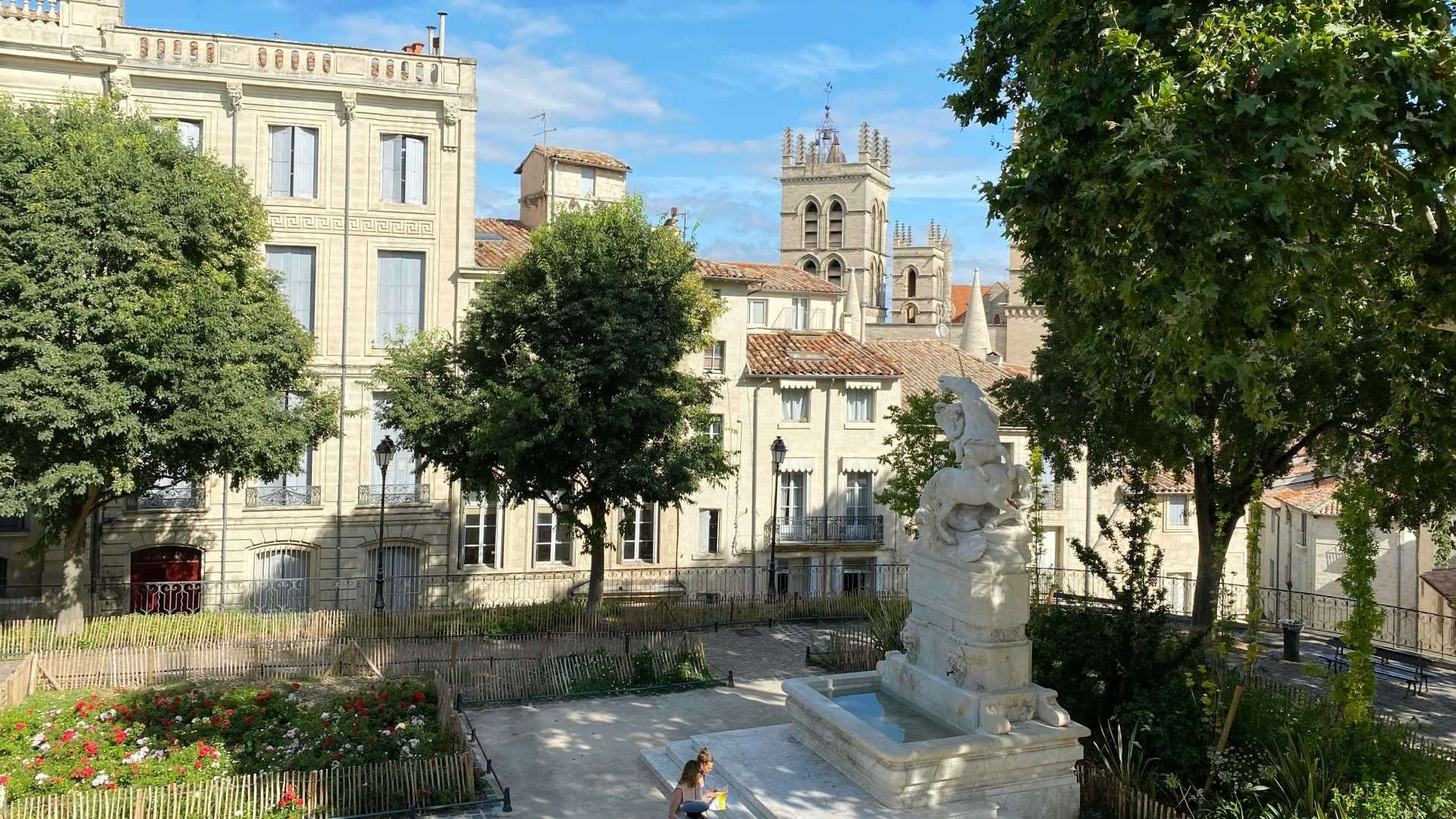
Place de la Canourgue is the oldest square in Montpellier and one of the least visited. It sits a short walk from Peyrou but feels completely different: smaller, leafier, surrounded by 17th-century aristocratic mansions, with garden benches and a fountain at the center. L'Atelier Bar a Vin here has an excellent wine list and a relaxed atmosphere that draws more locals than tourists. The view over the rooftops toward the cathedral spires is the kind of thing people frame as a photograph and forget they can see for free.
Jardin des Plantes was founded in 1593, originally to grow medicinal plants for the university's Faculty of Medicine. It is the oldest botanical garden in France, and it is free to enter. Today it is a public park with shaded paths, centuries-old trees, rare exotic plants, and an unhurried pace that the rest of the city does not always manage. It is full of locals with books and students who have decided their afternoon lectures are optional.
Carre Sainte-Anne is a deconsecrated Gothic church that now hosts contemporary art exhibitions. The stained glass stays in place while installations change around it. When light comes through the windows during an exhibition, the effect is genuinely memorable.
Broc Cafe, a large and relaxed spot opposite the Jardin des Plantes, is worth knowing for a drink or a meal. It has an unusually good beer selection for somewhere that does not present itself as a specialist craft beer bar, including tap beers from local Montpellier breweries. The terrace fills up with a mix of people who look like they have plans later and people who have decided they do not.
Day Trips Worth Making
Sete is the one not to miss. About 30 minutes by train from Montpellier, it is a working port town built on a narrow strip of land between the Etang de Thau lagoon and the Mediterranean. Canals cross the streets, the fish market is excellent early in the morning, and the local food scene centers on seafood that came out of the water that day. Tielle Setoise, the octopus pie you will have already tried in Montpellier, originates here. Climb Mont Saint-Clair for views over both the lagoon and the sea. On the way back, stop by the lagoon side for fresh Bouzigues oysters directly from a producer.
Pic Saint-Loup is the mountain visible from much of Montpellier on clear days, roughly 20 kilometers to the north. The surrounding wine appellation is one of the most interesting in Languedoc: the combination of limestone soil, Mediterranean sun, and altitude produces wines that are increasingly regarded as among the region's best. Several operators run half-day and full-day tours from the city, visiting two or three wineries, with tastings and usually a home-cooked lunch included. It is one of the more reliable ways to understand what Languedoc wine actually means in context.
Saint-Guilhem-le-Desert is a medieval village in a gorge about an hour from Montpellier, listed officially as one of France's most beautiful villages. The Abbaye de Gellone, founded in 804, is a UNESCO World Heritage Site as part of the Santiago de Compostela pilgrimage routes. The gorges are good for kayaking in the warmer months. Bus 308 runs from Montpellier if you prefer not to drive.
Getting There and Getting Around
From Paris, TGV high-speed trains reach Montpellier in about three hours and twenty minutes, with multiple direct services daily. If you bring luggage back full of wine, this is the obvious choice. The city also has its own airport, Montpellier-Mediterranee, with direct connections from London Gatwick, Amsterdam, and various other European cities.
Inside the city, the tram network is reliable and covers nearly everywhere you would want to go. Tickets cost 1.60 euros per trip and can be bought through the M'Ticket TaM app. The historic center is compact enough that most of what you want to do is walkable once you are there. Watch out for scooters in pedestrian areas.
The best time to visit is spring (April to June) or early autumn (September to October). The weather is warm, the landscape around the city is at its best, and the summer tourist spike has not yet arrived or has just ended. July and August are hot and busier.
Explore Montpellier with a Local

The Place de la Canourgue that does not appear on most maps. The wine bar in Les Arceaux that has been there since before it was a neighborhood. The medieval courtyards hidden behind unmarked doors in L'Ecusson. A local guide who grew up in the city knows all of this, and none of it makes it into a standard walking tour.
Book a personalized walking experience through Lokafy and spend a few hours seeing Montpellier through someone else's eyes. Every tour is shaped around your interests, your pace, and what you actually want to understand about the city. It is the fastest way to move from tourist to someone who knows the place.
Frequently Asked Questions About Montpellier
Is Montpellier worth visiting? Yes, and it is worth more time than most people give it. Montpellier is a genuinely lived-in city with a strong food and wine scene, an unusually good contemporary art program, and a compact historic center that rewards walking. It is less famous than Marseille, Nice, or Lyon, which means it is also less crowded and more affordable. Most people who go once go back.
How many days do you need in Montpellier? Three to four days is ideal. Two days is enough to cover the main sights and the best neighborhoods, but four days gives you time to explore Les Arceaux properly, take a day trip to Sete or Pic Saint-Loup, eat in a few different places, and sit long enough in Place de la Canourgue to understand what the city actually feels like.
What is Montpellier known for? Montpellier is known for its university (the medical school is among the oldest in Europe, founded in 1220), its large student population, the medieval streets of L'Ecusson, and its position as a base for exploring the Languedoc wine region. The city also has one of the best tram networks in France, now free for residents, and a growing reputation as a destination in its own right rather than a stopover.
What is the best time to visit Montpellier? April to June and September to October are the best months. The weather is warm and manageable rather than hot, the city is active but not overcrowded, and the landscape around the city is at its most interesting. July and August are peak season: busy, expensive, and very warm. Winter is mild by northern European standards but quieter, with some seasonal businesses closed.
Is Montpellier expensive? By French city standards, Montpellier is reasonably priced. A good lunch at a bistro typically runs 15 to 25 euros including wine. Market breakfasts are cheap. Accommodation in the historic center can be pricey for the quality of the rooms, so Les Arceaux, which is six minutes by tram from the center, is often a better option. The tram is cheap (1.60 euros per trip) and free for residents.
How do I get from Paris to Montpellier? The TGV from Paris Gare de Lyon reaches Montpellier Saint-Roch station in approximately three hours and twenty minutes. There are multiple direct trains daily, and the journey is comfortable. Montpellier also has a regional airport (Montpellier-Mediterranee) with direct connections from London Gatwick and several other European cities.
What is the best neighborhood to stay in Montpellier? L'Ecusson, the historic center, is central and atmospheric, but rooms can be small and noisy. Les Arceaux offers a better balance: a quieter, more local feel with the Marche des Arceaux market on the doorstep, six minutes from the center by tram. For a modern, riverside setting, Port Marianne is well-served by tram and close to the Marche du Lez. All three are safe and walkable.
Enjoyed this article?