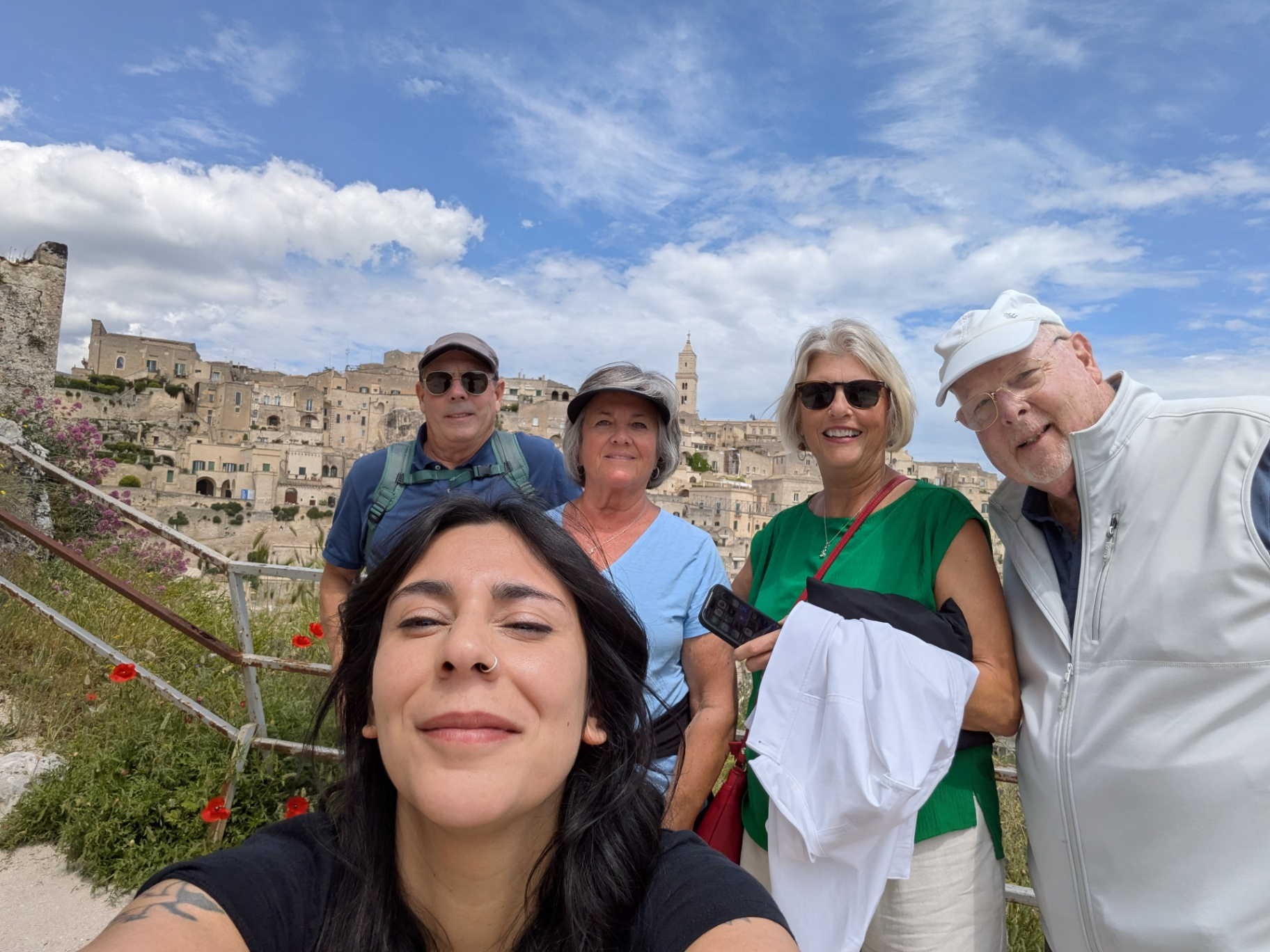
I did not know what to expect from Matera. I had seen the photos, the dramatic stone city carved into the hillside, cave windows stacked like theatre seating above a ravine. Nothing prepared me for the feeling of arriving and realising that people have lived here continuously for over 9,000 years, and that the streets you are walking on were once rooftops for the families living below. It is one of those places that takes a moment to even register as real. Once it does, you understand why locals bristle when visitors spend three hours here and leave thinking they have seen it. Matera does not reveal itself quickly.
This guide covers what you actually need to know, not the version in the glossy brochures, but the version locals have been sharing quietly for years.
What You Need to Know: A Quick Guide
- The Sassi are split into two distinct districts. Sasso Barisano is livelier and more restored; Sasso Caveoso is rawer and older.
- Cross the gorge to the Murgia plateau. The view everyone photographs is taken from the other side of the ravine. Almost no one actually goes there.
- The food here is unlike anywhere else in Italy. Peperoni cruschi, cavatelli with cacioricotta, Pane di Matera bread, and Aglianico del Vulture wine are specific to this region and largely unavailable elsewhere.
- Timing matters enormously. Matera in July and August is a different city to Matera in April or October, and not in a good way.
- The best way to experience Matera is with someone who lives here. Take a walk through one of the world's oldest cities with someone who calls it home.
The Two Sassi: Why the Difference Actually Matters
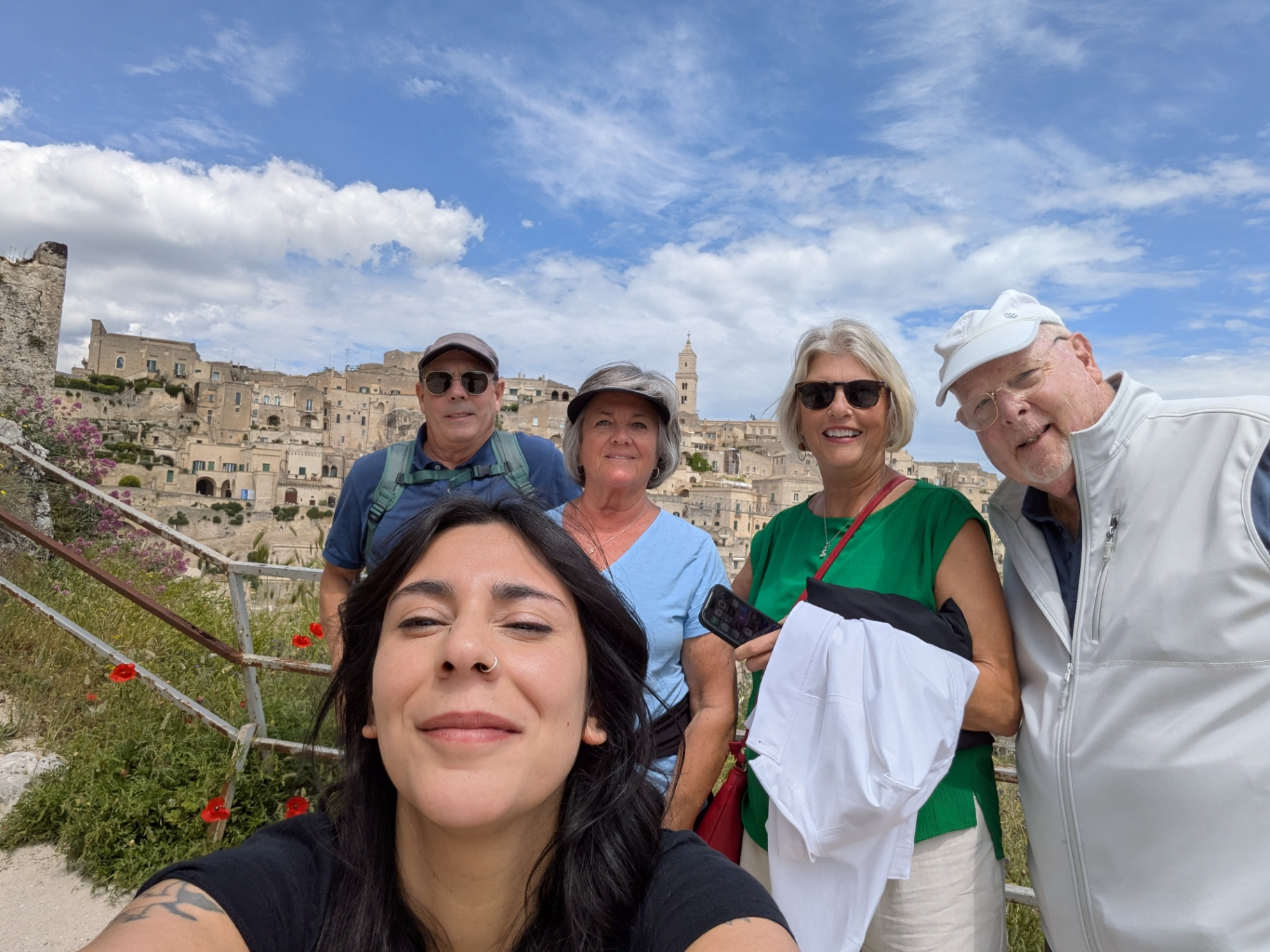
The historic centre of Matera is divided into two ancient cave districts, Sasso Barisano and Sasso Caveoso, separated by the Civita hill where the Cathedral stands. They look similar from a distance, which is exactly why most visitors treat them as one. They are not.
Sasso Barisano faces northwest and is the more commercially active of the two. It has been more extensively restored, and centuries of built facades have been layered over the original excavated sections, so the cave origins are less immediately obvious. This is where you will find most of the cave hotels, the better-known restaurants, and the aperitivo bars that fill with people at dusk. The atmosphere here in the evening, with warm light bouncing off the tufa stone and the smell of wood-fired kitchens drifting through the alleys, is genuinely unlike anywhere else in Italy.
Sasso Caveoso faces south toward Montescaglioso and feels distinctly different. More raw, more ancient, closer to what the Sassi looked like before restoration efforts began. Many of the cave dwellings here remain unrestored, their sealed windows and empty doorways preserving the atmosphere of abandonment that settled over the district after the 1950s evacuation, when the Italian government relocated the approximately 15,000 people who were still living in the caves into modern housing on the plateau above. Prime Minister Alcide De Gasperi described the Sassi as a national disgrace at the time. Today, they are a UNESCO World Heritage Site.
Sasso Caveoso is where you will find the rock church of Santa Maria di Idris, carved directly into the massive Monterrone rock that dominates the district's skyline, and the Casa Grotta museums, which recreate traditional cave family life with period furnishings. Seeing a single room where parents, children, grandparents, and their animals all slept together, with a sleeping alcove, a fireplace, and tools stacked against the stone wall, shifts something in you. It makes the polished cave hotel you might be staying in feel like a very different kind of story.
The local timing advice: Caveoso in the morning when the light is sharp and the tourist groups have not yet arrived, Barisano in the evening when the aperitivo hour is in full swing and the stone turns golden.
Beyond the two main Sassi districts, it is worth knowing about the Malve and Casalnuovo sub-districts within Caveoso. Casalnuovo in particular contains rock wine cellars and old olive oil mills that were once central to the city's food economy. Most visitors walk straight past them. They are the kind of detail you only notice if someone points them out.

Cross the Gorge: The View Almost Nobody Takes
The photograph that appears on every piece of Matera travel content, the one where the entire cave city is spread across the opposite hillside with the ravine below, is taken from the Belvedere Murgia Timone. The vast majority of visitors see this image, arrive in Matera, admire the sassi from the city-side belvederes, and never actually go to the place the photograph was taken from.
Getting there requires crossing the Gravina canyon on foot via a Tibetan suspension bridge, climbing through the Murgia Materana Park past Neolithic cave dwellings and small rupestrian churches, and ascending to the panoramic viewpoint at the top. Trail 406 starts at Porta Pistola in the old town and takes roughly 90 minutes at a moderate pace. The route is well-marked with white and red painted markers. From 2026, entry to the park costs 15 euros per person and guides at the trailhead check footwear before you are allowed in, a policy introduced after 42 people required evacuation or air rescue in 2025 due to inadequate shoes. Trail runners or hiking shoes are non-negotiable. Not sandals, not espadrilles.
The view from Belvedere Murgia Timone is the complete inversion of the city-side perspective. You are on the Murgia plateau looking across the entire canyon at the Sassi arranged below you, with the Cathedral on the Civita ridge, the ravine in the foreground, and the modern city invisible behind the old. No roads, no cars, no contemporary buildings in the frame. Just stone, rock churches, and a city that has been here since 7000 BC. It is the view that clarifies what Matera actually is.
If the hike is not practical, Belvedere di Piazza Giovanni Pascoli in the upper town is the most accessible panoramic viewpoint in the city itself and the best position for watching the sunset. The terrace of the Church of San Pietro Barisano is a local favourite for the same reason. Both give you the full spread of the Sassi without requiring the canyon crossing.
What to Eat in Matera
Basilicata is one of the least visited regions in Italy and one of the most culinarily distinct. Several dishes and ingredients here are genuinely local to this area, not variations on things you have eaten elsewhere in the country.
Peperoni cruschi are the defining ingredient of the entire regional kitchen. These are sweet red peppers from Senise, a small town in the province, dried whole and then flash-fried in very hot oil until they shatter with the texture of a crisp. The flavour is sweet, smoky, and slightly earthy, concentrated by the drying process into something much more complex than a fresh pepper. They end up crumbled over pasta, stacked over salted baccala, layered through antipasto, and eaten alone with a glass of Aglianico. The first time you try them you will understand immediately why this region guards them.
Cavatelli con peperoni cruschi e cacioricotta is the dish to order. Cavatelli are small elongated pasta shells, shaped by pressing dough with the fingertips to create a hollow that catches sauce. Paired with crushed cruschi peppers and cacioricotta, a local cheese that sits somewhere between fresh ricotta and aged pecorino, the combination is rustic, direct, and the kind of thing you look up how to make when you get home. Al Falco Grillaio near the Sassi and Trattoria Lucana on Via Lucana are both recommended by people who actually live in the city.
Pane di Matera IGP is protected bread made from locally grown durum wheat semolina in a distinctive curved shape. It has a thick, blistered crust and a dense yellow crumb, keeps for several days without going stale, and has almost nothing in common with generic Italian white bread. Locals buy it from wood-fired bakeries, not supermarkets. Bakery Perrone on Via delle Beccherie is the one worth finding specifically for this. Buy a loaf and eat it with local olive oil or with a slice of cured meat from a deli counter in the city.
Lagane e ceci is a thick homemade pasta with chickpeas that locals eat particularly through the late summer and into autumn. The pasta is wider and more irregular than most commercial varieties, and the dish is heavier and more filling than it looks.
For wine, ask for Aglianico del Vulture DOC. This is the regional red, grown on volcanic soil northwest of the city and built for the bold flavours of Lucanian cooking. It is robust, tannic when young, and distinctive in a way that reflects the volcanic landscape it comes from. Most trattorie pour it as the house red. It costs very little and is far better than what you would pay that price for in most of Italy.
If you are still in Matera after dinner, I Vizi degli Angeli on Via delle Beccherie is an artisan gelateria with flavours like grapefruit and rosemary or pineapple and ginger. Expect a queue. It is worth it.

When to Visit Matera
The Sassi are carved from limestone, open to the sky, and the alleys between them are narrow. In July and August, the stone holds heat aggressively and afternoon temperatures inside the cave districts regularly sit at 38 to 40 degrees Celsius. The Barisano restaurant strip fills on reservation three days out. The viewpoints at golden hour are crowded. Tour groups from the coast arrive by the busload between 10am and 4pm.
None of this makes Matera bad in summer. It makes it a city that requires careful timing. Go into the Sassi before 9am or after 7pm. Do the Murgia hike in the very early morning before the sun reaches the exposed sections of the trail. Book restaurants in advance.
The months locals actually prefer are April through June and September through October. Temperatures are walkable throughout the day, the plateau wildflowers are in bloom in spring, the restaurants are fully staffed rather than running on summer emergency mode, and the acoustic experience of the Sassi, the echo of footsteps on stone in near-empty alleys at 8am, is something qualitatively different from the peak season version.
November and March are quieter still and almost entirely tourist-free, which has its own appeal. The Sassi in rain and mist look like something from a different century entirely.
One timing detail that surprises most visitors: Matera at night is genuinely beautiful in a way that day visits never reveal. The cave city is illuminated after dark and the absence of traffic noise in the historic districts makes it feel completely still. If you are doing a day trip, stay for the evening and catch the last bus or drive back late. If you can afford to stay one night, do it. The city the next morning, before anyone else is awake, is the version worth travelling for.
See Matera the Way Locals Do
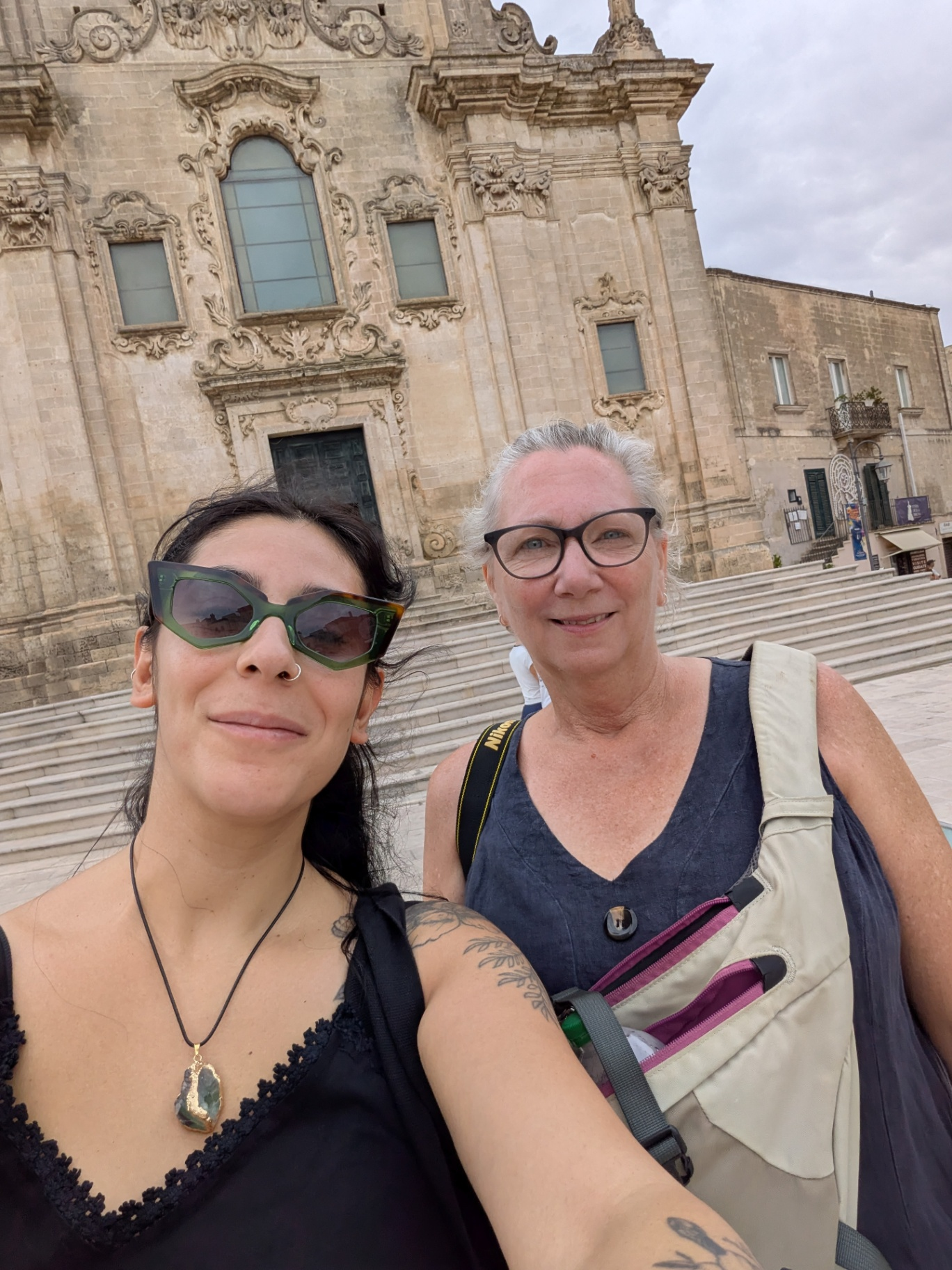
Matera is a city that rewards context. You can walk every alley in Sasso Caveoso and still not quite understand what you are looking at without knowing the full arc of the story: 9,000 years of continuous habitation, a forced evacuation that emptied the entire cave district within a few years in the 1950s, and a transformation from what was once called a national shame into a UNESCO World Heritage Site and European Capital of Culture 2019.
Lokafy connects you directly with people who live in Matera. Not a tour group, not a bus with a microphone, but a local who knows which Casalnuovo wine cellar is worth the detour, which trattoria the neighbourhood actually eats at, and what the city looks like before the crowds arrive.
→ Take a walk in Matera with a local.
Frequently Asked Questions About Visiting Matera
Is Matera worth visiting? Yes, but it requires at least one full day and ideally two. Matera is one of the world's oldest continuously inhabited settlements and a UNESCO World Heritage Site. The scale and strangeness of the Sassi districts are difficult to understand until you are inside them. A day trip from the coast gives you a surface read. Staying overnight gives you the city after the tour groups leave, which is a fundamentally different experience.
How many days do I need in Matera? Two full days is the local recommendation. Day one for exploring the Sassi districts and the Cathedral area, with an evening aperitivo in Sasso Barisano at sunset. Day two for the Murgia Timone hike and a longer lunch. If you only have one day, arrive early and do not leave before dark.
What is the difference between Sasso Caveoso and Sasso Barisano? Both are ancient cave districts within the historic Sassi. Sasso Barisano faces northwest, is more restored, and has the majority of restaurants and aperitivo bars. Sasso Caveoso faces south, is rawer and less commercial, and has more unrestored cave dwellings along with the rock church of Santa Maria di Idris. Visit Caveoso in the morning and Barisano in the evening.
What should I eat in Matera? The foods most specific to Matera and Basilicata are peperoni cruschi, cavatelli pasta with cruschi and cacioricotta cheese, Pane di Matera bread, lagane e ceci, and Aglianico del Vulture wine. If you only try one dish, make it cavatelli con peperoni cruschi at a trattoria away from the main tourist strip in Barisano.
When is the best time to visit Matera? April to June and September to October. These shoulder months offer manageable temperatures, better light for photography, and less pressure on restaurants and accommodation. July and August require early morning or evening timing to explore the Sassi comfortably. The city at night is worth staying for regardless of season.
Is Matera expensive? Less than comparable Italian heritage cities. A full meal at a local trattoria with wine typically costs between 20 and 35 euros per person. Cave hotel accommodation varies widely, from budget options around 80 euros to design hotels in converted grottoes above 300 euros. Murgia Materana Park entry is 15 euros per person from 2026.
How do I get to Matera? Matera is not on the main Italian rail network. The most practical options are by car from Bari (around 65 kilometres), by bus from Bari Centrale, or via the FAL regional train from Bari, which terminates at Matera Sud. Flying into Bari and renting a car gives the most flexibility for exploring the wider Basilicata region.
Enjoyed this article?