The first time I tried to walk across Kuala Lumpur, I lasted about twenty minutes. A six-lane road, a flyover with no obvious way across and a sudden 4pm downpour sent me into the nearest mall to regroup over an iced Milo. KL has a reputation as a city built for cars, and on some stretches it earns it. Then I found the other KL: a mosque at the muddy river junction that gave the city its name, a back lane in Chinatown where the curry laksa crowd gathers before 9am, and a Malay village of wooden houses sitting in the shadow of the Petronas Towers. All of it is walkable once you know which pieces to connect and when to go. This guide strings those pieces into three routes, with the food stops locals point to and the timing that keeps you out of the worst of the heat.
Quick Guide: Walking Kuala Lumpur Key Takeaways
- Primary Recommendation: Walk Old KL first. Masjid Jamek, Merdeka Square and Chinatown sit within a 15-minute walk of each other and hold most of the city's history.
- Top Choice for Food on Foot: Madras Lane, the hawker alley behind Petaling Street. Go for breakfast curry laksa before the heat builds, then walk it off through the temple lanes next door.
- Value Pick for Photographers: Kampung Baru at dusk, finishing on the Saloma Link bridge with the Petronas Towers lit up ahead. It costs nothing and suits anyone who wants the skyline without a ticket queue.
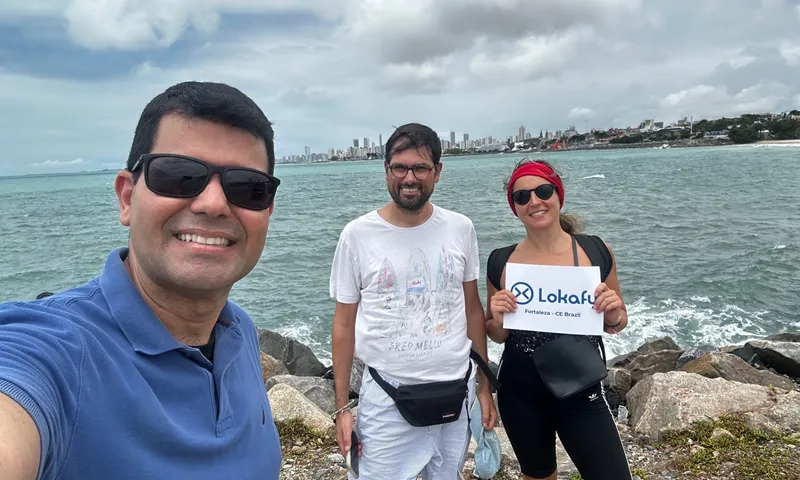
- The Best Way to See the City: Take a private/personalized walking experience with Lokafy in Kuala Lumpur and discover the kopitiams, clan temples and kampung lanes that most visitors walk straight past, with a local.
Is Kuala Lumpur Walkable?
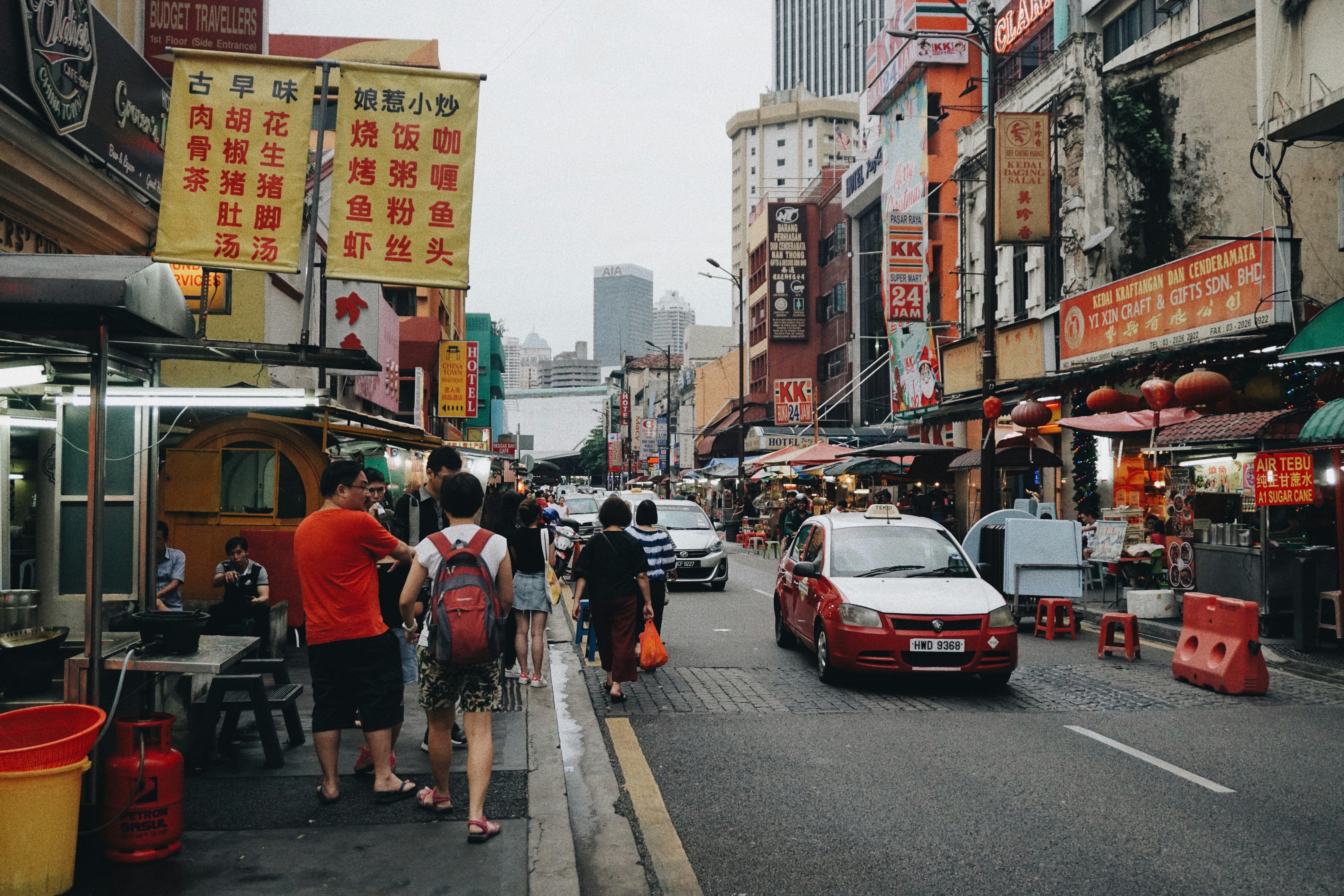
Yes, in clusters. Central KL is made up of compact, walkable neighbourhoods (Old KL and Chinatown, Chow Kit and Kampung Baru, KLCC and Bukit Bintang, and Brickfields), joined by roads that were never designed with pedestrians in mind. The smart approach is to walk within each cluster and hop between them on the LRT, MRT, monorail or a short Grab ride.
Two pieces of infrastructure make walking KL far easier than its reputation suggests. The first is the air-conditioned elevated walkway between KLCC and Pavilion in Bukit Bintang, roughly 1 km long and about 15 to 20 minutes on foot. The second is the Saloma Link, a pedestrian bridge that carries you from Kampung Baru across the river and highway toward the KLCC side of town.
The real challenge is the climate. KL sits a few degrees north of the equator, so days in the low 30s are normal all year, and heavy afternoon thunderstorms are common. Walk in the morning and the late afternoon, and save the middle of the day for museums, air-conditioned malls or a long lunch.
Route 1: Old KL and Chinatown (2.5 to 3 hours)
This is the walk to do first. It covers the spot where Kuala Lumpur began, the colonial core that grew around it and the Chinatown lanes that fed the tin miners. Start early; by 11am the stone of Merdeka Square is radiating heat.
- Start at Masjid Jamek Sultan Abdul Samad. Take the LRT to Masjid Jamek station and walk to the mosque at the confluence of the Klang and Gombak rivers. Completed in 1909, it stands at the literal "muddy confluence" that the name Kuala Lumpur describes. Non-Muslim visitors are welcome during set morning and afternoon visiting windows outside prayer times, and robes and headscarves are provided at the entrance. The mosque closes to visitors during Friday prayers, so plan this stop for another day if you are walking on a Friday.
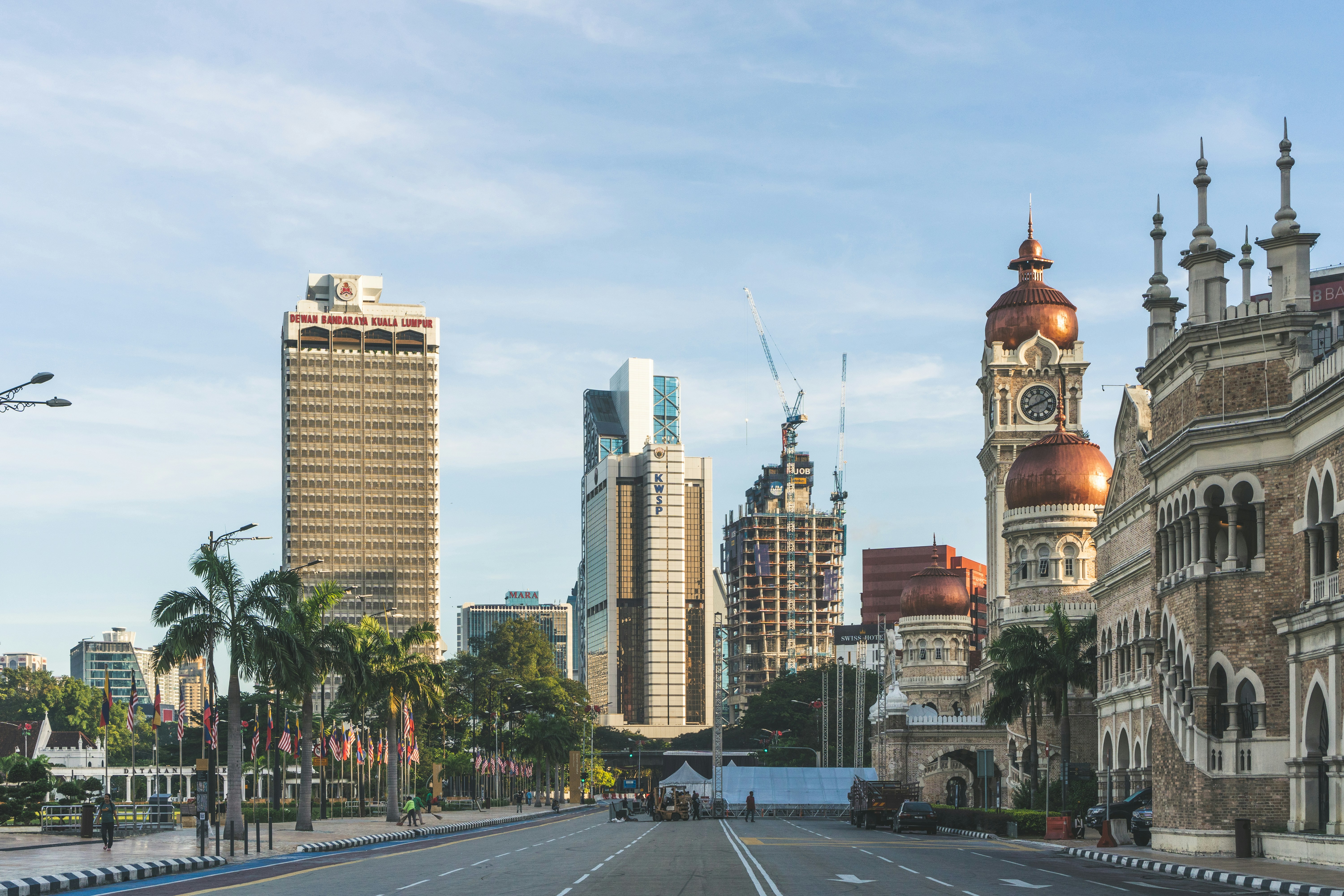
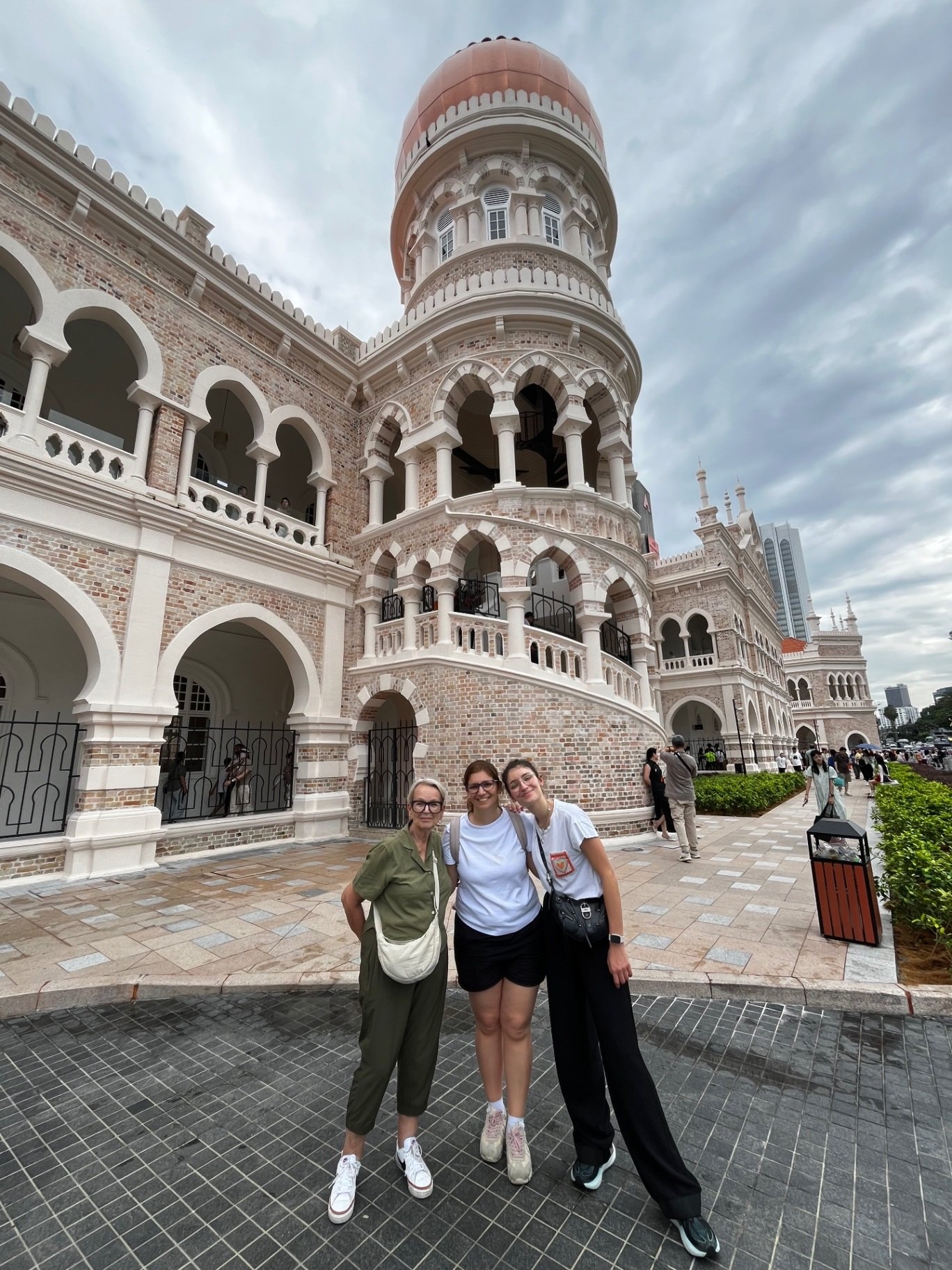
- Cross to Merdeka Square and the Sultan Abdul Samad Building. The copper-domed building facing the square was completed in 1897, and its facade runs more than 137 metres along Jalan Raja. For years it was something you admired from the outside. After a year of restoration, Block 1 reopened to the public in February 2026 with galleries on the history of the city, including the Kuala Lumpur City Gallery, plus cafés and a souvenir shop. The galleries are open daily from 9am to 6pm, which makes them a perfect escape when the square gets too hot.
- Walk down to Central Market and Kasturi Walk. Ten minutes south, the pale blue Art Deco Central Market (Pasar Seni) is full of batik, woodcarving and craft stalls, with air-conditioning to match. The covered Kasturi Walk alongside it is lined with snack stalls.
- Loop the temple lanes. Chinatown packs three very different places of worship into a few blocks. Sin Sze Si Ya Temple, founded by Kapitan Yap Ah Loy, the Chinese leader who helped build early KL, is small, smoky and easy to miss behind its narrow entrance. Guan Di Temple is a short walk away on Jalan Tun H.S. Lee, and Sri Mahamariamman Temple, the oldest Hindu temple in the city, sits on the same street under a tower of painted deities. Shoes come off at Sri Mahamariamman, and there is a small shoe-keeping counter at the gate.
- Eat at Madras Lane. Tucked behind Petaling Street, with an alley entrance near Sri Mahamariamman Temple, this covered row of hawker stalls is where KL comes for breakfast. The curry laksa stall here earned a mention in Lonely Planet's Ultimate Eatlist back in 2018 and still draws a queue. Chee cheong fun (rolled rice noodles) and yong tau foo are the other classics. Morning is the time to come.
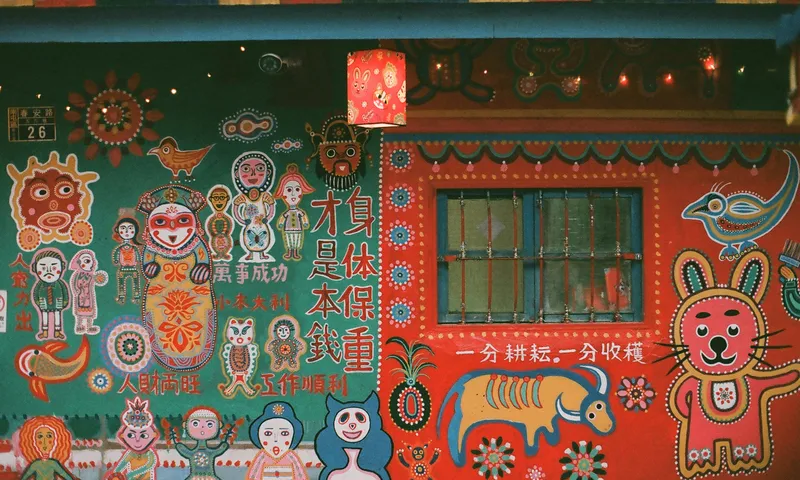
- Find Kwai Chai Hong. Lorong Panggung, known in Cantonese as Kwai Chai Hong or "Little Demon Lane", was a dilapidated back alley until a group of friends restored it in 2019. The pre-war shophouses now carry murals of 1960s Chinatown life, and you enter over a small red bridge built from wood salvaged during the restoration. It is tiny, so ten minutes covers it, but the murals are worth the detour, and the cafés along Petaling Street have back doors that open straight onto the lane.
- Walk Petaling Street, but skip the shopping. The covered market is mostly replica handbags and watches. Look up instead, at the old shophouse facades above the stalls, and duck into the kopitiams on the side streets. The street market is liveliest in the evening, roughly 6pm to 9pm.
- Finish on Jalan Sultan. REXKL, a 1947 cinema reborn as a cultural hub, now holds a maze-like BookXcess bookstore, a food hall and event spaces, and it is a good place to cool down. Across the street, Lai Foong Lala Noodles serves clam noodles in a broth of ginger and Chinese wine, and it holds a Bib Gourmand in the 2026 MICHELIN Guide Malaysia. Expect a wait at lunch.
Come back after dark: Once the sun goes down, return to Masjid Jamek for the River of Life. Blue lights, fountains and drifting mist fill the river junction in front of the mosque through the evening, and the view from the riverside walkway is the best free night photo in the city.
Route 2: Chow Kit and Kampung Baru to KLCC (2 to 3 hours)
If Route 1 shows you where KL started, this one shows you where people live and shop. It works best as a morning walk, or as a late-afternoon walk timed to finish on the Saloma Link at sunset.
Chow Kit. The neighbourhood takes its name from Loke Chow Kit, a tin miner and city councillor, and its heart is Bazaar Baru Chow Kit, one of the city's biggest wet markets. Come early, when the fish, herbs and spices are freshest and the aisles are busy with locals doing their daily shop. The floors are wet, so leave the sandals at the hotel.
Kin Kin for chilli pan mee. On Jalan Dewan Sultan Sulaiman, a no-frills shophouse with plastic chairs and fluorescent lights claims to be the birthplace of KL's chilli pan mee, created here in the 1980s. You get springy hand-rolled noodles, minced pork, crispy anchovies and a soft egg, then add the dry chilli flakes from the jar on the table. Start with a small spoonful; locals do not call it gunpowder for nothing. A bowl costs around RM12. Note that it opens only during the day and is not halal.
Kampung Baru. A few minutes' walk away, the city changes completely. Kampung Baru is KL's oldest Malay enclave, a neighbourhood of low wooden houses, flower gardens and family food stalls, with the Petronas Towers looming directly overhead. Walk the side streets, admire the mosaic gateway of Masjid Jamek Kampung Baru, and remember that this is a residential area: dress modestly and ask before photographing people or homes.
Nasi lemak on Jalan Raja Muda Musa. This street is lined with nasi lemak stalls, and debates about which one is best can get heated. Nasi Lemak Antarabangsa at number 4 is the famous name, though plenty of locals argue its standards have slipped and send you a few doors down to Nasi Lemak Wanjo at number 8. The best move is to try a small plate at one and let your own taste settle the argument.
Finish on the Saloma Link. From Exit B of Kampung Baru LRT station, the Saloma Link bridge carries pedestrians over the river and highway toward the KLCC side. At dusk, when the bridge lights come on and the towers glow ahead of you, it is one of the best free views in the city. From the far end you can walk on to KLCC Park.
Route 3: KLCC to Bukit Bintang, Air-Con Included (1 to 1.5 hours, plus eating)
This is the easiest walk in KL and the best one for the middle of the day.
Start in KLCC Park, at the foot of the Petronas Towers, where the lake and jogging track are pleasant in the early morning. From Suria KLCC, follow the underground link to the Kuala Lumpur Convention Centre and pick up the elevated walkway. It runs about 1 km to Pavilion Kuala Lumpur in Bukit Bintang, it is air-conditioned the whole way, and it has several exits along the route. Most people cover it in 15 to 20 minutes.
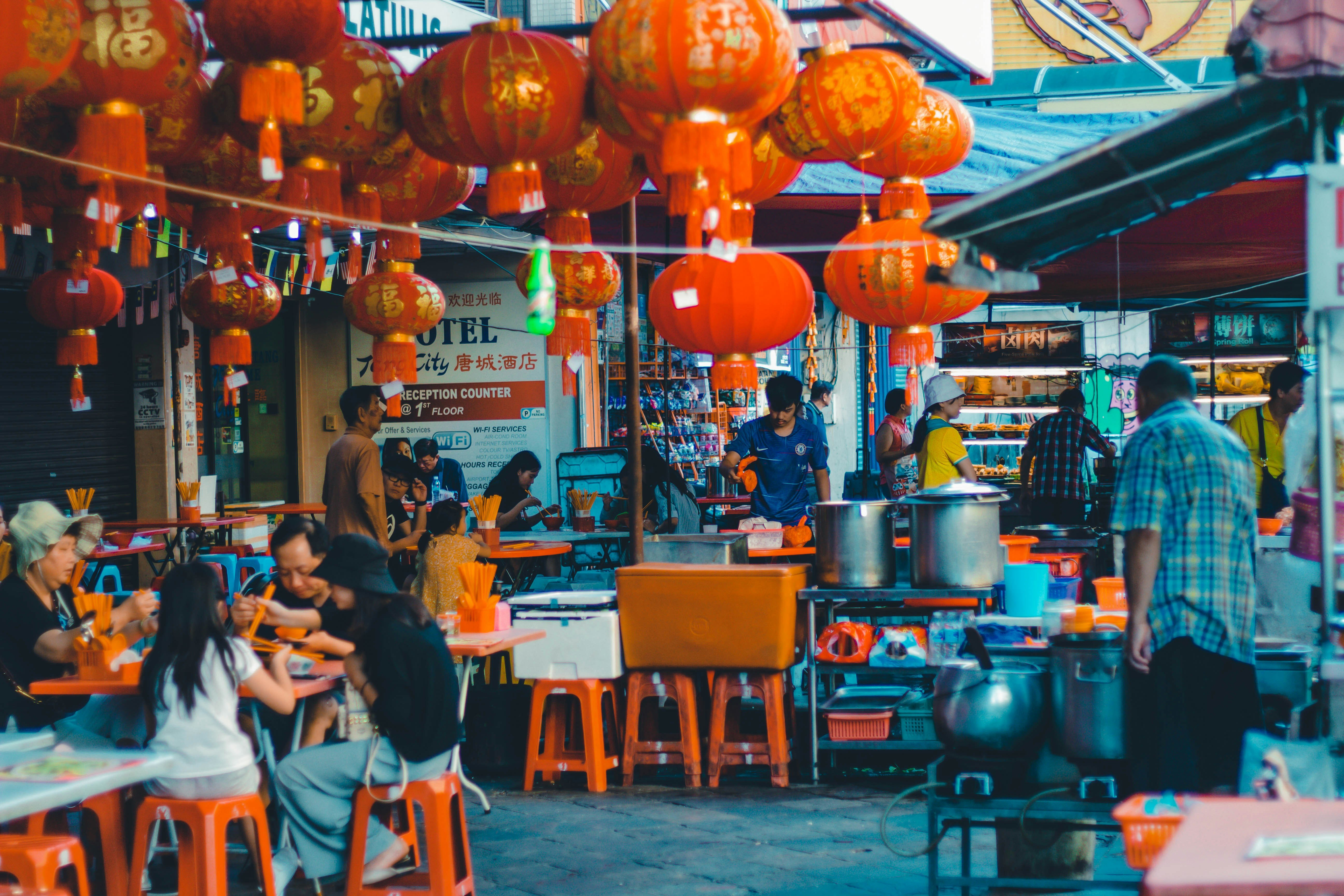
Jalan Alor, with honest expectations. Bukit Bintang's famous food street has around 100 stalls and 50 restaurants, and it comes alive from about 6pm, when the grills fire up and the tables spill onto the road. Go for the atmosphere and a couple of snacks, but know that prices are pitched at visitors, touts will steer you toward menus, and crowds make it a pickpocket magnet. Wear your bag in front.
Where to eat instead. For a local-grade meal near Bukit Bintang, take a short ride to Pudu. ICC Pudu on Jalan Kijang is a large hawker centre that locals pack out for breakfast, and Foong Lian on Jalan Yew has been cooking claypot rice over charcoal since 1986 (it holds a MICHELIN Bib Gourmand and closes on Tuesdays).
A green detour for early risers. KL Forest Eco Park on Bukit Nanas is one of the last patches of rainforest in the city centre, with a canopy walk that looks out to the skyline. Go at the 8am opening, before the heat and humidity set in. Foreign visitors pay RM40, cash is the safest bet, and the park closes on Fridays and during bad weather.
Add-On: Brickfields (about 1 hour)
A few minutes' walk from KL Sentral, Brickfields is Kuala Lumpur's Little India, first settled by Tamil railway workers and still strongly South Indian along its main road, Jalan Tun Sambanthan. Music spills from the sari shops, the grocers sell jasmine garlands by the metre, and the Sri Kandaswamy Temple shows off Sri Lankan Tamil temple architecture a block from the main drag. Banana leaf rice is the meal here, with restaurants along Jalan Tun Sambanthan and Jalan Scott. Eat with your right hand, and when you finish, fold the leaf toward you to say the meal was good.
Practical Tips for Walking in Kuala Lumpur
- Walk early and late. Aim to be out by 8am and head indoors by 11am, then go back out after 5pm. Afternoon thunderstorms arrive fast, so carry a compact umbrella.
- Cross with care. Traffic does not always stop at zebra crossings, and motorbikes filter through gaps. Use pedestrian bridges and signalised crossings wherever you can.
- Wear closed shoes. Pavements can be uneven, open drains are common, and markets have wet floors.
- Dress for temples and mosques. Cover shoulders and knees, and expect to take your shoes off. Mosques lend robes, but it helps to arrive dressed modestly.
- Carry small notes. Hawker stalls often prefer cash, so keep small ringgit notes on you.
- Link neighbourhoods by rail. Masjid Jamek, Pasar Seni, Kampung Baru, KLCC, Bukit Bintang and KL Sentral are all on the train network, which keeps the long, hot road walks out of your day.
One Day Walking Kuala Lumpur: A Sample Itinerary
- 8:00am: Breakfast at Madras Lane, then the Chinatown temple loop and Kwai Chai Hong.
- 10:00am: Masjid Jamek during the morning visiting window, then Merdeka Square.
- 11:00am: Cool off inside the Sultan Abdul Samad Building galleries.
- 12:30pm: Lala noodles on Jalan Sultan, then browse the bookstore at REXKL while the heat peaks.
- 3:00pm: Downtime. This is storm hour.
- 5:30pm: LRT to Kampung Baru for an early nasi lemak on Jalan Raja Muda Musa.
- 7:00pm: Sunset on the Saloma Link, then KLCC Park.
- 8:30pm: Take the elevated walkway to Bukit Bintang and finish with a snack on Jalan Alor.
Walk Kuala Lumpur With Someone Who Calls It Home
The routes above will get you around KL on your own, but the city rewards local knowledge more than most. Which nasi lemak stall is on form this month, which kopitiam still makes its kaya by hand, which alley in Chinatown has a clan house open today: that kind of information lives in people, not guidebooks.
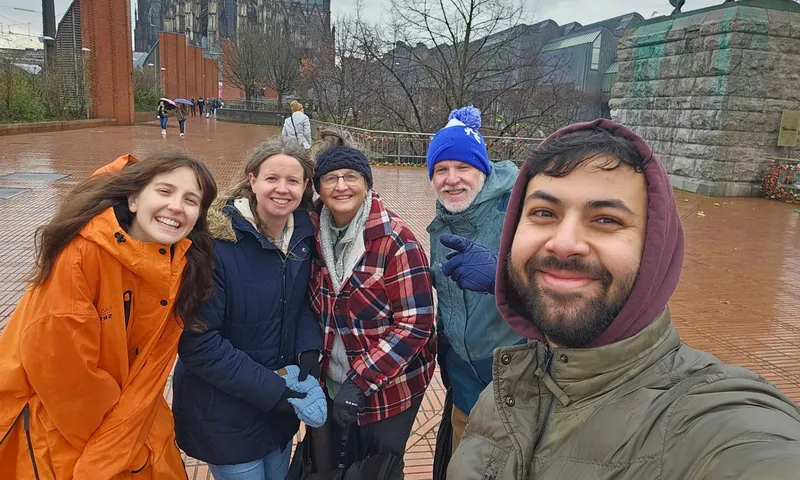
Take a private/personalized walking experience with Lokafy in Kuala Lumpur and discover the city through the eyes of someone who lives there. Every tour is private and shaped around your interests, from colonial heritage and temple lanes to a full day of eating your way across Chinatown, Kampung Baru and Brickfields. Tours run from 2 to 6 hours, your Lokafyer meets you at your hotel, a landmark or a café, and hosts speak English, French, Spanish, Portuguese, German and more. Cancellation is free up to 24 hours before your tour.
Book your Kuala Lumpur walking experience with Lokafy
Frequently Asked Questions
Is Kuala Lumpur a walkable city?
Kuala Lumpur is walkable in clusters rather than end to end. Old KL and Chinatown, Kampung Baru, KLCC and Bukit Bintang, and Brickfields are each easy to explore on foot, while busy roads between them make the train or a short Grab ride the better link. The KLCC to Pavilion elevated walkway and the Saloma Link bridge make the central districts much easier on foot.
How long does a walking tour of Kuala Lumpur take?
The Old KL and Chinatown route takes about 2.5 to 3 hours with food stops. Kampung Baru to KLCC takes 2 to 3 hours, and KLCC to Bukit Bintang takes 1 to 1.5 hours. Linking all three with train rides fills a full day.
What is the best time of day to walk in Kuala Lumpur?
Early morning, from about 8am to 11am, and late afternoon into the evening. Midday heat is intense year-round and heavy thunderstorms often roll in during the afternoon, so plan indoor stops for that window.
Can you walk from KLCC to Bukit Bintang?
Yes. An air-conditioned elevated walkway links the Kuala Lumpur Convention Centre, next to Suria KLCC, with Pavilion Kuala Lumpur in Bukit Bintang. It is roughly 1 km long and takes about 15 to 20 minutes.
Can you walk from Chinatown to Merdeka Square?
Yes. Central Market, on the edge of Chinatown, is about a 10-minute walk from Merdeka Square, and Masjid Jamek is a few minutes further north.
Is the Sultan Abdul Samad Building open to visitors?
Yes. Block 1 of the Sultan Abdul Samad Building reopened to the public in February 2026 after restoration. It houses galleries on Kuala Lumpur's history, including the Kuala Lumpur City Gallery, plus cafés, and the galleries open daily from 9am to 6pm.
Is it safe to walk around Kuala Lumpur at night?
The busy central areas, including Bukit Bintang, KLCC and the River of Life around Masjid Jamek, stay lively into the evening. Stick to lit main streets, keep your bag in front of you in crowds such as Jalan Alor, and use Grab for longer trips late at night.
What should you wear when walking in Kuala Lumpur?
Light, breathable clothes and closed walking shoes. If you plan to visit mosques or temples, cover your shoulders and knees, and bring a compact umbrella for afternoon storms.
Enjoyed this article?