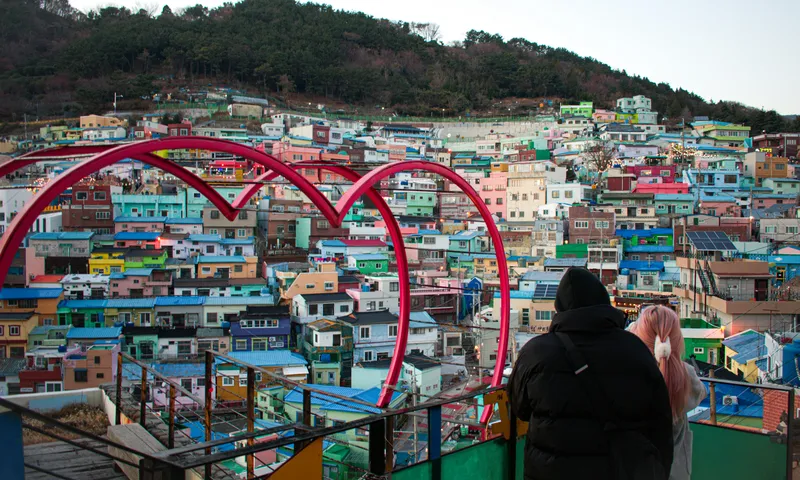
Busan, South Korea’s second-largest city, is not only known for its beautiful beaches, vibrant nightlife, and historic temples but also for its mouth-watering cuisine. As a coastal city with a rich culinary history, Busan offers a food scene that combines fresh seafood, traditional Korean flavors, and unique street food that will delight any traveler’s palate. Whether you’re strolling through a local market or dining in a cozy restaurant, the best way to experience Busan is by eating like the locals do. Here’s a guide to eating like a true Busan native, from street food to seafood feasts.
Busan’s Food Culture: A Local’s Perspective
Busan’s culinary culture is deeply intertwined with the city’s coastal location. Fresh seafood is a staple of local cuisine, with fish markets and seafood restaurants scattered throughout the city. But there’s more to Busan than just seafood—locals enjoy an eclectic mix of traditional Korean dishes, unique regional specialties, and a wide variety of street food.
Locals typically eat seasonally, and they favor communal dining experiences where a variety of small dishes, or banchan, accompany the main course. Sharing food and savoring bold flavors is the essence of eating like a Busan local.

Start Your Morning with Hearty Local Breakfast
While Korean breakfasts are often lighter than Western meals, Busan locals have a range of options to kick-start their day. From seafood stews to rice dishes, breakfast is a time to fuel up for the day ahead.
1. Dwaeji Gukbap (Pork and Rice Soup)
No dish better encapsulates Busan’s food culture than dwaeji gukbap (돼지국밥). This pork-based soup, served with rice and a side of salted shrimp, is a comforting and hearty way to start the day. The broth is rich and flavorful, simmered for hours with pork bones, and it’s served with side dishes such as kimchi, green chili, and garlic. Locals mix the rice directly into the soup and adjust the seasoning to their liking.
-Where to try it: Ssangdungi Dwaeji Gukbap in Seomyeon is a popular spot where locals go to enjoy this hearty dish.
2. Milmyeon (Wheat Noodles)
If you prefer something lighter but still distinctly Busan, try milmyeon (밀면). This cold wheat noodle dish is served with a refreshing, tangy broth that’s perfect for warmer days. Milmyeon is Busan’s answer to naengmyeon (cold buckwheat noodles), and locals often enjoy it topped with cucumber, boiled egg, and slices of beef.
- Where to try it: Choryang Milmyeon, a well-known spot near Busan Station, serves some of the best milmyeon in the city.
Mid-Morning Snack: Street Food Adventures
Busan’s bustling streets are filled with food stalls offering a wide variety of snacks that locals enjoy throughout the day. To truly eat like a local, sampling the street food is essential.
3. Hotteok (Korean Sweet Pancake)

Busan’s version of hotteok is slightly different from the traditional Korean sweet pancake. Filled with a mixture of seeds, nuts, and brown sugar, Busan-style hotteok is fried until golden brown and crispy on the outside, with a warm, gooey filling inside. Locals often enjoy this snack on a chilly day while strolling through markets.
- Where to try it: BIFF Square, a street food haven in Nampo-dong, is famous for its hotteok stalls, where you can watch the vendors fry these sweet treats fresh.
4. Ssiat Tteokbokki (Spicy Rice Cakes with Seeds)

Tteokbokki, a beloved Korean street food, is made with chewy rice cakes in a spicy gochujang (chili paste) sauce. Busan’s twist on this dish is ssiat tteokbokki, where the spicy rice cakes are topped with a crunchy assortment of sunflower seeds and pumpkin seeds. The combination of textures makes it a must-try.
- Where to try it: Head to Seomyeon Food Alley, where street vendors line the streets with their signature ssiat tteokbokki.
Lunch: A Seafood Feast by the Coast
Busan’s coastal location means that fresh seafood is at the heart of its culinary culture. Whether you want to try raw fish, grilled delicacies, or hearty seafood stews, Busan has it all.

5. Hoe (Raw Fish) at Jagalchi Fish Market
No visit to Busan is complete without a stop at Jagalchi Fish Market, Korea’s largest seafood market. Here, you can pick out fresh seafood directly from the vendors, which is then prepared on the spot for you to enjoy. Hoe (회), or raw fish, is the highlight, served thinly sliced with soy sauce, wasabi, and side dishes like kimchi and seaweed. Local favorites include flounder, sea bream, and octopus, often accompanied by chojang, a sweet and spicy dipping sauce made from gochujang.
- Where to try it: After browsing the stalls at Jagalchi Fish Market, head upstairs to one of the many restaurants that will prepare your selected seafood. If you’re adventurous, try san-nakji (live octopus), a local delicacy.
6. Grilled Shellfish at Gwangalli Beach
For a more relaxed seafood experience, head to Gwangalli Beach, where numerous seaside restaurants offer grilled shellfish platters. These seafood BBQs are a communal dining experience where shellfish like clams, scallops, and abalone are grilled right at your table, seasoned with butter and garlic. Locals gather here to enjoy the fresh sea breeze, sip soju, and feast on the best seafood the city has to offer.
- Where to try it: Goraesa Eomuk near Gwangalli Beach is a favorite spot for locals to enjoy shellfish while taking in the beach view.
Afternoon: Market Bites and Traditional Sweets
Exploring Busan’s markets is not just about shopping—it’s a food adventure. Busan’s local markets are packed with vendors offering snacks, traditional sweets, and beverages that locals love to enjoy during the afternoon.
7. Eomuk (Fish Cake)
Busan is famous for its eomuk (fish cake), and you’ll find eomuk stalls all over the city. The fish cakes are made from ground fish mixed with flour and vegetables, skewered, and boiled in broth. They’re served hot, often with a cup of the savory broth to sip on the side. It’s the perfect snack to warm you up on a cool day.
- Where to try it: Samjin Eomuk is one of Busan’s most well-known eomuk brands, with several locations around the city, including a flagship store near Jagalchi Market.
8. Patbingsu (Shaved Ice Dessert)

If you’re in Busan during the summer months, cool down with a bowl of patbingsu, a popular Korean shaved ice dessert. This treat is made with finely shaved ice, sweetened red beans, condensed milk, and various toppings like fruit, mochi, and ice cream. Locals gather in cafes to enjoy this refreshing dessert after a day of sightseeing.
- Where to try it: Sulbing, a popular Korean dessert chain, offers some of the best patbingsu, with locations across Busan. Try the injeolmi version, topped with chewy rice cakes and soy powder.
Dinner: Traditional Korean BBQ and Comfort Food
As evening falls, locals in Busan gather around tables for one of the most beloved Korean dining experiences: Korean BBQ. This communal meal is all about grilling marinated meats right at your table, paired with a variety of side dishes and sauces.
9. Korean BBQ (Samgyeopsal)

Busan locals are passionate about their samgyeopsal (pork belly), which is grilled over open flames at your table. The meat is then wrapped in lettuce leaves with garlic, ssamjang (a soybean paste), and fresh vegetables. Korean BBQ is best enjoyed with a group of friends, with soju or beer to complete the experience. Locals take their time during this meal, savoring each bite and enjoying the social aspect of dining.
- Where to try it: Haeundae Amso Galbijip is a popular spot for locals looking for top-quality pork and beef BBQ, located near Haeundae Beach.
10. Dongnae Pajeon (Green Onion Pancake)
For a more traditional Busan specialty, try dongnae pajeon (동래파전), a type of Korean savory pancake made with green onions, seafood, and a batter of rice and wheat flour. It’s crispy on the outside and soft inside, and it’s often paired with makgeolli (Korean rice wine) for a perfect balance. Locals in Busan typically order this dish when gathering at traditional Korean restaurants or pojangmacha (street tents) for dinner.
- Where to try it: Halmae Dongnae Pajeon, located in the Dongnae District, is the go-to spot for locals craving this traditional pancake.
Late-Night: Satisfying Midnight Cravings
Busan’s vibrant nightlife wouldn’t be complete without late-night eats. After a night out at the bars or karaoke, locals turn to comfort food to satisfy their midnight cravings.
11. Chimaek (Chicken and Beer)
A favorite late-night combo in Busan (and all of Korea) is chimaek, which is the pairing of fried chicken and beer. Korean fried chicken is crispy and light, often double-fried for extra crunch. It comes in various flavors, from classic crispy to sweet and spicy yangnyeom chicken. Locals gather at chicken joints to enjoy a casual meal of chicken and ice-cold beer with friends.
- Where to try it: Gupo Chicken, located near Gupo Station, is a local favorite serving delicious fried chicken late into the night.
End Your Busan Food Adventure
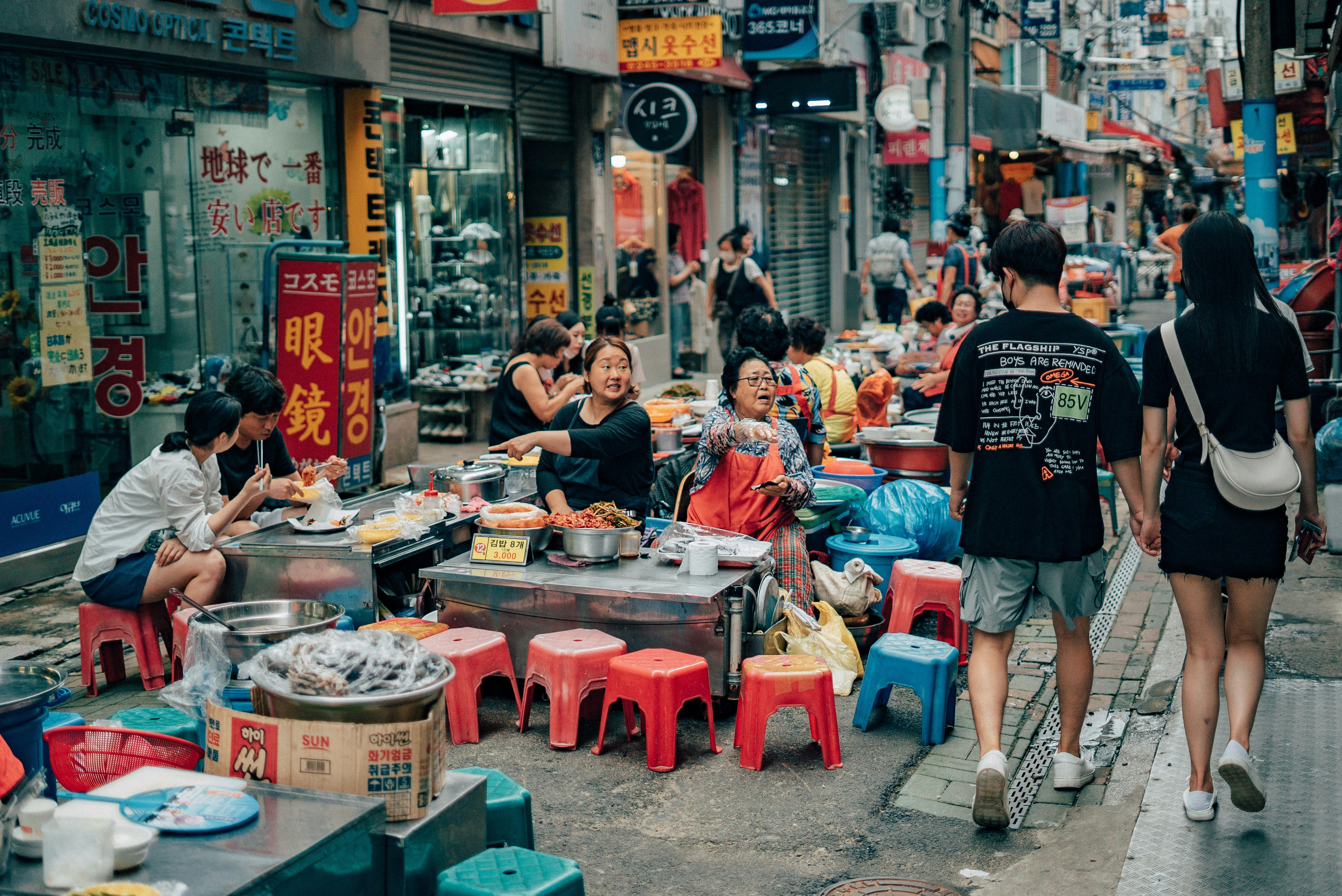
Eating like a local in Busan means diving into a world of bold flavors, fresh ingredients, and communal dining experiences. From market stalls to beachside seafood feasts, Busan’s food scene offers a unique blend of traditional and modern dishes that reflect the city’s rich cultural heritage. Whether you’re slurping down a bowl of milmyeon, grilling shellfish by the coast, or savoring late-night fried chicken with friends, every meal in Busan is an adventure in itself. So, bring your appetite and get ready to explore the city’s culinary treasures like a true local.
Enjoyed this article?