The first thing I ate in Dijon was a slab of jambon persillé from a market counter, wrapped in paper and eaten standing up outside Les Halles at ten in the morning. Nobody looked twice. That tells you most of what you need to know about this city: eating well here is a daily habit, and the best of it happens in small bistros with chalkboard menus and in shops that have been doing one thing well for a couple of centuries. Most visitors pass through on their way to the vineyards of the Côte de Nuits. The ones who stay a night or two tend to leave with a suitcase that clinks.
Quick Guide: Dijon Food Guide
- Primary recommendation: Plan your visit around a market morning at Les Halles (Tuesday, Thursday, Friday or Saturday, roughly 7am to 1pm). Buy jambon persillé from one of the charcutiers inside and a wedge of Époisses from the cheese stalls.
- Top choice for a classic Burgundian meal: Chez Léon on rue des Godrans, a family-run bistro near the market. Order œufs en meurette and the bœuf bourguignon, and ask about the 350-plus local wines on the list.
- Value pick for food-focused travellers on a budget: The weekday lunch set menu at DZ'envies, beside Les Halles, where the Michelin Guide singles out the lunch formula as a bargain.
- The best way to eat your way through the city: Take a private, personalised walking experience with Lokafy in Dijon and discover the market stalls, mustard counters and neighbourhood bistros locals use, with a Local who knows which queue is worth joining.
What to Eat in Dijon: The Burgundy Dishes Worth Ordering
Dijon was the capital of the Dukes of Burgundy, and the menus still read like a ducal shopping list. Wine goes into the sauces and the portions assume you walked here. These are the dishes locals expect you to try at least once.
- Jambon persillé: Ham cooked in white wine and set in a parsley jelly, served cold in thick slices. It is the city's signature starter and the thing Dijonnais buy at the market every week.
- Œufs en meurette: Poached eggs in a red wine sauce with lardons and onions. You will want extra bread for the sauce.
- Bœuf bourguignon: Charolais beef braised slowly in red Burgundy. Bistros often offer it on cooler days only, so look at the chalkboard.
- Escargots de Bourgogne: Snails baked in garlic and parsley butter, usually by the half-dozen or dozen.
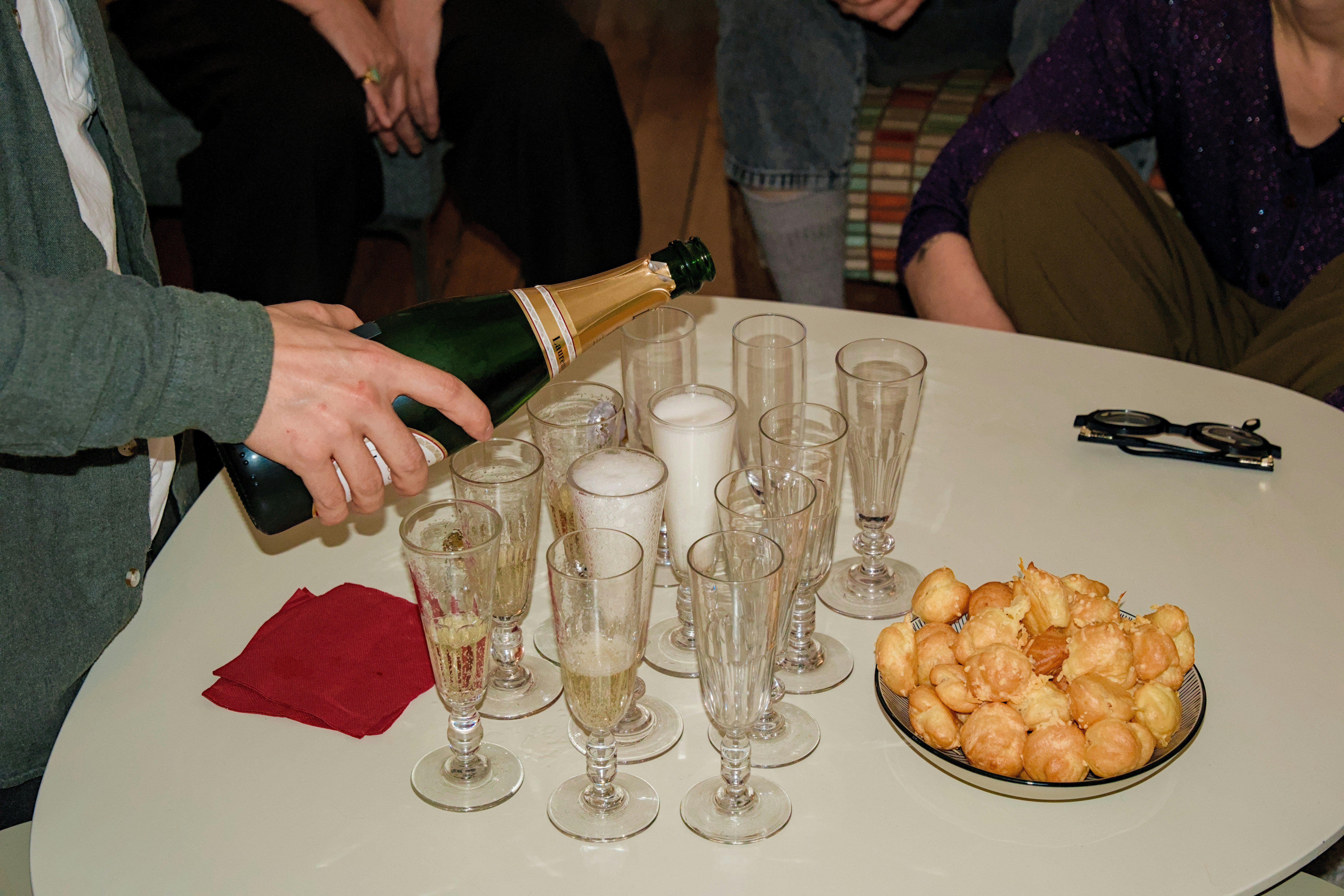
- Gougères: Small cheese puffs made with Comté or Gruyère, the standard partner to an aperitif.
- Époisses: A washed-rind cow's milk cheese from the Côte-d'Or with a smell that arrives before the plate. The taste is much gentler.
- Pain d'épices and nonnettes: Dijon's honey gingerbread, plus small iced cakes filled with orange marmalade or jam.
- Kir: White wine (traditionally Aligoté) with crème de cassis, about one part liqueur to four parts wine. It is named after Canon Félix Kir, a former mayor who served it at city receptions.
Les Halles: Where Dijon Shops, Gossips and Eats
If you only have one morning in Dijon, give it to Les Halles. The 19th-century iron-and-glass market hall sits a few minutes' walk from the Palace of the Dukes and is listed as a historic monument. The central market runs inside and around the building on Tuesday, Thursday, Friday and Saturday mornings, roughly from 7am to 1pm. Saturday is the busiest and the most fun, when families from across the city do their weekly shop and the surrounding streets fill with stalls.
Jambon persillé is the reason many locals come, and certain counters sell out fast. Look for Alviset, Boucherie Chenu and the Triperie Dijonnaise, which makes its own persillé alongside snails, pâté en croûte and stuffed cabbage. Watch who is ahead of you in the queue, hold up a finger when it is your turn, and ask for "une tranche" if you want a single thick slice to eat right away.
For cheese, the Fromagerie Porcheret on rue Bannelier, beside the hall, has a strong selection of Burgundian cheeses, and the stalls inside sell Époisses and young goat cheeses from the region. Add bread, persillé and some fruit and you have a picnic for the Jardin Darcy.
The streets around the market are also where Dijon eats out. Rue Bannelier, rue Odebert and rue des Godrans are lined with bistros that cook with what the market sells, which brings us to lunch.
Where Locals Eat in Dijon
Ask Dijonnais on French food and wine forums where they eat, and the same few names keep coming back. None of them are tourist traps, and most close on Sundays and Mondays, so plan around that.
Classic Burgundian bistros
Chez Léon (20 rue des Godrans) is the name that comes up first. Gault&Millau calls it the traditional bistro you need to know to understand the city, and it is the place for œufs en meurette, snails, Label Rouge chicken with tarragon and a proper bourguignon. The wine list leans heavily local. Book ahead for dinner and for the terrace in summer.
DZ'envies (12 rue Odebert) sits right beside Les Halles. Chef David Zuddas left Michelin-starred cooking to run a bistro, and the menu sticks to market produce: jambon persillé, eggs in meurette, beef cheeks bourguignonne. The weekday lunch formula is one of the best-value meals in town.
Les 3 Bures (12 rue Bannelier) is where locals go when they want cheese and lots of it. Think chalet décor, fondue, raclette and Burgundy and Franche-Comté cheeses, with produce bought at the market across the street. It is at its best on a cold evening.
Modern bistros with a Dijon accent
Parapluie (74 rue Monge) is a small neo-bistro run by chef Chern Hwei Gan, who trained at La Mère Brazier in Lyon. The cooking mixes seasonal Burgundy produce with Asian spices, and the wine list favours young winemakers. Wine-loving locals rate the multi-course menus highly for the price. His wife, chef Xin Gan, runs Azérole nearby with a similar French-Asian approach in a more relaxed setting.
Monique, boire et manger (rue Amiral Roussin) is a friendly modern table on a pedestrian street in the old town, serving Burgundy wines, local juices and Dijon beers with seasonal plates. It feels like eating at a friend's house, if your friend had professional training.
Cave (29 rue Jeannin) is the more relaxed sister of CIBO across the street, from the team of chef Angelo Ferrigno. It holds a Michelin Bib Gourmand for good cooking at fair prices and is one of the easiest ways to taste starred-level sourcing without the starred bill.
When you want to splash out
Dijon has more Michelin stars than most cities its size. Restaurant William Frachot, inside the Hostellerie du Chapeau Rouge on rue Michelet, holds two stars and is the city's top table. CIBO (24 rue Jeannin), from Angelo Ferrigno, holds a star plus a green star for sustainability, with nearly every ingredient sourced from within about 200 km. La Maison des Cariatides (28 rue Chaudronnerie) recently earned its first Michelin star, and the early 16th-century merchant's house with its carved stone figures on the façade is worth a look even if you do not eat there. All three need reservations, often weeks ahead.
Mustard, Gingerbread and Cassis: Dijon's Edible Souvenirs
Dijon's food shops are as much a part of the city's identity as its restaurants. Three products matter most.
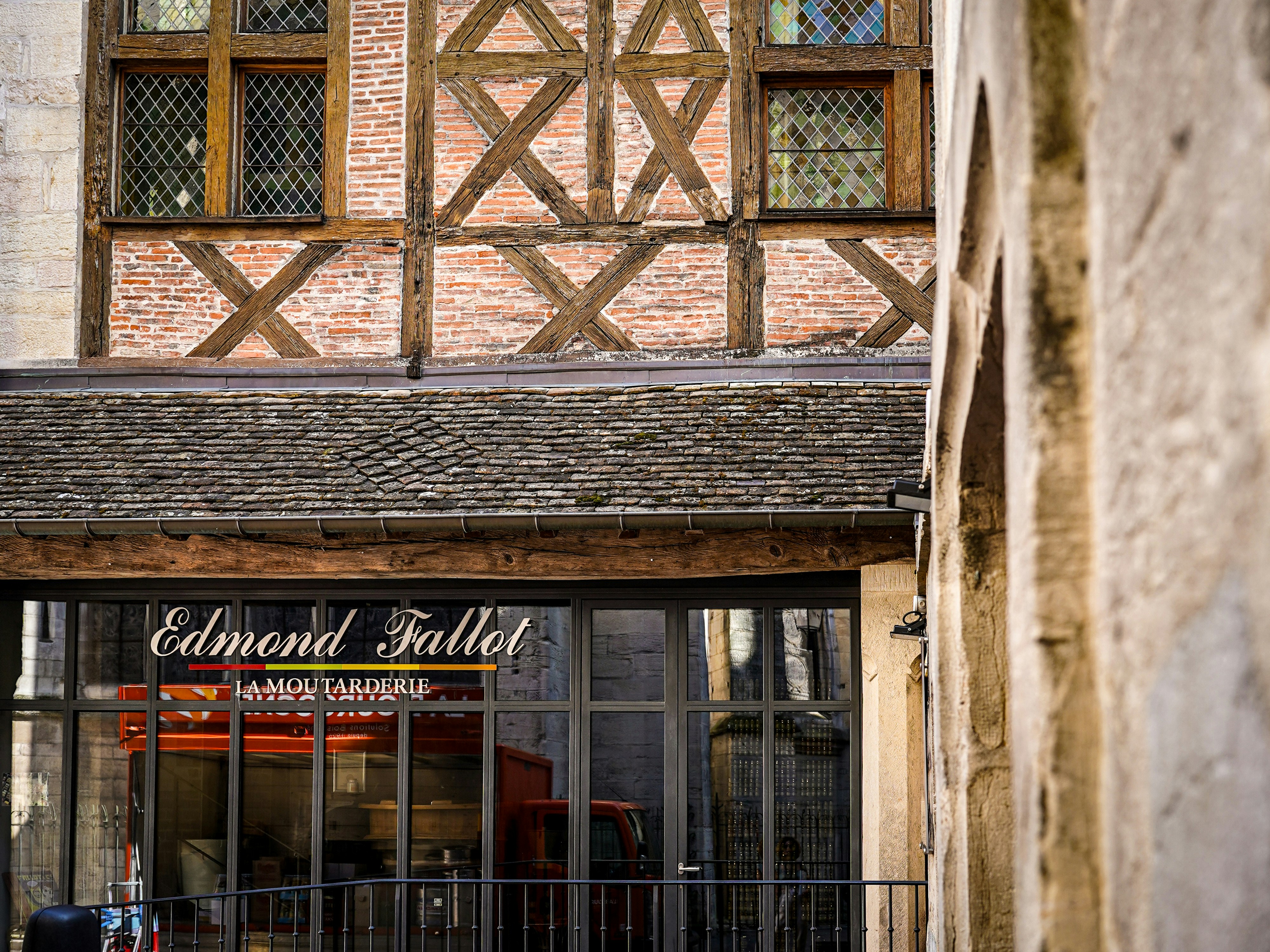
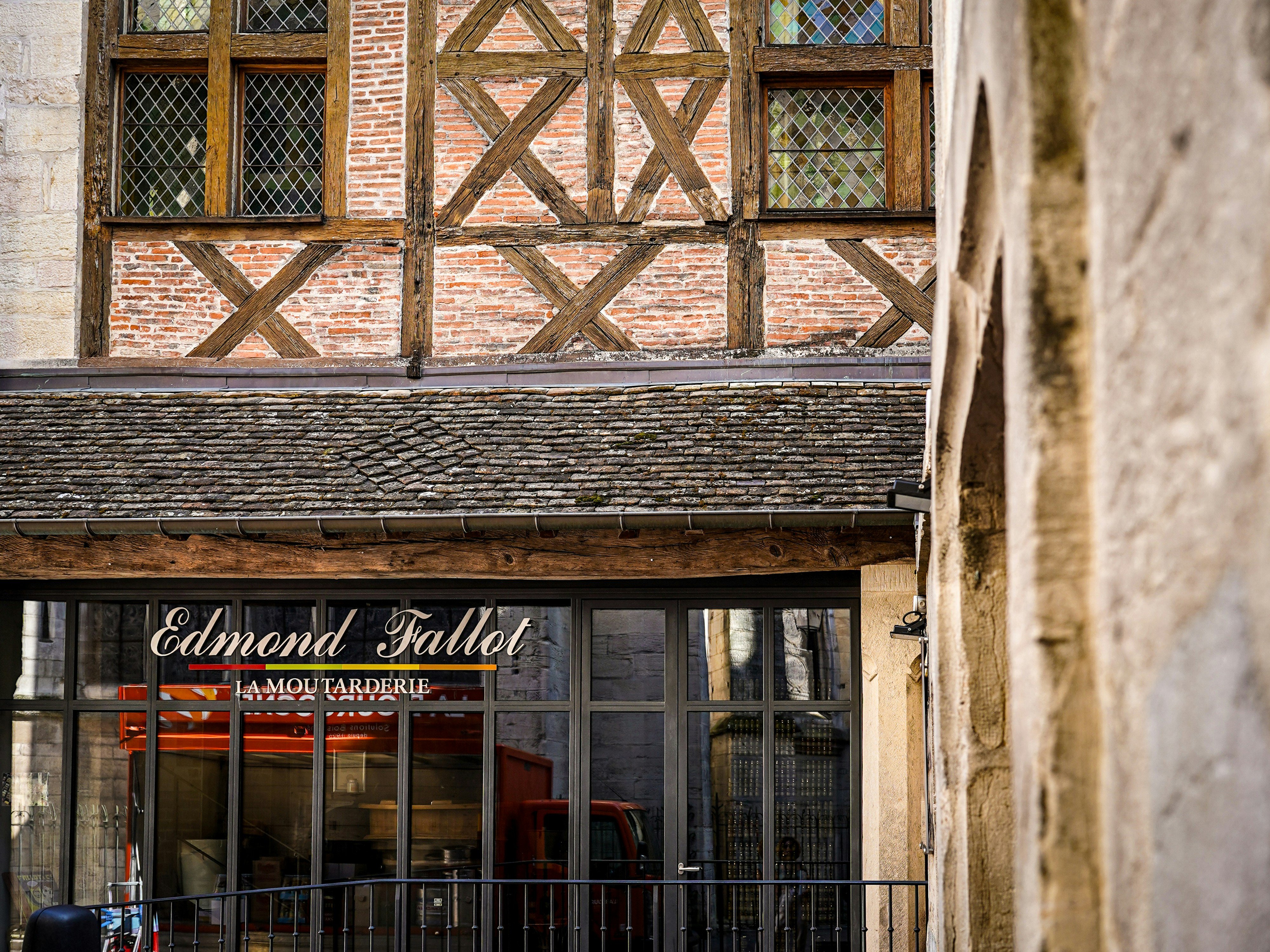
Mustard. The name "Dijon mustard" refers to a recipe, so most jars sold around the world are made far from the city. To taste mustard with a real local connection, go to the Moutarderie Edmond Fallot boutique-atelier at 16 rue de la Chouette, a short walk from Notre-Dame church. Fallot is a family mustard house founded in 1840 in Beaune that still grinds its seeds on a stone mill, and the Dijon shop has a millstone on display and a tasting bar where you can try flavours before you buy. It is open Tuesday to Saturday 10am to 7pm, Monday from noon and Sunday mornings. The Maille boutique at 32 rue de la Liberté, first opened in 1845, is the other classic stop, known for mustard served fresh from the pump into stoneware jars.
Pain d'épices. Mulot & Petitjean has been making gingerbread since 1796 and is the last gingerbread maker left in Dijon. Their shop at 13 place Bossuet, with its old-fashioned storybook façade, is worth seeing for itself. For the full story, the company's Fabrique de Pain d'Épices at 6 boulevard de l'Ouest runs visits Tuesday to Saturday, with audio guides in English and a tasting at the end. Try the nonnettes and the jacquelines, meringue-topped treats filled with nougat or praline.
Crème de cassis. Crème de cassis was created in Dijon in 1841, and "Crème de Cassis de Dijon" is a protected geographical indication made only by a handful of liqueur houses in the city. Maison Briottet, family-run since 1836, still produces it in central Dijon. Buy a bottle for the Kir you will want to recreate at home, and look for "de Dijon" on the label rather than generic cassis.
While you are on rue de la Chouette, find the small stone owl carved into the side of Notre-Dame. Locals touch it with the left hand for luck, and the bronze owl arrows set into the pavement mark the Parcours de la Chouette, a self-guided trail through the old town. Fallot is stop number 10, which makes it an easy place to start.
Sweet Stops Locals Love
Fabrice Gillotte is a Meilleur Ouvrier de France chocolatier, and his shop at 21 rue du Bourg is where Dijonnais buy chocolates for dinner parties. A few doors away, his newer pâtisserie Beurre Noisette (50 rue du Bourg) has quickly become a favourite for viennoiseries, generous family-style cakes and sandwiches. The rue du Bourg is pedestrian, so you can wander between the two, eat a croissant on the move and still make it to the market before the best stalls sell out.
A One-Day Food Itinerary in Dijon
This works best on a Friday or Saturday, when the market is running and every shop is open.
- 8:30am, breakfast on rue du Bourg. Pick up a pastry at Beurre Noisette and take it with you.
- 9:30am, Les Halles. Walk every aisle before buying anything. Then get jambon persillé, Époisses and bread for later.
- 11am, the owl and the mustard. Follow the owl arrows to Notre-Dame, touch the owl, then taste your way through the Fallot mustard bar on rue de la Chouette.
- 12:30pm, lunch near the market. Book DZ'envies or Chez Léon and order the set lunch menu if there is one.
- 3pm, gingerbread. Visit the Mulot & Petitjean shop on place Bossuet, or head to the Fabrique on boulevard de l'Ouest for the full tour.
- 5pm, a picnic or a pause. Eat your market haul in the Jardin Darcy, or rest your feet with a coffee on Place de la Libération facing the Palace of the Dukes.
- 7pm, Kir and dinner. Start with a Kir at a wine bar in the old town, then dine at Parapluie, Monique or Cave. For a once-in-a-trip meal, book William Frachot or CIBO well ahead.
Practical Tips for Eating in Dijon
Mind the closing days. Most independent restaurants close on Sunday and Monday, and the central market does not run on Monday, Wednesday or Sunday. A Saturday gives you the most options.
Lunch is the bargain. Many bistros offer a weekday "formule" at lunch that costs far less than the dinner menu for similar cooking. If you want to try a fancier place on a budget, lunch is the way in.
Book dinner. Dijon's best small bistros have few tables. Reserve a day or two ahead, and much further ahead for starred restaurants.
Time it with the food fair. The Foire internationale et gastronomique de Dijon, held every year since 1921, runs for about twelve days from late October into mid-November at the Parc des Expositions. It draws hundreds of exhibitors and hosts the competition for the best jambon persillé.
Check before visiting the Cité de la Gastronomie. The Cité internationale de la gastronomie et du vin, in the restored Hôpital du Saint-Esprit, still hosts its city-run exhibitions on the French gastronomic meal and Burgundy wine. Its commercial food village has closed, so do not plan a meal there. Check the Cité's own site for what is open before you go.
The vineyards are close. The Route des Grands Crus starts at the southern edge of the city, so Dijon makes a good base for a Burgundy wine day once you have eaten your way through town.
Explore Dijon's Food Scene with a Local
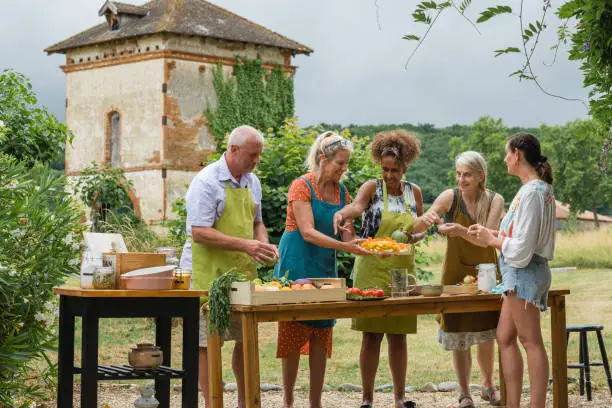
Guidebooks will point you to the market and the mustard shop. A local will tell you which persillé counter their grandmother swore by, which bistro does the best meurette this season, and where to sit with a Kir when the old town lights come on. That is the difference between seeing Dijon's food scene and tasting it properly.
With Lokafy, you are matched with a Dijon local for a private walk built around what you love to eat. Spend the morning at Les Halles learning what to buy and how to order, follow the owl trail between mustard and gingerbread shops, and finish with tips for dinner that you would never find on a review site. Every walk is personalised, so you set the pace and the appetite.
Take a private, personalised walking experience with Lokafy in Dijon and discover Burgundy's food capital with a Local.
Frequently Asked Questions
What food is Dijon famous for?
Dijon is famous for mustard, pain d'épices (honey gingerbread), crème de cassis and the Kir aperitif. It is also the best place to try Burgundy classics such as jambon persillé, œufs en meurette, bœuf bourguignon, escargots and Époisses cheese.
When is Les Halles market open in Dijon?
The central market at Les Halles runs on Tuesday, Thursday, Friday and Saturday mornings, roughly from 7am to 1pm, inside and around the covered hall. Saturday is the busiest and liveliest day. Individual stalls set their own hours, so arrive before 11am for the best choice.
Where do locals eat in Dijon?
Locals return to traditional bistros near Les Halles such as Chez Léon on rue des Godrans and DZ'envies on rue Odebert for Burgundian classics, Les 3 Bures for cheese dishes, and modern tables such as Parapluie, Monique and Cave for seasonal cooking at fair prices. Most close on Sundays and Mondays.
Where is the best place to buy mustard in Dijon?
The Moutarderie Edmond Fallot boutique-atelier at 16 rue de la Chouette has a tasting bar and stone-ground mustards from a family house founded in 1840. The Maille boutique at 32 rue de la Liberté, open since 1845, is known for fresh mustard served from the pump.
Is Dijon worth visiting for food lovers?
Yes. Dijon combines a historic covered market, centuries-old food producers, affordable traditional bistros and several Michelin-starred restaurants in a compact, walkable centre. It is also the gateway to the Burgundy wine route, which makes it an ideal base for a food and wine trip.
How many days do you need in Dijon for food?
One full day covers the market, the mustard and gingerbread shops and two good meals. Two days lets you add a starred restaurant, a gingerbread factory visit and a wine outing on the Route des Grands Crus.
Do you need a guide to explore Dijon's food scene?
You can explore Dijon alone, but a local makes a real difference at the market, where the best counters, unwritten queue etiquette and seasonal specialities are hard to spot as a visitor. A private walk with a Lokafy local lets you shape the route around what you want to taste.
Enjoyed this article?