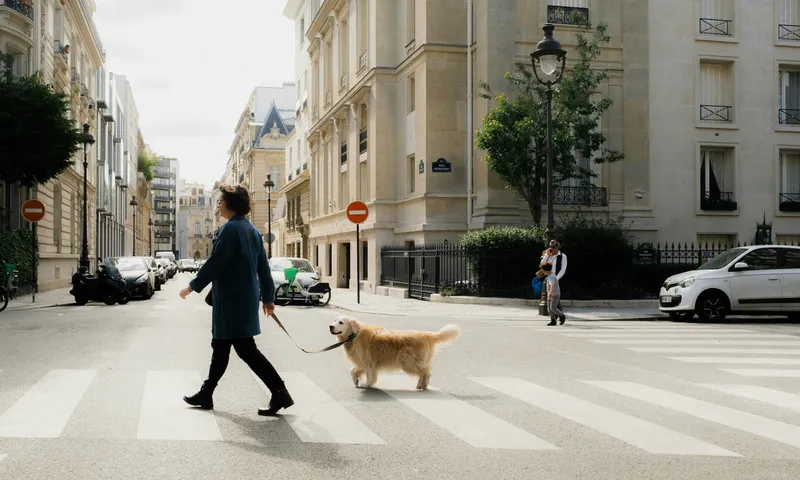
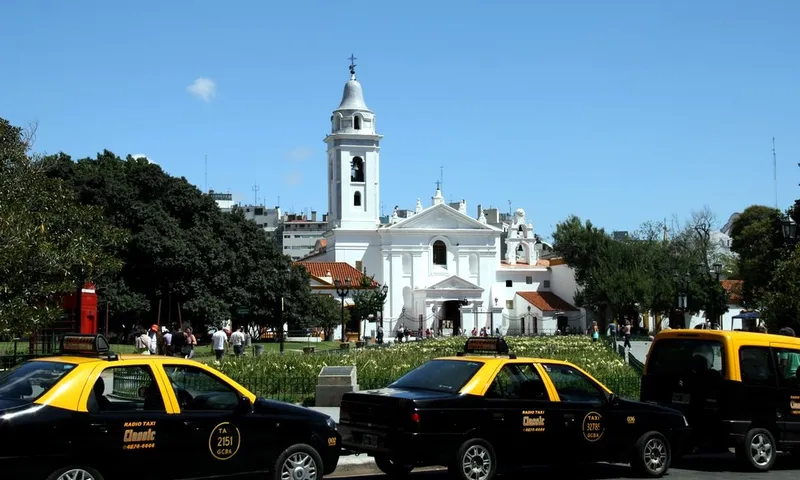
Buenos Aires is one of the most beautiful cities of Latin America, and it is certainly one of those places that you can’t get enough of. It is charming, colorful and magical, and it has a vast history and rich culture from which you can always learn a new thing. Don’t you think that a great way to begin this new year would be to travel and have an adventure in Buenos Aires? A little bit of tango, asados and mate doesn’t sound like a terrible way to begin 2024… Well, for today’s blog, we thought that we could go over some of the most remarkable places of the city that you should absolutely get to know and that will give you a proper idea of what to expect from a city like Buenos Aires.
You might’ve heard that people call Buenos Aires the Paris of Latin America, due to the breathtaking architecture that resembles the City of Lights, but that doesn’t mean that it lacks a Latin spirit! On the contrary, you’ll see how everyone has the best time of their lives dancing, eating, listening to music, partying and preserving the incredible history of the city. Undoubtedly, Buenos Aires perfectly combines European beauty with Latin energy and enjoyment. Are you curious about what you can find in this city? Let’s discover what makes it so wonderful.

The Heart of Buenos Aires:
If there’s one place where you can begin to understand what Buenos Aires is all about, it is the Plaza de Mayo, one of the most emblematic places in the city. Whether everyone gathers in order to celebrate the World Cup victory, or there are massive protests against certain policies, something is always happening at the Plaza. Think about it: it was founded in 1580, and given its key location -next to the Casa Rosada, the presidential palace- it witnessed Eva Perón’s iconic speech in 1945, the military bombings of 1955 and the protests and violent police repression during the country’s 2001 economic crisis. If you happen to be at the Plaza on a Thursday at 3:30 pm, you’ll see the heartbreaking scene of the Madres de la Plaza de Mayo holding a vigil for their missing children and grandchildren. This group of women are the mothers and grandmothers of the children that “disappeared” (in reality, they were abducted by the state during the military dictatorship that ruled Argentina from 1976 until 1983) and haven’t been found. Although it is something really difficult to see, it summarizes a very important part of Argentina’s history and its people’s fight for social justice and peace.
Not very far from the Plaza de Mayo, you’ll find the Obelisk, one of the most famous landmarks of the city. This huge pyramid was presented in 1936 to commemorate the first anniversary of the country’s independence from Spain, and since then, it has become an essential symbol of Buenos Aires. Now, the best part of going from the Plaza de Mayo to the Obelisk is walking through a passage of numerous souvenir shops, restaurants and notable cafés, waiting for you to pause for a second and enjoy one of Argentina’s famous media lunas. You’re probably left wondering what is a notable café, so let us enlighten you. Throughout its history, Buenos Aires has had a thriving café culture, and usually they were the place where the illustrious met to discuss politics, art, culture and music. Jorge Luis Borges and Carlos Gardel are just some of the iconic names that have gone through the notable cafés of the city. Some of the most traditional and beloved cafés have been recognized for their importance to the city’s culture and have preserved its original decorations, becoming a time capsule in the middle of an ever changing city.
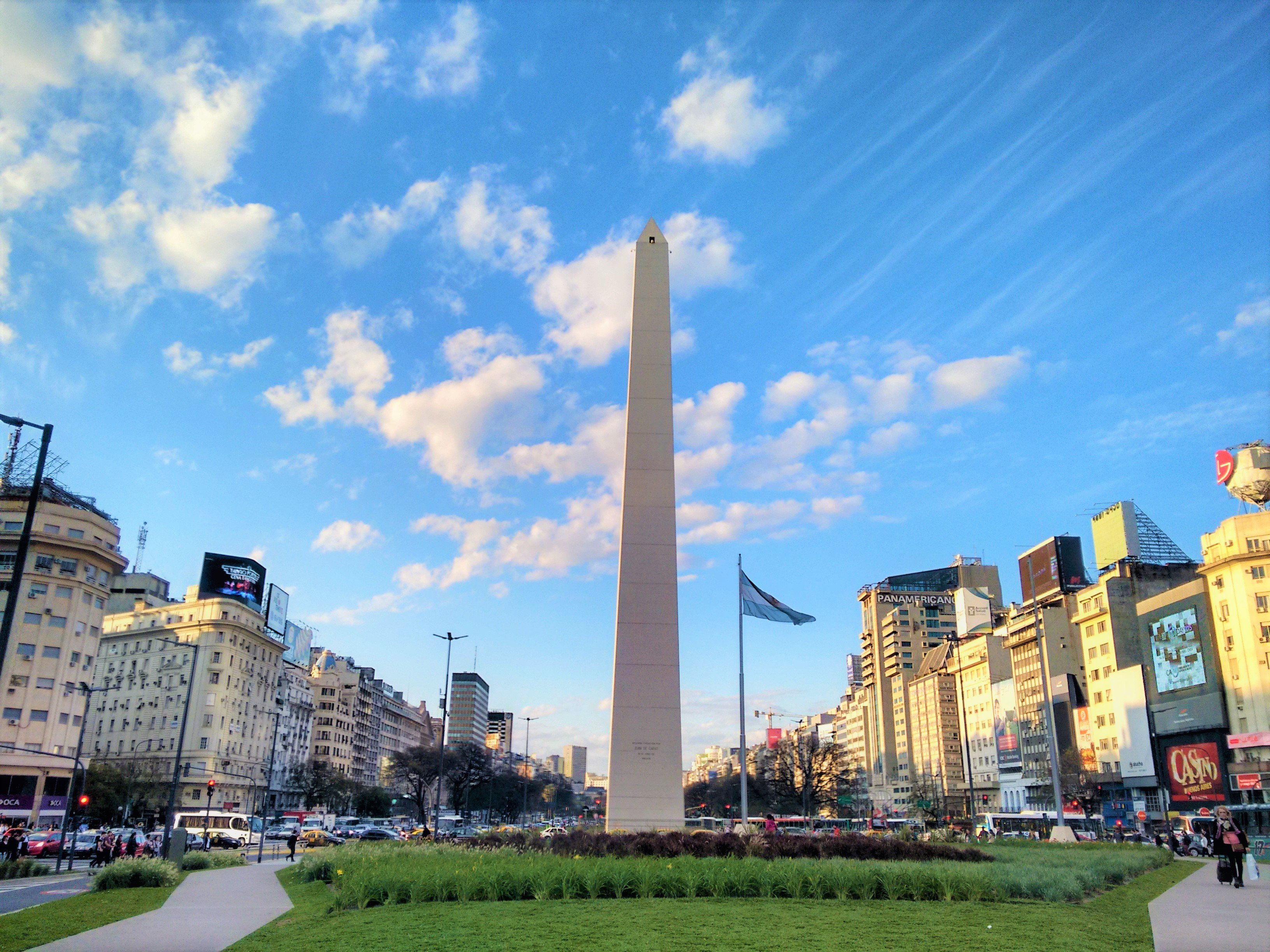
Buenos Aires’ Obelisk has witnessed the most important periods of the city's history.
The most beautiful architecture:
Since Buenos Aires is considered the Paris of Latin America, of course we need to talk about its architecture! The best thing about it, is that while going over some of the most iconic buildings of the city, we will also dive deeper into its history and culture. First off, we have to mention Palacio Barolo, a wonderful 22-story building created by Italian architect Mario Palanti, that is a very special jewel of Buenos Aires because its intricate design is inspired by the Divine Comedy of Dante (for example, its 100m height is a reference to each song and the 22 floors mirror the number of verses per song). When it was completed in 1923, it became the tallest skyscraper in South America, and even though it has been long surpassed, it still is one of the most beautiful ones. For a complete experience, go all the way up to the 16th floor of the palace to its Salón 1923, a perfect space for a glass of wine or cup of coffee with the marvelous sunset with Buenos Aires as its backdrop.
We should also mention the Teatro Colón, a seven-story theater that occupies an entire city block and is the heart of Buenos Aires’ performing life. It is over 100 years old, and it has built a reputation as one of the world’s leading venues, creating the perfect space for opera, ballet and classical music. If we’re talking about Buenos Aires architecture, we cannot avoid talking about La Recoleta cemetery, one of the city’s top attractions. You may be wondering why a cemetery would be so popular, but once you understand this place, it all makes sense. La Recoleta is where some of the most important people in the history of Argentina are buried: we’re talking about past presidents, military heroes, influential politicians and the richest people of the country… all of them, without mentioning the illustrious Evita Perón, the daughter of Napoleón and even Nobel prize winners. Thus, you can imagine that there’s an impressive set of statues and marble mausoleums ready to be admired.
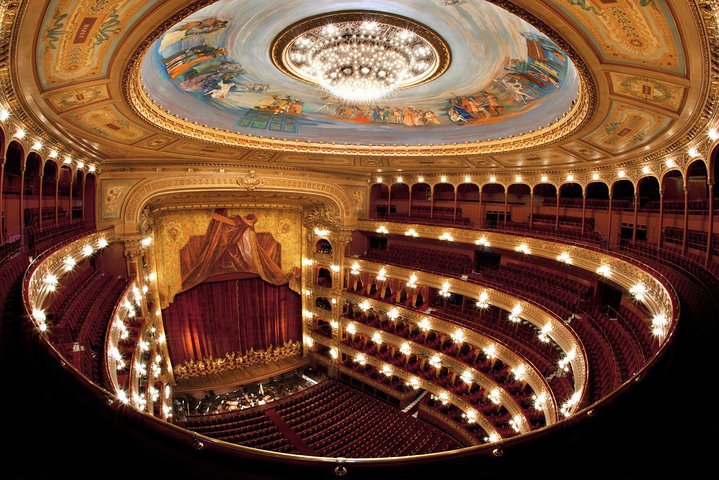
The Teatro Colón is just one example of Buenos Aires’ exquisite architecture.
Feel the music:
It would be a dishonor to talk about Argentina or Buenos Aires without mentioning tango, a sensual and beautiful dance that is part of Argentinians’ DNA. Thankfully, there are plenty of places in the city, called milongas, where you can experience tango in the most authentic way possible. San Telmo neighborhood is the perfect place to begin, because aside from the melancholic and romantic atmosphere that it creates with its belle-époque architecture, dancers will captivate you with their movements in the streets. And if you want to learn how to move like that, there are numerous milongas where, aside from the spectacular tango shows, there’s an opportunity for visitors to learn the basic tango steps.

Tango is one of Argentina’s finest creations, and a dance that keeps mesmerizing everyone who witnesses its elegant and sensual movements.
Eat like a local:
If you want to eat like a true Argentinian, there are three things that you need: empanadas, asado and mate (we’re going to give “media lunas” an honorable mention as well). For mate, “media lunas” or empanadas, you can easily find all of them in restaurants, cafés and patisseries, so you don’t have to worry about them. For the asados, you’ll have to go to a steakhouse or parrilla, in order for you to be able to enjoy the absolutely delicious Argentinian beef. It goes really well with wine, another Argentinian speciality! Remember that we just mentioned the San Telmo Market? Well, we will mention it again because it is an incredible place to taste Buenos Aires’ flavors. The market was built in 1897 by Juan Antonio Buschiazzo, the same architect who designed La Recoleta cemetery, so you can guess just how beautiful the structure is. Of course, it is the perfect place to shop for meat, have a cup of mate, enjoy a choripán or have a quick bite. Whatever you choose, it will certainly be a very authentic Argentinian experience.

If there’s a place where you can taste the authentic flavors of Buenos Aires, it is at San Telmo Market.
Thank you for joining us in our adventure across Buenos Aires! We hope that you had the opportunity to learn more about this beautiful Latin American city and that you’re ready to dive deeper into its history and culture during your next trip. Indeed, it is a great way to welcome 2024.
Enjoyed this article?