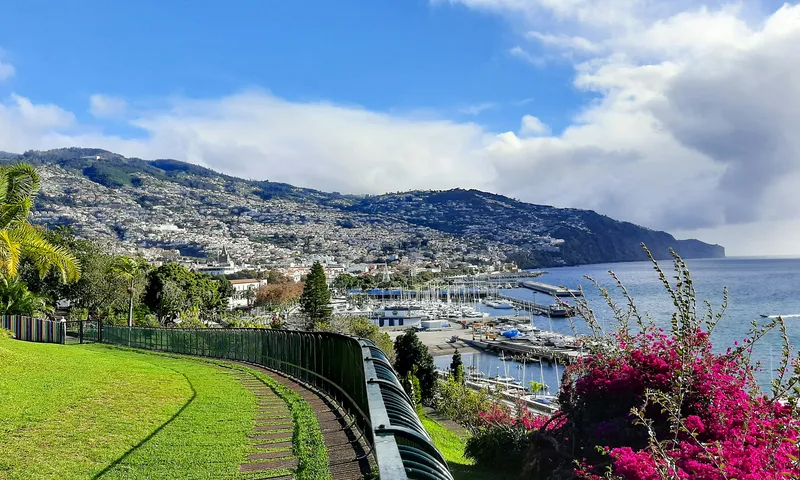
I have a soft spot for the cities most travellers skip on their way somewhere else, and Aalborg sits near the top of my list. People pass through on the train to Skagen or land at the airport and head straight for the beaches, which leaves the rest of us with a compact, walkable harbour city full of Renaissance merchant houses, a free castle dungeon, a medieval friary hidden under a shopping street and a Viking burial field across the water. You can see the best of it in a day with nothing more than comfortable shoes and a decent appetite, so here is the route I'd hand a friend.
Quick Guide: Aalborg Walking Tour Key Takeaways
- Primary Recommendation: Start at Budolfi Cathedral and walk north through the old town to the Limfjord. The historic core is small enough to cover in a relaxed morning.
- Top Choice for History: Aalborghus Castle. The courtyard and ramparts are free and open all year. Insider detail: from May to October you can also go down into the dungeon (weekdays) and the underground passages (daily) at no cost.
- Value Pick: Lunch at Aalborg Street Food in the old Boform furniture factory in Vestbyen, followed by a slow wander past the tiny painted houses of Fjordbyen. Ideal for budget travellers and anyone who prefers neighbourhoods to monuments.
- The Best Way to See the City: Take a private, personalized walking experience with Lokafy in Aalborg and discover the stories behind the merchant houses, the friary and the fjord with a local.
Is Aalborg a Walkable City?
Yes, and very much so. Aalborg is Denmark's fourth-largest city, but its historic centre is a tight cluster of streets running down to the Limfjord, the long fjord that cuts across the top of Jutland. Algade, one of the oldest streets in town, grew up on a natural tongue of chalk that rose above the water, and most of what you'll want to see sits within a short walk of it.
A good Aalborg walking tour links three areas: the medieval and Renaissance old town around Budolfi, the regenerated harbourfront to the east, and Vestbyen, the western district where the old docks and fishermen's sheds have become the city's favourite hangout. The core route below covers roughly 4 to 5 km and takes three to four hours with stops. Add Vestbyen and you have a full, very satisfying day.
One quick spelling note before you set off: you'll see both "Aalborg" and "Ålborg". The city has chosen to keep the traditional double-a spelling, so that's what you'll find on signs around town.
Stop 1: Budolfi Cathedral and Gammeltorv
Begin at Budolfi Cathedral on Algade, a white Gothic church built in the 1300s and named after Saint Botolph, an English saint long associated with travellers. Fitting, really. Listen for the carillon, which plays on the hour, then step inside for a few minutes of calm before the day gets going.
Right next door, the Aalborg Historical Museum at Algade 48 holds Aalborgstuen, a merchant's room from 1602 often described as the best-preserved Renaissance interior of its kind in Denmark. If you only have time for one indoor stop in the old town, make it this room.
From the cathedral it's a minute's walk to Gammeltorv, one of the city's oldest squares. The pale Baroque building facing you is the Old Town Hall, dating from 1762. In December the square hosts a Christmas market, so time your visit for late in the year if mulled wine is your thing.
Stop 2: Jens Bang's Stone House
Turn onto Østerågade and you'll hit Aalborg's most photographed building. Jens Bang's Stone House at number 9 went up in 1624 for a merchant who was the richest man in town but was never allowed a seat on the city council. Look closely at the façade: it's covered in grotesque carved faces, and local gossip has always held that they're caricatures of Bang's enemies. One carved head on the gable sticks its tongue out in the direction of the town hall. Petty? Absolutely. Four hundred years later, it still makes people laugh.
The building housed the Svane pharmacy from 1666 until 2014. These days the upper floors aren't generally open, but the vaulted cellar is home to Duus Vinkjælder, a restaurant serving traditional Danish lunch under brick arches. Order smørrebrød (open sandwiches on rye) and you've ticked off the most Danish lunch possible in the most Aalborg setting possible.
A few steps away, also on Østerågade near Nytorv, is Jørgen Olufsen's merchant house, built in 1616 by the mayor of the day, who happened to be Jens Bang's half-brother. It's one of the best-preserved Renaissance merchant courtyards in the country. The brothers clearly did not believe in doing things by halves.
Stop 3: Hjelmerstald, the Street Everyone Photographs
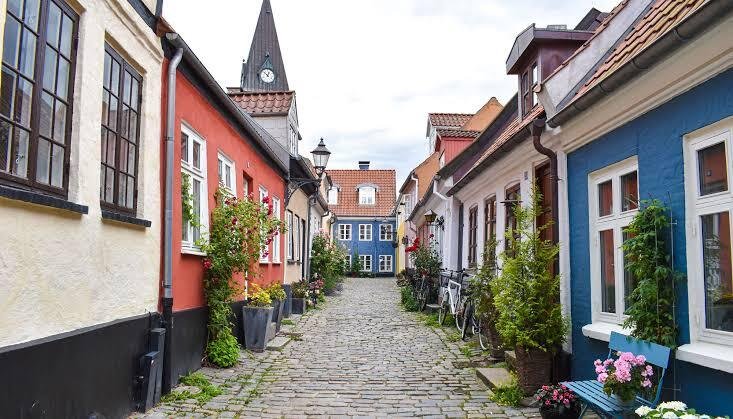
Head back toward Algade and duck into Hjelmerstald, a short cobbled side street that bends at an angle near Vor Frue Kirke (the Church of Our Lady). The name roughly means "horse stable", and that's what the area was when the street was laid out in the 1600s. Most of the little houses are 200 to 300 years old, with low doorways and crooked window frames, and they're still lived in, so keep your voice down and resist the urge to press your nose to the glass.
This is the moment where Aalborg stops feeling like a regional capital and starts feeling like a storybook. Locals love it too: these are some of the most sought-after homes in the city.
Stop 4: The Friary Under the Shopping Street
Back on Algade, look for a glass elevator outside the Salling department store at Algade 19. It drops you three metres below the pavement into the Gråbrødrekloster Museet, the excavated ruins of a Franciscan friary established around 1250. The ruins were found during construction work, and you can walk among the foundations and old cellar walls while shoppers wander overhead with no idea you're there. You pay a small fee by card at the elevator, and the price covers everyone who fits inside, so bring friends.
While you're at Salling, ride up to the rooftop. It has a panorama over the old town and harbour plus a glass skywalk that sticks out over the street, which is a good test of how much you trust Danish engineering.
Stop 5: Helligåndsklostret and C.W. Obels Plads
Walk east to C.W. Obels Plads and find the alley leading into the Monastery of the Holy Ghost (Helligåndsklostret). Founded in 1431, it served as the town's hospital until 1953 and is one of the best-preserved medieval complexes in Denmark. The courtyard is open to wander, and on a grey day it feels like stepping out of the wind into a different century.
The best story here is a modern one. During the Second World War, the monastery became the base for the Churchill Club, a group of Aalborg schoolboys who formed one of Denmark's earliest resistance groups. The interior, with wall paintings from the early 1500s, can only be seen on a guided visit, so check ahead if you want to go inside.
Back on the square, Søgaards Bryghus is a brewery and restaurant with the brew kit in the basement behind a glass wall. Next door, the Missing Bell brewpub pours house beers from 24 taps in a room fitted out with the interior of an old church. If your walking tour needs a mid-afternoon pause (and it does), this is the place.
Stop 6: Aalborghus Castle and Its Dungeon
Now head north toward the water. Aalborghus Castle doesn't look much like a fortress. It's a long, half-timbered building with whitewashed walls, built by King Christian III from 1539 to the mid-1550s, and only the east wing survives from the original. It still works as a state administrative office, so you can't go inside the main building.
What you can do is walk the courtyard and the old ramparts, open daily from 8am to 9pm all year. From May through October, the tiny, gloomy dungeon opens on weekdays from 8am to 3pm, and the underground passages (the casemates) open daily from 8am to 9pm. Entry is free. Bring a phone torch and a sense of humour about low ceilings.
Stop 7: The Waterfront, From Utzon to the Music House
Step out of the castle grounds and you're on the Limfjord. Fifteen years ago this stretch was industrial docks. Today it's a long promenade with lawns, moored boats (including an old icebreaker that now works as a restaurant) and, in summer, a harbour bath where locals swim in the fjord.
Right by the castle is the Utzon Center, the last building designed by Jørn Utzon, the architect of the Sydney Opera House. Utzon spent his childhood in Aalborg, and the centre was completed in 2008, the year he died. The silver, wave-like roofline is worth a slow lap even if you skip the exhibitions inside.
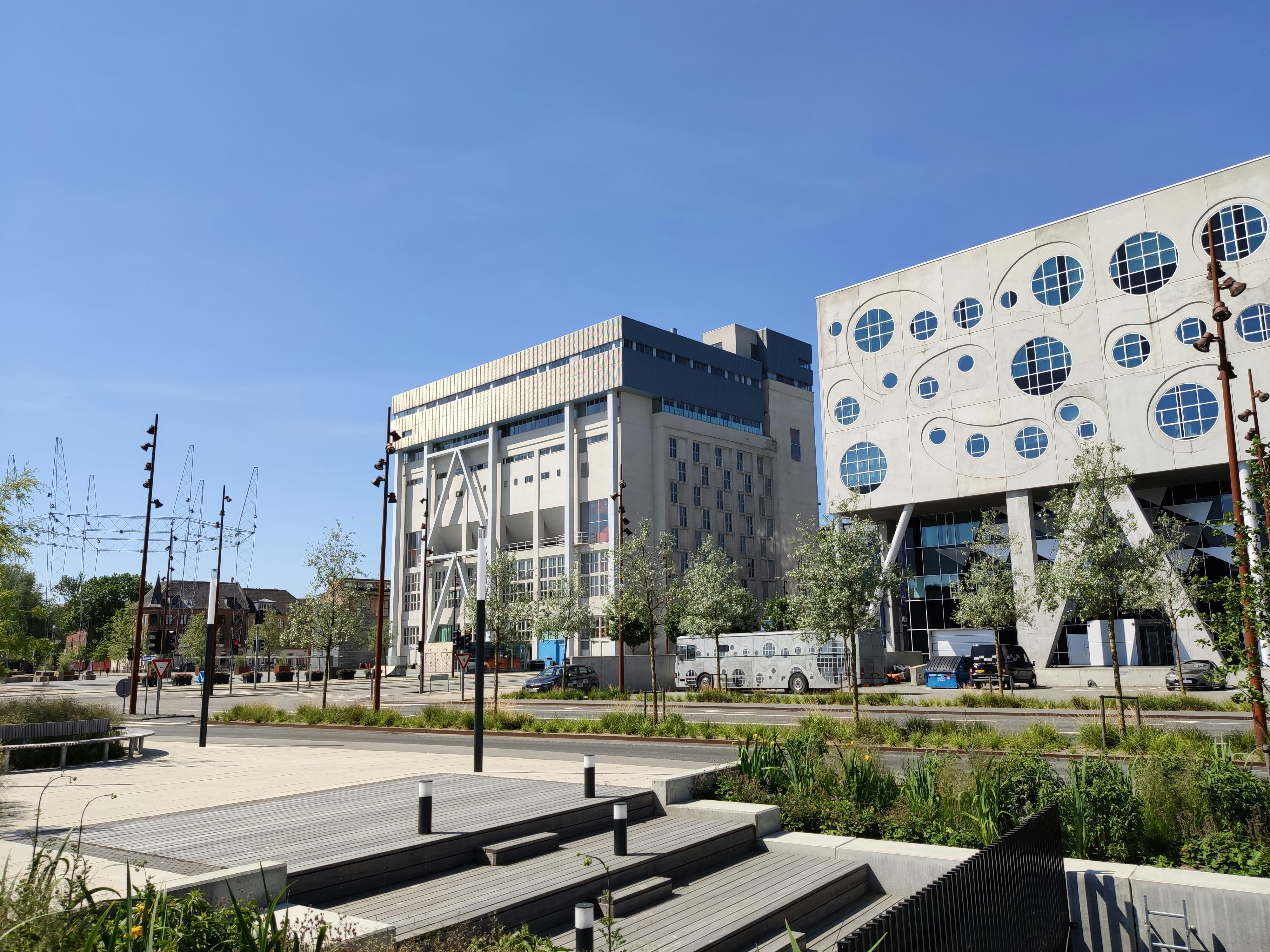
Keep walking east and you'll reach Musikkens Hus, the city's concert hall, designed by the Austrian firm Coop Himmelb(l)au. It looks a bit like a white box that's been dropped and dented on purpose, and it's become one of the most recognisable shapes on the skyline.
For a postcard view of all this, walk onto Limfjordsbroen, the road bridge across the fjord, and look back at the city. On a clear evening the light over the water is ridiculous.
Afternoon Option: West to Vestbyen and Fjordbyen
If the old town is Aalborg dressed up, Vestbyen is Aalborg in its weekend clothes. Walk west along the water (or cut through the streets behind the harbour) to Skudehavnen and Aalborg Street Food, housed in the old Boform furniture factory at Skudehavnsvej 35 to 37. It brings together kitchens serving food from all over the world under one industrial roof, with outdoor seating by the harbour.
Keep going and you'll find Fjordbyen, one of the most charming oddities in Denmark. It started as a cluster of self-built fishermen's sheds back in the 1930s, and the community has sat on its current spot since 1980. Today there are 122 little houses, painted in every colour imaginable and given grand names like Amalienborg and Badehotellet. Residents rent the land from the city and must have a registered address elsewhere in the municipality, which makes Fjordbyen the world's most stylish collection of garden sheds. Walk through respectfully: these are people's homes.
Right next door is Vestre Fjordpark, a waterside park opened in 2017 with a sandy bathing beach, a 50-metre pool, a diving tower with a climbing wall and a sauna. On sunny days it's where half the city seems to end up. From the old town, plan on 30 to 40 minutes on foot to reach this end of town.
Hungry again? Grøn Bakery & Café at Bådehavnsvej 13 opened in 2025 in the old pancake house premises and bakes through the day, so there's a decent chance something will still be warm.
Worth the Detour: Art, a Tower and Viking Graves
Kunsten Museum of Modern Art. Designed by Alvar Aalto with Elissa Aalto and Jean-Jacques Baruël, Kunsten opened in 1972 and is the only museum building outside Finland that Aalto designed. The white marble, the copper lamps and the sculpture park are as much the attraction as the art. It's on Kong Christians Allé, a short walk from the train station.
Aalborgtårnet. This 55-metre lattice steel tower sits on Skovbakken hill, so the viewing platform ends up about 105 metres above sea level. To get up, you ring a bell at the base and an elevator gets sent down for you, which is a lovely bit of old-fashioned theatre. It closes in strong wind, so save it for a calm day and check it's open before you climb the hill.
Lindholm Høje. Across the fjord in Nørresundby, about 4.5 km from the centre, lies one of the best-preserved ancient burial grounds in Scandinavia. There are close to 700 graves from the Iron Age and Viking Age, many marked by stones laid out in circles and ship shapes. Drifting sand buried the whole site around the year 1000, which is why so much survived. Walkers can cross Limfjordsbroen and continue uphill, while local buses from the centre take roughly 15 to 20 minutes. The Viking Museum next to the field charges adults DKK 110 and lets under-18s in free. It closes on Mondays outside July and August and shuts for the Christmas and New Year fortnight.
Where Locals Eat and Drink Along the Route
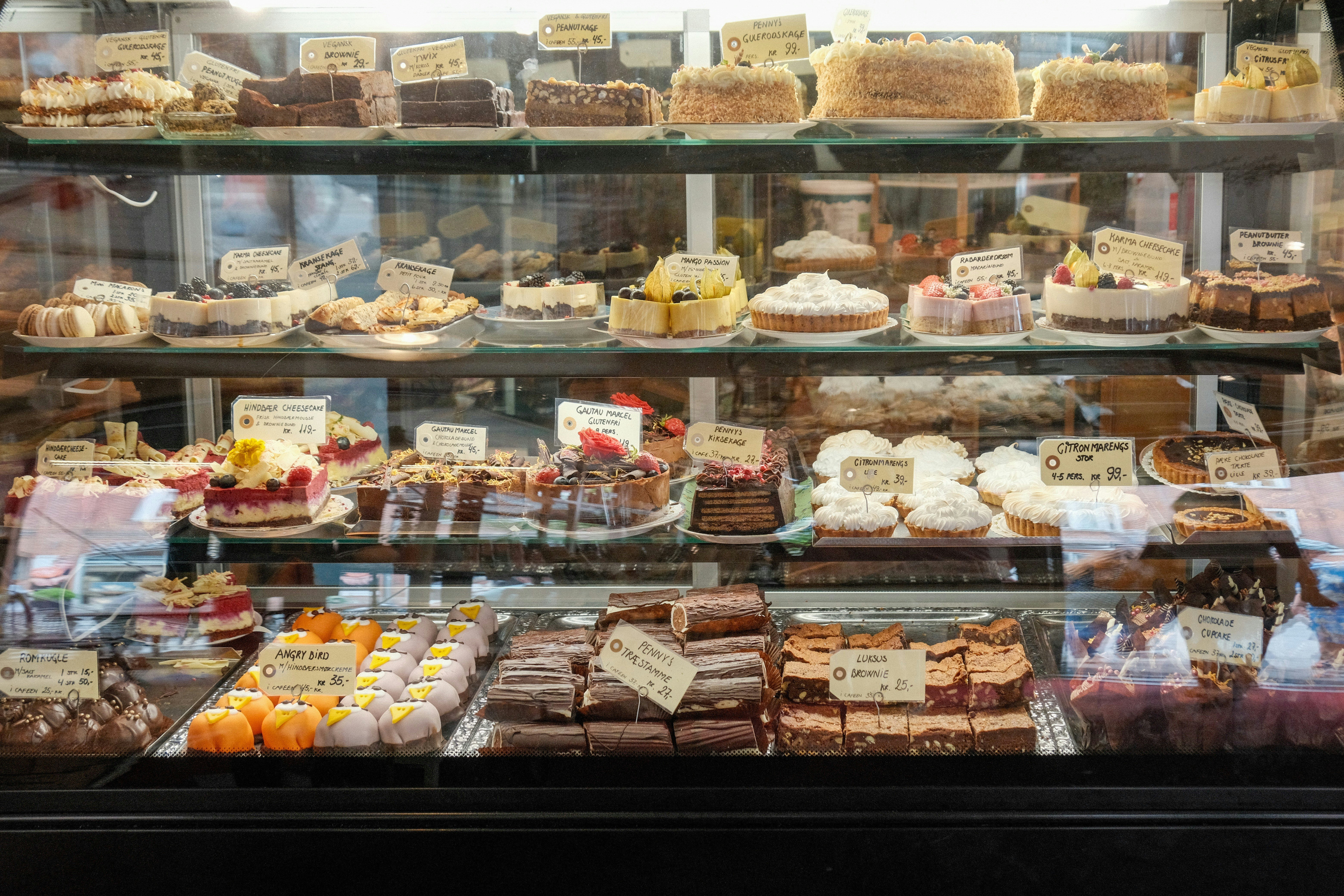
Ask people in Aalborg where to eat and you'll hear about bakeries before restaurants. A few names worth knowing:
- Slotsbageren: Locals rave about the chocolate buns. Eat them warm, because the chocolate topping sets hard once they cool. Opening hours can be irregular, so treat it as a happy accident rather than a fixed stop.
- Othello Bageriet: Known around town for its Othello layer cake, which many Aalborg families associate with birthdays and celebrations.
- Kochs Kaffebar (Algade 23): A solid coffee stop right on the route between the cathedral and the friary.
- Behag Din Smag (Slotsgade 16a): A coffee bar where you can choose from a long list of brewing methods, handy on the way to the castle.
- Café Noer (Møllegade 2): A newer, relaxed café for breakfast or a light lunch.
- Duus Vinkjælder: Traditional Danish lunch in the cellar of Jens Bang's Stone House.
- Søgaards Bryghus and Missing Bell: House-brewed beer on C.W. Obels Plads.
- Aalborg Street Food: The easy group option in Vestbyen when nobody can agree on lunch.
After dark, Jomfru Ane Gade is the city's famous party street, with one of the highest concentrations of bars in Denmark. It's loud and fun on a weekend night and very quiet on a Tuesday morning, so walk through it in daylight to see the old buildings and come back later if you're in the mood.
One last food fact to win you a free drink at a bar quiz: Aalborg gave its name to Denmark's best-known akvavit, Aalborg Taffel, nicknamed "Rød Aalborg". The distillery in town closed in 2015 and production moved to Norway, but ordering a cold shot with your herring is still the local way to end a lunch.
Suggested Itineraries
Half a day (3 to 4 hours): Budolfi Cathedral and the Historical Museum, Gammeltorv, Jens Bang's Stone House, Hjelmerstald, the underground friary, Helligåndsklostret, then Aalborghus and a stroll along the waterfront to the Utzon Center.
One full day: Do the half-day route in the morning with lunch at Duus Vinkjælder. In the afternoon, walk west to Aalborg Street Food, Fjordbyen and Vestre Fjordpark. Finish with sunset from Limfjordsbroen and an evening on Jomfru Ane Gade.
Two days: Add Kunsten and Aalborgtårnet on the second morning, then cross the fjord to Lindholm Høje in the afternoon (remember it's closed on Mondays outside high summer).
Practical Tips for Walking Aalborg
- Wear proper shoes. Hjelmerstald and the old lanes are cobbled, and the castle passages are uneven.
- Pack for wind. The Limfjord funnels weather straight through town. A light waterproof layer earns its place in your bag every month of the year.
- Plan around the seasons. The castle dungeon and casemates open from May to October, and the harbour bath is a summer thing. Winter brings the Christmas market on Gammeltorv and far fewer visitors.
- Bring a card. Denmark runs almost entirely on card payments, including the friary museum's elevator.
- Check Monday closures. Lindholm Høje closes on Mondays outside July and August, so build your days around that.
Take a Private Walking Experience With Lokafy in Aalborg

A self-guided route gets you to the right buildings. A local gets you the stories that don't fit on a plaque: which bakery sells out first, why everyone in town has an opinion about Jomfru Ane Gade, and where to sit when the wind comes off the fjord. A Lokafyer is a local who loves their city and builds the walk around what you care about, with no group, no script and no fixed route.
Interested in Renaissance merchant houses and the Churchill Club? Want to spend the afternoon eating your way through Vestbyen? Travelling with kids who need a playground stop at Vestre Fjordpark? Tell your Lokafyer and they'll shape the day around it.
Take a private, personalized walking experience with Lokafy in Aalborg and discover the city with someone who calls it home.
Frequently Asked Questions
Is Aalborg a walkable city?
Yes. Aalborg's historic centre, the harbourfront and the Vestbyen district are all connected by flat, pedestrian-friendly streets along the Limfjord. Most old-town sights sit within a few minutes of each other, and you can reach the far west end of town around Fjordbyen in 30 to 40 minutes on foot.
How long does an Aalborg walking tour take?
The core old town and waterfront route covers roughly 4 to 5 km and takes three to four hours with stops for the cathedral, the underground friary and the castle. Adding Vestbyen, Fjordbyen and Vestre Fjordpark turns it into a comfortable full day.
What can you see for free on a walk around Aalborg?
Plenty. Aalborghus Castle's courtyard and ramparts are free all year, and its dungeon and underground passages are free from May to October. Hjelmerstald, the courtyard of Helligåndsklostret, the waterfront promenade, the exterior of the Utzon Center, Fjordbyen and Vestre Fjordpark cost nothing to enjoy.
Can you walk from Aalborg to Lindholm Høje?
You can. The site is about 4.5 km from the centre in Nørresundby, reached by crossing Limfjordsbroen and continuing uphill. If you'd rather save your legs, local buses from central Aalborg take roughly 15 to 20 minutes. The museum is closed on Mondays outside July and August.
Is one day enough for Aalborg?
One day is enough to see the old town, the castle, the waterfront and Vestbyen at a relaxed pace. Stay a second day if you want to add Kunsten, Aalborgtårnet and the Viking burial ground at Lindholm Høje.
What food should you try in Aalborg?
Start with smørrebrød, the Danish open sandwich, ideally at a traditional lunch spot such as Duus Vinkjælder in the cellar of Jens Bang's Stone House. Locals will also point you to a warm chocolate bun from Slotsbageren and a slice of Othello layer cake. For something casual, Aalborg Street Food in Vestbyen has kitchens covering cuisines from around the world.
When is the best time to do a walking tour in Aalborg?
May to September gives you the longest days, the open castle dungeon and casemates, and the harbour bath. October is still good for walking, with the castle underground open until the end of the month. Winter is cold and windy but brings the Christmas market on Gammeltorv and a cosy, crowd-free old town.
Enjoyed this article?