
The first time I came to Busan, I made the rookie mistake of eating right on the beach. The seafood was fine and the bill was not, and a retiree at the next table leaned over to tell me I was paying tourist tax. He scribbled three restaurant names on a napkin and told me to take the subway inland. That napkin rearranged my entire trip.
Busan turned out to be one of the best eating cities in Korea, and almost none of the good stuff happens where the guidebooks send you. I’ve expanded the details on that napkin and more insights from locals into a full guide: the bowls, the markets, and the back-alley counters where people who live here go to eat.
Quick Guide: Where Locals Eat in Busan
- Primary recommendation: Dwaeji gukbap, the pork and rice soup that defines the city. Start in the Seomyeon Market soup alley, or go straight to a Michelin Bib Gourmand pick like Hapcheon Gukbapjip in Nam-gu.
- Top choice for noodles: Milmyeon at Gaya Milmyeon near Nampo, the cold wheat noodle that was invented in this city.
- Best street snack: Ssiat hotteok, a seed-stuffed pancake, at BIFF Square in Nampo.
- Value pick and vibe: The Seomyeon night-eating alleys, where nakgopsae, jokbal, and gukbap run cheap and late, perfect for solo travelers and first-timers who want to point and eat.
- The best way to eat the city: Take a private, personalized walking experience with Lokafy in Busan and find the counters guidebooks miss with a local who actually eats there.

What Busan Eats, and Why It Tastes Different
Busan is a port city, so the seafood is the freshest in Korea and the prices are lower than Seoul for the same haul. But the dishes the city is famous for were born from something harder. During the Korean War, refugees from across the country crowded into Busan and cooked with what they could find. Out of that came a small set of dishes you taste here better than anywhere else: dwaeji gukbap (pork and rice soup), milmyeon (cold wheat noodles), eomuk (fish cake), and nakgopsae (a spicy stir-fry of octopus, intestine, and shrimp). Add the raw fish culture of the harbor and the street snacks of the old downtown, and you have a city built for eating from morning to very late at night.
The trick to eating well in Busan is geography. The good food clusters in working neighborhoods like Seomyeon, Nampo, and the university district in Nam-gu, not along the famous beaches. Learn three or four areas and you can eat like a local for a week.
Dwaeji Gukbap: The Soup Busan Runs On
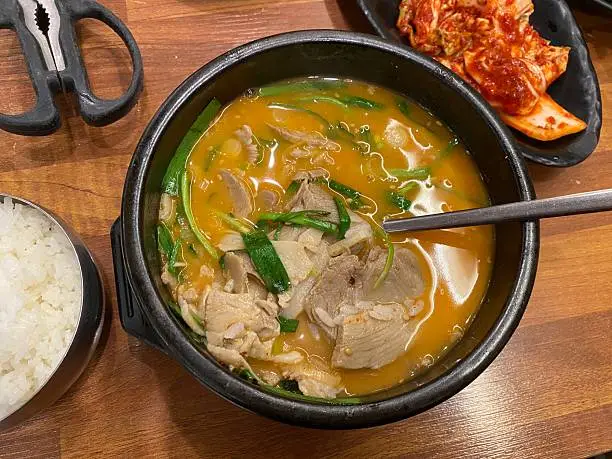
Dwaeji gukbap is a bowl of milky pork-bone broth poured over rice and topped with tender slices of boiled pork. It is the single dish that says "Busan" to any Korean, and the city even has a Dwaeji Gukbap Street. You season the bowl yourself at the table with salted shrimp (saeujeot), chives, and a dark fermented paste, which is half the fun. Expect to pay around 10,000 to 12,000 won for a bowl that easily counts as a full meal.
Where you eat it matters, because every shop runs a slightly different broth. These are the ones locals send people to:
- Songjeong Samdae Gukbap (Seomyeon) sits in the Seomyeon Market soup alley and has refined three generations of recipe. The menu splits into pork slices, blood sausage (sundae), and intestine versions, so you can mix and match. It is the easiest first bowl in the city, a short walk from Seomyeon Station.
- Hapcheon Gukbapjip (Nam-gu) on Yongho-ro holds a Michelin Bib Gourmand for a reason. The broth is clean and deeply savory rather than heavy, and the boiled pork slices (suyuk) sell out daily, so arrive early. Solo diners should avoid the 11am to 1pm rush.
- Namakzip (Nam-gu), in the W Square complex on Bunpo-ro, builds a lighter broth with more vegetable stock, so it tastes clean and easy. Another Bib Gourmand listing, and one of the most comfortable rooms in town for eating alone.
- Anmok (Gwangalli) near Gwangnam-ro takes the dish somewhere unexpected, with a broth that surprises people who think they know gukbap. It carries a Bib Gourmand and a "worth queueing for" note, and the six side dishes, including seasoned chives and sea pineapple, are part of the show.
- Jeongjitgan (Saha-gu) on Bibong-ro is open 24 hours, which makes it the late-night and early-morning answer when nothing else is serving. Milky broth, build-your-own toppings, and cold buckwheat noodles on the side.
If you only have time for one, eat in the Seomyeon alley to feel the energy, then chase a quieter, better bowl in Nam-gu the next morning. Locals treat gukbap as breakfast and hangover food as much as dinner, so an early bowl is the most authentic way to order it.
Milmyeon: The Cold Noodle Busan Invented
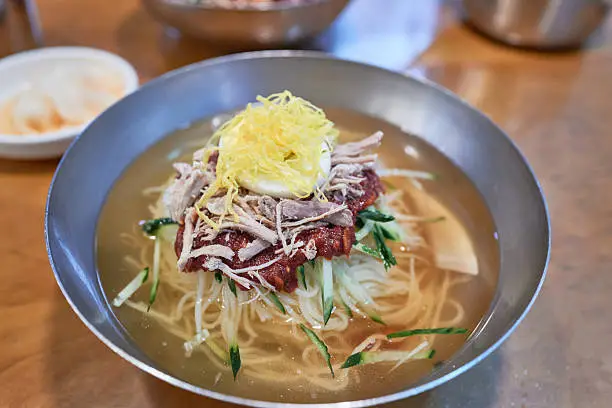
When the war cut off the buckwheat supply that northern refugees used for cold noodles, cooks in Busan swapped in cheaper wheat flour and created milmyeon, a chewy cold noodle in icy broth that now belongs to this city alone. On a hot day it is the most refreshing thing you can order, and Busan summers run long and humid.
Gaya Milmyeon on Gwangbok-ro, a few minutes from the Nampo shopping streets, is the classic. The kitchen floats a thin sheet of ice on the savory broth, and the noodles stay soft and springy underneath. Order mul milmyeon for the cold soup version, or bibim milmyeon if you want the spicy sauced one, and add a plate of fat dumplings on the side. There is also a branch near Haeundae if you are over on the beach side. For a second opinion, Choryang Milmyeon in Dong-gu, near Busan Station, is the other name old-timers will give you.
Jagalchi and the Raw Fish Ritual
No food trip to Busan skips Jagalchi Market, the oldest and largest seafood market in Korea, sitting right on the water in Nampo. The ritual is simple and very local: pick your fish from the vendors on the ground floor, agree a price, then carry it upstairs where a restaurant slices it into hoe (raw fish) and sets you up with sides, broth, and soju for a small fee. You are eating something that was swimming an hour earlier.
Go with an appetite and a little nerve. Point at what looks good, watch what the Korean tables around you are ordering, and let the vendor steer you toward what is in season. Flatfish, sea bream, and abalone are safe, delicious starting points. For a tamer version of the same idea, the raw fish centers around Millak, between Gwangalli and Haeundae, do the pick-and-eat routine in a more relaxed seaside setting.
BIFF Square After Dark: Hotteok, Eomuk, and Street Snacking

Walk ten minutes inland from Jagalchi and you hit BIFF Square, the old film-festival plaza in Nampo that turns into a street-food run after sunset. The thing to find here is ssiat hotteok, Busan's upgrade on the standard sweet Korean pancake. The dough is fried, slit open, and packed with sunflower seeds, pumpkin seeds, pine nuts, and brown sugar, so it comes out sweet, nutty, and dangerously hot in the middle. It costs around 2,000 won, the stall with the longest line is the one you want, and it has been a regular on Korean variety shows for years. Reach it from Jagalchi Station Exit 7 in about five minutes.
While you are snacking, get eomuk, the Busan fish cake. This is the city's other claim to fame, and the version here is better than anywhere else in Korea because of the fresh catch it is made from. Skewers simmered in hot broth cost a few thousand won and warm you up on a cold night. For the source, cross Yeongdo Bridge from Nampo (Nampo Station Exit 8) to Samjin Eomuk in Yeongdo, the oldest fish cake maker in the country. The flagship looks like a bakery, you grab cakes off the rack with tongs, and the upper floor runs a small museum and a make-your-own station. There is a handy outlet inside Busan Station too if you are short on time.
Nakgopsae and the Seomyeon Night Crawl
For your big night-eating session, go back to Seomyeon, the central district that works like the city's stomach. The dish to chase is nakgopsae, a fiery stir-fry of octopus (nakji), beef intestine (gopchang), and shrimp (saeu) in a sweet-and-spicy sauce, all named by smashing the three ingredients together. It became a minor celebrity after showing up in Korean dramas, but locals have been eating it for decades. Gaemijip in Seomyeon is the go-to. Tell them your spice level, because the standard setting has teeth, and finish by mixing rice and crumbled seaweed into the leftover sauce at the bottom of the pan.
Seomyeon rewards wandering. The market hides a famous hand-cut noodle counter, Gijang Sonkalguksu, where the kalguksu broth is clean and the noodles are pulled by hand. A few alleys over you will find the jokbal and bossam strip, all braised pig trotter and lettuce wraps, open late and built for sharing over drinks. None of it needs a reservation. You follow the steam and the lines.
Where to Eat by Neighborhood

If you remember nothing else, remember which area does what:
- Seomyeon (Busanjin-gu): the all-rounder. Gukbap alley, nakgopsae, hand-cut noodles, jokbal, and late hours. Best base for eating.
- Nampo, Jagalchi, and BIFF Square (Jung-gu): harbor seafood, raw fish, milmyeon, and the street-snack run. The old downtown.
- Nam-gu (Daeyeon and Yongho-dong): the quiet gukbap heartland near the universities, where the Michelin-listed soup shops live.
- Gwangalli (Suyeong-gu): beach views with serious food behind them, including Anmok's gukbap and the Millak raw fish centers.
- Yeongdo: a short hop across the bridge for the original Busan fish cake.
See Busan Through a Local's Eyes
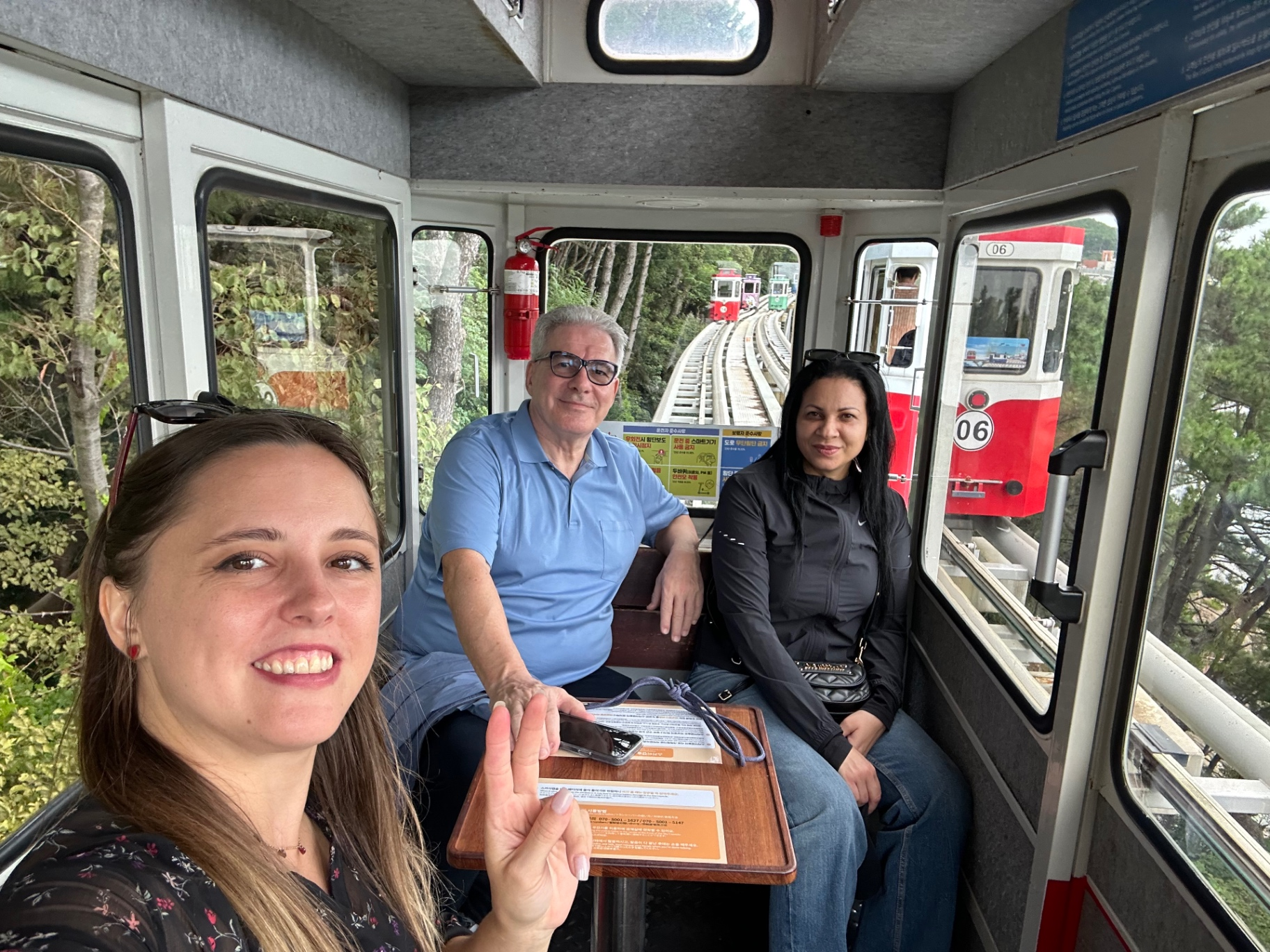
Reading about a city's food only gets you so far. The counters that never make it onto a map, the stall the napkin guy meant, the seasonal fish a vendor swears by that week, those come from someone who lives here. That is the whole idea behind Lokafy. Book a private, personalized walking experience with a Busan local and spend a few hours eating and wandering the way a friend in the city would show you, beyond the tourist strip and into the alleys where the real meals happen.
Frequently Asked Questions
What food is Busan known for? Busan is known for dwaeji gukbap (pork and rice soup), milmyeon (cold wheat noodles), eomuk (fish cake), and nakgopsae (a spicy octopus, intestine, and shrimp stir-fry), along with some of the freshest raw seafood in Korea thanks to its port. Most of these dishes were created or perfected in Busan and taste best here.
Where do locals eat in Busan? Locals eat in working neighborhoods rather than along the beaches. Seomyeon has the gukbap alley, nakgopsae, and late-night food. Nampo and Jagalchi cover seafood and street snacks. The Nam-gu university district near Daeyeon is where the Michelin-listed soup shops are. As a rule, the further inland you eat from a famous beach, the more local and better-value the meal.
What is the best dwaeji gukbap in Busan? For a first bowl, Songjeong Samdae Gukbap in the Seomyeon Market soup alley is the easiest and most atmospheric. For a quieter, refined version, the Michelin Bib Gourmand shops in Nam-gu, Hapcheon Gukbapjip and Namakzip, are local favorites. Anmok near Gwangalli offers an unconventional take that is worth the queue.
Is Busan food cheaper than Seoul? Yes, in general. Busan's port means seafood is fresher and often cheaper than in Seoul, and the city's signature dishes like dwaeji gukbap and milmyeon are inexpensive comfort food, usually well under 12,000 won a bowl. Prices climb only near the main beaches, which is exactly why locals eat inland.
What should I eat at Jagalchi Market? Pick a live fish from a ground-floor vendor, agree a price, then take it upstairs where a restaurant slices it into hoe (raw fish) and serves it with sides for a small fee. Flatfish, sea bream, and abalone are reliable choices. It is the most authentic seafood experience in the city and a Busan ritual in itself.
Where can I find ssiat hotteok in Busan? The famous seed-stuffed hotteok is at BIFF Square in Nampo, about five minutes from Jagalchi Station Exit 7. Look for the stall with the longest line. A seed hotteok costs around 2,000 won and is stuffed with sunflower seeds, pumpkin seeds, pine nuts, and brown sugar.
How many days do I need to eat my way through Busan? Two to three days is enough to hit the essentials: a gukbap breakfast, milmyeon and street food in Nampo, raw fish at Jagalchi, and a Seomyeon night crawl for nakgopsae. A local guide can compress the highlights into a single well-planned day if your time is short.
Enjoyed this article?


