Brussels has a Grand Place problem. The central square is genuinely one of the most beautiful in Europe I’ve ever seen, ringed by gilded guild houses and buzzing at all hours, and immediately around it are dozens of restaurants with English menus in the window, laminated photos of moules-frites, and prices that reflect your proximity to a UNESCO landmark rather than the quality of anything on the plate.
Here is the thing most people visiting Brussels do not know: some of the best food in Western Europe is being eaten about fifteen minutes' walk away, in neighbourhoods with no particular reputation on travel blogs, by Belgians who are very quietly having an excellent time. I will spill it all.
This guide covers where Brussels locals actually eat. That means a few classics that genuinely deserve their reputation, a handful of neighbourhood spots most visitors never find, and specific dishes worth ordering by name in each of them.
Quick Guide: Brussels Belgian Comfort Food
Primary Recommendation: The neighbourhoods of Saint-Gilles and Ixelles (particularly around Matongé and Rue des Chartreux) offer the most authentic Brussels dining without the tourist pressure of the centre.
Top Choice for Traditional Belgian Classics: Fin de Siècle, near Place Sainte-Catherine. Order the carbonnade flamande or stoemp with sausage, pair it with a Leffe or Tripel, and go early because the place fills fast and does not take reservations.
Top Choice for Neighbourhood Bistro Cooking: Le Tournant in the Matongé district, Ixelles.
Value Pick / Local Vibe: 9 et Voisins on Rue des Chartreux, open since 1918. Locals from the Sainte-Catherine neighbourhood have been eating here across generations.
Best Way to Eat in Brussels Like a Local: Take a personalised food experience with Lokafy and discover the city's real flavours with a local who actually lives here.
What Makes Brussels Food Different
Belgian food is the most underrated cuisine in Europe. That is not an opinion; it is a consistent complaint you will hear from any food writer who has spent time there. The country sits at the intersection of French culinary tradition and Flemish heartiness, and Brussels, as the capital of both Belgium and the EU, funnels an unusual concentration of culinary talent, imported produce, and multicultural cooking into a relatively compact city.
A few things that shape how locals eat here:
The beer culture is inseparable from the food. This is not the same as other beer cities. Belgian brewing has a 700-year monastic tradition and produces styles (lambic, gueuze, saison, Trappist) that exist nowhere else. A carbonnade flamande is not just stewed beef; it is beef braised for hours in dark Belgian ale, which makes the sauce taste entirely different from anything cooked in wine. Knowing which beer to pair with which dish is something Brussels locals consider basic table knowledge.
The ingredients are quietly excellent. Belgian butter, Belgian endives, Zeeland mussels from just up the coast, grey North Sea shrimp (crevettes grises) that are tiny, intensely flavoured, and completely different from the pink prawns most of the world knows. The food here is good in part because the raw materials are good.
The ritual of the friterie matters. Belgian fries are not the same as fries anywhere else on earth. They are cut thicker, fried twice (once to cook through, once to crisp), and served with a precision that locals take seriously. The best friteries in Brussels have regulars who come specifically at certain times of day. Standing at a counter eating frites with mayo from a paper cone is not a lesser version of dining out in Brussels. It is a legitimate meal.
Neighbourhood by Neighbourhood
Sainte-Catherine and the Lower Town
The area around Place Sainte-Catherine used to be the old fish market, which is why the best seafood restaurants in Brussels cluster around here. It has also accumulated some of the best general Belgian cooking in the city, because the neighbourhood has always attracted locals rather than tourists.
Fin de Siècle (Rue des Chartreux 9) is the starting point for anyone who wants to understand Brussels food. Communal tables, a blackboard menu, no English translation, no fuss. The carbonnade (beef braised in Flemish ale until it falls apart) and the stoemp (a mashed potato dish cooked with whatever vegetables are in season) are the core dishes. Portions are generous to the point of being slightly alarming. The atmosphere is loud in the best way. Get there before 7pm or expect to wait.
9 et Voisins sits on the same Rue des Chartreux and has been open in some form since 1918. It is the kind of place locals from the neighbourhood eat on a weeknight without making plans, just because it is there, the food is reliably good, and the prices do not require a special occasion.
In 't Spinnekopke (Place du Jardin aux Fleurs 1) is an 18th-century estaminet, which is the Belgian term for a traditional tavern-restaurant. The building dates from 1762. The kitchen cooks almost entirely with Belgian beers (chicken braised in kriek, lapin à la gueuze, rabbit in cherry ale) and the beer list is the length of a small novel. It is touristy in the sense that people come specifically to experience something traditional, but it is the real thing, not a simulacrum of it.
For frites, Friterie Tabora on Rue de Tabora is the reference point for locals in this neighbourhood. The queue is a reliable indicator of quality. Order with Andalouse or stoofvlees sauce if you want to eat the way a Brusselois would.
Ixelles and Matongé

Ixelles is the neighbourhood Brussels food writers mean when they say the city has an underrated dining scene. It stretches south from the centre and contains within it the Matongé district, which is the heart of the Central African community in Belgium, plus the student strip around Chaussée d'Ixelles, the upscale terraces near Avenue Louise, and everything in between.
Le Tournant (Chaussée de Wavre 168) is in Matongé proper, and it is the best argument for eating off the standard tourist circuit. It holds a Michelin Bib Gourmand, which means exceptional quality at a reasonable price. The cooking is nostalgic and honest, the sort of food that does not try to be interesting, it just is. Beef cheeks braised in Orval beer, lamb with dried figs, natural wines chosen by a sommelier who actually knows what he is doing. It is dinner-only and closes on weekends, which is counterintuitive for a restaurant people travel to eat at.
Nona Pasta and Nona Pizza (multiple locations around Ixelles) are not Belgian, strictly speaking. They are Italian, made with Belgian organic ingredients. They are on this list because they are where Ixelles locals eat when they do not want to think too hard about dinner. The approach is simple: traditional Italian technique, local Belgian produce, prices that make sense. Both locations are consistently full of people who live in the neighbourhood.
For a Sunday brunch that feels like an Ixelles institution rather than a tourist production, Gaudron (Place Georges Brugmann 3) has been doing it for decades. The terrace fills early. The pastries are the reason people come back.
Saint-Gilles
Saint-Gilles sits just southwest of the centre and has a character distinct from every other Brussels neighbourhood: slightly more working-class than Ixelles, younger than the Sablon, and filled with Art Nouveau architecture that visitors regularly walk past without noticing. The restaurant scene here skews toward neighbourhood bistros where the owner is often still in the kitchen.
The street culture around Chaussée de Waterloo and the side streets off it is worth spending an afternoon in. Small wine bars, Lebanese sandwich counters, Vietnamese spots that have been around for twenty years, and the occasional very good Belgian bistro that has not been written about anywhere.
Les Petits Oignons (Rue Notre-Dame du Sommeil 13) pulls a mixed crowd of locals and people who know to seek it out specifically. Seasonal Belgian cooking, a strong wine list, and a terrace for good weather. It regularly appears on the shortlists of Brussels food professionals.
The Marolles and Sablon
The Marolles is Brussels' old working-class neighbourhood, directly below the Palais de Justice. It has a flea market every morning, a dialect of French that is technically its own thing, and a density of genuine neighbourhood eating that the tourist guides consistently underestimate.
Au Stekerlapatte (Rue des Prêtres 4) is the Marolles restaurant that locals recommend to people they like. Small, reliably excellent, Belgian comfort food executed without ego. The booking window fills quickly.
The Sablon neighbourhood above it is more upscale and more visited, but it earns its reputation for chocolate. Wittamer (Place du Grand Sablon 12-13) has been making chocolates and pastries in the same location since 1910. The croissants are an argument for arriving in Brussels early. The seated patisserie upstairs is where Sablon residents conduct their weekend mornings.
The Dishes Worth Ordering by Name
Croquettes aux crevettes grises. Shrimp croquettes made with tiny grey North Sea shrimp in a béchamel that is crispy outside and molten inside. Not a starter in Belgium but a serious dish in its own right. The crevettes grises are available almost nowhere outside the North Sea coastal countries and taste completely different from Atlantic prawns. Order these everywhere. The gap between a good version and a mediocre one is significant.
Carbonnade flamande. Beef braised low and slow in dark Belgian ale, typically sweetened with a little mustard and brown sugar spread on a slice of bread that goes into the pot. The result is somewhere between a stew and a braise, deeply savoury and malt-forward. Served with frites or stoemp. This is the dish that separates Brussels from every other European food city.
Stoemp. Mashed potatoes cooked with a secondary vegetable (leeks, carrots, Brussels sprouts, spinach) plus enough butter to constitute a minor health hazard. Served as a side to sausage, sauerkraut, or whatever the kitchen has decided to put next to it. The version with Brussels sprouts is the local answer to the question of whether the city's namesake vegetable is actually good.

Moules-frites. Mussels cooked in white wine with shallots, butter, and parsley, arriving in a pot large enough to serve two, with a separate portion of twice-cooked frites. The city takes this dish seriously. The best versions use Zeeland mussels (from the Dutch-Belgian coast), weigh the pot carefully, and serve the frites hot. Order this on the terrace at a neighbourhood restaurant, not at a tourist brasserie off the Grand Place.
Filet americain. A Belgian preparation of raw minced beef, seasoned with capers, mustard, Tabasco, Worcestershire, and egg yolk, served on toast or as a meal. The name is confusing and the preparation sounds alarming. It is one of the great things to eat in Belgium. Order it as a starter. It is on almost every traditional Belgian menu.
Speculoos and waffles. Speculoos is the spiced biscuit that the rest of the world knows as the cookie in the little Biscoff packet on European flights. In Belgium it is sold in large blocks from bakeries and is categorically better than the airline version. The Brussels waffle (gaufre de Bruxelles) is rectangular, lighter than the Liège waffle, crisper, and eaten plain or with powdered sugar rather than the piled-on toppings tourist stands offer. A proper Brussels waffle should not need strawberries and Nutella to be good.
Where to Drink (Because You Have To)
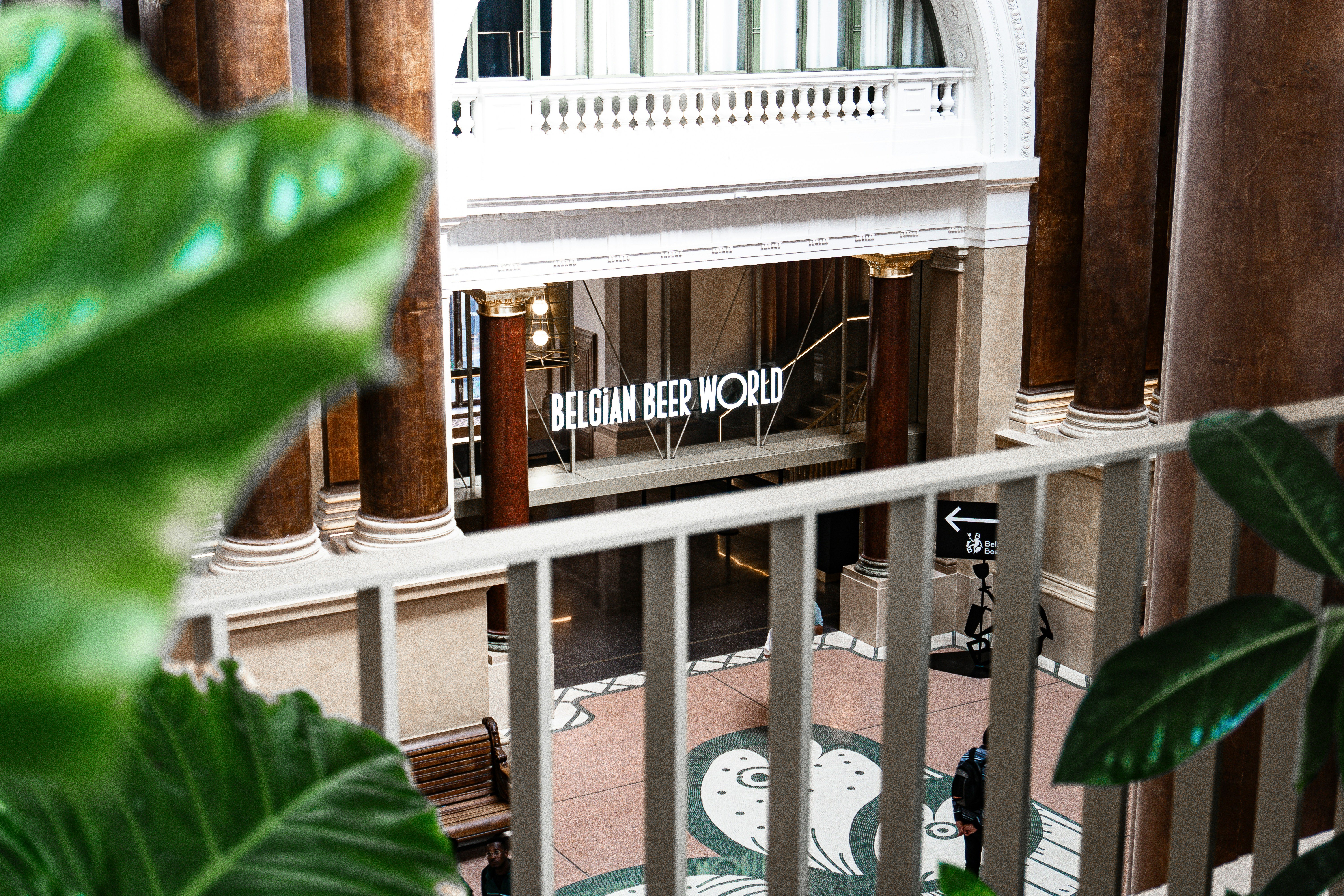
Belgian beer culture in Brussels does not separate cleanly from food. You eat and drink at the same table, and the beer is as much a part of the meal as the bread.
A la Mort Subite (Rue Montagne aux Herbes Potagères 7) has been open since 1928 and serves the gueuze and lambic made by the Cantillon brewery nearby. The interior is unchanged from the 1920s, which sounds like a marketing claim but is genuinely true: the old wooden tables, the globe lights, the tiled floor. Order a Mort Subite gueuze or a kriek and sit with it.
Cantillon Brewery (Rue Gheude 56) is the last working lambic brewery in Brussels and offers tours and tastings most weekdays. Lambic is spontaneously fermented beer using wild yeasts native to the Senne valley; you cannot make it anywhere else. The gueuze is sour, complex, and polarising. Going here is not optional if you are spending more than a day in Brussels.
What to Avoid
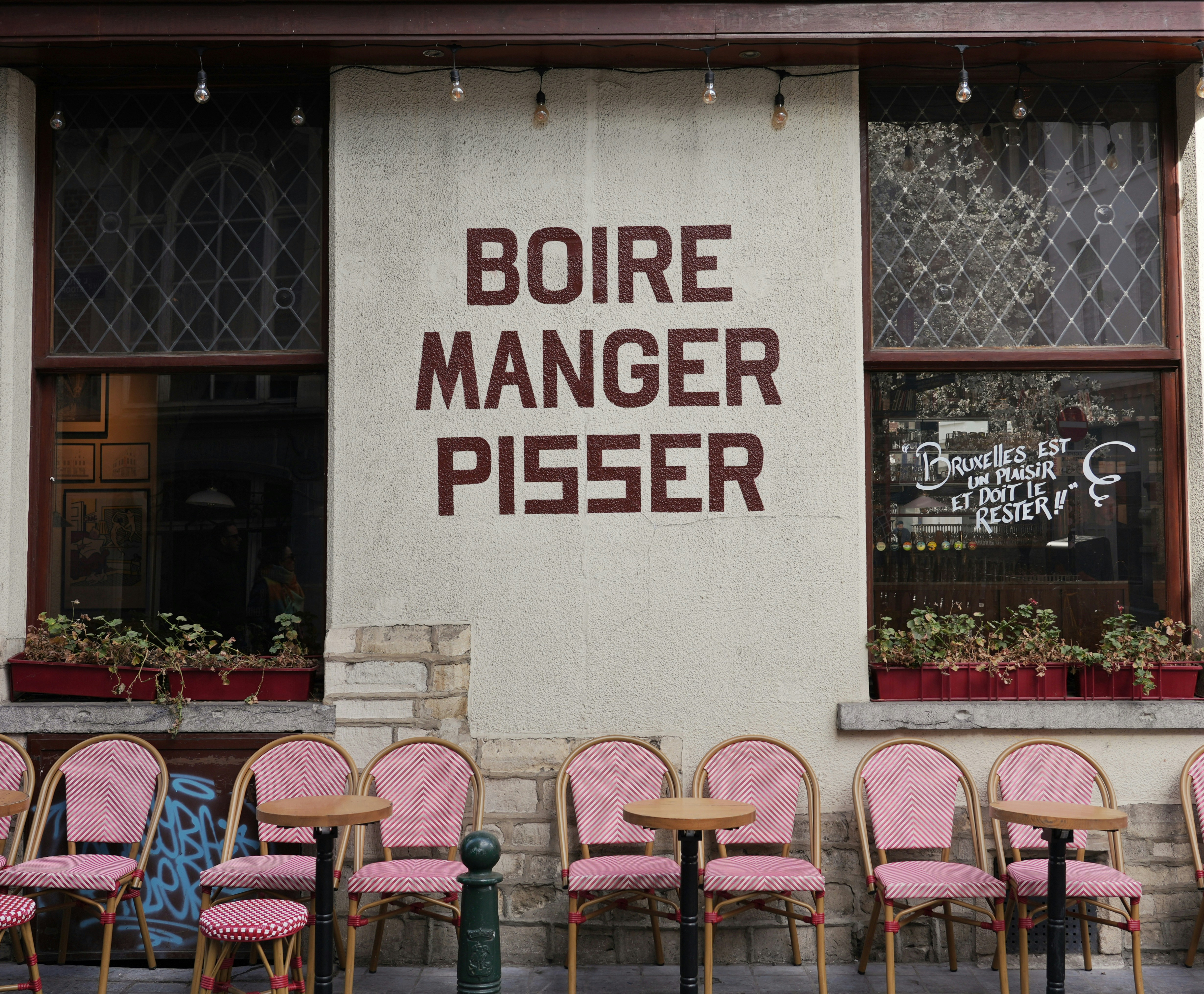
The restaurants with photographs of food in the window on and immediately around Rue des Bouchers, the pedestrianised street near the Grand Place, are uniformly tourist-oriented. Not bad, exactly, just optimised for volume rather than quality, priced at a premium, and not where anyone who lives in Brussels would take a visiting friend.
The same applies to most of the outdoor terraces directly facing the Grand Place. Beautiful location, and the beer you pay too much for is still a Belgian beer so it is still better than average. Just not where you should be eating dinner.
The Belgian waffle stalls around the main tourist sites serve toppings that are not how Belgians eat waffles. The plain gaufre at a bakery or patisserie is the real thing.
→ 24 Hours in Brussels: 6 Ways to Explore the Capital like a Local
Brussels vs Paris for Food
Should I eat in Brussels or Paris? The honest comparison: Brussels has fewer world-famous restaurants and significantly more excellent everyday eating at accessible prices. A three-course lunch with wine in a Saint-Gilles bistro runs 25 to 40 euros. The equivalent in Paris is 40 to 70 euros. Belgian beer is categorically better than the house wine you will be offered in a Paris brasserie at the same price point. Paris wins on haute cuisine, variety of international cooking, and having more options overall. Brussels wins on traditional cooking being genuinely traditional, prices making everyday good eating sustainable, and Belgian specialities existing nowhere else in Europe.
Experience Brussels With a Local

Reading a food guide gets you to the door. A local gets you to the right table, in the right order, with the right drink, and the story behind the dish on your plate.
That’s exactly what Lokafy offers. Instead of a standard tour, you explore Brussels with a local guide who can introduce you to the city’s authentic culinary scene.
Ready to eat like a true Brusseler? A local experience with Lokafy in Brussels means eating where locals eat, understanding why certain dishes are made the way they are, and skipping the months of research required to find the places that do not show up in the first page of Google results.
Frequently Asked Questions
Where do locals eat in Brussels? Locals in Brussels eat in the neighbourhoods of Saint-Gilles, Ixelles, and the streets around Place Sainte-Catherine rather than the centre. Fin de Siècle on Rue des Chartreux, Le Tournant in Matongé, and the traditional bistros in the Marolles are the reference points for authentic Brussels dining.
What is the most typical food in Brussels? The most distinctively Brussels dishes are carbonnade flamande (beef braised in dark Belgian ale), croquettes aux crevettes grises (North Sea shrimp croquettes), and moules-frites (mussels with twice-cooked frites). Stoemp and filet americain are equally typical and less internationally known.
Is Brussels good for food? Brussels is consistently underestimated as a food city. It has more Michelin-starred restaurants per capita than Paris, a beer culture with no equivalent anywhere in the world, and a tradition of everyday cooking (bistros, estaminets, friteries) that sustains a very high floor of food quality across all price ranges.
What is a carbonnade flamande? Carbonnade flamande is a slow-braised beef stew cooked in Belgian dark ale, typically seasoned with mustard and brown sugar on bread that dissolves into the braising liquid. It is one of the defining dishes of Belgian cuisine and is distinctly different from French beef bourguignon because the ale base creates a maltier, more bitter flavour profile.
Are Belgian frites really different from French fries? Yes, significantly. Belgian frites are cut thicker, fried twice (once at lower temperature to cook through, once at high heat to crisp), and served with mayonnaise rather than ketchup as the default. The best Brussels friteries use specific potato varieties (bintje being the traditional choice) and maintain precise frying temperatures. The result is a crisp exterior and a fluffy, almost airy interior that differs substantially from thinner, single-fried versions.
What are croquettes aux crevettes? Croquettes aux crevettes grises are a Belgian speciality made with tiny grey North Sea shrimp bound in a rich béchamel, coated in breadcrumbs, and deep-fried until crisp outside and molten inside. The grey shrimp (crevettes grises) are caught in the North Sea and have an intensely savoury, briny flavour very different from the large prawns available globally. They are eaten as a main dish in Belgium, not a starter.
What neighbourhood should I eat in Brussels? The area around Rue des Chartreux and Place Sainte-Catherine for traditional Belgian restaurants, Ixelles and Matongé for neighbourhood bistros and diverse cooking, and Saint-Gilles for a more local atmosphere with fewer tourists. Avoid eating immediately on or adjacent to the Grand Place unless you are specifically there for a drink with a view.
Enjoyed this article?