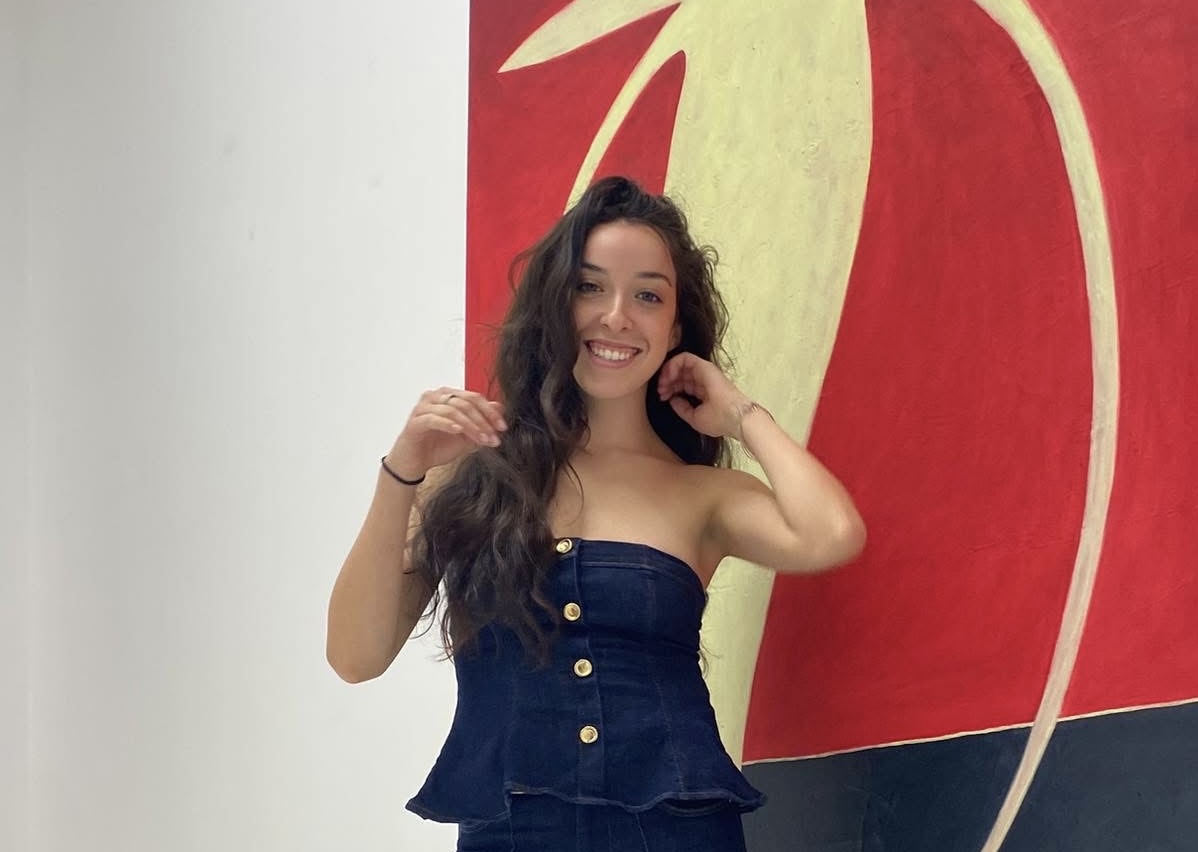
Vienna gets summed up in postcards pretty fast: grand palaces, the State Opera, coffee served on a silver tray with a glass of water on the side. All of it is true, and none of it explains why the people who live there love the city the way they do. For that, you need someone who has spent years learning which streets get swallowed by tour groups and which ones still belong to the neighborhood. Bianca Mazzini Fei has called Vienna home for ten years, and as a Lokafyer, she spends her days showing travelers the version of the city that made her stay.
We asked Bianca about the spots she keeps coming back to, the coffeehouse rituals she never skips, and how she reads a group of travelers well enough to know when to change the plan. Here's what she told us, and how to experience her Vienna for yourself.
A Decade in Vienna, and a Reason to Stay

"I have been living in Vienna for 10 years now, and I've developed a deep passion for sharing the city's unique charm with others," Bianca says. Guiding pulled her in less for the landmarks than for the people. "What inspired me to become a Lokafyer was the idea of connecting with people from all over the world on a personal level, showing them Vienna not just as a tourist destination, but as a place I truly call home."
That distinction matters more than it sounds. A guide reciting facts about the Hofburg Palace can be found in any guidebook. Someone who has lived off Taborstrasse for a decade and knows which bakery still uses a wood-fired oven is harder to replace.
Vienna Changes Its Personality With the Seasons
Ask Bianca what she loves most about her city, and she doesn't lead with a single landmark. "What I love most about Vienna is its incredible multiculturalism and the endless variety of activities it offers," she says. "Every season brings a completely different experience: in the summer, life revolves around the Danube; in winter, the historic center lights up with magical Christmas markets and classical music; spring blooms in the city's breathtaking gardens; and autumn is perfect for cozying up in all kinds of unique local spots."
Anyone who has spent a July afternoon along the Donauinsel, the long stretch of parkland and beaches splitting the Danube, knows exactly what she's talking about. Come winter, the Rathausplatz Christkindlmarkt sets up in front of City Hall and runs from mid-November through December 26, with ice skating continuing into January. Spring belongs to the Volksgarten's rose beds. None of this needs to be forced into an itinerary. It's simply what Vienna does on its own calendar.
Where She Takes Travelers, and Why

"There are honestly so many!" Bianca says when asked about a standout memory from her tours. "But for me, the most meaningful moments are always when I have great company and we end up sharing genuine laughs throughout the tour. My absolute favorite area to explore is the historic city center because of its rich Habsburg history and culture, but finding that lighthearted, joy-filled connection with travelers while walking through the old streets is what truly makes a moment stand out."
The historic city center, officially Vienna's 1st district and known locally as the Innere Stadt, is where the Habsburg monarchy ruled for six centuries. St. Stephen's Cathedral and the Hofburg Palace anchor most people's mental map of the area, and Bianca's routes pass both. But she's clear that the buildings aren't really the point. It's what happens in between them: a group stopping to watch a street musician, someone asking about a shop window that has nothing to do with the planned route, an unexpected joke shared between people who were strangers twenty minutes earlier.
What Separates a Good Tour From a Great One
Ask any experienced guide what separates a decent tour from a great one, and you'll get a version of what Bianca said. "Without a doubt, empathy and intuition! An exceptional tour requires deep knowledge of the city and a very solid initial plan of where to go, but also the flexibility to read the room and always have a Plan B ready. Understanding what travelers need in the moment and adapting seamlessly is what turns a good walk into an unforgettable experience."
In practice, that flexibility shows up in small decisions. If a couple mentions they're marking an anniversary, the route might swing past a quieter garden instead of a crowded square. If someone asks about Vienna's musical history, the next twenty minutes might become an unplanned detour toward a composer's old address. The plan exists so it can be set aside when something better comes up.
Human Connection Over Checklists
"My favorite part is definitely the human connection and the positive energy," Bianca says. "Vienna is wonderfully multicultural, and I love sharing stories and laughs with my guests while showing them around. I feel proud when they leave feeling like they have made a true friend in Vienna."
It's a small shift in framing, but it changes what a tour is for. Instead of measuring success by how many sights get checked off, Bianca measures it by something harder to quantify: did a stranger leave the city feeling like they had someone there.
Augarten: The Garden Between Two Districts

Every local guide has a spot they bring up before anyone asks. For Bianca, it's Augarten. "One true hidden gem is Augarten, a beautiful, peaceful garden located right between the 2nd and 20th districts that most tourists completely miss! I also love taking travelers off the beaten path to discover Vienna's lesser-known local spots and neighborhood cafes."
Augarten sits in Leopoldstadt, Vienna's 2nd district, right where it borders Brigittenau, the 20th. It's the oldest Baroque garden in the city, laid out with long avenues of chestnut and lime trees that turn shady in summer and gold in October. The Vienna Boys' Choir rehearses inside the Augarten Palace on the grounds, and next door sits the Augarten porcelain manufactory, founded in 1718 and one of the oldest in Europe, even though the workshop has only occupied its current home since 1923. None of that shows up on a typical first-timer's list, which is exactly why Bianca brings people here.
Coffeehouses, Melange, and the Idea of Gemütlichkeit
Ask Bianca how she'd tell someone to experience Vienna properly, and the answer isn't about seeing more. It's about slowing down according to the calendar. "I always recommend experiencing the city according to the season, whether that's enjoying the beautiful gardens in spring, taking in a classical music concert in winter, or sitting down in a traditional coffeehouse for a warm Melange and a slice of authentic Sachertorte to experience that famous Viennese Gemütlichkeit."
The coffeehouse recommendation isn't a small aside. Viennese coffeehouse culture has held UNESCO Intangible Cultural Heritage status since 2011, recognized specifically for the social ritual of it: marble tables, a single coffee that buys you the right to sit for hours, a newspaper on a wooden rack nearby. A Melange, roughly Vienna's answer to a cappuccino, and a slice of Sachertorte are the standard order. Gemütlichkeit doesn't translate cleanly into English, but the closest version is a feeling of coziness that has nowhere else to be.
There's More to Vienna Than the First District
If Bianca has one piece of advice for travelers planning a trip, it's this: don't stop at the postcard version. "Don't just stay in the 1st District! While the city center is essential for learning about the famous Habsburg history, I always encourage travelers to venture out into the other districts as well. Every single district in Vienna has its own unique personality, local vibe, and totally different experience to offer."
That's the difference between seeing Vienna's history and understanding its present. The Innere Stadt tells you where the empire sat. The other twenty-two districts tell you where the city lives now.

Why Seeing Vienna With a Local Matters
Vienna rewards a good guide more than most cities do, mostly because the language and the menu can both be a little intimidating on a first visit. A Lokafyer like Bianca does the obvious work of translation and navigation, but the real value shows up in the details a guidebook can't capture, like which alley leads to the coffeehouse locals still use, or how long a Viennese waiter will let you linger over one coffee before checking in. Bianca's goal, in her own words, is making sure every visitor gets a fun, seamless experience shaped around what they want to see, not what's supposed to be on the list.
Explore Vienna With Bianca
Ready to see Vienna through Bianca's eyes? Start in the Innere Stadt for the history, then let Augarten's quiet paths slow the pace down. Save time for a coffeehouse afterward, and don't let anyone rush you out the door. Take a private, personalized walking experience with Lokafy in Vienna.
More From Vienna
→ How to Get from Vienna International Airport (VIE) to the Main City
→ Vienna vs Bratislava: Two Capitals, One Hour Apart (and How to See Both)
→ Best Places to Eat Traditional Viennese Comfort Food in Vienna’s 7th District
Enjoyed this article?