Everyone who visits Tallinn goes to the Old Town and they should. The medieval towers, the cobblestones, the Town Hall Square are all genuinely beautiful, but if you spend your entire trip inside those city walls, you leave having seen only the postcard version of Tallinn, not the real one.
Kalamaja is where the real Tallinn lives. It is a former working-class district sitting just a 10-minute walk or a short tram ride from the Fat Margaret gate at the northern edge of the Old Town. Kalamaja has quietly become the city's most interesting neighborhood. You will find wooden houses painted in faded pastels, independent coffee shops where the barista is often the owner, and a creative scene that grew organically.
This guide covers Kalamaja, how to get there, what to do once you arrive, and why going with a local changes everything.
Quick Guide: Kalamaja, Tallinn
Key Takeaways for 2026
- Top Recommendation: Plan to spend at least half a day here. It’s the most authentic part of the city for any visitor.
- The Best Way to See It: Book an experience with Lokafy. We’ll match you with a Tallinn local who can show you the neighborhood’s hidden spots.
- Must-Visit Spots: Telliskivi Creative City for street food and markets, Tops cafe for a vintage vibe, and Lore Bistroo for an incredible dinner near the water.
- Getting There: Take Tram 2 from Viru Street (heading toward Kopli) and get off at the Kotzebue stop. It takes about 7 minutes.

What Is Kalamaja and Why Does It Matter?
The name Kalamaja roughly translates to “fish house” in Estonian. Baltic Sea fishermen first settled here in the 1200s, making it the oldest suburb in Tallinn.
During most of the twentieth century, Kalamaja was a working class industrial district. Wooden houses built in the late nineteenth and early twentieth centuries housed factory workers as Tallinn expanded. During the Soviet period, concrete apartment blocks and state industries appeared. In the 1990s, after Estonia regained independence, many factories closed and the area went through a period of decline.
What happened next can still be seen in the buildings today. Restored wooden homes stand beside ones still waiting for renovation. Former factories have turned into creative spaces. A submarine factory became a waterfront district filled with restaurants and galleries. Artists first moved in because rents were low, creative businesses followed and over time, Kalamaja became the neighborhood where Tallinn’s everyday life happens.
The area even received coverage from the New York Times. Locals will tell you the article only showed the polished side of the neighborhood. The real story is more complex and much more interesting.
How to Get to Kalamaja from the Old Town
Kalamaja is about 1.5 kilometers northwest of the Old Town. You have a few easy options to get there:
- On Foot (Direct): Walk through the Fat Margaret gate at the north end of the Old Town. Head toward the Balti Jaam Market. This takes about 15 to 20 minutes.
- On Foot (Scenic): In the summer, walk along Kalaranna Street. You’ll see the Baltic Sea and pass Linnahall, the enormous brutalist concert hall built for the 1980 Moscow Olympic Games, now standing as an eerie landmark on the seafront. Add 10 extra minutes and go this way at least once.
- By Tram (Fastest Option): Take Tram 2 from Viru Gate toward Kopli. Get off at Kotzebue. It’s a 7-minute ride, and you only need one standard fare. From the stop, Telliskivi Creative City is a 5-minute walk north along Telliskivi Street, and the wooden house streets of Kotzebue and Vana Kalamaja are immediately around you.
The Streets and Spots Worth Visiting
Telliskivi Creative City
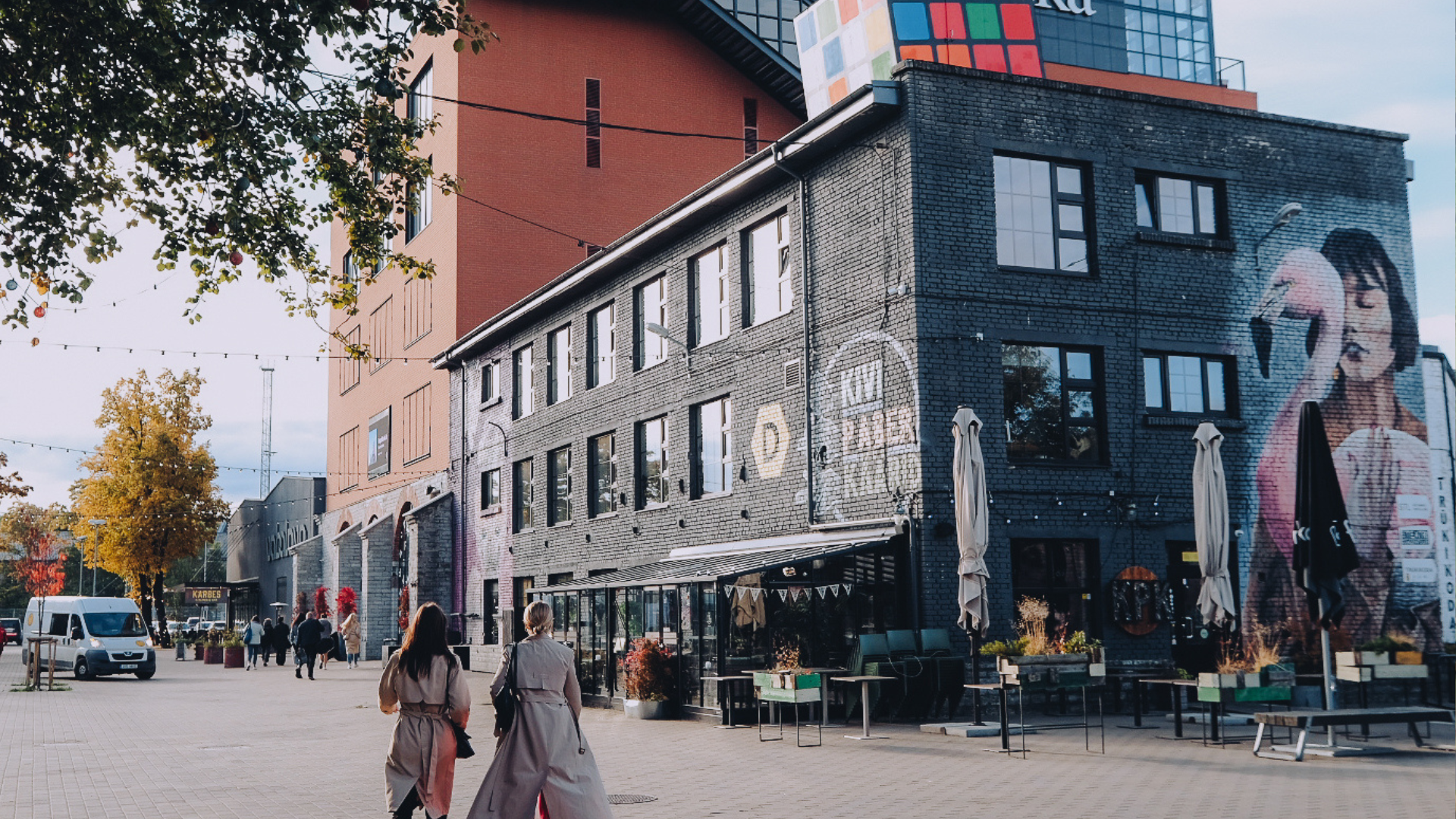
Telliskivi Creative City, located at Telliskivi 60A, is where many visitors start exploring Kalamaja.
The complex opened in 2010 inside former Soviet electronics factory buildings that stopped production in the 1990s. Today the area is filled with independent shops, design studios, cafés, galleries, the Fotografiska photography museum, and a weekend flea market that attracts locals from across Tallinn.
The walls of the old factories are covered in street art, some of the best you will see in Estonia. If you visit on a Saturday morning between May and October, you will catch the flea market in full swing. Vendors sell vintage clothing, Soviet era objects, handmade jewellery, fresh produce, and many items that are hard to categorize. Arrive before 11 am if you want the best selection.
Kotzebue Street and the Wooden Houses
Kotzebue Street is one of the best places to see Tallinn’s traditional wooden architecture.
Most of the houses here were built in the late nineteenth and early twentieth centuries for factory workers. They have timber frames, decorative details, and the kind of craftsmanship that was common before Soviet concrete buildings became widespread. These houses are not museum pieces. People still live in them.
Other nearby streets worth exploring include Valgevase, Kalju, Kungla, Koie, and Niine. These streets offer the same architecture but with fewer visitors.
The Kultuurikilomeeter (Culture Kilometre)
The Kultuurikilomeeter is a 2.5 kilometre walking path that runs along Kalamaja’s coastline.
It starts at the Linnahall car park and ends at Port Noblessner. Along the way you pass abandoned Soviet structures, former factories turned creative spaces, sections of old railway track, and large murals covering industrial walls.
Many tourists never find this route. Walking it from south to north helps you understand the neighborhood’s industrial history and how it changed over time. By the time you reach Noblessner, the story of Kalamaja becomes much clearer.
Kalamaja Cemetery Park
Kalamaja Cemetery Park sits on Kungla Street in the middle of the neighborhood. It is one of the most peaceful places in Tallinn and one that most visitors never see. For more than 400 years this site served as the city’s main cemetery. In the 1960s Soviet authorities removed the graves and turned the land into a public park.
Today, the park contains a restored baroque gate tower, a small chapel, and a memorial area with surviving tombstones. Locals now use the space as a park. Children play here, dogs run through the grass, and families bring picnic blankets on summer afternoons. Unless you know the history, you would never guess what lies beneath the ground.
Noblessner Seafront Quarter
Noblessner sits on the Baltic Sea at the northern edge of Kalamaja. It began as an Imperial Russian submarine factory built before the First World War and later used by the Soviet navy.
Around 2010 the area began transforming into a waterfront district with restaurants, galleries, and a marina. The original factory buildings are huge and impressive. On clear days you can see across the water toward Helsinki.
Noblessner is also home to the Seaplane Harbour museum, which holds one of the best maritime collections in northern Europe.
What One Tallinn Local Wants You to Know
Lokafyer Profile: Catching up with Björn from Tallinn
We sat down with Björn to talk about the "symbiosis of Old and New" that defines Estonia’s capital.
What is one thing you wish tourists understood before visiting Tallinn?
“Most people are drawn to the medieval history, but the city is also home to an innovative start-up scene and mentality. It is a unique mix of the ancient and the modern.
If you want a true experience, you have to embrace the atmosphere. For example, Olde Hansa in the heart of Old Town is popular for a reason, there is no electric light, only candles, and they serve medieval dishes with live performances. While it’s a bit touristy, it’s a high-quality experience that even we locals enjoy for special occasions.
I moved here permanently from Germany in 2010 with just one suitcase and a backpack, knowing nobody. Eleven years later, I can say it was the best decision ever. Tallinn has truly become my home.”
Björn, Tallinn Lokafyer, 11 years in Estonia

What Tourists Miss by Staying Only in the Old Town
The Old Town deserves its UNESCO World Heritage status. It is one of the best preserved medieval city centres in northern Europe but during summer, it also becomes a cruise ship stop, a nightlife corridor, and a row of restaurants charging much higher prices. When visitors stay only inside the Old Town walls, they miss several important parts of the city.
The wooden architecture
Kalamaja and nearby Pelgulinn contain the largest concentration of historic wooden housing in the Baltic region.
Better food
Restaurants in Kalamaja are usually cheaper and often higher quality because they are built for locals, not tourists.
Daily life
A Saturday morning in Kalamaja means families biking through the streets, neighbors chatting outside wooden homes, and dogs walking through the park.
Creative culture
Much of Estonia’s design, music, and arts scene is based in Kalamaja, Telliskivi, and Noblessner.
Local stories
Every building has history. Some were saved from demolition by residents. Others survived major fires or Soviet redevelopment. These stories are best understood through local perspectives.
Where Locals Eat and Drink in Kalamaja
The most honest recommendation is simple. Visit the Telliskivi market on a weekend morning, buy food from a local vendor, and eat outside on a bench. That is one of the best food experiences in the neighborhood.
If you want specific restaurants, these are the places locals regularly recommend.
F-Hoone
F-Hoone sits inside Telliskivi Creative City and has been a neighborhood favourite for years. The restaurant serves breakfast, brunch, lunch, and dinner with a focus on Nordic and Estonian ingredients. The communal tables often bring together locals, freelancers, and travelers. The Kalamaja Breakfast is one of the most popular menu items. Arrive before noon on weekends to avoid waiting.
Lore Bistroo

Lore Bistroo is located in Noblessner and holds a Michelin Bib Gourmand distinction for excellent food at a good price. The menu focuses on seasonal ingredients served as sharing plates. The atmosphere is relaxed and family friendly. Dinner reservations are recommended.
Moon Restaurant
Moon is a local dinner spot known for Baltic Russian cuisine. The menu includes dumplings, smoked fish, and borsch. It is recommended in the Michelin Guide and remains more affordable than similar restaurants in the Old Town.
Tops Café
Tops is a small café on Soo Street with vintage furniture, artwork on the walls, and music chosen by people working there rather than an algorithm. The küpsisekook, a layered biscuit and cream cake that many Estonians grew up eating, is a must try. The café also hosts DJ nights and occasional live music.
Balti Jaama Turg (Baltic Station Market)
Balti Jaama Turg is one of Tallinn’s busiest markets. Balti Jaama Turg sits at the corner of Kopli and Toompuiestee, right at Balti jaam train station, a 5-minute walk south of Telliskivi Creative City and contains nearly 300 stalls across three levels. The ground floor food hall is the best place for a quick lunch, offering everything from traditional Estonian dishes to vegan options and craft beer. The upper levels sell clothing, antiques, and secondhand goods. Many Tallinn residents do their regular grocery shopping here, which says a lot about the quality and pricing.
Pohnjala Brewery Tap Room

Pohnjala Brewery Tap Room occupies a large converted industrial space on Manufaktuuri Street in the Noblessner quarter, about a 15-minute walk north of Telliskivi Creative City toward the Baltic waterfront. Pohnjala is one of Estonia's leading craft breweries, and the tap room serves rotating seasonal pours alongside a kitchen that runs Texan-style BBQ. Twenty-four taps, most of them unavailable anywhere else in the city. If you drink beer and you are in Kalamaja, this is not optional.
The Kalamaja Spots Most Visitors Never Find
These are the spots that come up when locals recommend Kalamaja to people.
The Kalamaja Museum
The Kalamaja Museum opened in 2020 and sits in the residential streets of the neighborhood, a short walk from Telliskivi Creative City. It is a small, focused institution dedicated entirely to the history of Kalamaja and its residents. More unusually, the museum has taken its collection outside: historic photographs and neighborhood stories have been printed and mounted on walls and fences across the area, turning a walk through Kalamaja into something closer to a living archive than a sightseeing route.
Contemporary Art Museum Estonia (EKKM)
EKKM sits at the southern start of the Kultuurikilomeeter, located just across from the Linnahall car park on the seafront about a 15-minute walk northwest of the Fat Margaret gate. It shows work by emerging and young Estonian artists through constantly rotating exhibitions and installations. Entry is free. Opening hours are seasonal, generally spring through early winter. It is one of the genuinely good free cultural experiences in Tallinn and almost no one outside the local arts scene knows about it.
Kopli Couture at Telliskivi

Kopli Couture is a vintage clothing shop inside Telliskivi Creative City that is mentioned consistently by locals as one of the best of its kind in the Baltics. By day it is a well-curated selection of vintage fashion. By night on weekends, it transforms into a bar.
Is Kalamaja Safe?
Yes. Kalamaja is a residential neighborhood and there are no particular safety concerns for visitors.
Some parts of the area look rough around the edges. You might see unfinished buildings, graffiti, or houses still waiting to be restored. This is part of the neighborhood’s character rather than a safety issue.
Estonia consistently ranks among the safest countries in Europe. Tallinn is compact and easy to navigate, and Kalamaja is generally quieter than the city center.
Half a Day in Kalamaja: A Local’s Suggested Plan
Morning (10:00–12:00)
- Arrive by Tram 2 and exit at Kotzebue stop
- Walk along Kotzebue Street and nearby residential streets to see the wooden houses
- Stop at Tops café for coffee and cake
- Explore Telliskivi Creative City and its weekend market
Midday (12:00–14:00)
- Eat lunch at Balti Jaama Turg food hall
- Walk the Kultuurikilomeeter along the waterfront toward Noblessner
Afternoon (14:00–16:00)
- Explore Noblessner and visit the Seaplane Harbour museum
- Finish the afternoon at Põhjala Brewery Tap Room for craft beer and barbecue
Experience Kalamaja with a Tallinn Local
Kalamaja is a neighborhood where context matters. The honest thing about Kalamaja is that it rewards conversation and context more than it rewards a checklist. Many of its best stories are hidden in everyday places.That knowledge lives with locals, not in travel guides.
When you explore Kalamaja with a local on Lokafy, you are matched with a Tallinn local who knows the neighborhood well. They can share the stories behind the places you see and help you experience the area in a more personal way.
Frequently Asked Questions About Kalamaja, Tallinn
Is Kalamaja worth visiting?
Yes. Kalamaja offers one of the most authentic neighborhood experiences in Tallinn and is well worth visiting.
How do you get to Kalamaja from the Old Town?
Take Tram 2 from Viru Street toward Kopli and exit at Kotzebue stop. The ride takes about seven minutes.
What are the best things to do in Kalamaja?
Visit Telliskivi Creative City, explore the wooden house streets, walk the Kultuurikilomeeter coastal route, visit Noblessner waterfront, and try the local food scene.
What are the hidden gems in Kalamaja?
The Kalamaja Museum’s wall photo project, Contemporary Art Museum Estonia, Tops café, and Kalamaja Cemetery Park. A local guide will know where all of these are and why they matter.
Is Kalamaja safe for tourists?
Yes. It is a quiet residential neighborhood with no notable safety concerns.
What is the best time to visit Kalamaja?
Weekend mornings between May and October are ideal because the Telliskivi market is open and the neighborhood is lively.
Enjoyed this article?