The first time I came up the escalators from Piazza Partigiani, I had no idea I was riding through a buried medieval neighbourhood. One minute I was in a car park, the next I was walking past the bricked-up doorways of houses that had been swallowed by a papal fortress in the 1540s, and ten minutes later I was standing on Corso Vannucci with a cappuccino and a view across half of Umbria. That is Perugia in a nutshell. The city keeps its best stuff stacked in layers, and most visitors only ever see the top one. This guide is about the rest, from the back lanes Perugians use to cut across town to the little kiosk where office workers queue for porchetta at lunch.
Quick Guide: Perugia Guide
- Primary recommendation: Walk the Via dell'Acquedotto, a raised medieval aqueduct turned footpath that links the old centre to the Borgo Sant'Angelo quarter. It is the single best hidden walk in the city.
- Top choice for food: A porchetta sandwich from the Antica Salumeria Granieri kiosk on Piazza Matteotti. Insider tip: the family has been roasting porchetta in a wood oven since 1916, so ask for a bit of the crackling.
- Value pick: Dal Mi' Cocco on Corso Garibaldi for a set-menu Umbrian lunch or dinner, popular with students and best for anyone eating on a budget. There is no menu to read, you eat what the kitchen cooks that day.
- Best free experience: Ride the escalators through the Rocca Paolina and wander the underground Via Bagliona. Entry costs nothing.
- The best way to see the city: Take a private, personalized walking experience with Lokafy in Perugia and discover the city's hidden lanes, Etruscan layers and favourite food stops with a local.
Is Perugia Worth Visiting?
Yes. Perugia is the hilltop capital of Umbria, a university city of Etruscan origin built on layers of history that you can walk through, under and over in a single afternoon. It sits between Florence and Rome, it is cheaper and far less crowded than either, and it has a lived-in feel thanks to two universities, including the Università per Stranieri, which draws language students from all over the world. You come for the art and the views, and you end up staying an extra night because the food is cheap, generous and very good.
What surprises people most is how compact it is. The historic centre sits on a hilltop, and the old town spreads out along five ridges, each one ending at an ancient gate. Those five districts, called rioni, still matter to locals: Porta Sole, Porta Sant'Angelo, Porta Santa Susanna, Porta Eburnea and Porta San Pietro. Once you understand that the city is shaped like a hand with five fingers, getting lost becomes a lot more fun and a lot less stressful.
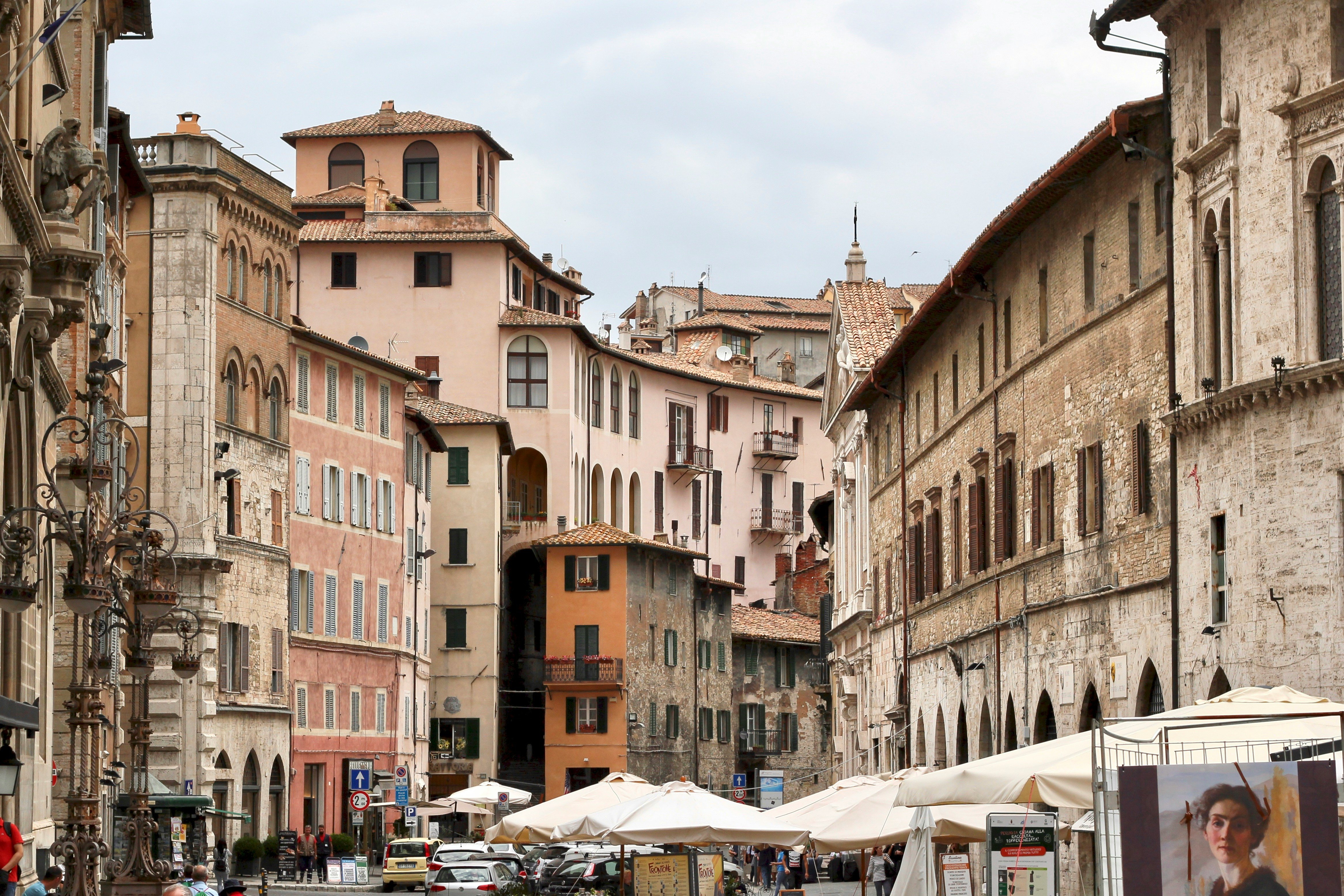
Perugia's Hidden Streets: Where Locals Walk
Via dell'Acquedotto and Via Appia
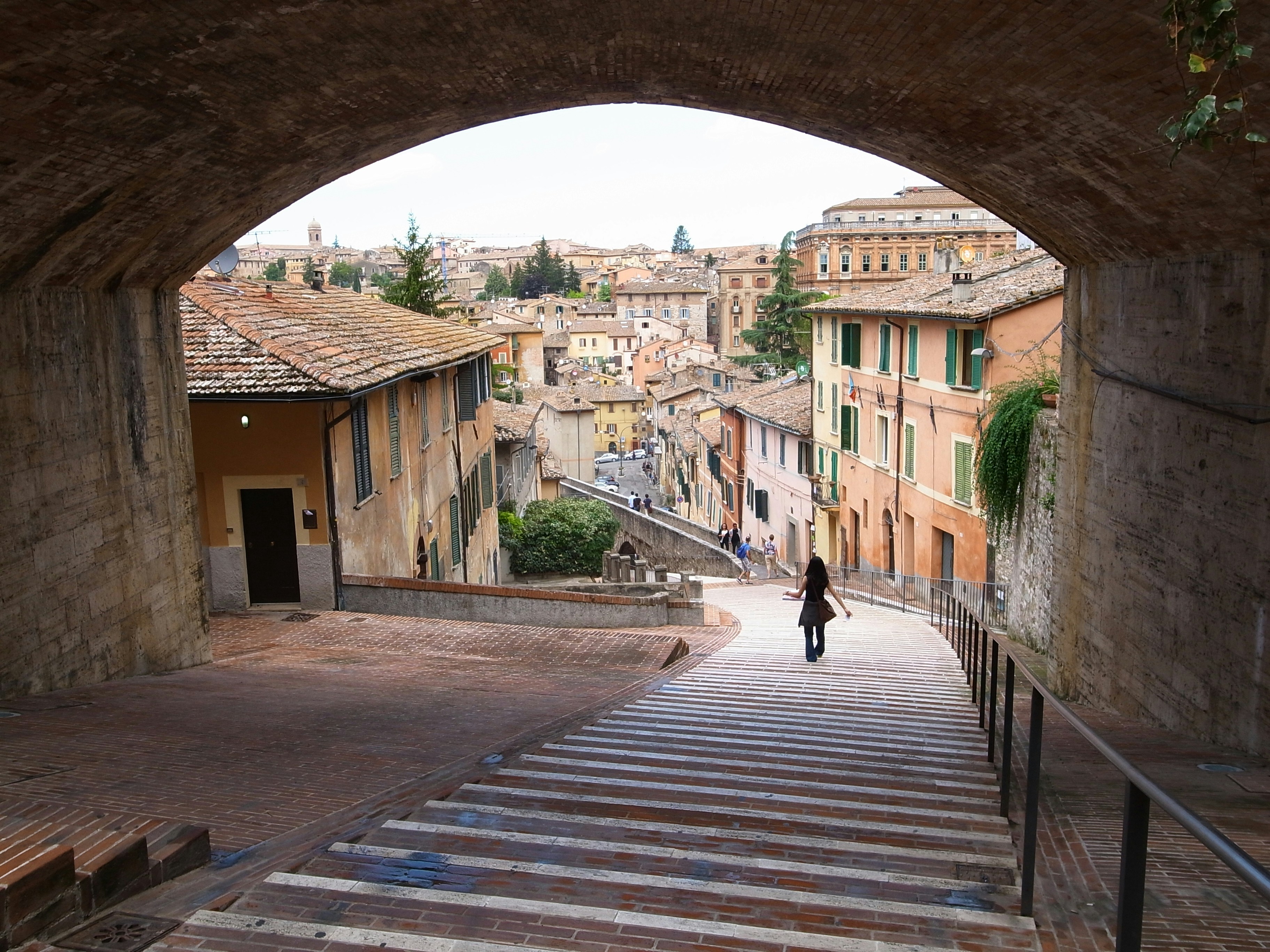
Start near the Teatro Morlacchi and drop down the steep, stepped Via Appia until you reach an archway with a view across the valley. To your right, a narrow path runs along the top of a stone bridge. This is the Via dell'Acquedotto, built between 1254 and 1280 to carry water from Monte Pacciano up to the Fontana Maggiore in the main square. The water stopped flowing long ago, and the bridge became a pedestrian path that Perugians use to get between the centre and the northern quarter.
Walking it feels a bit like strolling across the rooftops. You pass at eye level with laundry lines, potted geraniums and kitchen windows, and the path is narrow enough that you will be stepping aside for locals carrying their shopping. Go in the late afternoon when the light hits the brick, and bring decent shoes, because the steps at both ends are steep and can be slippery after rain.
Corso Garibaldi and the Tempio di Sant'Angelo
The aqueduct path drops you into Borgo Sant'Angelo, the city's student quarter. Head up Corso Garibaldi, a long, slightly scruffy street full of small grocers, laundromats, bars and cheap eats. Tour groups rarely make it this far, which is a big part of the appeal.
At the end of the street, behind a quiet lawn, stands the Tempio di Sant'Angelo, a round church dating to late antiquity, built on a circular plan with ancient columns reused inside. It is one of the oldest churches in the region, and it is usually empty. Right next to it, the Cassero di Porta Sant'Angelo, a chunky medieval gate tower, houses a small museum with a rooftop terrace and one of the widest views in town.
Via Maestà delle Volte
Two minutes from the cathedral, this vaulted medieval street ducks under a series of arches and stone passageways. It is one of the most atmospheric corners of the centre, and it is where Perugians walk to shortcut down toward Piazza Cavallotti. Most visitors pass the entrance without noticing it.
Porta Sole and the Via delle Prome Steps
Climb to Piazza Rossi Scotti, the highest point of the old city, and look over the railing. The view takes in the medieval walls of Borgo Sant'Antonio, the Sant'Angelo district and the hills beyond. It is a favourite place to linger on warm evenings, and the steps of Via delle Prome lead down from here into some of the quietest lanes in the centre.
Borgo XX Giugno, San Pietro and the Medieval Garden
At the opposite end of town, the long, straight Borgo XX Giugno leads out of the centre through Porta San Pietro toward the Benedictine abbey of San Pietro, founded in 966. The church interior is packed with paintings, but the real secret sits behind it: the Orto Medievale, a symbolic monastic garden run by the university's agriculture department. Locals come here for a quiet walk among herbs, fruit trees and old stone. On the way back, stop at the Giardini del Frontone, the oldest public gardens in the city and a favourite spot for families on weekend afternoons.
Underground Perugia: The City Beneath the City
Rocca Paolina and Via Bagliona
In 1540, Pope Paul III crushed a Perugian revolt and built a massive fortress on top of the homes of the Baglioni, the family that had ruled the city. Whole streets disappeared inside it. Perugians tore much of the fortress down in 1860, but the lower levels survived, and since 1983 a chain of public escalators has run right through them, linking Piazza Partigiani at the bottom of the hill with Piazza Italia at the top.
The result is one of the strangest walks in Italy. Step off the escalator and follow the signs to Via Bagliona, a buried medieval street where you can still see doorways, windows and courtyards of houses that have not seen daylight in almost five hundred years. Access is free during escalator hours. Look for the Porta Marzia too, an Etruscan gate from the 3rd century BC that the fortress architect, Antonio da Sangallo, dismantled and rebuilt into the walls instead of destroying it.
The Etruscan Well
Under Palazzo Sorbello, on Piazza Danti, sits the Pozzo Etrusco, a huge cistern built from travertine blocks around the 3rd century BC. It is about 5.6 metres across and you walk out over it on a footbridge, which is either thrilling or terrifying depending on your relationship with depth. The visit is short, entry is in small groups and there is a modest ticket fee, with a combined option that includes the Casa Museo di Palazzo Sorbello upstairs.
Where to Eat in Perugia Like a Local
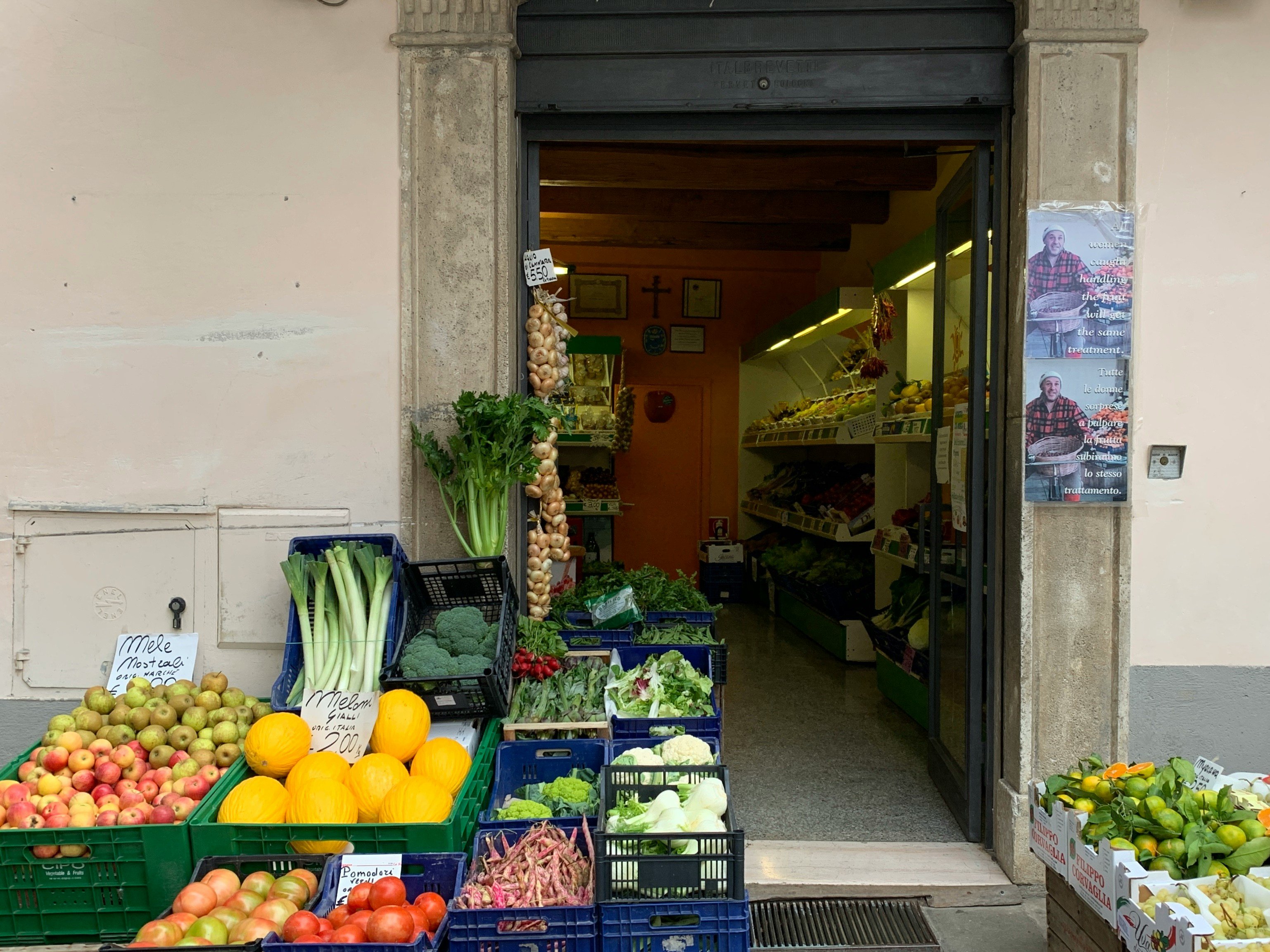
The first rule, repeated by every Perugian and plenty of travellers on Reddit: skip the big picture menus on Corso Vannucci. The main street is for walking, people-watching and an aperitivo. The good food is one or two streets away.
Torta al Testo: Perugia's Street Food
Torta al testo is Perugia's everyday flatbread, and the word torta confuses plenty of visitors expecting dessert. The dough is flour, water, salt and a pinch of bicarbonate, with no yeast, cooked on a hot cast-iron or stone disc called a testo, then split open and stuffed. The classic filling is sausage with sautéed greens, but you will also see it with prosciutto, local cheeses or porchetta.
Testone, on Piazza Matteotti, is the name most locals give when you ask where to try it. It is a small local chain, it is fast and cheap, and the herb and sausage version is the order. A whole torta is filling enough to count as lunch on its own.
Porchetta from the Granieri Kiosk
Look for a plain grey kiosk on Piazza Matteotti at the corner of Via Fani. This is the Antica Salumeria Granieri, run by a family that has been making porchetta since 1916 and still roasts it in a wood oven. Gambero Rosso named it the best street food in Umbria. Order the classic panino, or try one of the house combinations, like the 1916 with roasted apples, mustard, raisins and walnuts. Note that Umbrian bread is traditionally unsalted, which makes sense the moment you taste the seasoned pork.
Panini at La Bottega di Perugia
On Piazza Morlacchi, a few steps from the theatre, La Bottega di Perugia is a tiny deli that fits about three people inside and a whole crowd outside. Students, office workers and visitors all queue here for sandwiches built with local cured meats. The Gnorante, with capocollo, pecorino and mushrooms, is the house favourite. Expect to wait at peak times, and eat standing in the piazza like everyone else.
Dal Mi' Cocco for a Set-Menu Meal
At Corso Garibaldi 12, Dal Mi' Cocco is a no-frills osteria with a fixed menu that changes by the day. You get a starter, two pastas, a main and dessert, often finished with a digestivo, and wine costs a little extra. The price is very fair for the amount of food. It is hugely popular with students and locals, so call ahead to book.
Osteria a Priori for Umbrian Classics
On Via dei Priori, at number 39, this osteria sits above a wine shop and cooks with ingredients from across the region: lentils from Castelluccio, beans from Lake Trasimeno, black truffle from Norcia, Chianina beef. If you only eat one plate of pasta in Perugia, make it the strangozzi, the thick, square-cut local noodles, with truffle. Book a few days ahead for Friday or Saturday dinner.
La Taverna for a Special Night Out
Tucked away on Via delle Streghe, La Taverna has brick vaults, candlelit tables and a menu that reworks Umbrian dishes with a lighter touch. It is popular with locals and visitors alike for a special night out, so reserve in advance.
Coffee, Chocolate and Gelato
Pasticceria Sandri on Corso Vannucci has been open since 1860 and is still run by the same Swiss-Italian family. The frescoed ceiling, wooden display cases and jacketed waiters feel like a time machine. Stand at the counter for a coffee and a pastry like a local, or take a table outside to watch the evening passeggiata.
For chocolate, head toward the Arco Etrusco and stop at Augusta Perusia on Via Pinturicchio, founded by a chocolatier who learned his trade at Perugina. The gelato is excellent, and in the colder months a cup of their thick hot chocolate is hard to beat.
Experiences Beyond the Main Attractions
Città del Cioccolato
Perugia's 1932 covered market, the Mercato Coperto, is now home to the Città del Cioccolato, a large interactive chocolate museum. It covers cacao from its origins to Perugia's own Perugina story, and you can make your own chocolate bar in the Bean to Bar Factory. Upstairs, the Chocolate Bar sits on the market's panoramic terrace, which has some of the best views over the valley in the whole centre.
Sunset on the Cathedral Steps
As evening comes, the steps of the Cattedrale di San Lorenzo on Piazza IV Novembre fill up with students, couples and friends meeting before dinner. Grab a drink, find a spot facing the Fontana Maggiore and watch the square come alive. It costs nothing and it is the most Perugian thing you can do.
Giardini Carducci at Golden Hour
At the far end of Corso Vannucci, the Giardini Carducci sit on top of what remains of the Rocca Paolina. The terrace looks south across the Tiber valley, and on a clear day you can pick out Assisi on the slopes of Monte Subasio. Locals walk here after dinner as part of the evening stroll.
The Minimetrò
Perugia has a driverless mini-metro, a string of small cable-pulled cars that glide up from the Fontivegge train station to Pincetto, right below Piazza Matteotti. Locals use it as everyday transport, and the ride up through the hill is a fun way to arrive.
Time Your Visit Around a Festival
Perugia has three big moments on its calendar. Umbria Jazz takes over the city every July, with free concerts in the piazzas and paid headline shows. In June, Perugia 1416 brings back the city's medieval past with a historical procession, archery and contests between the five rioni. In autumn, Eurochocolate fills the centre with chocolate stalls. Check the official dates before booking, and reserve accommodation early for all three.
A One-Day Perugia Itinerary
Morning: Arrive by Minimetrò or ride the escalators up through the Rocca Paolina and explore Via Bagliona. Surface at Piazza Italia, walk Corso Vannucci and stop at Sandri for coffee. Visit the Galleria Nazionale dell'Umbria inside the Palazzo dei Priori for Perugino and Pinturicchio, then look in at the Fontana Maggiore.
Lunch: Porchetta from the Granieri kiosk or a torta al testo at Testone, both on Piazza Matteotti.
Afternoon: Head to Piazza Danti for the Etruscan Well, then walk down Via Appia, cross the Via dell'Acquedotto and continue up Corso Garibaldi to the Tempio di Sant'Angelo. Loop back past the Arco Etrusco and grab gelato at Augusta Perusia.
Evening: Aperitivo on the cathedral steps, then dinner at Osteria a Priori or Dal Mi' Cocco. Finish with a walk to Giardini Carducci.
A Two-Day Perugia Itinerary
Day one: Follow the one-day plan above.
Day two: Start slow with coffee, then walk Borgo XX Giugno to the abbey of San Pietro and the Orto Medievale, stopping at the Giardini del Frontone on the way back. Grab panini at La Bottega di Perugia for lunch. Spend the afternoon at the Città del Cioccolato and finish on its terrace. In the evening, climb to Porta Sole for the view, wander down the Via delle Prome steps and book a table at La Taverna.
If you have a third day, Assisi is a short regional train ride away, which makes it an easy half-day trip.
Practical Tips from Perugians
- Wear proper shoes. Perugia is all hills, stairs and polished stone. Flip-flops will make you miserable.
- Use the escalators. The network of public escalators and lifts links the lower car parks to the centre. Locals rarely climb the full hill on foot.
- Do not drive into the centre. The old town is a limited traffic zone. Park at Piazza Partigiani and take the escalators up.
- Eat on Italian time. Lunch runs from about 1pm, dinner from 8pm, and many kitchens wind down around 10pm.
- Book weekend dinners. The best small osterie fill up fast on Friday and Saturday nights.
- Carry a little cash. Small kiosks and bars sometimes prefer it for a quick sandwich or coffee.
- Skip the sea fish. Umbria is landlocked. Order meat, truffles, legumes and lake fish from Trasimeno instead.
Explore Perugia with a Local on Lokafy
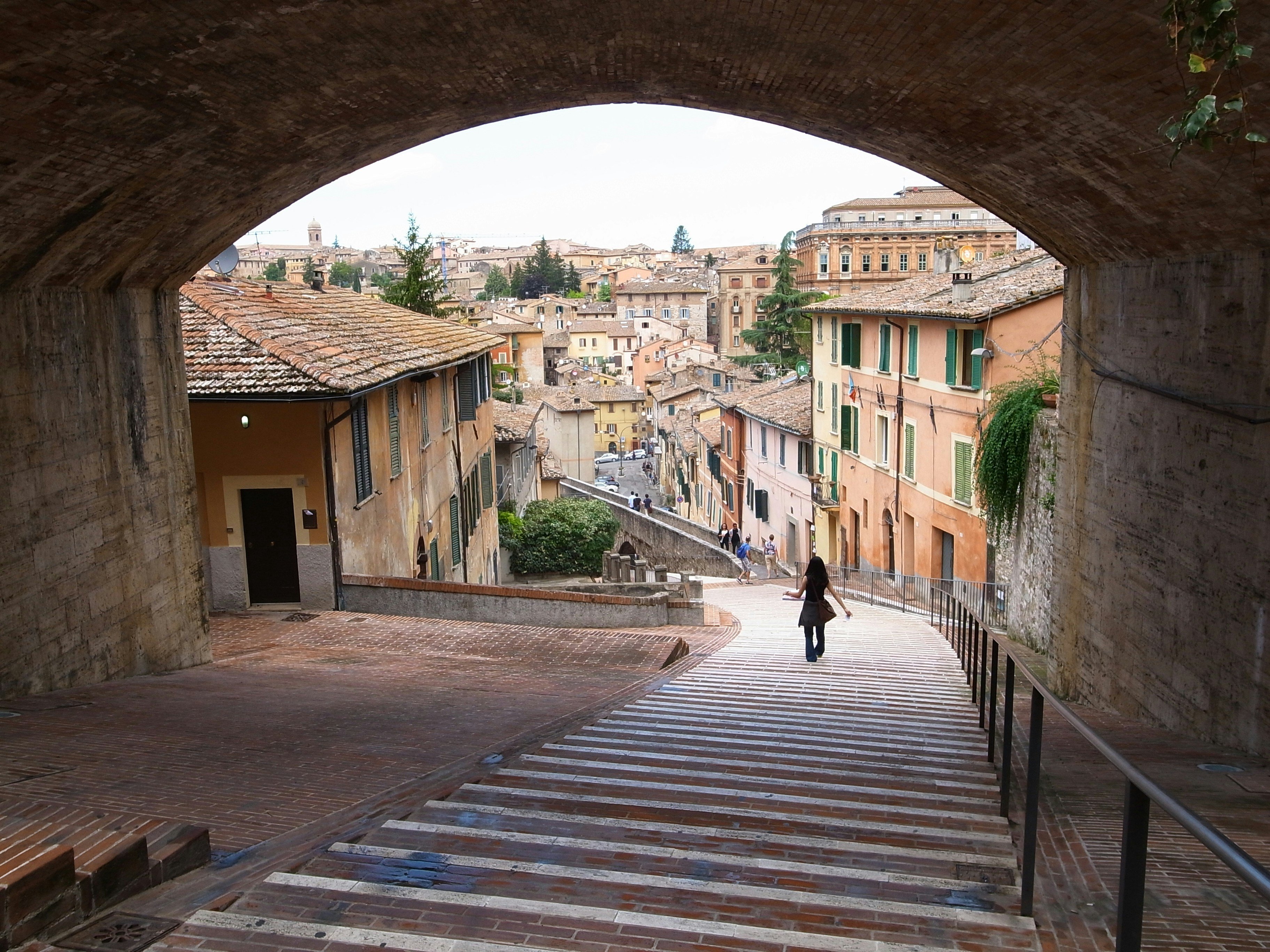
Perugia rewards curiosity, but a lot of its best corners hide in plain sight. A local knows which archway leads to the aqueduct, which kiosk has the freshest porchetta that day and which viewpoint is quiet at sunset. With Lokafy, you are matched with a Perugian who designs a private walk around what you love, from Etruscan history and underground passages to food stops and student hangouts. There is no fixed script and no crowd to follow.
Take a private, personalized walking experience with Lokafy in Perugia and see the city the way people who live here see it.
Frequently Asked Questions About Perugia
Is Perugia worth visiting?
Yes. Perugia combines Etruscan, medieval and Renaissance history with a lively student population, excellent Umbrian food and sweeping hilltop views. It is less crowded and more affordable than Florence or Rome, and it makes a great base for exploring Umbria.
How many days do you need in Perugia?
One full day covers the historic centre, the underground Rocca Paolina and the main food stops. Two days let you add the abbey of San Pietro, the Orto Medievale, the Città del Cioccolato and a slower evening at Porta Sole. Add a third day for a trip to Assisi.
What are the best hidden gems in Perugia?
The top hidden gems are the Via dell'Acquedotto aqueduct walk, the buried Via Bagliona inside the Rocca Paolina, the round Tempio di Sant'Angelo, the vaulted Via Maestà delle Volte, the Orto Medievale behind San Pietro and the Porta Sole viewpoint.
What food is Perugia known for?
Perugia is known for torta al testo, an unleavened flatbread stuffed with sausage, greens or cured meats, and for porchetta, slow-roasted pork served in a panino. Other local dishes include strangozzi and umbricelli pasta, black truffle, Trasimeno beans and chocolate, thanks to the Perugina company founded in the city in 1907.
Where do locals eat in Perugia?
Locals eat porchetta from the Granieri kiosk and torta al testo at Testone on Piazza Matteotti, queue for panini at La Bottega di Perugia on Piazza Morlacchi, and go to Dal Mi' Cocco and Osteria a Priori for sit-down Umbrian meals. Most avoid the picture-menu restaurants on Corso Vannucci.
Is Perugia walkable?
Yes, but it is steep. The historic centre is compact and mostly pedestrian, and a network of free public escalators and the Minimetrò connect the lower town and train station to the top of the hill. Comfortable shoes are essential.
How do you get from Perugia train station to the old town?
Take the Minimetrò from the Fontivegge stop next to the main train station up to Pincetto, which is a short walk from Piazza Matteotti and Corso Vannucci. A city bus is the alternative.
Enjoyed this article?