If you've ever watched Bridgerton and thought "I need to see these places in real life," you're not alone. Since the show dropped on Netflix in 2020, Bath has become one of the hottest destinations for fans wanting to walk the same streets as the Bridgertons and Featheringtons.
While the show is technically set in London, most of those beautiful street scenes were actually filmed in Bath. The city is famous for its golden-colored stone and grand old buildings that look exactly like a 19th-century dream.
That's why Bridgerton filming locations in Bath have become such a popular search for fans planning their 2026 trips. You can see the Featherington house, walk where the Duke made his dramatic entrance, and visit the actual rooms where those stunning ball scenes were filmed. And the best part? Everything's really close together, so you can easily see all the major spots in one visit.
The Featherington House: No.1 Royal Crescent
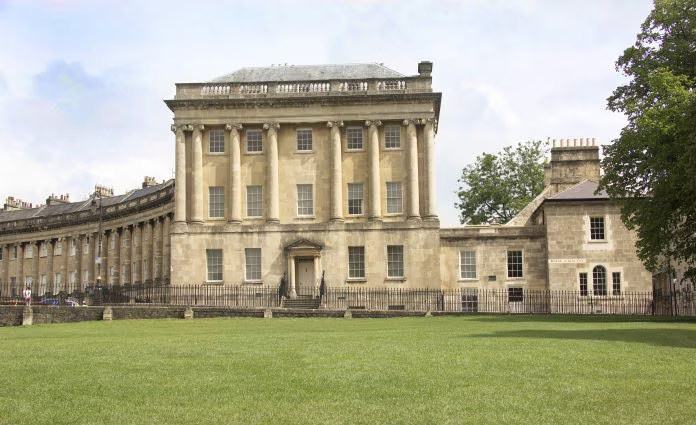
This is probably the most famous spot from the show. No.1 Royal Crescent is the Featherington family home, or at least the outside of it. Every time you see Lady Featherington pushing her daughters through that front door, trying to get them married off, that's No.1 Royal Crescent you're looking at.
The Royal Crescent is one of Bath's biggest landmarks. It was built between 1767 and 1775, and it's basically a long, sweeping curve of 30 connected houses looking out over a big green lawn and Royal Victoria Park. The show's designers loved it because it already looked perfect for the 1800s. They used some CGI tricks to make it look like the Featherington house sits across from the Bridgerton house in a London square, but really, it's just sitting pretty in Bath.
Here's something cool: No.1 Royal Crescent is actually a museum. You can go inside and see what life was like for rich people in the 1700s. They didn't film the interior scenes here, but the outside became the face of the Featherington home throughout all the seasons.
The whole Royal Crescent shows up in lots of scenes where characters are walking around, gossiping, and checking each other out during their daily promenades. When you visit, it's easy to imagine yourself as part of the “ton”, strolling along and pretending you're looking for a suitable match.
The Dress Shop: Abbey Green and the Modiste
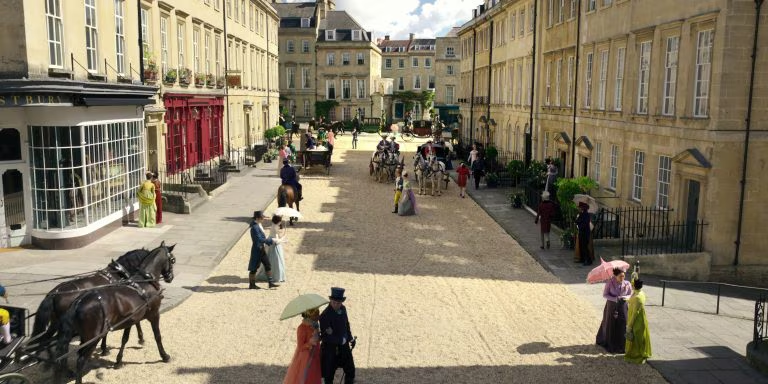
Just a short walk from Bath Abbey, there's a charming cobbled square called Abbey Green. It's got a big tree in the middle and old stone buildings all around it. In Bridgerton, this is where you'll find Madame Delacroix's dress shop, the Modiste.
The Modiste isn't just a shop in the show. It's where all the gossip happens, where people go to see the latest fashions and find out what everyone's talking about. Madame Delacroix knows everyone's secrets, and her shop is basically the place to be if you want to know what's going on in high society. The real building is actually a cafe called the Abbey Deli, and the production team filmed both inside and outside to create the dress shop scenes.
Today, you can actually visit the Abbey Deli and have afternoon tea there. They sell Bridgerton merchandise too, like special teas and clothing inspired by the show. The building itself is pretty old and protected, with those classic double bay windows that look perfect for the period.
Where the Magic Happens: Bath Assembly Rooms
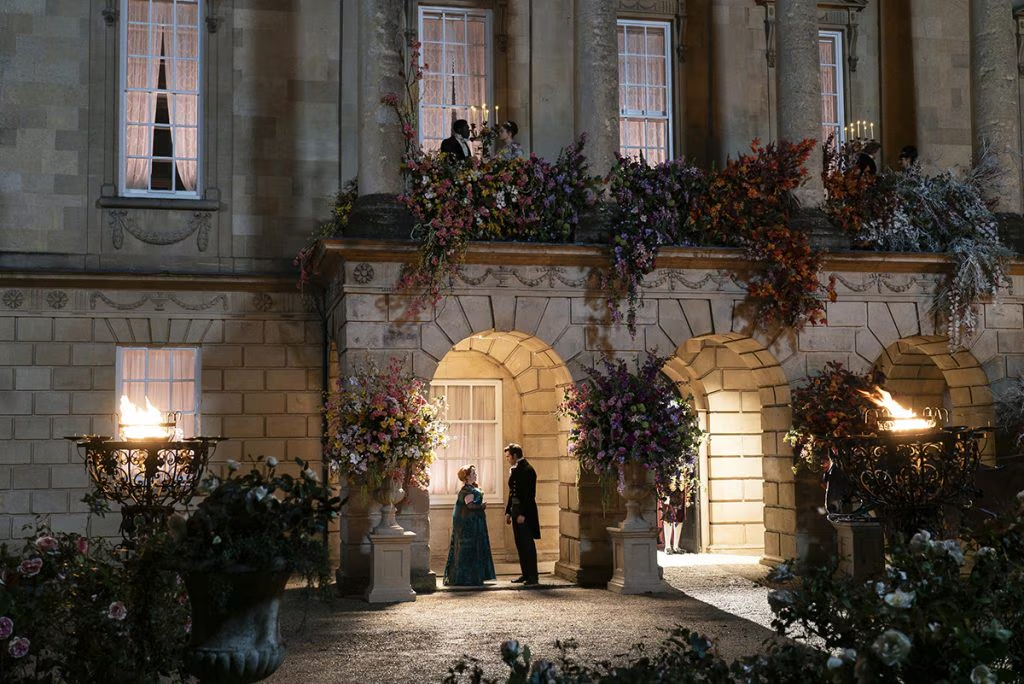
If you love the ball scenes in Bridgerton, you need to see the Assembly Rooms. This is where a lot of those amazing dance sequences were actually filmed. Back in the 1700s, the Assembly Rooms were the center of Bath's social scene. People came here to dance, play cards, drink tea, and basically see and be seen.
Built between 1769 and 1771, the Assembly Rooms have several gorgeous spaces, but the Ballroom is the real showstopper. It's huge (106 feet long) and has these incredible crystal chandeliers hanging from the ceiling. When you see those elaborate ball scenes in Bridgerton, with the dancers swirling around in their fancy costumes while modern pop songs get the orchestral treatment, that's all happening here in these rooms.
The Assembly Rooms are run by the National Trust now, and they're getting ready to open a new Georgian experience in early 2027. Right now, you can take guided tours and stand in the exact spots where your favorite scenes were filmed. The chandeliers, the massive ballroom, the elegant details all helps you understand why the show chose to film here. You can't really recreate this kind of authentic grandeur on a set.
Bath's Guildhall also got in on the action, with its Banqueting Room used for some ball scenes too. So between the Assembly Rooms and the Guildhall, Bath provided multiple stunning spaces for Bridgerton's social events.
Lady Danbury's House: The Holburne Museum
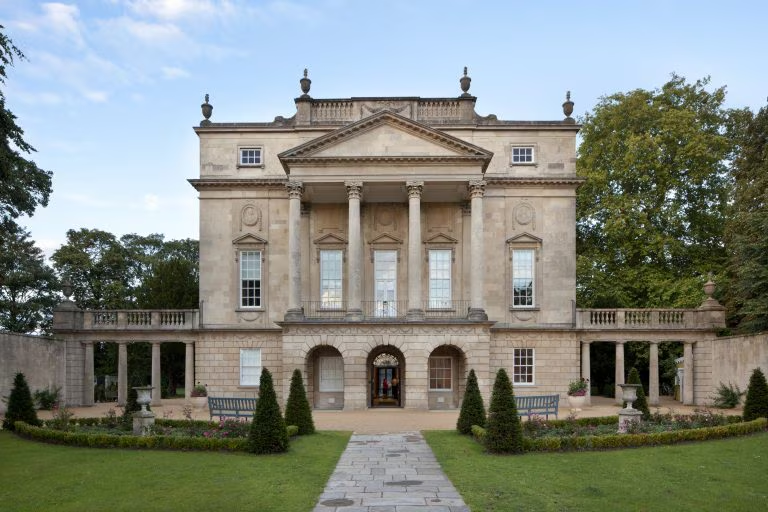
The grand building that becomes Lady Danbury's home in the show is actually the Holburne Museum. If you know Lady Danbury, you know she's one of the most powerful characters in Bridgerton, Queen Charlotte's close friend and someone you definitely don't want to cross. Her house needed to look impressive, and the Holburne Museum definitely fits the bill.
This beautiful building started out as the Sydney Hotel back in the 1790s. Later, in 1882, it became Bath's first public art gallery. It sits at the end of Great Pulteney Street with lovely gardens behind it, looking exactly like the kind of place a wealthy, influential woman would live. The production team barely had to change anything on the outside, though they were careful about camera angles to hide the modern extension.
The building shows up in both the first and second seasons. In season two, the Sharma sisters stay with Lady Danbury, and several important scenes happen here. If you look closely, you might notice that some of the decorations on the museum look similar to the ones they added to the Featherington house, which helps tie the show's look together.
Behind the museum, Sydney Gardens still have some of their old features from the Georgian era, like decorative bridges and little temples. While the gardens don't get much screen time in the show, they're the kind of outdoor spaces where people back then would have gone for entertainment and fresh air. The museum has a great art collection inside, so it's worth visiting even beyond the Bridgerton connection.
A Dramatic Entrance: Bath Street
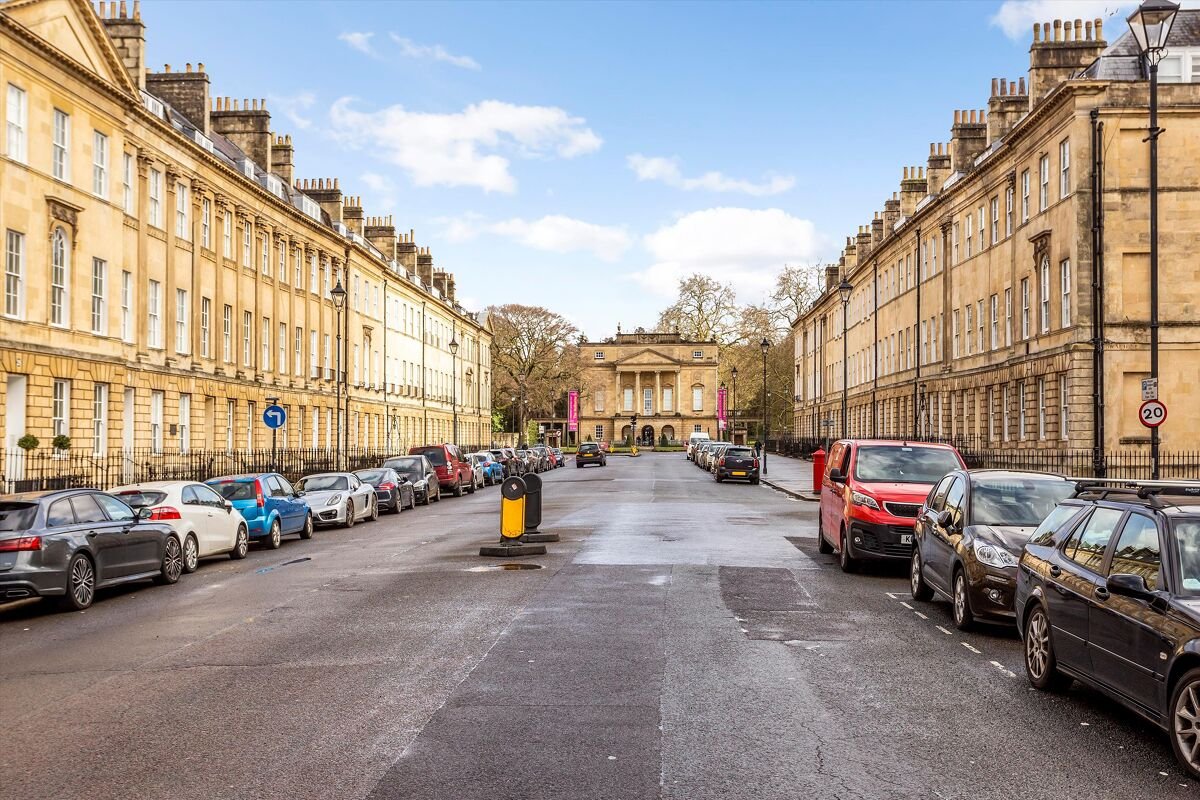
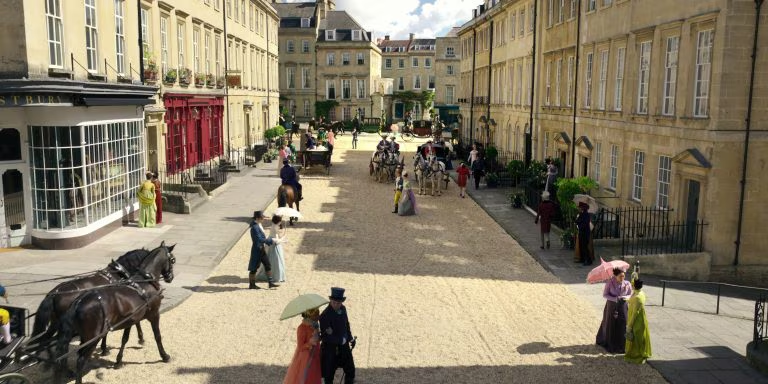
Bath Street makes its Bridgerton debut in the very first episode, when Simon Basset, the Duke of Hastings, makes his heart-stopping entrance into society on horseback. Though the show presents it as a fashionable Mayfair street in London, this distinctly Georgian thoroughfare is actually located in Bath's historic Spa Quarter.
The street's visual appeal for filming is immediately apparent. Its cobblestone surface, striking colonnades running along both sides, and complete absence of modern shop signage create an authentically period atmosphere. The production team needed to do little more than remove modern vehicles and add a few period-appropriate props to transform Bath Street into Regency London.
Bath's Georgian Streets
Beyond these major filming locations, Bath's Georgian streets provide countless backdrops for Bridgerton's exterior scenes. Beauford Square, built in 1730 to John Strahan's designs, features as another location for street filming. This square of two-story cottages maintains the Georgian character that makes Bath so cinematically valuable. Beauford Square is a quiet little area with a small green lawn and pretty iron railings. It’s where Eloise and Penelope often had their heart-to-heart talks away from their families.
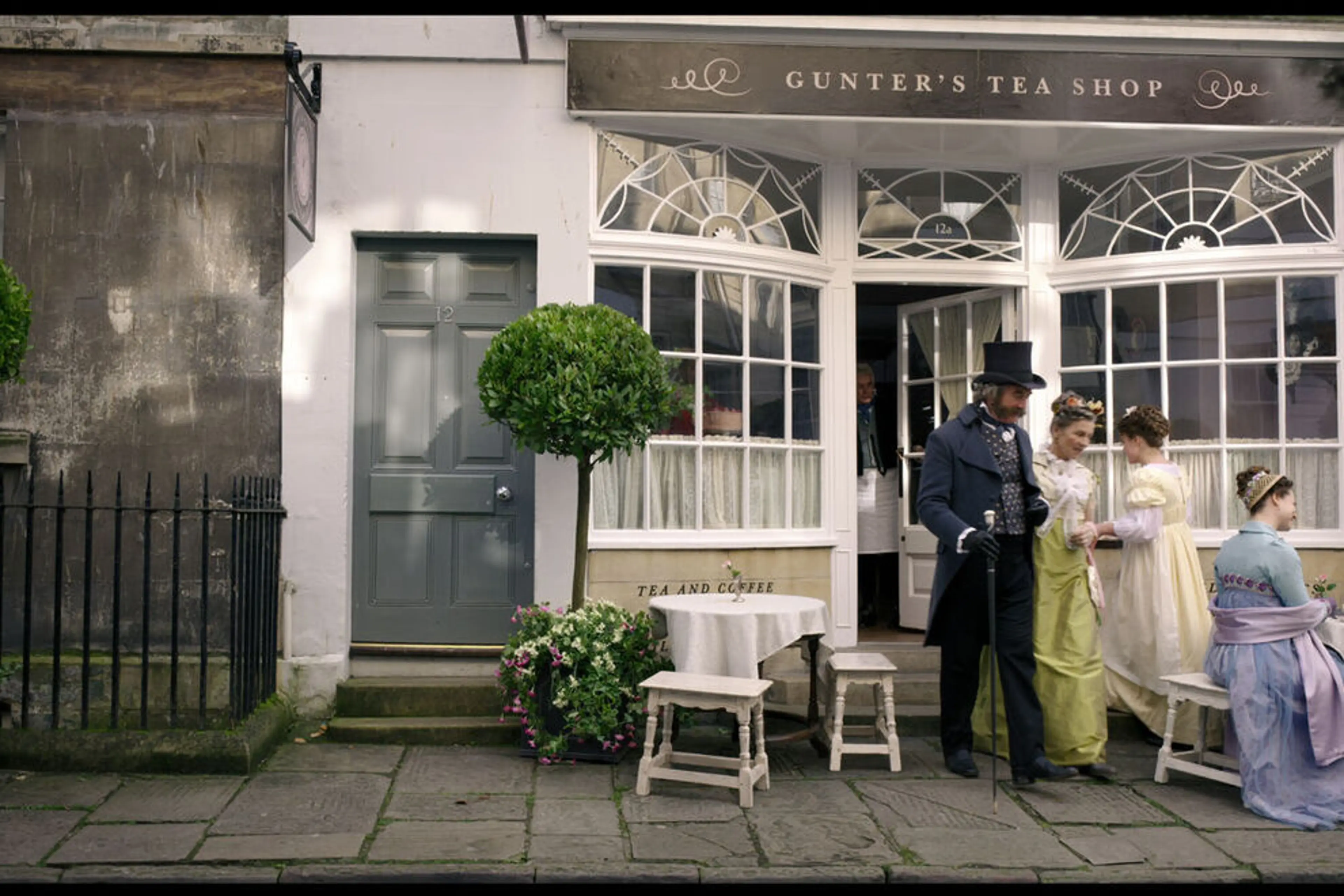
Trim Street is just around the corner and was the location for Gunter’s Tea Shop. These streets are narrow and full of character. A Bath Bridgerton tour is the best way to find these spots because they are easy to walk past if you don't know exactly where to look. They really capture the romantic, "secret" side of the show.
The entire Royal Crescent area, not just No.1, appears throughout the series. The sweeping curve of the Crescent itself, the manicured lawn in front, and Royal Victoria Park beyond all contribute to establishing the show's visual grandeur. The production team used various angles of the Crescent to create different London locations, demonstrating how Bath's architecture could multiply to fill multiple roles.
What makes these locations work so effectively on screen is Bath's remarkable architectural integrity. The city possesses over 5,000 listed buildings, and its designation as a UNESCO World Heritage Site in 1987 reflected international recognition of this exceptional Georgian legacy.
During the 18th century, Bath transformed from a modest spa town into one of Britain's most fashionable destinations. The social rituals, architectural developments, and cultural practices that emerged during this period directly informed the Regency era Bridgerton depicts. Walking through Bath offers genuine insight into the world that inspired both the show and the Julia Quinn novels it adapts.
Why Choose a Guided Bridgerton Walking Tour
While it's entirely possible to visit Bath's Bridgerton filming locations independently, there's considerable value in experiencing them with a knowledgeable local guide. The city's Georgian architecture, while visually stunning, reveals its full significance when understood in historical context. A guided Bath Bridgerton tour transforms a series of pretty filming locations into a cohesive narrative about how Georgian society actually functioned, why these spaces were designed as they were, and how they connect to the stories playing out on screen.
Expert guides also navigate the practical aspects that enhance any visit. They know the optimal times to visit each location to avoid crowds, the best angles for photographs, and how to structure a walking route that flows naturally through the city. They can identify architectural details visitors might otherwise overlook, explain the significance of features like the ha-ha in front of the Royal Crescent, or point out the controversy around No. 22's famously yellow door.
For Bridgerton fans specifically, guided tours offer opportunities to discuss the show with fellow enthusiasts, ask questions about how closely the series reflects actual historical practices, and understand which elements are historically accurate versus dramatic license.
Planning Your Bridgerton Travel Experience for 2026
As interest in Bridgerton filming locations in the UK continues to grow in 2026, Bath remains the single best destination for fans wanting to immerse themselves in the show's world. Unlike productions filmed across scattered locations requiring extensive travel, Bath concentrates numerous significant Bridgerton sites within a highly walkable historic center. Visitors can easily explore all the major locations in a single day while also enjoying Bath's other attractions, from the Roman Baths to the Jane Austen Centre.
To make the most of a trip to these famous sites, a little planning goes a long way. Bath is a very walkable city, but the cobblestones can be uneven, so comfortable shoes are a better choice than Regency-style heels. Most of the filming locations are within a 15 to 20 minute walk of each other, making it easy to see several spots in a single afternoon.
If you want photos without the crowds, arriving at the Royal Crescent or the Holburne Museum early in the morning is a good idea. By midday, these spots become very busy with fellow fans. Also, remember that many of these locations, like Abbey Green, are part of active business districts. While taking photos is encouraged, being mindful of the local shops and residents helps keep the city welcoming for everyone.
Things to do in Bath 2026 extend well beyond Bridgerton locations. The city's thermal spas, world-class museums, thriving food scene, and beautiful surrounding countryside ensure that even visitors who come primarily for the Bridgerton connection will find numerous reasons to extend their stay. The compact, walkable historic center makes it easy to combine Bridgerton filming locations with Bath's many other cultural offerings.
Experience Bridgerton's Bath with a Local
Bath is a beautiful city that feels like a movie set even when the cameras are not rolling. From the grand Royal Crescent to the quiet corners of Trim Street, there is so much to see. As you plan your trip for 2026, make sure to put these spots at the top of your list.
If you want to make the most of your visit, exploring with a local through Lokafy is the way to go. It is the perfect way to see the "ton" through the eyes of someone who lives there. You’ll leave with great photos and even better stories about the real-life world of Bridgerton.
Enjoyed this article?