The first time I took a train out of Florence for the day, I almost talked myself out of it. The city has enough art, food and Renaissance swagger to fill a week, so leaving felt like a waste. Then I spent an afternoon watching the light shift on the Arno in Pisa, and a slow Sunday lunch in Siena that I still think about, and the penny dropped.
Florence is a brilliant base. An hour in almost any direction and you land somewhere with a completely different character. Two of the easiest and most rewarding escapes are Pisa and Siena, and they could not be more different from each other. Here is how to reach each one, what to actually do when you get there, and where to eat so you skip the tourist spots clustered around the big monuments.
Quick Guide: Day Trips from Florence (Pisa or Siena)
- Primary recommendation: Pick one city per day. Pisa works as a relaxed half day, Siena rewards a full day. They sit in opposite directions, so cramming both into one day means seeing neither properly.
- Top choice for a short, easy trip: Pisa. Take the regional train from Firenze Santa Maria Novella to Pisa Centrale (about 50 to 60 minutes, around 8 to 9 euros each way, no need to book ahead). Pro tip: stamp your paper ticket at the green machines on the platform before boarding, or buy on the Trenitalia app to skip that step.
- Value pick for food and atmosphere: Siena, for anyone who wants medieval streets, hilltop views and a long Tuscan lunch over Renaissance art and a leaning tower.
- The best way to see Italy: Take a private, personalised walking experience with Lokafy in Florence, Pisa or Siena and explore the cities with a local who actually lives there, before or after your day trips.
Pisa or Siena: which day trip should you pick?
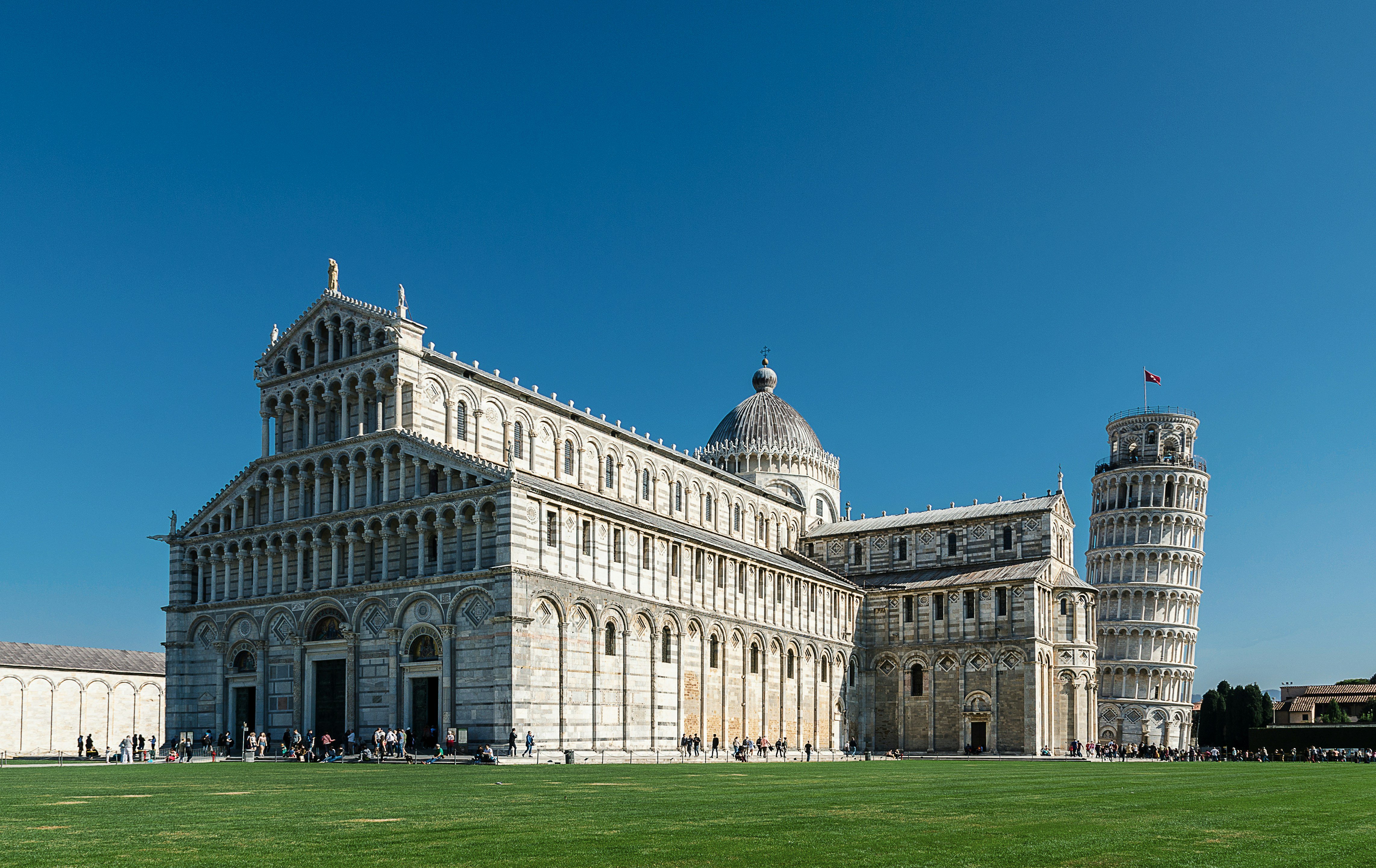
The honest answer depends on what you want from the day. Pisa is flat, compact and quick. You can be standing under the Leaning Tower a little over an hour after you leave your Florence hotel, see the headline sights and the quieter corners in half a day, and be back for dinner with energy to spare. It suits a morning out, a first day when you are easing into Tuscany, or a trip with kids who want one big "wow" landmark and a riverside gelato.
Siena asks more of you and gives more back. It is a hilltop medieval city built for wandering, with a shell-shaped main square, a striped cathedral that stops people mid-sentence, and a food culture that leans rustic and proud. You need a full day to do it any justice, and you will want to slow down rather than tick boxes. If your idea of a good day out involves climbing a tower, getting pleasantly lost in stone alleys and eating hand-rolled pasta with a glass of local red, Siena is your pick.
A simple way to decide: choose Pisa if you are short on time or travelling with restless feet, and Siena if you have a clear day and want depth over speed.
Florence to Pisa: the easy half-day escape
How to get from Florence to Pisa
Take the train. It is the fastest and cheapest way, and it drops you near the centre. Regional trains run from Firenze Santa Maria Novella to Pisa Centrale roughly every half hour throughout the day, with more than forty services daily. The ride takes about 50 to 60 minutes and costs around 8 to 9 euros each way on a standard second-class regional ticket. The fare is fixed, so there is no advantage to booking weeks ahead. Buy at the station machine, the ticket window, or on the Trenitalia app.
One thing that catches first-timers out: if you buy a paper regional ticket, you must validate it at the small green or yellow machines on the platform before you board, or you risk a fine. A digital ticket bought through the app needs no stamping. From Pisa Centrale, the Leaning Tower is a flat 20-minute walk straight through town, or a short hop on the LAM Rossa bus if you would rather save your legs for later.
Things to do in Pisa beyond the Leaning Tower
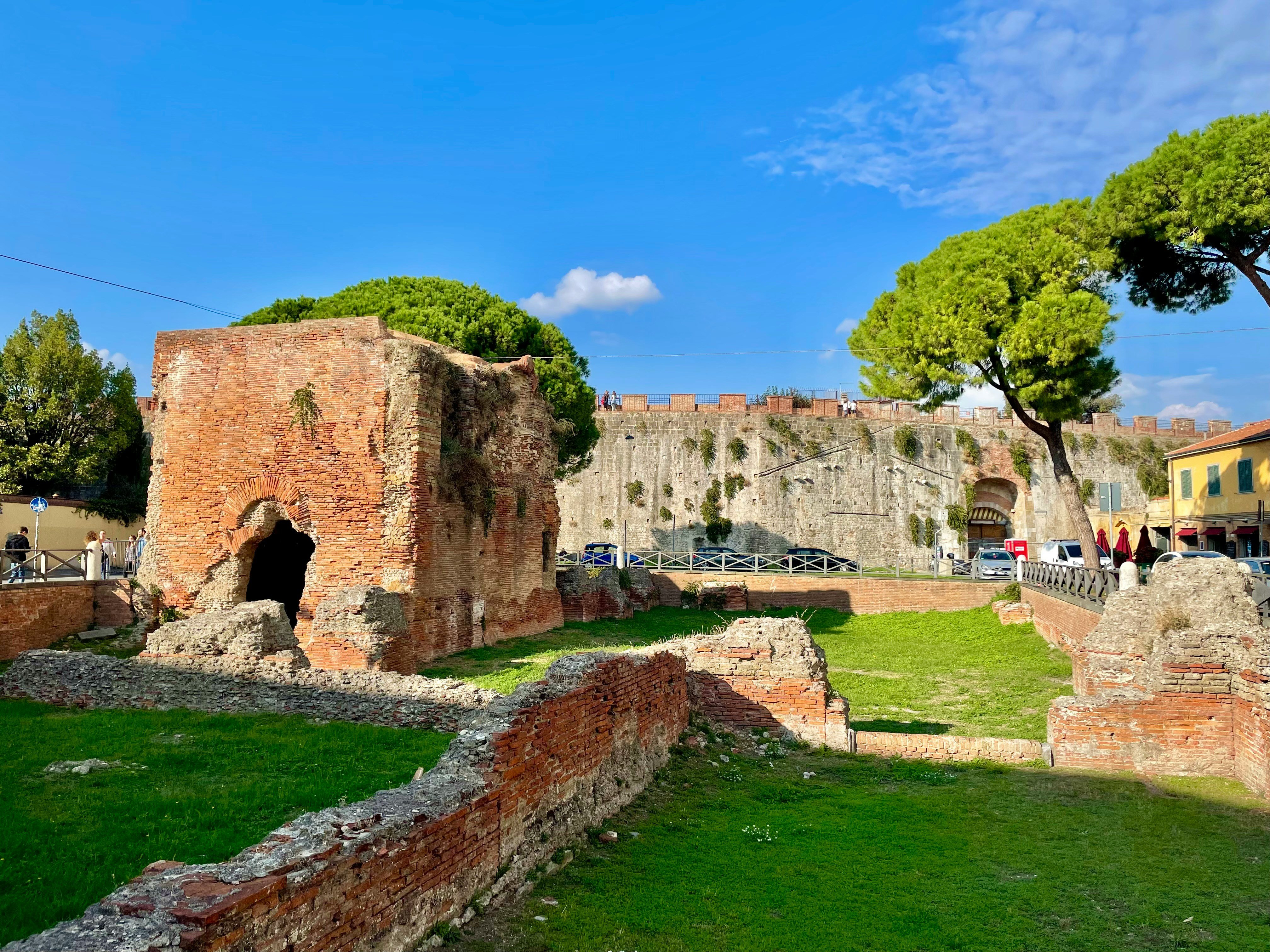
The Piazza dei Miracoli, also called Piazza del Duomo, is the famous green lawn where the Tower leans and everyone poses for the same photo. Get that out of your system, then look closer, because the square has more than its lopsided star. The Cathedral next door is free to step into with a timed ticket, and the round Baptistery beside it has acoustics so good that an attendant sings a single note every half hour and lets it bloom under the dome. Behind the Cathedral sits the Camposanto Monumentale, a long marble cloister with extraordinary frescoes that most day-trippers walk straight past. It is the most quietly moving spot on the square.
Then leave the lawn and walk into the city people actually live in. Piazza dei Cavalieri, the old Knights' Square, is home to the Scuola Normale Superiore, one of Italy's most prestigious universities, and it has a grandeur the tour groups miss. Borgo Stretto, the arcaded shopping street, leads you toward the river. Walk the Lungarno, the embankment along the Arno, and find Santa Maria della Spina, a tiny Gothic church covered in spires that looks like it was carved from lace. A few streets away is Keith Haring's Tuttomondo mural, painted in 1989 and one of the artist's last public works, a burst of colour on the side of an ordinary building.
Where locals eat in Pisa
Skip any board advertising a 15-euro "bistecca" near the Tower. That is tourist-grade meat, not the real thing. Pisa's food is honest, coastal and a little rough around the edges, born from sailors and university students rather than fine dining.
Start with cecina, a thin golden flatbread made from chickpea flour, water, salt and olive oil. Order it hot, with a generous grind of black pepper, from a pizza-by-the-slice place like Nando. Locals eat it plain or tucked inside a piece of focaccia like a sandwich. For a proper sit-down meal, L'Osteria dei Cavalieri and Trattoria da Stelio are small, popular and packed with locals, so book a day ahead for dinner. Look out for Mucco Pisano, a prized local beef, and bordatino, a cornmeal and cabbage soup that tastes like winter in a bowl. Finish with gelato from I De Coltelli on the Lungarno and eat it walking by the river at sunset, which is the most Pisan thing you can do.
A simple Pisa day
Morning train from Florence, walk to Piazza dei Miracoli, climb the Tower if you have pre-booked a slot, see the Cathedral, Baptistery and Camposanto. Cecina and a wander through Piazza dei Cavalieri and Borgo Stretto for lunch. Afternoon along the Lungarno to Santa Maria della Spina and the Tuttomondo mural, gelato by the water, then back to the station. Easy, unhurried, done by early evening.
Florence to Siena: the full-day medieval one
How to get from Florence to Siena

Here the train is the wrong call, and this trips a lot of people up. Take the bus instead. The 131R "rapida" run by Autolinee Toscane leaves from the Autostazione, the bus station right beside Santa Maria Novella train station, and reaches Siena in about 75 minutes. The reason it beats the train is geography: the bus drops you at Piazza Gramsci, a flat 10-minute walk from the historic centre, while the train leaves you at a station below the hill, so you then face an escalator, a local bus or a taxi to climb up.
Buy your ticket at the station for around 8.40 euros, or pay a little more on board. Catch the 131R, not the slower 131O, which stops in small towns along the way and adds 20 to 25 minutes. There is no need to reserve in advance, and buses run frequently through the day. Flixbus and Itabus also serve the route, but they use Villa Costanza on the edge of Florence and the area near Siena's train station, both far less convenient than the central bus.
Things to do in Siena
Walk straight to the Piazza del Campo, the sloping, shell-shaped square that works as the city's living room. Sit on the warm brick for a while. This is where life happens. Rising above it is the Torre del Mangia, a 102-metre bell tower you can climb for a sweeping view over terracotta rooftops and the hills beyond. Below the tower, the Palazzo Pubblico houses the Museo Civico and Ambrogio Lorenzetti's "Allegory of Good and Bad Government" frescoes, a strikingly modern lesson in power and justice for a medieval painting.
The Duomo is the other showstopper, a Romanesque-Gothic cathedral in banded marble, with a floor and a Piccolomini Library that reward a slow look. The OPA SI Pass, valid for three consecutive days, covers the Duomo, the library, the Baptistery, the Crypt, the Museo dell'Opera and the Facciatone, the panoramic terrace on the unfinished cathedral expansion. The Facciatone view rivals the Torre del Mangia with a fraction of the queue. Then let yourself drift through the contrade, the 17 historic districts, each marked by its own flags, colours and animal emblem on the lanes.
A note on the Palio
If you visit on 2 July (Palio della Madonna di Provenzano) or 16 August (Palio dell'Assunta), the 2026 race dates, you will catch Siena at full intensity. The Palio is a bareback horse race around the Campo, lasting around 90 seconds, and it means everything to the city. The centre of the square is free but fills to capacity hours ahead, with no shade, no toilets and no easy exit once you are in. It is unforgettable, and it is not a casual day-trip add-on. Plan around it deliberately or visit on another date when the Campo is calm enough to enjoy.

Where locals eat in Siena
The golden rule: have your aperitivo on the Campo for the view, then eat dinner on a side street, because restaurants directly on the square are reliably overpriced. Siena's signature dish is pici, a thick, hand-rolled pasta made with flour and water and no egg, served with aglione (a garlic and tomato sauce) or cacio e pepe. If you see pici offered with Bolognese, walk on, because that belongs to another city. A true Sienese ragù uses local wild boar (cinghiale) or Cinta Senese pork, a heritage breed you can spot by the DOP label on the menu.
For a proper trattoria meal, Antica Trattoria Papei sits just behind the Campo near Piazza del Mercato. Osteria Il Grattacielo does a cheap, satisfying stand-up plate of Tuscan classics. Enoteca i Terzi makes its pasta in-house under old brick vaults, and Trattoria La Torre on Via di Salicotto is run by the Torre contrada, so expect a lively, deeply local room. For sweets, buy panforte (a dense spiced fruitcake) and ricciarelli (soft almond cookies) from a real pasticceria like Nannini rather than a souvenir shop, where they tend to sit too long and go dry. Pair your meal with a glass of Chianti Colli Senesi, the local red, or Vernaccia di San Gimignano if you want a crisp white.
A simple Siena day
Catch the 131R bus mid-morning, walk in from Piazza Gramsci, and head for the Campo. Climb the Torre del Mangia or the Facciatone before the midday crowd, then see the Duomo complex. Long lunch of pici on a side street. Afternoon in the Museo Civico for the frescoes, then a slow loop through the contrade with a panforte stop. Late bus back to Florence, full and happy.
→ Siena for First-Time Visitors: A Local's Guide to What Really Matters
Can you do Pisa and Siena in one day from Florence?
On a map it looks possible. In practice it is a bad idea. The two cities lie in opposite directions from Florence, so you would spend most of the day on trains and buses, and Siena alone deserves a full day. If you are tight on time and want two stops, pair Pisa with nearby Lucca instead, since they sit on the same rail line, and give Siena its own unhurried day. One city, done well, beats two seen in a blur.
See Tuscany the way locals do
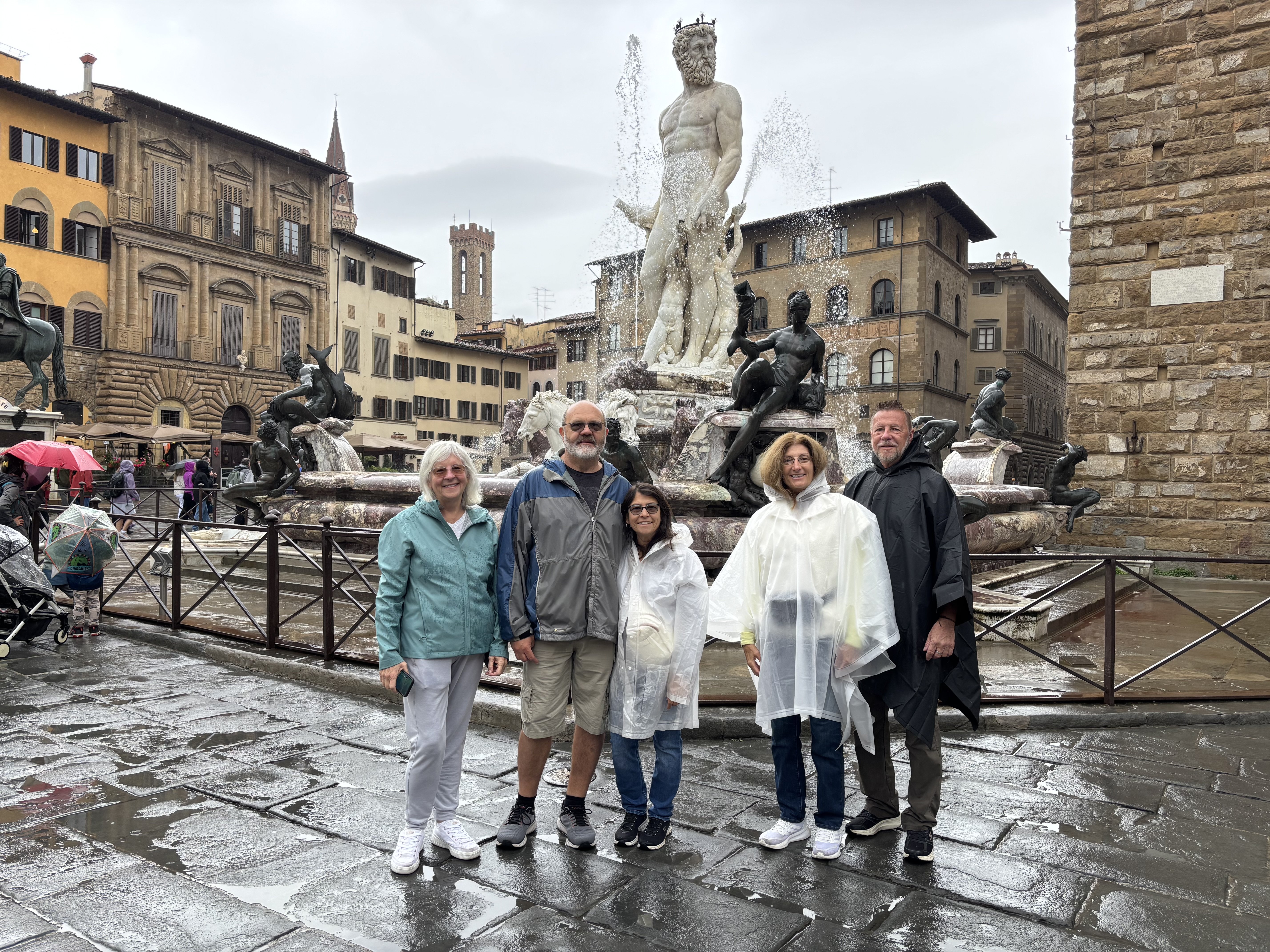
The monuments are the easy part. The harder thing to find on a quick trip is the texture of a place: the bar where the morning regulars stand, the trattoria with the handwritten menu, the back lane that opens onto a view no guidebook flagged. That is exactly what a local shows you.
Before or after your day trips, spend a few hours walking Florence with a Lokafy local who lives there, on a private, personalised tour built around what you actually want to see. It is a guided tour with a local friend showing you their city, and it makes everything that follows, including a day out to Pisa or Siena, land differently.
Frequently asked questions
Is Pisa or Siena a better day trip from Florence? Both are excellent, but they suit different days. Pisa is faster and flatter and works well as a half day focused on the Leaning Tower and a compact old town. Siena needs a full day and rewards slow wandering, with a famous shell-shaped square, a striped cathedral and a rich food scene. Pick Pisa for speed and ease, Siena for depth and atmosphere.
How do I get from Florence to Pisa? Take a regional train from Firenze Santa Maria Novella to Pisa Centrale. The ride takes about 50 to 60 minutes, costs around 8 to 9 euros each way at a fixed fare, and runs roughly every half hour. From Pisa Centrale it is a flat 20-minute walk to the Leaning Tower. Validate a paper ticket on the platform before boarding, or use a digital ticket on the Trenitalia app.
How do I get from Florence to Siena? Take the 131R "rapida" bus run by Autolinee Toscane from the Autostazione next to Santa Maria Novella station. It takes about 75 minutes and drops you at Piazza Gramsci, a flat 10-minute walk from the centre. Tickets cost around 8.40 euros at the station. The bus beats the train here because the Siena train station sits below the hill, away from the historic centre.
Can you visit Pisa and Siena in one day from Florence? It is not recommended. The cities are in opposite directions, and Siena needs a full day on its own. You would spend most of the day in transit. Give each city its own day, or pair Pisa with Lucca on the same train line if you want two stops in one outing.
How much time do I need in Pisa and in Siena? Pisa works as a half day, roughly four to five hours, which covers Piazza dei Miracoli, the old town and a riverside walk. Siena needs a full day to take in the Campo, the Duomo complex, the Museo Civico and a proper lunch without rushing.
Do I need to book the Leaning Tower of Pisa in advance? Yes, if you want to climb it. Tower climbs are by timed entry and sell out in peak season, so reserve a slot ahead online. Seeing the Tower from the square, and visiting the Cathedral, Baptistery and Camposanto, can be done with same-day tickets, though arriving early helps in summer.
More From Lokafy in Italy
→ Experience Italy Like a Local: Lokafy's Top 5 Hidden Gem Destinations
→ Florence Beyond the Duomo: What Locals Actually Want You to Know
→ Bologna Food Guide: What to Eat in Italy’s Culinary Capital
Enjoyed this article?


