Why do you travel? There are probably a hundred different ways you could answer that question: you want to meet people, explore new extraordinary places, connect with nature, go on solo adventures, and so on… However, there’s something that will always be there, even if you don’t think much about it. Of course, we’re talking about food! Being able to get a taste of local food scenes is always a highlight in any trip; it is absolutely necessary and if you truly want to get to know a new place, its gastronomy will give you important clues about its culture and history. Whether it is street food of Michelin-starred restaurants, that’s where your adventure begins.

Culinary Odysseys:
In all honesty, there are different interpretations of a culinary odyssey. Are we talking about traveling to remote places with extreme cuisines? Or are we simply referring to food scenes that have so many layers, textures and flavors that one dish takes you on a trip around the world with just one bite? For the purpose of this blog, we’ll go with the second option. And what better way to describe a culinary odyssey than by talking about Peruvian cuisine, which has become increasingly popular in the last few years, and that now everyone recognizes for their bold flavors, multicultural combinations and earthy ingredients.
The Peruvian cuisine odyssey will take you on a journey through several geographical locations (such as the Amazon, the Andes and the Pacific coast) and the diverse cultures that have created a multicultural Peru (Japanese, Chinese, Spanish, African, Indigenous). Fortunately, you don’t have to run around Peru in order to try every single dish (although it sounds like a great plan!), because you can find it all in Lima, the capital. It is the country’s gastronomic hub, where chevicherías and pisco bars are the norm, and that has carefully created a massive offer of restaurants that serve both the most popular local dishes, as well as some innovative recipes. For example, Lima is the birthplace of chifa, a fusion of Cantonese and Peruvian cuisine, and if you want to get a taste of it, look no further than Calle Capón.
For our next odyssey, we’ll move to Mexico, another Latin American country known for its delicious food that has taken the world by storm. But, we’re going to be more specific here, because we’ll go to one city in particular: San Miguel de Allende. It is one of the country’s most cosmopolitan cities, and although its food scene has become increasingly innovative and sophisticated, the traditional, more simple dishes are beloved by the people and they are truly the best taste of San Miguel de Allende. What makes San Miguel’s gastronomy stand out is the fact that it uses local ingredients both for their traditional dishes and international cuisine. So, even if you’re in an Italian restaurant, chances are the ingredients will take you to Tuscany and back to Mexico in the blink of an eye. Since there are multiple ranches, farms, vineyards and orchards that provide the best quality ingredients, food in San Miguel will always taste fresh.
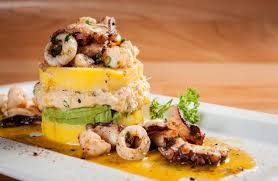
Chifa is the result of a match made in heaven: Peruvian and Cantonese cuisines.
Neighborhood Food Crawls:
Now you know some of the cities and countries where you can experience a wonderful culinary odyssey filled with colors, flavors, culture and history. However, what happens when you already know the city is a great gastronomic destination, but you’re not quite sure where are the best places to eat? Don’t worry, we’ve got you covered. For this section, we’ll go over some neighborhoods around the world that are beloved by foodies and known for their culinary DNA, with restaurants and street stalls waiting for their next hungry customer.
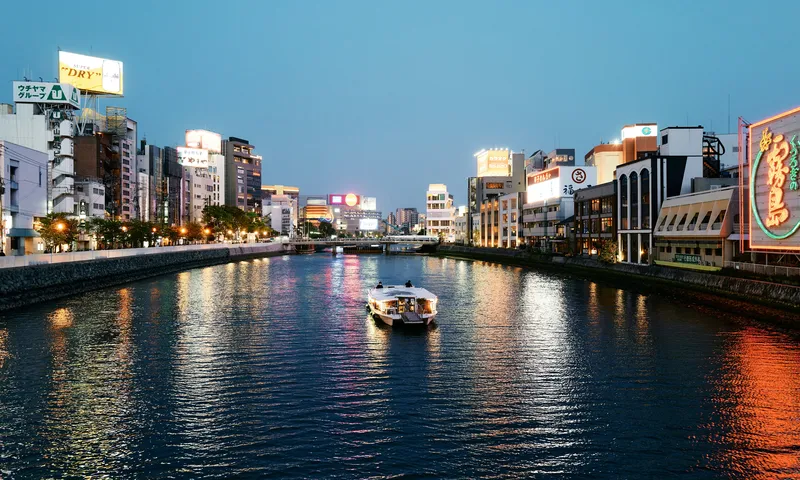
First off, we’re flying all the way to Asia, to the one and only Osaka, regarded as “The Kitchen of Japan”. This city is like a dream come true to anyone obsessed with food, because everywhere you look, there’ll be a place to eat! The first neighborhood that you have to visit in order to stay true to the kuidaore philosophy (which roughly translates to “eat until you drop”) is Dotonbori, a district that glows thanks to all of its neon signs. Scattered across the Dotonbori waterway, you’ll find street food stalls selling takoyaki or kushi katsu. And if that’s not enough, there are also plenty of izakaya-style pubs, and tabehoudai (all-you-can-eat) okonomiyaki restaurants, perfect for trying out teppanyaki, udon or ramen. Other districts that you can visit if you want to eat are Shinsekai with its kushikatsu shops and shogi parlors, or Osaka Station City, where restaurants are more elegant.
We’ll stay in Asia but move to Thailand, where our destination, Chiang Mai, awaits. This city in Northern Thailand is recognized around the world for its street food. The first district that we have to mention is Chinatown, one of the most vibrant neighborhoods of Chiang Mai and the perfect spot to try the city’s street food. Its Warorot Market, or Kad Luang, is filled with street food stalls of both Chinese and Thai recipes, where you’ll be able to taste the Burmese and Chinese influence in the ingredients used and dishes served. In Chiang Mai, khao niao, sticky rice, is the main staple at every meal, and make sure to taste every nam prik (chili dip) you can, because they are unique to this area. Additionally, another place that you must visit in order to taste the most authentic street food is the northern Chang Phuak gate, just outside the Old City. It is the spot where locals come to eat dishes like pork leg rice and bualoy, and where you won’t find a vacant seat during the whole evening.

Street food is deeply intertwined in Chiang Mai’s DNA.
Artisan Workshop Visits:
As we said at the beginning of our blog, exploring a place’s gastronomy means learning about its culture and its history, just as much as it means enjoying new and delicious foods. That’s the reason why we wanted to end this blog by mentioning some artisan workshop visits, basically cooking classes where you learn how to make traditional food and get familiar with the culture, processes and ingredients behind the magic. For this section, we are traveling all across the world, from Italy, to Colombia, and all the way to India.
We’ll begin our journey in Italy, where we’ll uncover the secrets of Tuscany through its food. Here, you’ll have the opportunity to shop at a Florentine market all the ingredients needed for a 4-course lunch, and then go over to a farmhouse in the countryside where you’ll learn how to prepare bruschetta, pasta and tiramisù. This is an experience that will bring you close to the place that you’re visiting, and that will showcase the most extraordinary elements that make Tuscany so fresh and divine. Later on, we’ll move to Colombia, specifically Medellín, where you’ll learn how to cook traditional Colombian dishes along with the community, bringing a special meaning to the activity, since it shows that food can also be an opportunity to heal wounds and re-establish social tissue. Finally, in Mumbai, India, you’ll get the chance to cook a vegetarian menu of Punjabi dishes, after exploring the Wadala Church Market. All of these are great experiences that will bring you closer to locals, and welcome you into the world of local cuisines and traditions.
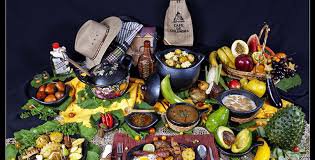
Food can also be artisanal, and preparing typical dishes can become a wonderful personal experience filled with history and cultural lessons.
Well, thank you for coming with us on this delicious tour around the world. It has been a pleasure to discover the wonderful ways in which gastronomy makes a place so special, and honestly, how it welcomes everyone with open arms. Aren’t you hungry? We certainly are…
Enjoyed this article?