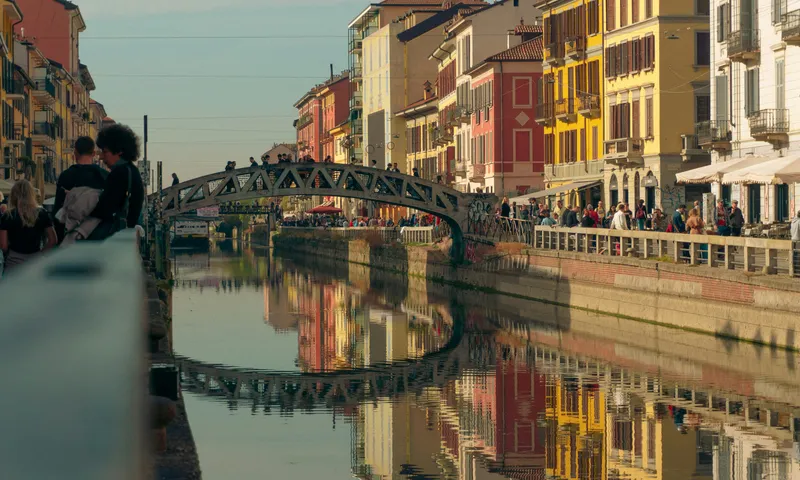
Bruges is the fairy tale. Brussels is the real Belgium.
Most people who visit Belgium for the first time pick Bruges, and it is not hard to understand why. The canals, the cobblestones, the step-gabled medieval houses reflected in dark water, it looks exactly like what a European city is supposed to look like and it delivers on that image in a way very few places actually manage. But most people who only visit Bruges leave Belgium thinking they understand the country, and they do not. Not really.
Brussels is an hour away by train and it is a completely different proposition. Chaotic, bilingual, architecturally inconsistent, home to one of the best food scenes in Europe, stuffed with Art Nouveau masterpieces and flea markets and spontaneous fermentation breweries and a cultural diversity that reflects Belgium's complicated history in ways that no amount of canal-gazing in Bruges can quite prepare you for. It is the city that does not particularly care whether you like it, which is exactly what makes it likeable.
The honest comparison is this. Bruges delivers in a day and rewards one night. Brussels takes longer to understand and rewards every hour you give it. They are different enough that choosing between them feels like a genuine decision, and close enough that doing both is easier than most people realise.
What Bruges Actually Feels Like

Walking into the center of Bruges for the first time does something to most people. It stops them.
The medieval Flemish trading city that exists here has been preserved so completely, the entire historic center is UNESCO-listed, that arriving feels less like visiting a city and more like stepping into a painting that has somehow remained inhabitable. The Markt, the main market square, is surrounded by guild houses and dominated by the Belfry tower. The Burg Square, slightly less famous and arguably more beautiful, holds the Basilica of the Holy Blood in a corner that looks like it was designed specifically to be discovered by accident. The canals reflect everything back at you and the horse-drawn carriages on the cobblestones complete a scene that would feel theatrical if it were not genuinely ancient.
Nicholas, one of our Lokafy locals in Bruges, describes his tours as covering museums, churches, and touristic attractions, and says of his guests that he believes their experience was worthwhile. What comes through in that description is the genuine care of someone who wants visitors to actually understand what they are looking at. Bruges has layers that are invisible if you only photograph the surface, the Flemish Primitive paintings in the Groeningemuseum, the story of the begijnhof, the way the city's economy shifted when its harbour silted up in the 15th century and it essentially froze in time as a result. That freezing is why it looks the way it does today. It is a beautiful accident of economic history.
Francis, another of our Bruges locals, had a guest who was visiting for the second time. He showed him different images of the city and shared historical happenings and legends, and his guest was genuinely interested and appreciated the tour very much. The fact that someone returned to Bruges and found it worth exploring in depth a second time tells you something. There is more here than one visit captures.
The thing about Bruges that most travel writing misses is what happens after 6pm. During the day, particularly in summer, the city center is dense with visitors who have arrived from Bruges's port at Zeebrugge, from Brussels on the train, from across northern Europe on coaches. It can feel, in the worst moments of peak summer, like a very beautiful open-air museum. But when the day-trippers leave in the late afternoon, something changes. The streets quiet down, the restaurants fill with people who are actually staying, and the city relaxes into something that feels much more like a real place. If you visit Bruges, stay at least one night. The evening version of the city is the one worth seeing.
What Brussels Actually Feels Like
Brussels will not seduce you in the same way Bruges does. It requires more patience and it rewards that patience considerably.
The Grand-Place is the place to start, and it is genuinely one of the most beautiful squares in Europe. The ornate guildhalls that ring it, covered in gold detail, are the kind of architecture that makes you stop and look properly rather than glancing and moving on. Go at night when it is lit and the tourists have thinned and you are standing in something that feels genuinely magnificent. Then walk 200 metres in any direction and you will hit brutalist EU office buildings from the 1960s or a construction site or a street that somehow managed to avoid any architectural coherence whatsoever. This is Brussels. It holds all of it without apology.

Daniel, one of our Lokafy locals in Brussels, described a tour with his guest Scott as a pleasure, sharing anecdotes along the way to see the highlights of the city. That word, anecdotes, is the right one for Brussels. The city runs on stories. The comic strip murals that appear on building facades across the city, more than sixty of them, Tintin and the Smurfs and Lucky Luke on the sides of ordinary apartment blocks, came from a city that invented the graphic novel as an art form and considers it entirely normal to decorate its streets with the results. The EU quarter exists because of a historical accident in the 1950s when Belgium lobbied to host the institutions and won. The Atomium, the giant atom structure built for the 1958 World's Fair, still stands in a suburb because nobody could agree on whether to demolish it and eventually people just started liking it. Brussels accumulates these things and lets them coexist.
Via, another of our Brussels locals, summed up her approach well. She and her guests had great conversation, visited the places they agreed on together, and the guests left with a bundle of tips for what to do in the evening. That last part matters. Brussels is a city with a strong evening culture, the restaurant scene, the bars, the live music, and a local knows which parts of that are worth your time and which are just proximity to the tourist circuit.
The Marolles neighbourhood is the part of Brussels that locals consistently describe as the most genuinely theirs. A daily flea market at the Place du Jeu de Balle, antique shops, local bars serving cheap beer to a crowd that mixes elderly Belgians with young artists and everyone in between. It is not pretty in the Bruges sense but it is alive in a way that Bruges's center sometimes is not. Saint-Gilles, the Art Nouveau quarter, has Victor Horta's house and studio, now a museum, which is the best single building in Brussels and one of the most beautiful domestic interiors in Europe. Sablon has the upscale chocolate shops and the weekend antique market and a general sense that money and taste have arrived here and made themselves comfortable.
The Food: And This Is Where Brussels Pulls Ahead

Belgium's food reputation rests on four things: frites, waffles, beer, and chocolate. All four are better than you expect. But Brussels adds a fifth dimension that Bruges does not quite match, which is depth.
The frites question is important and worth treating seriously. Belgian frites are fried twice, which is why they are crispier outside and fluffier inside than fries anywhere else. The best place to eat
in Brussels is from a good friterie, a dedicated frites stand, rather than from a restaurant. Maison Antoine in the Ixelles neighbourhood is the most famous and the queue outside it on a weekend evening tells you what you need to know.
The waffle situation requires clarification because there are two distinct Belgian waffles and most tourists confuse them. The Brussels waffle is the rectangular, light, crispy one often eaten plain or with fruit and cream. The Liège waffle, which you will also find everywhere in Brussels, is denser, made with pearl sugar that caramelises during cooking, and eaten warm. The Bruges waffle is its own regional variation, round and dense. All three are good. None of them are the thick sweet things topped with chocolate and strawberries sold from tourist stands, which are made for visitors rather than locals and are best avoided.
The beer in Brussels goes very deep. Cantillon, in the Anderlecht neighbourhood, is a brewery using spontaneous fermentation to make lambic beers in a building that has not changed much since 1900. The tour, which involves walking through the brewery as the beer ages in barrels and bottles and understanding a process that requires patience measured in years rather than weeks, is one of the best brewery experiences in Europe. Moeder Lambic, a bar with forty or more beers on tap, is the place to sit and work through what you have learned.
Brussels also has a food culture that reflects its position as one of Europe's most genuinely diverse cities. The North African food in the neighbourhood around Rue de Brabant is excellent. Congolese cuisine, almost impossible to find elsewhere in Europe, exists here because of Belgium's colonial history with the Democratic Republic of Congo, and a few restaurants in Brussels serve it properly. The city also has a French-influenced fine dining scene with Michelin-starred restaurants at prices that would be impossible in Paris for comparable quality.

Bruges is good for food but narrower. Moules-frites at a proper restaurant away from the main square. Flemish beef stew, stoofvlees, slow-cooked in Belgian beer with thyme and bay leaf, served with frites. Chocolate from The Chocolate Line or Dumon rather than the tourist shops on the main drag. The beer at De Halve Maan, the only remaining city-centre brewery, which you should tour and then drink in. The food in Bruges is satisfying and specific. The food in Brussels is a city's entire culture on a plate.
The Train Between Them Makes the Decision Easier
Brussels to Bruges takes about an hour on the Intercity train. Trains run every thirty minutes from all three main Brussels stations, Midi, Central, and Nord, and tickets cost around €15 each way or roughly €30 return, with a weekend return fare that is cheaper if you are traveling on a Saturday or Sunday. No booking required, buy at the machine or the counter and get on.
Bruges station is about fifteen minutes walk from the city center or a short bus ride. It is a slightly more annoying arrival than Rotterdam or Amsterdam where the stations drop you into the middle of things, but it is not a significant inconvenience.
The practical result of that connection is that a day trip from Brussels to Bruges is extremely common and works well logistically. It is the most common way to combine both cities on a short trip. But as with Rotterdam and Amsterdam, staying overnight in Bruges gives you access to the evening city that a day trip does not, and if Bruges is somewhere you are going to only once, the overnight is worth it.

Cost: Similar in Total, Different in Character
Brussels and Bruges are closer in cost than people expect, though the character of the spending is different.
Bruges is slightly more expensive for accommodation because it is a small city with high demand and limited supply. A mid-range hotel in Bruges costs around €120 to €160 a night. Brussels has more range, from hostels and budget hotels up to luxury properties, and mid-range options run around €100 to €150. The biggest practical difference is that Brussels has a much wider floor of cheap-and-excellent options outside the tourist center, particularly for food, while Bruges has a higher minimum across the board.
Beer in both cities costs around €4 to €6 in a bar. Restaurant prices are comparable in the tourist areas but Brussels diverges sharply once you move into the residential neighbourhoods, where genuinely good food at very reasonable prices is much easier to find than in Bruges.
If budget is a real constraint, base yourself in Brussels and day-trip to Bruges. The transport cost is low and your daily spend in Brussels, once you find the right neighbourhoods to eat in, will be meaningfully lower than spending the equivalent nights in Bruges.
When to Go

Spring is the best time for both cities. April and May bring Bruges without the summer crowds and Brussels coming properly alive after winter. The weather is mild, the light is good, and the city centers are navigable rather than overwhelming.
Summer in Bruges requires managing expectations. The day-tripper pressure in July and August is real and on days when cruise ships have docked at Zeebrugge the center can feel genuinely crowded in a way that tests your patience. Going early in the morning or staying for the evening helps considerably.
Brussels absorbs summer tourists more easily because it is a much larger city. It gets busy around the Grand-Place and the tourist circuit but the residential neighbourhoods function normally.
Winter is worth considering for Bruges specifically. The Christmas market is one of the better ones in Belgium and the medieval setting works beautifully for it. The crowds thin significantly and the city has a quieter, more melancholy atmosphere that suits its character. Brussels has multiple Christmas markets and a lively winter cultural scene, though it is colder and grayer than anywhere further south would be.
Autumn is the season both cities handle best without attracting enough attention for it. Brussels in October has a food culture that peaks with seasonal menus and the Art Nouveau facades look particularly good in northern European autumn light.
Who Should Go Where
If you are visiting Belgium for the first time with limited time, Bruges is the right starting point. The medieval center is genuinely one of the most beautiful urban environments in Europe and it is worth seeing before anything else Belgium has to offer. Just give it one night rather than two, which allows you to spend the second night in Brussels and understand the country more fully.
If food and beer are your priorities, Brussels is not close. The depth and diversity of eating and drinking in Brussels across every price point and cultural tradition makes it the more interesting city from a food perspective by a considerable margin.
If architecture interests you, Brussels for Art Nouveau and Bruges for medieval Flemish. Both are serious architectural destinations and for very different reasons.
For families, Brussels works better. More variety, the Comic Strip Centre, the Parlamentarium in the EU quarter which is free and genuinely interesting, more parks and open space, fewer crowd-management problems than central Bruges in peak season.
For couples looking for romance, Bruges is the obvious answer and it earns it. The canals and cobblestones and the evening quiet when the day-trippers leave make it one of the most atmospheric overnight destinations in northern Europe.
And if you have already done both Brussels and Bruges, the bonus tip is Ghent. Thirty minutes by train from Brussels, it is a university city with the medieval character of Bruges and the contemporary energy of Brussels, arguably the best of both, and almost as undervisited relative to its quality as Rotterdam is relative to Amsterdam.
Common Questions About Brussels and Bruges

Brussels vs Bruges: which is better? They are better at different things. Bruges is more immediately beautiful and delivers in a shorter visit. Brussels is more complex, more diverse, and rewards a longer stay. Neither is objectively better.
Is Bruges worth visiting or is it too touristy? It is worth visiting and it is touristy. Both things are true. The solution is to stay overnight rather than day-tripping, arrive early in the morning, and explore the Sint-Anna quarter and the Begijnhof rather than staying on the main tourist circuit all day.
How far is Bruges from Brussels? About 100 kilometres. The train takes approximately one hour and runs every thirty minutes from all three main Brussels stations.
Can you do Bruges as a day trip from Brussels? Yes, easily. It is one of the most common day trips in Belgium and the logistics are straightforward. If you can stay overnight in Bruges you will see the city at its best, but a day trip gives you the highlights.
Is Brussels worth visiting? More than its reputation suggests. Brussels is consistently underrated as a destination and consistently delivers more than visitors expect, particularly for food, beer, and architecture.
What is Brussels known for besides the EU? The Grand-Place, Art Nouveau architecture, Belgian beer and specifically lambic at Cantillon, the best frites in Europe, an extraordinary multicultural food scene, comic strip murals across the city, and a creative neighbourhood culture in Marolles and Saint-Gilles.
Should I stay in Brussels or Bruges? For a short trip of two to three days, split your time between both. If you only have one night, stay in Bruges for the evening atmosphere. If you only have two nights, one in Bruges and one in Brussels gives you a more complete picture of Belgium than two nights in either city alone.
Is Bruges expensive? Slightly more expensive than Brussels for accommodation due to high demand and limited supply. Food and drink are comparable in the tourist center. Brussels offers more budget options once you move into the residential neighbourhoods.
Explore Brussels or Bruges with a Lokafy local and see whichever city you choose the way it actually is rather than the way it presents itself to visitors. In Brussels, a local takes you through Marolles and Saint-Gilles and finds the frites worth eating and the beer worth drinking. In Bruges, a local shows you the Sint-Anna quarter after the day-trippers have left and explains why the city looks the way it does and what that history actually means. All experiences are fully private and built around how you want to spend your time.
If you are spending more time in Brussels before or after your trip, our 24 hours in Brussels guide and our where locals eat in Brussels guide have everything you need to make the most of the city.
Enjoyed this article?