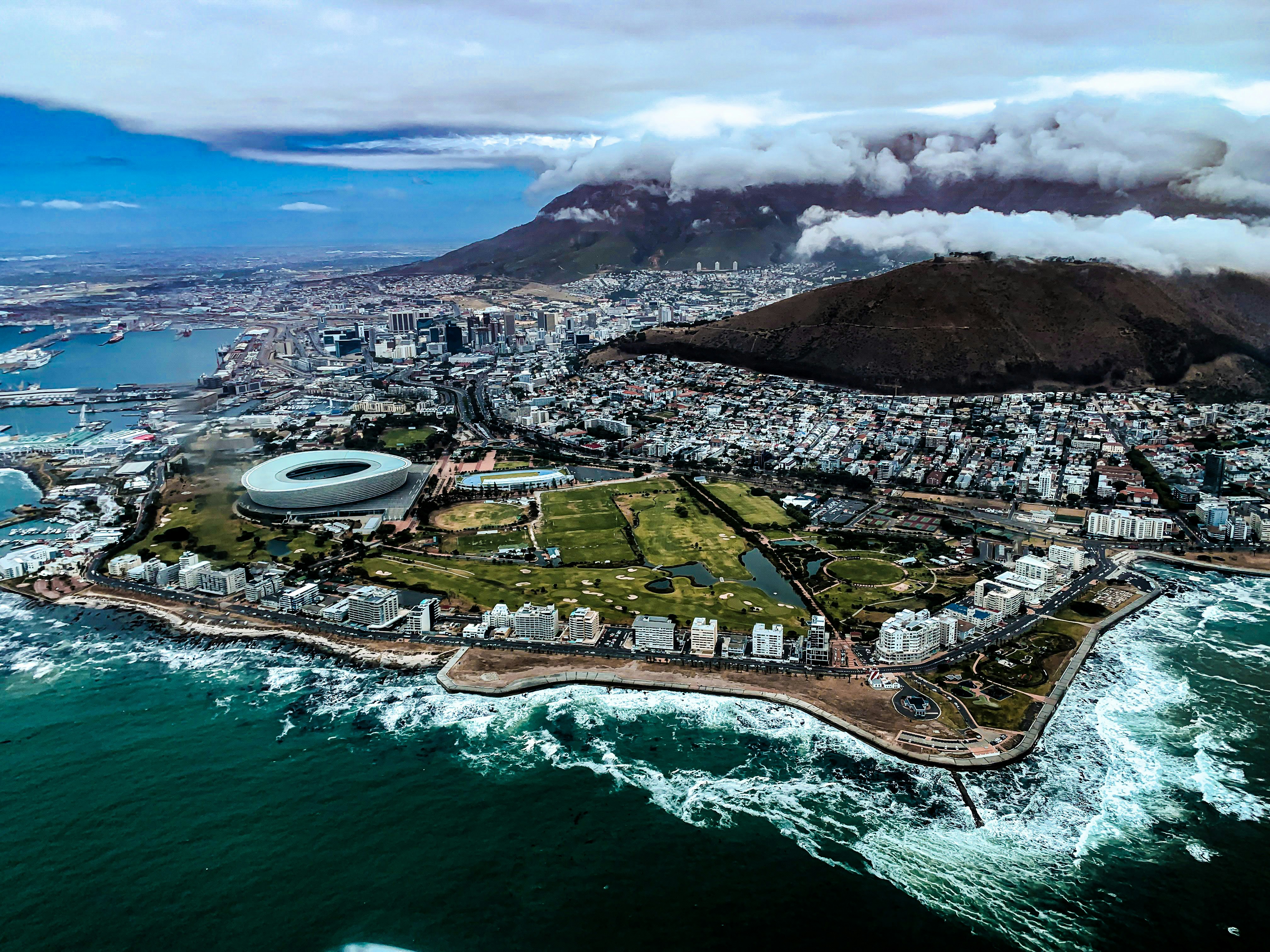
If there’s one Italian city where food defines everyday life, it’s Bologna. Locals often call it La Grassa (“the fat one”), a nickname that reflects its deep culinary traditions and generous cuisine. This is the birthplace of ragù alla Bolognese, home to handmade pasta traditions passed through generations, and a city where food markets and trattorias shape daily life.
Bologna is also, remarkably, still underrated, so if you want to understand Italian food at its source, this is your map. This guide covers everything you need to eat and drink your way through Bologna, the classic dishes, the restaurants worth the reservation, the markets, the aperitivo bars, and the gelato shops. Read it before you go. Then eat your way through it when you arrive.
Quick Guide: Bologna Food Highlights for 2026
- Primary Recommendation: Tagliatelle al ragù, the original Bolognese pasta served with fresh egg tagliatelle.
- Top Choice for Traditional Dining: Trattorias in the historic center around the Quadrilatero district, where many of Bologna’s oldest food traditions continue.
- Value Pick / Local Vibe: Via del Pratello. This is where locals go for affordable wine and tagliere (meat and cheese boards) away from the main tourist drag.
- Local's aperitivo: Osteria del Sole, wine since 1465, BYOF (bring your own food from the Quadrilatero market next door).
- Best gelato: La Sorbetteria Castiglione for the Crema Michelangelo; Gelateria Gianni for seasonal, locally sourced flavours.
- The Best Way to Taste Bologna: Take a personalized food experience with Lokafy and discover the city’s flavors with a Local.
Why Bologna Is Considered Italy’s Food Capital

Bologna sits in the Emilia-Romagna region, one of the richest culinary areas in Italy. Many of the country’s most famous ingredients come from this region: Parmigiano Reggiano, prosciutto di Parma, balsamic vinegar, and mortadella.
The city itself built a reputation around fresh egg pasta. Walk through the historic center and you will see pasta shops displaying trays of tortellini, tagliatelle, and lasagne sheets behind glass.
Another reason food culture thrives here is geography. Bologna lies between major agricultural areas and historic trade routes. This created a strong tradition of markets, small food producers, and family-run trattorias.
The Essentials of Bolognese Cuisine
To eat like a local, you have to know the heavy hitters. Bologna is the birthplace of some of the world’s most famous exports, but they taste different here.
Tagliatelle al Ragù
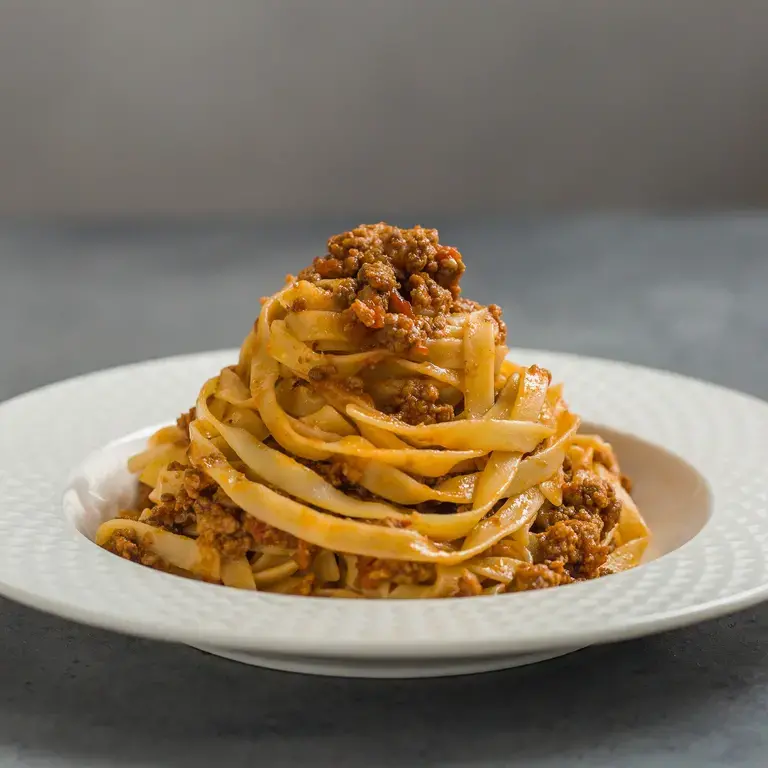
This dish is often mistaken internationally as “spaghetti Bolognese,” but in Bologna it is always served with fresh egg tagliatelle. The pasta is wide enough to hold the rich, meat-based sauce, which is simmered for hours with a base of onion, celery, carrots, and a touch of milk to cut the acidity.
Where to try it:
- Osteria Broccaindosso
- Trattoria del Tempo Buono
- Sfoglia Rina
These spots are widely mentioned by locals and travelers looking for authentic ragù experiences.
Tortellini in Brodo
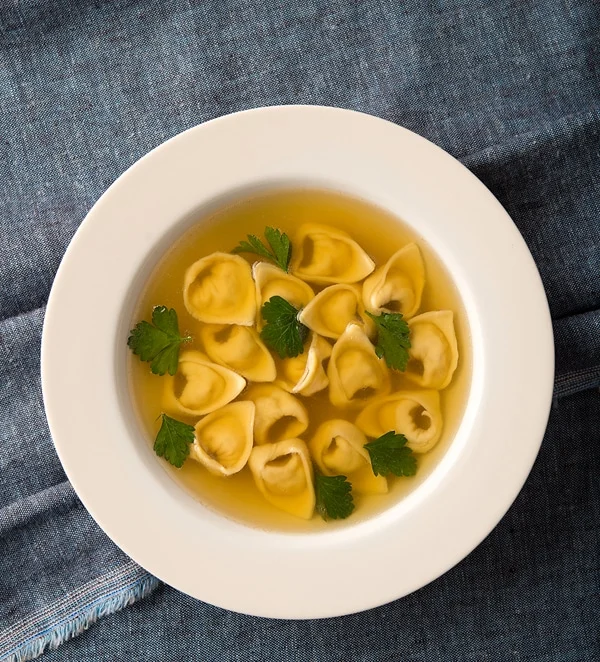
These tiny, hand-folded pasta knots are stuffed with pork loin, prosciutto, mortadella, and Parmigiano Reggiano. While you can find them with cream sauce, the traditional way to eat them is swimming in a clear, rich capon or beef broth.
This dish often appears during holidays like Christmas but can be found year-round in traditional trattorias. According to legend, the pasta shape was inspired by the navel of the goddess Venus.
Where to try it:
- Caminetto d’Oro
- Trattoria Anna Maria
- Osteria dell’Orsa
Mortadella

Mortadella originated in Bologna and remains one of the city’s defining ingredients. High-quality Mortadella Bologna IGP is velvety, studded with cubes of fat and black pepper (pistachios are optional but common). Try it sliced paper-thin on a piece of warm crescentina (fried dough). Another popular way to eat it is in a warm sandwich from small street food spots.
Where to try it:
- Mo! Mortadella Lab
- La Prosciutteria
Other Dishes You Absolutely Have to Try in Bologna
Lasagne alla Bolognese
Lasagna in Bologna is different from the version many travelers know. The local version uses spinach-infused pasta sheets, giving the lasagna a green color. The layers include ragù, béchamel sauce, and Parmigiano Reggiano. It’s rich, and widely considered one of the best lasagna variations in Italy.
Where to try it:
- Trattoria Anna Maria
- Ristorante Diana
- Osteria Boccabuona
Crescentine (Gnocco Fritto)
Crescentine are small pieces of fried dough served with cured meats and cheeses. The outside is crisp while the inside remains soft and airy. Locals often eat them with mortadella, salami, or soft cheeses.
Where to try it:
- Lambrusco
- Trattoria del Rosso
Gramigna alla Salsiccia
This lesser-known local pasta uses short curly pasta called gramigna served with sausage and tomato sauce. It’s a favorite comfort dish in Bologna and less touristy than ragù pasta.
Where to try it:
- Osteria Broccaindosso
Cotoletta alla bolognese
Also called la petroniana, this is a veal cutlet fried in butter, draped with prosciutto and Parmigiano, then finished with a splash of meat broth to melt everything together. It is indulgent in the best possible way.
Where to try it:
- Trattoria Anna Maria
- Osteria Bottega
Passatelli in brodo
This is a lesser-known pasta made from breadcrumbs, eggs, lemon, and Parmigiano, pressed through a special tool to create thick, short noodles served in broth. It is the dish that feels most like home cooking, and most tourists never try it.
Where to try it:
- Trattoria da Me
- Osteria dell'Orsa
Tigelle
These are small, round flatbreads cooked in a special press, eaten hot, split open, and filled with whatever you like; prosciutto, soft squacquerone cheese, or the Modenese pesto of lard, rosemary, and Parmigiano.
Where to try it:
- Mo Mortadella Lab
- La Prosciutteria Bologna
Friggione
This is a slow-cooked onion and tomato condiment with roots in 18th-century peasant cooking. It is silky, deeply sweet, and extraordinary eaten on bread or alongside aged cheese. Most menus do not advertise it heavily. Ask.
Where to try it:
- Trattoria del Rosso
- Osteria Broccaindosso
Where to Eat Quick Bites and Street Food in Bologna
Pigro: (Via de' Fusari, alongside San Petronio church) is the place for a mortadella panino done properly. A fresh rosetta roll, artisanal mortadella, nothing else needed. It is called Pigro (lazy) because the hours are flexible. Check before you go, and go at lunch.
I Panini di Mirò (Piazza Aldrovandi 5/2a, in the Saragozza neighbourhood) is a small counter with outdoor stalls that is almost entirely unknown to tourists. They are known for their porchetta sandwiches. The porchetta, fontina, and guanciale combination is exceptional. Ordering works on paper. Grab a slip, write your ingredients and name, and hand it to the counter.
Forno Brisa (multiple locations across the city) is a local bakery with serious credentials. They mill their own grain, source locally, and make bread, pizza, and pastries that are genuinely worth hunting down for a quick breakfast or lunch stop.
The Quadrilatero: Bologna's Beating Food Heart
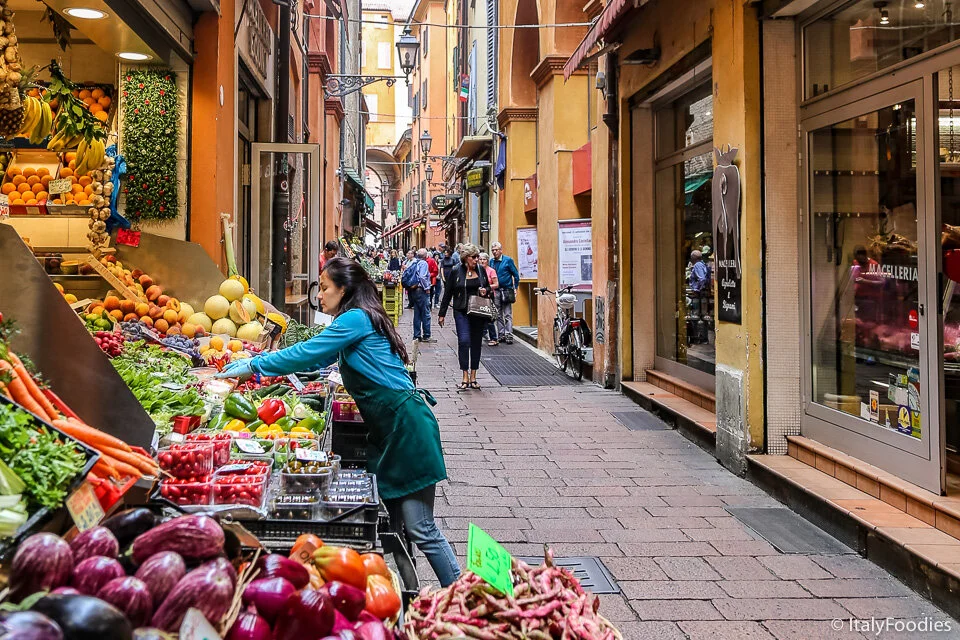
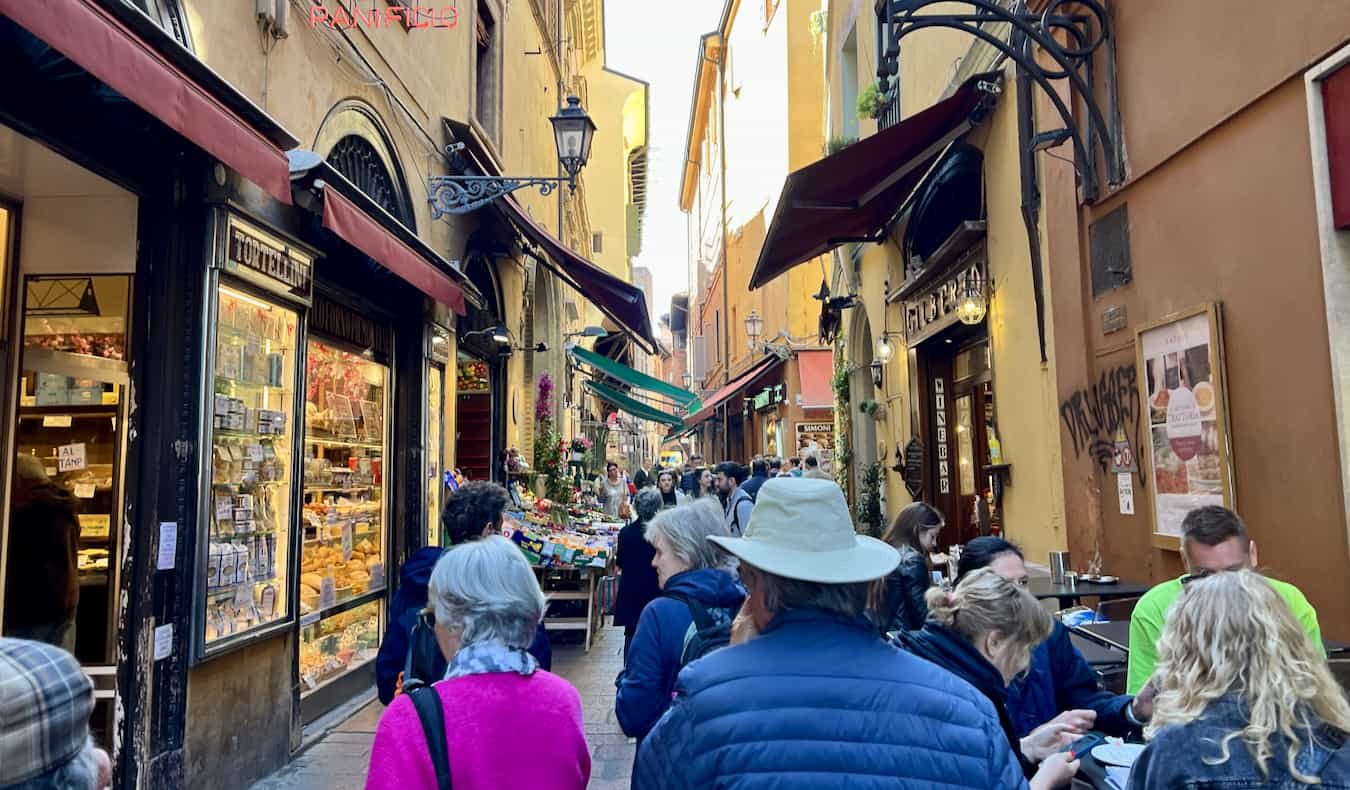
The Quadrilatero is a tangle of medieval streets east of Piazza Maggiore. Via Pescherie Vecchie, Via Drapperie, Via Clavature, Via Orefici. It has been Bologna's food market since the Middle Ages. It is where you understand that food here is not a lifestyle trend. It is infrastructure.
Giant wheels of Parmigiano Reggiano sit in delis alongside legs of prosciutto and mountains of mortadella. Fresh pasta. Green tortelloni, yellow tagliatelle, spinach-flecked lasagna sheets. These are made and sold from small counters. Fishmongers shout the day's catch. The smell of aged cheese, cured meat, and fresh bread hits you the moment you enter from Piazza Maggiore.
Tamburini (Via Caprarie 1, just off Piazza Maggiore) is the most famous deli in the Quadrilatero and has been there for generations. The charcuterie boards are excellent and adjusted for however many people are eating. Go for lunch or an early afternoon snack.
Simoni is the locals' preferred stop for cured meats and cheese. Staff will let you taste before you commit. Buy a small bag of mortadella and eat it on the street while you walk.
Aperitivo Hour: The Bologna Way
Aperitivo in Bologna runs from about 6:30 PM, and it is not optional. The ritual exists to bridge the gap between work and dinner. A glass of wine or a spritz, something salty to nibble on, and a couple of hours of conversation before the kitchen reopens at 8 PM.
Osteria del Sole (Vicolo Ranocchi 1, off Via Pescherie Vecchie in the Quadrilatero) has been serving wine since 1465, and is likely the oldest continuously operating osteria in Italy. They do not serve food. You bring your own from the market next door, claim a seat, and order a glass of local Lambrusco or Pignoletto for a few euros. It is one of the great experiences in Italian travel.
Gianni Vini Bottega Storica (Via Clavature 13, in the Quadrilatero) is open from early morning to evening and works at any hour. Espresso and brioche in the morning, aperitivo and local wine in the evening.
Camera A Sud (Via Valdonica 5, in the old Jewish Ghetto just north of the Quadrilatero) is a hip wine bar with excellent cocktails and an extensive list. It is always busy, call ahead to reserve.
Gelato in Bologna
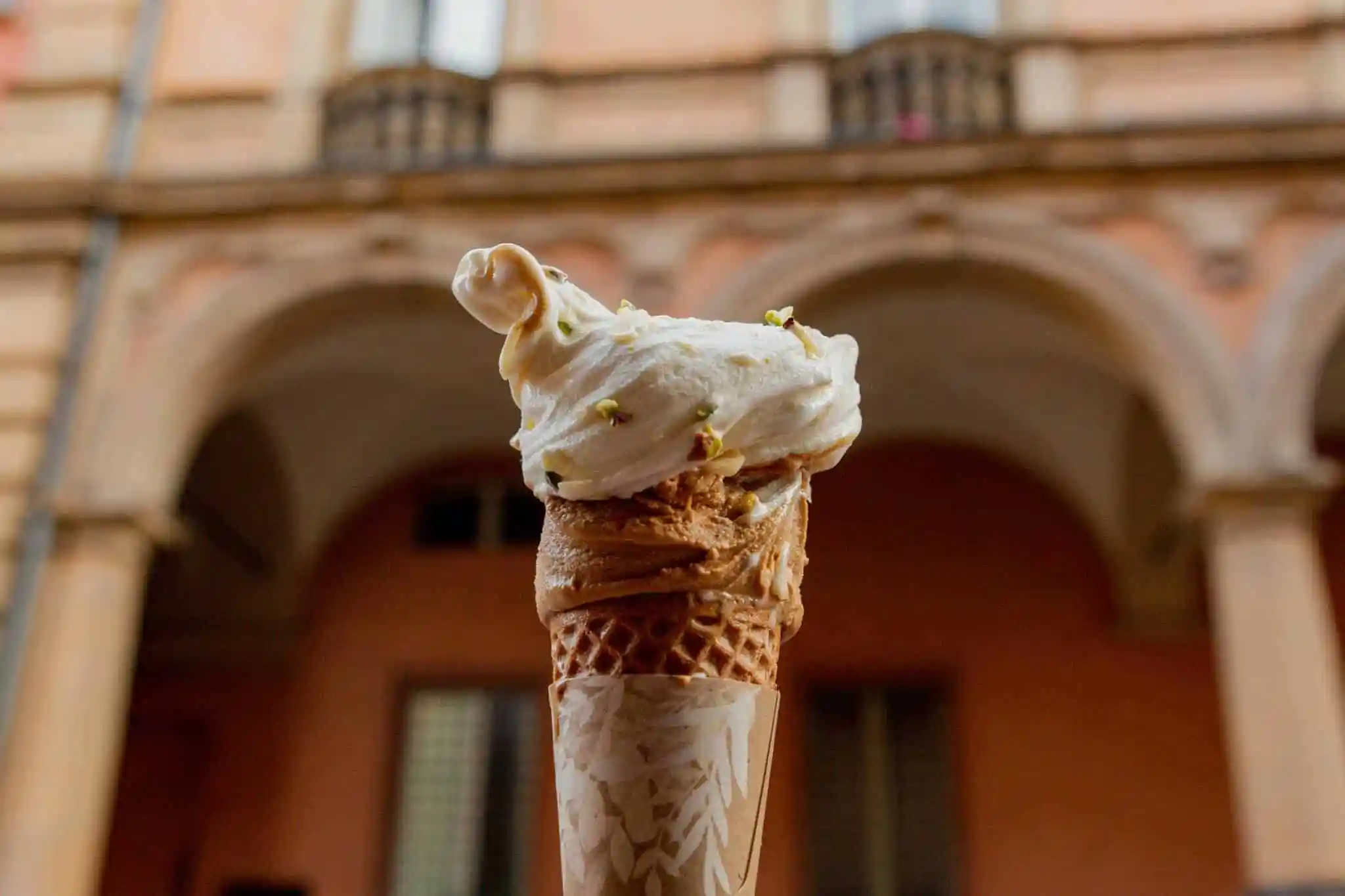
Bologna is not only Italy's culinary capital. It is the home of the Gelato University, where students from across the world come to learn the craft. There are more than 100 gelaterias in the city. Not all are equal.
The rule for finding quality is simple. Look for gelato stored under metal lids or parchment paper. If it is stacked high in fluorescent towers, keep walking.
La Sorbetteria Castiglione is consistently cited as one of the best gelaterias in all of Italy. The Crema Michelangelo, made with amaretti, caramelised almonds, and cacao, is the one to order.
Gelateria Gianni has been run by the Figliomeni family since 1976 and draws on historical Bolognese gelato recipes going back to the 19th century. The flavours rotate by season. The quality is consistent across all of them. There is a second location on Via San Vitale if the queue at Monte Grappa is long.
Cremeria Santo Stefano has won national recognition and is often mentioned as a favourite by locals who take gelato seriously. The Crema delle Zitelle, made with mascarpone and pine nuts, is the house signature.
Coffee and Wine

Bologna's coffee culture follows the Italian model strictly. Espresso at the bar, standing, in the morning. Cappuccino only before noon. Do not ask for a large anything.
Caffè Terzi is the most respected coffee bar in Bologna and is often called the best espresso in the city by locals. It is a small space. The coffee is excellent. The ritual is fast and precise.
Zanarini is an institution, and its terrace is one of the best spots in the city for a morning cappuccino and people-watching.
For wine, Cantina Bentivoglio is Bologna's most beloved jazz and wine bar. It has an underground cellar, live music most nights, and a wine list focused on Emilia-Romagna. Book ahead for dinner or drop in for a glass and the music.
The local wines you need to know:
- Pignoletto is a sparkling white wine from the Colli Bolognesi hills, light and slightly fruity, perfect for aperitivo.
- Lambrusco, the fizzy red from nearby Modena, is the working person's wine of the region and pairs well with charcuterie.
- Sangiovese rounds out the table wines.
Hidden Gems and Local Secrets
The Secret Window (Finestrella)

Located on Via Piella, about ten minutes from the main square, there is a tiny window that opens onto the Reno Canal. It’s a reminder that Bologna used to look a lot like Venice, with a network of waterways used for trade.
Mercato delle Erbe
While the Quadrilatero is famous, Mercato delle Erbe on Via Ugo Bassi is where locals actually shop for groceries. In the back, there are several "food court" style stalls where you can grab gourmet pizza or fresh seafood in a relaxed, non-touristy atmosphere.
Via del Pratello

This street is the heart of Bologna’s alternative scene. It’s lined with small bars and osterias. It’s the best place for a "nightcap" of local wine and a plate of tigelle; small, round flatbreads served with a spread made of lard, rosemary, and garlic.
Practical Tips for Eating Well in Bologna
Reservations
In 2026, Bologna is popular enough that booking 2–3 days ahead for dinner is standard. For places like Trattoria Anna Maria and All'Osteria Bottega, book earlier. Many smaller spots do not take reservations at all, Osteria dell'Orsa being the obvious example but the trade-off is queuing at noon on the dot.
Days of Closure
Many of Bologna's best traditional restaurants are closed Sunday and Monday. If you are visiting for a weekend only, plan your restaurant list around this. Markets and bars generally stay open, but the trattorias you most want to visit may not.
Cost
Expect to pay a coperto (cover charge) of €2–3 per person. This is standard across Italy and not a tourist tax. Tipping is not expected, rounding up the bill is appreciated, but not required.
A full lunch usually runs €25–40 per person at a mid-range trattoria but could be less depending on where you go. The more serious restaurants push into €50–70+.
A Simple 1-Day Bologna Food Itinerary
Morning
Start at Caffè Terzi for an espresso and a brioche, eaten standing at the bar. Walk to the Quadrilatero while the market stalls are at their freshest, the fishmongers open early, the deli counters start slicing by 9 AM. Buy mortadella. Eat it immediately.
Lunch
Head to Sfoglia Rina (Via Castiglione 5B) for a pasta lunch near the Due Torri. Or, for something more local, walk to the university district and queue at Osteria dell'Orsa (Via Mentana 1) at noon.
Afternoon
Gelato at La Sorbetteria Castiglione. Walk off the sugar down Via Santo Stefano, one of the most beautiful streets in Italy.
Aperitivo
Collect charcuterie from the Quadrilatero market. Simoni for the mortadella, Paolo Atti for bread and take it to Osteria del Sole. Drink Lambrusco for €3 a glass at one of the long wooden tables.
Dinner
Trattoria Anna Maria for tortellini in brodo and tagliatelle al ragù, with a carafe of local Sangiovese. End the meal with zuppa inglese; boozy, theatrical, and the correct way to finish dinner in Bologna.
A Local Tip Travelers Often Miss
Many travelers come to Bologna expecting spaghetti Bolognese everywhere.
“People come looking for spaghetti Bolognese, but that dish isn’t traditional here. The real ragù is always served with fresh tagliatelle or layered in lasagna.”
— Chiara M., Bologna Local from Santo Stefano, living in the city for 28 years
Understanding this difference helps visitors experience the real food culture of the city.

Frequently Asked Questions About Eating in Bologna
What is the most important food to eat in Bologna? Tagliatelle al ragù is the essential dish. After that, tortellini in brodo and lasagna bolognese. Together, these three form the core of what makes Bologna's food culture unique.
Is spaghetti bolognese actually from Bologna? No. The dish that exists here is tagliatelle al ragù, wide egg pasta with a slow-cooked meat sauce. Order spaghetti bolognese in Bologna and you will mark yourself immediately as a tourist.
What is the best way to experience Bologna's food scene for a first-time visitor? Combine a self-guided morning through the Quadrilatero market with a lunch booking at one of the neighborhood trattorias in the university district or near the Due Torri. In the evening, do aperitivo at Osteria del Sole before dinner. A local food tour is also an excellent option for getting inside access quickly, especially if you are only in the city for one or two days.
Are there good options for vegetarians in Bologna? Bologna's cuisine is heavily meat-focused, but there are options. Tortelloni (the larger version) are often filled with ricotta and spinach and served with butter and sage. Friggione is vegetarian. Many markets and delis sell excellent cheese boards. The newer, more creative osterias like Osteria Tricheco in the Santo Stefano area, often have strong vegetarian menus.
When is the best time to visit Bologna for food? Autumn and spring are ideal. The food is at its richest in cooler months, this is truffle season and the time when tortellini in brodo makes the most sense.
Is Bologna safe to visit as a solo traveller? Absolutely. Bologna is a student city and very walkable. Even at night, the streets are filled with people. Use standard common sense in the area around the central station late at night, but otherwise, it is one of Italy’s safest urban centers.
What is the best way to get around Bologna? Your feet. The city center is compact and mostly pedestrianized. For longer distances, the bus system is efficient, but you’ll miss the beauty of the porticos if you don't walk.
How do I book a food tour or a local experience? The best way to see the "real" Bologna is with someone who lives there. Locals can take you to the spots that don't have English menus and explain the history of the dishes you're eating.

Experience Bologna With a Local
Reading a food guide gets you to the door. A local gets you to the right table, in the right order, with the right wine, and the story behind the dish on your plate.
That’s exactly what Lokafy offers. Instead of a standard tour, you explore Bologna with a local guide who can introduce you to the city’s real food culture. From handmade pasta labs to neighborhood trattorias, your experience is tailored to what you want to taste and discover.
Ready to eat like a true Bolognese? Take a personalized walking tour with Lokafy and discover the flavors of La Grassa with a friend in the city.
Enjoyed this article?